Katt Williams Turned Comedy Into A Measurable Competition
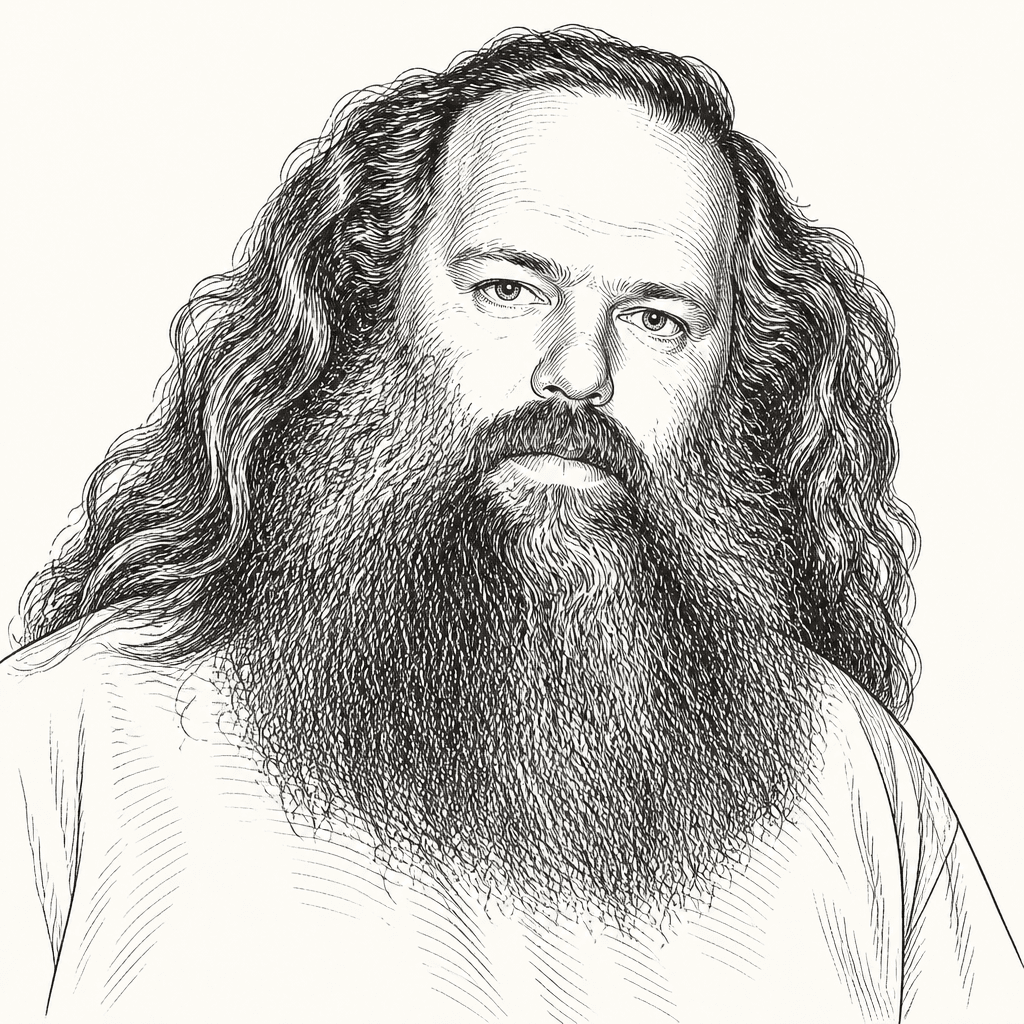

Katt Williams says he improved as a comedian by treating comedy as work he could measure and refine, not as a talent he either had or lacked. He tracked how many laughs other comedians earned and set himself the task of beating their counts, while treating rejection as part of the work rather than a verdict. Williams credits repeated testing and performing for different audiences with developing his comedy; separately, he says financing his own specials let him retain control over their production and licensing.

Stories gave Williams a way to imagine an exit
Katt Williams says he learned to read at about three. He was drawn to stories about soldiers, captains and stowaways, and wondered how people got into the adventures he was reading about—and how he might become one of them. Books gave him somewhere to go in a childhood he describes as tightly controlled and abusive. They also gave him a way to interpret hardship: he assumed that, as in the stories, bad things might happen first and life might get better later.
His parents did not celebrate holidays or birthdays, and most of his activities were Bible-based. Reading was an exception. He could go to his room with a book, spend a couple of hours somewhere else in his imagination, and come out feeling he had been part of something larger than himself. He knew other children had more freedom, but says he did not initially see how bad his own situation was. He thought difficulty might mean he was destined for something better.
He connected that belief to Cinderella. The heroine endured a terrible family life, verbal abuse and degrading work before her circumstances changed. Williams naively took that pattern as a rule for heroes: “I just held onto that,” he said. “And so I was looking for my opportunities.” He also found things to carry into his life in books such as White Fang, The Call of the Wild and The Swiss Family Robinson. He admired the latter’s picture of a family surviving through cooperation, with different people contributing different strengths. In each story, he says, he could find something to apply to his own circumstances.
The stories did not change what was happening at home. Williams says that from ages five to twelve his parents repeatedly beat him. He describes the punishment escalating from belts to an extension cord and a water hose, and then to a two-by-four. When he could evade them, he says, his parents tied him to a pole in the basement for hours. Sometimes he was unconscious afterward; before school, his parents would try to stop the bleeding and get him dressed.
He says he understood as a child that what was happening was abuse. He had not committed the kinds of offenses his peers were punished for: he had not committed crimes or snuck out. For a time, he wondered what it was about him that his parents disliked. Once he concluded that the treatment was out of his hands, he became defiant. While being beaten, he says, he would talk back and comment on what was happening: “You sure are beating your baby a lot. You say God loves this?”
Williams describes two very different pictures of family life. His parents’ marriage appeared to him loving and harmonious; he says he never saw them argue, and that their relationship became his model for marriage. Their treatment of him was different. In his memoir, he describes receiving his mother’s love in “sample sizes.” Watching affectionate television families such as The Waltons helped him see that he was missing something.
His younger brothers, he says, were treated differently. They were not tied up in the basement, and Williams says his parents understood that it had not worked. That difference made him feel, as a child, that he himself had been a disappointment. He says he was grateful that his parents had taken care of him, but that does not make the treatment he describes less severe. He distinguishes the way they treated him from the apparently loving marriage he saw between them.
Religion was part of the conflict. Williams says he would not pretend to believe the religious answers expected of him. He questioned biblical teachings, including passages about slavery, and says he was willing to endure the consequences rather than act as if he agreed. His parents were prominent in their religious community, he says, but he does not blame the religion for the abuse: no religion, in his view, condoned what happened. He says the expectation was that he either act as if he believed or face the consequences.
At school, he says, the abuse could go unnoticed because he would appear dressed and smiling the next morning. School mattered to him; it gave him a chance to leave home and enter a world that knew nothing about the previous night. Neighbors heard the beatings, he says, but saw him setting off for school looking cheerful and did not understand what was going on. Years later, they told him they had heard hours of noise but did not know what was happening because they saw him smiling and dressed for school in the morning.
The childhood photographs Bartlett showed him capture that contrast: in one, a young Williams wears a suit and smiles; in another, he holds both thumbs up. Williams says he can see how happy and carefree the boy looks, while knowing what was happening behind the scenes. He feels sorry for him and is proud that things worked out. He also says he has been a happy person throughout his life and tried to preserve as much of that child as he could.
Williams does not describe comedy as a way to make an audience happy or win his parents’ affection. Before he imagined performing, it was something he used privately to change how he felt. He watched comedy in many forms, from slapstick and silent comedy to Don Knotts. Laughing, he found, could alter the state he carried out of a difficult situation.
When I shut that room door, that as soon as I shut that door, I’m in control now.
He had learned that he could put things into his mind that changed how he saw things. Comedy was one of the first medicines he found that helped him get through the day. He describes watching a comedy film alone and knowing that laughing would change how he felt when he came out of the room. Performing came later; his respect for comedy’s effect came first.
Leaving home was about protecting his brothers as well as himself
At thirteen, Williams left home. He resists calling it running away. School administrators noticed that he sometimes stopped changing for gym, unusual for a boy who loved physical education. They involved the police, who investigated and photographed his injuries. Williams says he had not known how to judge the abuse as criminal or “beyond the pale.” The authorities told him it was not acceptable and said they planned to arrest his parents and place the children somewhere safe.
What frightened him was the possibility that his younger brothers would be separated. The authorities could not promise that the boys would stay together. Williams says he chose to leave before they came to the house because he wanted to avoid a situation in which his case might disrupt his brothers’ lives. He told his parents what had happened at school and that he was leaving.
He had no real plan. He was thirteen and had about $1,200. He went to a truck stop to find a ride to a warmer place. Having grown up in Ohio, he did not want to face winter alone. He narrowed the options to California, Texas or Florida, and ended up in Miami.
Williams says he did not think of himself as homeless. He had not owned the home he left and did not feel safe or comfortable there. In Miami, he felt free rather than victimized by his circumstances. That did not mean the situation was safe. He says there were no safe places and that he had to learn some people were good and some were not.
He slept in Peacock Park. When Steven Bartlett showed him a Miami Parks & Recreation sign for the park, Williams noticed its slogan, “Where Magic Happens,” and called the coincidence striking. He described the magic as a front-row view of other people’s lives and troubles. In the early 1980s, he recalls, a homeless enclave occupied part of the park. Some people he met, he says, had recently been doctors, lawyers, nurses, spouses and parents before drugs or alcohol contributed to the collapse of their lives. He heard accounts of decisions that could not be undone. The stories frightened him away from trying hard drugs. He did not remember people describing drugs as having made their lives wonderful; he heard them talk about what they had lost.


He found work that did not require identification, including work after hours for a business owner willing to employ him. He also briefly tried car theft, which he says was lucrative in the area, but could not continue because he did not want illegal work to become the thing he was best at.
About a year and a half after leaving, he encountered his family on the highway. Until then, he had checked milk cartons, believing his family must be looking for him. He says it was a shock to realize that no one had reported him missing. His family had moved to Florida the same day he left Ohio. Williams says that, as he understood it, people who knew his family saw the move as a family relocation connected to missionary work, not as a child disappearing.
When his parents and brothers found him, Williams says, he was overwhelmed by seeing his brothers. He had not understood how much leaving them would hurt. He does not recall a hug or a long conversation; he says everyone was glad to see him, and they told him to get in the car. His account holds the shock of realizing he had not been searched for alongside the happiness of seeing his brothers.
He credits other relatives, especially his grandparents, with giving him a strong sense of family and well-being. His parents’ shortcomings, he says, did not erase what he received from the wider family.
Williams says he has forgiven his parents, though they did not ask him to. He describes forgiveness as something one can do for oneself, not as a favor to the person who caused harm. He has remained in contact with them and says they are grandparents to his children, but his decision at thirteen remains the same at fifty-five. He does not need their approval or pride to validate what he achieved. He says he is grateful to have been brought into the world, while also saying the subject is painful and he would rather be able to say nice things about them.
He is explicit that his choices as a teenager should not be treated as advice. Leaving home and relying on the hope that God would protect him was dangerous, he says. He recounts the story to explain what he believes helped him make it through, not to urge young people to repeat his decisions.
The people he met became part of his education
After returning from Haiti as a teenager, Katt Williams did not return to school or move back into his parents’ home. He says he had already built an adult life that could not simply be put back into a child’s structure. He worked in different sales jobs for several years, beginning with books and magazines. Door-to-door work suited him, he says, because he was already comfortable speaking with strangers, and he liked selling things he considered useful.
He also describes becoming a pimp as circumstantial. Williams says he had not set out to do it: he knocked on a door where women involved in sex work lived, and their pimp had been killed. He says he could have quit what he was doing and helped them, and chose to do so. He recalls that the women challenged his assumptions about them and talked with him regularly about men’s behavior, hygiene and what women disliked. He says those conversations helped him become a better man.
Williams had grown up without sisters and says he lacked a frame of reference for how women thought or communicated. Books filled some of that gap. He remembers reading Little Women and having to read it two or three times before he could understand how the sisters could be related yet hold such different views. The experience unsettled his assumption that women were broadly similar in how they thought. He came to see women as a subject of continuing interest and importance.
He turned comedy into a problem he could study
Katt Williams’s first stand-up performance came at sixteen, when he was working around carnival people and went with a group of older acquaintances to a small club. He had only dress clothes, and when he realized the venue was checking identification, he noticed that some people were getting in by telling the bouncer they were comedians. He tried the same line. The club was holding a comedy competition, and he became performer number five.
He won, despite having almost no idea what a stand-up set required. He says he spent the four or five minutes on a single subject and told one joke. The prize was a chance to open for a touring show, which put him onstage as a professional comedian. Still, he did not perform again for five years. Winning did not make him understand comedy as a viable job. The pay—$25 for five minutes—seemed decent, but not like a career.
In his early twenties, he began to see comedy as a possible path. He had asked God for work that would let him support himself, be available as a parent and avoid the dangers of making money illegally. He promised that if such an opportunity appeared, he would work at it seriously. He says he did not know where the opportunity would come from; he was asking for a kind of life rather than a particular profession.
Once he returned to comedy, he approached it less as a matter of innate talent than as a problem he could study. He made a list of roughly 300 working comedians—not just stars, but people in his era and circuit competing for the same opportunities. The board Bartlett showed him listed household names, including Richard Pryor, Martin Lawrence, Eddie Murphy, Bernie Mac and Chris Rock. Williams clarified that his own list had been of working competitors who had not necessarily become household names. He was trying to work out how to get past them and become one of the names considered alongside established performers.
“They were funnier than me,” he said. “And that’s what I had to fix.”
His method was to count. In sales, he learned that 300 rejections could produce 30 sales. Once he understood the ratio, he says, rejection stopped being a verdict on him and became part of the work. His target could be to get more “nos” than someone else, because that meant more chances to reach “yes.”
He applied the same logic to stand-up. He watched other comedians’ sets and counted audience laughs. If a performer got nine laughs in fifteen minutes, Williams wanted to get sixteen or seventeen in the same time. He says he would not cross a comedian off his list until he could produce more. The comparison was deliberately concrete: not whether he liked another comedian’s style, or whether he could explain the person’s success, but how the set performed in the room.
He worked on comedy eight hours a day, seven days a week, believing that treating it like a job was a shortcut to getting better. That labor was the method by which he tried to improve. He had tested the principle in other work. As a child, with one lawnmower, he could still acquire 26 clients by doing more yards, charging less and making himself more available. He says the same approach worked for shoveling snow and selling door to door.
The principle was not simply “work hard” in the abstract. Williams describes setting himself a measurable comparison—more clients, more sales, more laughs—and continuing to work until he could meet it. He was not trying to imitate comedians’ backgrounds or delivery. He was watching what happened in the room. That shift made rejection and competition usable information: a “no” was not proof he should stop, and a laugh count showed him where he stood against a particular performer.
That approach also shaped where he worked. He moved to Sacramento for about two years to perform for predominantly white audiences. He wanted to become funny for them without needing to become a different person or build a separate act. As he began appearing on ComicView and Def Comedy Jam, he realized that doing well in those rooms did not mean he was competitive with Black audiences. He describes himself as “bottom tier” among Black comedians at that point.
He then spent about two and a half years in Oakland, performing for Black audiences with high expectations and regular exposure to Los Angeles comedians. He says he worked until he was comparably effective with predominantly Black and predominantly white audiences. The aim was to understand what his material did in different rooms and improve it until it traveled. He did not treat success in one audience as proof that the work was finished; he looked for the next place where it did not yet work as well.
Williams describes a repeatable process for building a special. He writes the hour, tests it in different regions, adds material that works and removes what does not. After about a hundred cities, he says, he has a clearer sense of whether the hour will work for a broad audience. A joke or section that does not hold up during the tour can be cut or rebuilt; material that works in one place still has to be tried elsewhere. The tour is not just a sequence of performances but an extended test of the hour.
Once he has completed that cycle, he says, he moves on to the next hour and begins again. From his first special through his fourteenth, he has kept to the same basic approach: write, test, revise, tour widely and repeat. He says that after finishing one hundred-city run, he already has the next hour written and is back on the road working on it. The process makes the next special depend on the same kinds of decisions as the first: develop material, observe how audiences respond, and keep revising until he is prepared to take it wider.
The visible break came after years of work
Katt Williams says there were six years between winning the competition and his first milestone: opening a tour as a professional comedian. He believed a big break was inevitable and concentrated on being ready when it came. He did not describe those years as wasted time. Being able to perform, earn enough to live for the day and move on to another show counted as success to him.
When he moved to Los Angeles around the turn of the millennium, several goals came together in his first year. He appeared on ComicView, began acting in sitcoms and got his first audition for Friday After Next. He says these were things he had privately asked for, and that they happened in that first year. The speed of those particular opportunities did not erase the longer period of work that preceded them.
His first stand-up special came at thirty-five, fifteen years after he returned to comedy. Bartlett pointed to the gap between the visible result and the repetitions behind it. Williams said that if someone had told him at the start it would take fifteen years to reach that milestone, he might not have continued. He says he experienced progress along the way, rather than waiting fifteen years for one event to declare him successful. He was more certain the work belonged in his life when he was able to keep performing and make enough to get to the next show.
He does not say he considered himself great. He says he believed everyone had the potential for greatness, though circumstances could keep some people from realizing it. His task was to find what that potential looked like for him. He had confidence as a comedian even when he was making less than $10,000 a year from stand-up, he says, but that confidence was based on what he believed in—not on a belief that he was inherently superior.
He also distinguishes confidence from fearlessness. Williams says he was afraid of failure and felt there was no Plan B. He believed that if he did not work hard enough, failure would follow, and that he had to make comedy work. His confidence and his fear existed together: he believed in his capacity to respond, while also feeling the pressure of having few alternatives.
Once he became established, Williams says, the problem changed. He saw the period of recognition as a limited “15 minutes of fame” and wanted to get as much time out of it as possible. That meant a new set of constraints. He says he could not afford to tell his whole story in the first few years of stand-up, because he might become someone with more to say later. He was thinking about the life he was making as a story that would continue beyond the immediate moment.
He also refers to the consequences and uncertainty around arrests and charges. At one point he speaks of 35 arrests and says the charges would eventually be dropped, but that this could only be known at the end. He says he was aware that people leave a story behind, and that someone might later look at what they did in difficult circumstances. The point, for him, was not to assume the outcome in advance but to keep acting without knowing how the account would eventually resolve.
Owning the special let him control more of the work
Katt Williams says he paid for his first special himself, and for the next eight as well. He traces his approach to a lesson from Prince, whom he met before he knew what he would do for a living. Prince often talked about business, Williams says, and taught him to value the independence an artist has before other people invest in the work.
Williams understood the risk differently from the usual story of a creator needing someone else to believe. As he describes his own arrangement, financing the special himself let him choose the director, producer and venue, and make the production match his standards. He could then license the finished special to HBO or Comedy Central, receive payment for the license period and, in that arrangement, sell it himself after the month-long licensing period ended.
Prince’s lesson, as Williams recounts it, was that an artist could start out fully independent, then give away parts of that independence when others put money into the work. Williams says he wanted to make the specials good enough that, even if no one came asking for them, they would still have value. Self-financing let him make decisions about the production rather than waiting for someone else to fund it.
The sequence mattered to him: first create a finished product on his own terms, then license it to a platform, then regain the ability to sell it himself when the license period ended. He says the first special introduced him to that licensing model. He was not only buying the ability to make a show; he was making a choice about the work’s production and the terms on which it could be distributed afterward.
He says he was thankful that no one wanted his product, because it gave him the opportunity to make and own it on his terms. The point was to understand what an artist is giving up, what they are being paid for, and what control remains afterward. His account is not that every creator can or should use the same arrangement, but that independence was something he wanted to preserve when he could.
He links that business approach to self-worth. For artists, he says, knowing what peers in comparable roles earn can help establish what a fair contract looks like. His example is a football player comparing contracts for others in the same position. The comparison gives an artist a reference point rather than leaving them to accept whatever is offered.
Williams says he never spent time thinking he was worthless, and advises people who do feel that way not to treat the thought as authoritative. Even if someone has to lie to themselves about their worth, he says, they should do that rather than accept the conclusion that they have none. He argues that reading can show people how many others with less talent, opportunity or preparation have still managed to do what they are trying to do.
He also says he did not base his self-worth solely on himself. He placed it in God and believed that if he tried to become a better person and make better decisions, he would be helped when he did not know what to do. He describes asking for guidance and trying to follow what he took to be the answer. That is how he explains his own confidence.
His confidence rests on evidence, effort and faith
Bartlett played a clip of Rick Rubin saying that risk and success go together, and that greatness is revealed through risk. Williams agreed that risk matters, but drew the boundary differently. Betting on a football team, he said, is risky because he cannot influence what either team does. Betting on himself is not risky in the same way: he can work harder, apologize, adapt or change course.
Williams says he based his confidence on evidence, including testing how many rejections led to sales and learning from losses as well as wins. He did not accept the “300 nos for 30 yeses” ratio as an article of faith; he says he went out and found it by testing the limits. For him, a bet on himself is not a prediction that nothing will go wrong. It is a bet on his ability to respond when it does.
His belief in his own effort sits alongside a strong belief in providence. He says he asked God for particular kinds of work and opportunities, then tried to respond by working hard when something appeared. He had asked for a job that could support him, allow him to be present as a parent and keep him from having to look over his shoulder. He says he promised that if an opportunity met those conditions, he would show his gratitude through the effort he put into it.
Williams distinguishes that relationship with God from belonging to a religion. He says he made that separation early and does not belong to a religious institution. He has studied different religions and sees them as sharing an effort to help people live better and avoid harming others. He respects the work people do through religion, while describing his own faith as a personal relationship with God.
He says he does not believe in coincidence and sees events as part of a greater plan. He came to believe that he was being guided and cared for, and that the more he believed this, the more real it became in his own life. He describes asking for help when he did not know what to do and trying to follow the answer he believed he received. In his account, faith did not remove the need to act; it gave him something to rely on while he acted.
The stories he read helped him think of hardship as part of a narrative rather than proof that hardship was the final destination. Bartlett related a similar practice of imagining that present difficulties might someday be part of a story worth telling. Williams recalled books that presented a character with a choice of paths, then let the reader return and see what happened after choosing differently. He incorporated that structure into his own decisions: look at the possible outcomes, then choose a direction.
He says he would consider the best possible outcome and the worst possible outcome before making a move. Knowing both ends of the range made him feel better about acting. When he was unsure what to do, he asked himself what a Black superhero would do and tried to choose that. The question gave him a way to picture a version of himself meeting a difficult decision with courage, rather than being led by fear or immediate convenience.
Williams’s account brings those ideas together without treating them as the same thing. He says his effort produced evidence about what he could do; his reading helped him imagine possible consequences; and his faith gave him a source of support outside himself. The confidence he describes is not confidence that he controls every outcome. It is confidence that he can keep choosing, working and asking for help when the outcome is uncertain.
He wants the account heard without making it a prescription
When Bartlett asked why he seemed more stoic than in other interviews, Katt Williams said the subject was not his preferred one. He does not particularly want to talk about himself, look at childhood pictures or revisit painful events. He tells the story because young people may hear it, and he does not want them to mistake the decisions he made as a teenager for smart choices.
He says he does not enjoy attacking his family, even when he believes they deserve criticism. He wants to be able to say good things about them. When Bartlett asked whether it still hurt, Williams said he would rather be able to say nice things about his parents.
He says he has forgiven his parents, maintained contact and remained available to them, but does not need their approval to make sense of his life. He describes forgiveness as something he did for himself, and says he did not need them to ask for it. He also says that his decision at thirteen—to leave rather than continue living under the same conditions—remains his decision at fifty-five.
Asked what young people should know, Williams returned to time. People do not know how much of it they have, he said, but they can choose what to do with it and change direction. He believes the lasting regret is more often the opportunity not taken or the thing never tried than choosing a path that turns out to be wrong. In his view, people can discover purpose at very different stages of life; reading showed him stories of people who did not accomplish something notable until late in life.
His advice is to keep trying and to make room for healing, even when it is painful. People can restart and take a different direction, he says. He also makes clear that leaving home without a plan was dangerous, not a model for young people to follow.