Iran Deal Remains a Term Sheet With Verification Details Unresolved

Vice President JD Vance casts his politics as the product of childhood instability, Iraq-era disillusionment, distrust of American institutions, and a return to Christianity after what he describes as secular ambition without virtue. Speaking with Steven Bartlett, Vance argues that those experiences explain his turn toward Donald Trump, his preference for limited war aims, his view that immigration must move at a pace communities can absorb, and his concern that AI will concentrate wealth and surveillance power. On Iran, he says the administration has secured a provisional term sheet, not a completed peace deal, with nuclear verification and enforcement still unresolved.
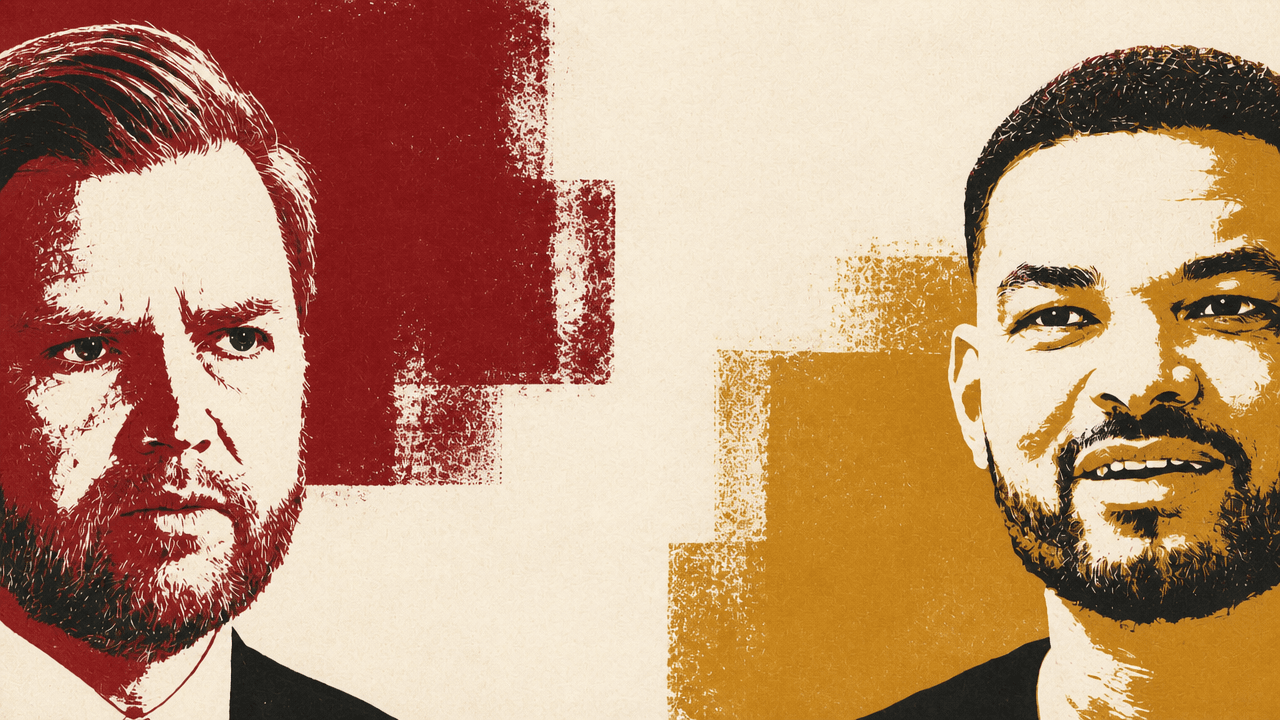
Vance’s Iran claim is a term sheet, not a finished victory
? jd-vance presented the Iran conflict as having reached a ceasefire and a provisional deal framework, while repeatedly making clear that the final implementation details were still unresolved. An on-screen note said the interview was recorded on Monday, June 15, 2026. In Vance’s account, what existed was not a completed final accord but a term sheet: broad principles accepted in principle, with verification, sequencing, and enforcement still to be negotiated.
Steven Bartlett pressed the obvious skepticism. He asked whether the United States had entered another “forever war,” arguing that the conflict appeared to have begun with expectations that bombing would be straightforward: take out leadership, encourage an Iranian public uprising, and force a political transition. Instead, Bartlett said, Iran appeared to fracture into militias and military pockets, while U.S. officials had said they did not know who they were negotiating with after the first and second rows of leadership had been taken out. A New York Times national polling average shown on screen put Trump’s approval at 38% and disapproval at 56% on June 11, with “U.S. attacks Iran” marked among the chart’s events.
Vance rejected the Iraq analogy. Trump, he said, did not need to “learn the lessons” of Iraq because, in Vance’s view, Trump had opposed that war at the time. Vance said he never feared “a multi-year expedition with no end in sight” because the administration had defined the objective narrowly: degrade Iran’s conventional military power, accomplish that objective, and then reassess.
The Iranian street rising up was, by Vance’s description, a possibility some people considered, and the president had spoken about it. But he insisted it was not the primary objective. The objective was to degrade Iran’s military so that, whoever remained in power, “they didn’t have a loaded gun to our head anymore.” That action, he said, “bought us an option”: the United States could weaken Iran’s military, alter the leadership environment, and then offer the Iranian leadership a different path.
Vance described the Iranian system as having three poles: a political pole, including the foreign minister, president, and speaker of parliament; a clerical pole, centered on the supreme leader and religious authorities; and a military pole, particularly the IRGC. Two months earlier, he said, the U.S. was asking which group had the upper hand and what each wanted. By June 15, he said, the system had “coalesced” enough that the U.S. understood who it was dealing with and what they cared about.
His account of Iranian intentions remained an assertion from inside the administration, not a demonstrated fact. Vance said Iran’s leadership had not endorsed U.S. actions and still carried “a lot of mistrust” and animosity, but had reached a different view of its relationship with Washington. In his telling, their message was that Iran had done one thing toward the United States for 47 years and “we shouldn’t do that thing anymore.” He said the Iranians were willing to make a long-term commitment never to develop nuclear weapons if the United States was willing to negotiate a radically different economic arrangement.
He framed that possibility as a feature of Trump’s foreign-policy style. Trump, Vance said, is so unconventional that options previous administrations would have considered unthinkable become available. In this case, Vance said, Trump could tell Iran: give the U.S. what it needs on nuclear weapons, and America will take sanctions off and allow Iran to prosper. Vance said that would have been unthinkable in either a Democratic or Republican administration 10 years earlier.
He’s so unconventional in the way that he does everything, but certainly in the way that he does foreign policy, that things that were previously unimaginable are actually on the table.
Bartlett remained skeptical. He said he had watched repeated statements from Trump and others about deals being done or nearly done, only to see negotiations continue. “I don’t have any trust anymore for a deal getting done,” Bartlett said. Vance answered, “Well this one’s real,” while adding that “people can always change their minds.”
Pressed for the status of the agreement, Vance confirmed Bartlett’s business analogy: a term sheet had been sent, and Iran had provisionally agreed to terms that would have to be formalized into a final agreement.
The first element, in Vance’s description, was the Strait of Hormuz. It would open “effectively immediately” and the naval blockade would be lifted “effectively immediately.” The qualifier mattered, he said, because shippers had different risk tolerances. Some were already moving oil through the strait despite Iranian threats; over time, he said, the strait would be de-mined, Iran would stop shooting, the United States would lift its naval blockade, and traffic would resume quickly.
The second element was nuclear. Iran would give up its highly enriched stockpile, commit to a long-term inspection regime, and in return receive a different economic relationship with the United States. Vance described the existing U.S. sanctions stack on Iran as about 60 pages long and “incredibly destructive” by design. The bargain, as he put it, was that if Iran took significant steps to behave “like a normal country,” it would get significant reintegration into the world economy. What the United States would receive was a long-term guarantee that Iran never becomes a nuclear power.
The third element concerned nuclear material left after U.S. bunker-buster strikes. Vance said Iran, the United States, and the International Atomic Energy Agency would work together to recover and destroy it. Bartlett asked whether the material was now buried underground and whether the U.S. would get to retrieve it. Vance said the “basic idea” was that all three parties would work together to get the material and destroy it.
On verification, Vance was less final. Bartlett asked whether the agreement allowed the U.S. to check that Iran was not building new nuclear weapons elsewhere. Vance said that was where verification came in, and added that the United States had “a very good sense” of what was happening inside Iran. But when Bartlett observed that the specifics of those checks had not yet been defined, Vance agreed that the agreement was a term sheet: broad agreement on principles and the approach to negotiation, with many details still to be worked out.
| Term-sheet element | Vance’s description of what was agreed in principle |
|---|---|
| Strait of Hormuz | Opens effectively immediately; U.S. blockade lifted; de-mining and reduced Iranian attacks allow traffic to resume. |
| Nuclear material | Iran, the U.S., and the IAEA work together to recover and destroy highly enriched material. |
| Inspections | Iran commits to a long-term inspection and verification regime, with details still to be negotiated. |
| Sanctions and economy | Iran receives significant reintegration into the world economy if it makes verifiable nuclear commitments. |
| Hostilities | The agreement contemplates a permanent cessation of hostilities and a broader regional peace. |
Vance also argued that Iran’s most immediate leverage, the Strait of Hormuz, was weaker than it looked. He said the Trump team was not caught off guard by the risk that Iran would try to close the strait and push up energy prices; that was a “main fixture” of the prewar conversation. The administration’s basic assumption, he said, was that Iran would try to cut off the strait for others while keeping it open for itself, but that proved false once the United States imposed a blockade.
A chart attributed to Brent crude prices in 2026 showed monthly peak prices per barrel of $126.69 in January, $122.10 in February, $98.50 in March, $84.30 in April, $74.20 in May, and $68.45 in June, with annotations for “Strait of Hormuz closed, naval conflict” and “Peace deal signed.” Vance’s spoken number was different: he said Brent crude had peaked around $126 a barrel and was “around $82” at the time of the interview. He used the decline to argue that markets recognized the shock as short-term rather than a permanent alteration of the global energy economy.
His underreported development was oil flow. Vance said oil moving through the strait under U.S. and Gulf partner arrangements had risen from “close to zero” around April 1 to “many, many million barrels of oil a day” by late May or early June. Not enough to eliminate the shock, he said, but enough to show Iran that its leverage could degrade over time.
Bartlett suggested Iran could simply wait out Trump’s remaining time in office and hope for a more favorable successor. Vance answered that Iran did not have two and a half years to wait. Its leverage was declining, he said, and Iran’s own sense of civilizational pride made a “Libya-style rump state” unattractive. He described Persian culture and Iranian history as among the world’s oldest and proudest, and said he believed the regime wanted a brighter future.
The U.S.-Israel alliance is real, but Vance refuses to treat interests as identical
Steven Bartlett raised Israel through Trump’s reported anger at Benjamin Netanyahu. A text overlay attributed to The Times of Israel quoted Trump saying, “Why did Bibi have to do a fucking attack?” and “He has no fucking judgement,” adding that the attack had delayed a signing by a few hours. Another overlay quoted Trump calling Netanyahu “a very difficult guy” and saying Israel should be thankful to the United States because if Iran had a nuclear weapon, “Israel wouldn’t be around for two hours.”
? jd-vance did not dispute that the U.S. and Israel can have divergent interests. Israel is a good partner, he said, but the idea that Israeli and American interests are “fundamentally always aligned” is false. They are different countries with different needs and geographies.
Asked whether he trusts Israel, Vance answered with a broader rule: he does not trust anybody in international affairs and diplomacy. Israel is capable and works well with the United States when interests are shared, he said, but his job is to be “laser-focused” on U.S. interests. Trump’s reported conversation with Netanyahu, in Vance’s explanation, was an example of a president asserting American objectives with a close ally when necessary.
Vance described the relationship as grounded in both strategic and civilizational overlap. Israel, he said, is “in some ways the only democracy in the Middle East,” with an advanced economy, high-skilled people, technological ingenuity, and exceptional intelligence collection. Those features create many shared interests, especially when both countries are concerned about strands of Islamic radical terrorism. But even in the early 2000s, he said, the United States and Israel emphasized different threats: Israel was more focused on Iran, while the U.S. was more focused on al-Qaeda.
His strongest formulation was about hierarchy. Having seen Trump operate, Vance said he was confident Israel is “the junior partner” and the United States is “the senior partner” because America is the world’s superpower. He drew a parallel with the United Kingdom, which he called America’s closest and oldest ally while still saying he does not “really trust anybody.” Allies can be deeply valued, he said, and still have misaligned interests.
Asked what Netanyahu wants, and told that some experts say Israel wants to overtake or run the Middle East, Vance said he did not know and could not get inside Netanyahu’s head. In the Iran operation, he said, U.S. and Israeli interests aligned around weakening and decimating Iranian conventional military power. He added that there are probably people in Israeli society who would like Iran to become “a Persian Libya” — a failed state of 90 million people — but he did not know whether Netanyahu wanted that.
For the United States, Vance said such an outcome would be unacceptable. Iran becoming “a Persian Libya” would not be good for America. That was one reason, in his account, Trump had chosen a course centered on eliminating the nuclear threat and changing the dynamic with Iran rather than turning the country into a failed state.
His case for Trump begins with institutions he came to distrust
? jd-vance explained his move from anti-Trump critic to vice president around two claims: Trump proved more successful than he expected, and the institutions Vance trusted proved less functional than he believed.
Steven Bartlett read from Vance’s 2016 Atlantic essay, in which Vance wrote that Trump offered “an easy escape from the pain,” promised simple solutions to complex problems, and was “cultural heroin.” The visual on screen included Vance’s line that Trump could make some people feel better briefly, but could not fix what ailed them. Bartlett also cited a private message in which Vance had described Trump as either “a cynical asshole or America’s Hitler.”
Vance’s answer was not that he had always secretly agreed with Trump. He said the journey was “crazy” and began with admitting error. He said he had been right about some things in 2016, but now found one line in the Atlantic essay embarrassing: that “no credible military leader” had endorsed Trump’s plan. Vance said he believed that when he wrote it, but now regarded the thought as “obviously absurd.” In his current view, Trump’s misalignment with military experts and military leadership in 2016 was a virtue, not a defect.
His reasoning came from Iraq and the broader record of American war-making. Vance said one could credibly argue that from the early 1990s until at least 2016, America had not won a war in 30 years. There was a reason Trump mistrusted military leadership, he said, and “he was right.” Trump, in Vance’s interpretation, represented recognition that American institutions had become “sclerotic and broken,” and functioned as “a weapon to break down those institutions.”
I thought Donald Trump would be a failed president if he got elected. He was not. I thought that America’s institutions were fundamentally functioning. They were not.
Vance said his change began from the outside. He did not initially revise his view because he had insider knowledge of Trump’s character. He voted for Trump in 2020, became involved in the 2024 campaign before becoming the vice-presidential nominee, and had already changed his view based on what he saw publicly.
The insider view, he said, changed his understanding of Trump as a person. He described Trump as warm, loving toward his children and grandchildren, generous, and intensely hospitable in the Oval Office — the kind of person who “has to give you a gift,” whether a water bottle, MAGA hat, coin, or pen. From the outside, Vance said, he had mostly seen clips of Trump arguing with journalists, which produced a one-dimensional view.
He also rejected the idea that Trump is unintelligent. Vance said Trump reads a lot, understands people instinctively better than anyone he has known, and is “from a pure IQ perspective” very smart. He claimed that if Trump took an IQ test alongside the other presidents, he would be “near the top or at the top.” In Vance’s telling, the media framing of Trump in 2016 had badly misled him.
His relationship with Trump developed during Vance’s Senate run and afterward. Trump endorsed him in 2022; Vance won the Senate race; and Vance said he was one of the first, perhaps the first, senators to endorse Trump in 2023, when conventional wisdom still held that Trump’s political career was over. They talked about issues, Trump advised him on Senate bills, and they worked closely around the East Palestine, Ohio train derailment.
The vice-presidential offer came only after the relationship had become close. Vance said he and Trump never had a direct conversation about being running mates until a day or two before Trump picked him. The in-person conversation happened the morning Trump was shot at a rally in Pennsylvania. Two days later, Vance said, Trump asked him to be the nominee.
The actual call came as Vance had just landed in Milwaukee for the Republican National Convention. He thought he had a good chance but was unsure. The convention deadline meant the nominee had to be formally chosen by delegates that afternoon. Trump called, but Vance missed it because he was receiving so many calls and it went straight to voicemail. A friend, later White House Chief of Staff, texted that he had missed “a very important phone call.” When Vance called back, Trump joked, “JD, you just missed a very important phone call. I’m going to have to pick somebody else now,” then asked him to join the ticket.
Immigration, for Vance, is a problem of pace, integration, and leadership failure
? jd-vance and Steven Bartlett had their most sustained disagreement over immigration. Bartlett accepted the legitimacy of borders and immigration policy, but questioned the rhetoric used to mobilize support for restriction. He spoke as a Black British man who had grown up in a white neighborhood and said broad language about “brown people” or Mexicans as rapists and murderers could make minorities’ lives harder. Even if immigration is a problem, he argued, politicians can turn division into the most compelling narrative, with downstream consequences for Black, brown, and Muslim communities.
Vance’s first response was that Trump is often accused of saying things he did not say, or of saying them without the fuller context. He gave the “rapists and murderers” line as an example: Vance said he had initially been offended by it, then looked at the original remarks and concluded Trump’s claim was that some countries were encouraging prisoners to come to the United States. That did not mean every migrant was a rapist, murderer, or prisoner, Vance said, and Trump had not said that.
He conceded that he and Trump have very different styles. But he said they were closely aligned on immigration. His own way of describing it begins with the idea that a country is constituted by the people living in it — in America’s case, roughly “330 million souls.” Most are good people, he said, and newcomers can also be “fun, decent, normal human beings.” But adding people at scale still changes the equation.
His analogy was a dinner party. If he invites 10 people and one brings a stranger, the gathering is probably fine. If every guest brings three strangers, it changes the character of the room. A country is similar, he said, on a much larger scale.
Bartlett’s concern was that narratives blaming immigrants for native hardship can redirect anger toward neighbors who did nothing wrong. Vance’s answer shifted responsibility upward. He said when he talks about immigration, the people he demonizes — to the extent he demonizes anyone — are leaders who ignore the consequences. He said he is not angry at an illegal immigrant who broke the law, perhaps unknowingly, to seek opportunity for family. He is angry at the political system that encourages rule-breaking, sows division, and then condemns the existing population for looking around and saying, “I didn’t sign up for this.”
The heart of Vance’s argument was that division may not be caused primarily by political demonization. It may be the inevitable consequence of population change happening “too quickly, too fast” in a given society. Politicians, in this framing, are often articulating a real feeling rather than manufacturing it. Vance said people naturally want to share community with people with whom they have something in common. A “little bit of spice” is good; too much changes the dynamic.
Bartlett offered his own childhood example. His Black family moved into a white neighborhood; they were called the N-word a couple of times, though many people were welcoming. Vance called that terrible and said society should fight back against children having that experience. But he also used his own neighborhood to distinguish racial difference from rapid social breakdown. His grandmother, whom he described as unwoke and not progressive on race or gender, loved the Black preacher who lived next door because, in her highest compliment, “he has a good heart.” Vance said he did not experience that family as substantially different from his.
The changes his grandmother resisted, he said, were different habits and rapid decline in the neighborhood: people moving in who did not share values, incidents such as a woman getting drunk after drawing a bath and flooding her house, and a general loss of comfort and common conversation. Vance cited criticism he received during the 2024 campaign for saying it was acceptable for an English-speaking American to want the person moving next door to speak English. In his telling, the point was not racism or xenophobia but wanting to speak with the person one shares a community with.
He concluded that integration requires statesmanship. It must be slow enough to work, economically supported enough that people do not experience newcomers as competitors in scarcity, and attentive to the community’s capacity to absorb change. “A hundred people moving into a community is different from 10,” he said. Welcoming newcomers is different when everyone has access to a good job than when residents feel economically distressed.
Bartlett pressed the moral intuition from the other side: if his family were endangered or struggling, and a nearby country offered a better chance, he would try to move them there, even without a visa. He asked whether Vance would do the same if America collapsed and Mexico were thriving.
Vance said he did not think he would. He understood migration under extreme need, and acknowledged that his own grandparents moved from Eastern Kentucky to Southern Ohio for economic opportunity. If someone pointed a gun at his head and threatened his children, he said, he would leave. But he argued that most migration decisions are not that extreme, and that people should feel rootedness and devotion to country beyond economic opportunity.
A World Values Survey chart compared willingness to fight for one’s country: Norway 86.1%, Poland 64.9%, United States 60.9%, United Kingdom 50.4%, Italy 36.5%, Netherlands 35.3%, Germany 30.3%. Vance described the U.S. number from memory as something like 70% and contrasted it with lower European numbers. He used it to argue that patriotic attachment matters. He said he loves America independently of what it can provide his children economically — tied to places, memories, folkways, and the landscape of Eastern Kentucky, West Virginia, and the Appalachian region.
Iraq is the wound behind his foreign-policy suspicion
? jd-vance traced his skepticism of elite war-making to joining the Marine Corps after September 11. He said there was a patriotic sense that his generation had to answer its call, just as the World War II generation had answered theirs. He remembered seeing a World War II veteran in a red veteran’s hat outside a Skyline Chili in southwestern Ohio, shaking his hand, and thinking that generation was dying away. The feeling was: “This is our World War II.”
The analogies used at the time, he said, were explicit. Saddam Hussein was compared to Adolf Hitler; the public was asked to imagine having a chance to stop Hitler at the Sudetenland. Vance said political leaders were very good at tapping the patriotic reservoir. He does not dismiss that reservoir. He called it valuable and important for statesmen to cultivate. But he said it should only be tapped when necessary and justified.
Vance went to a Marine Corps recruiter and signed up on an open contract, meaning he did not know what job he would receive. He wanted to be a Marine because older cousins had been Marines and because Marines were thought to be the toughest. He served in Iraq from 2005 to 2006, made friends, and gained appreciation for the Marine Corps as an institution and for the people in it. But he became jaded about political leadership.
His grievance against George W. Bush is that Bush drew on that wellspring of patriotism for something Vance now believes was not in America’s best interest. Asked whether Bush acted on bad information, negligence, or incompetence, Vance said people who know Bush lead him to think it was bad information. But the violation, in his view, remains grave. The war on terrorism mattered after 9/11, he said; terrorist networks had to be addressed. But it was not existential for the United States in the way World War II was existential for Britain.
Vance’s broader principle was that sending young people to war creates a trust contract between state and citizen. If leaders ask young people to sacrifice and the young believe the leaders were honest, it adds to the patriotic reservoir. If leaders ask them to sacrifice and it turns out they were lied to — intentionally or not — it draws that reservoir down. Vance said he would bet a lot of money that fewer young Americans in 2026 would say they would die for their country than in 2003.
Bartlett summarized it as a contract with the nation built on trust. Vance agreed: “It’s a social contract built on trust. You violate that trust, it has very, very bad consequences.”
The childhood story is Vance’s model of stability and damage
? jd-vance centered his account of childhood on instability, addiction, and one anchoring adult. He described being raised in a working-class town and family that struggled to adapt to middle-class life. His grandmother — Mamaw — was the stabilizing figure. Vance said his mother, Beverly, has been clean and sober for 11 years, but during his childhood she was in “the throes of a pretty bad addiction problem.” Mamaw was, to the extent he had one, the source of a stable life.
Vance described his grandparents’ origins in Eastern Kentucky: extremely poor, rural, with limited opportunity. His grandmother became pregnant at 13 while dating his grandfather, then 16. They moved to Ohio for opportunity and married young, a decision Vance said was hastened by the pregnancy, which ended in miscarriage. Their marriage was chaotic and abusive in many ways, but they had three children. Vance said part of what motivated him to write about his family was the question of why some people broke the cycle and others did not.
The “revolving door of father figures” was literal. Vance said his biological father put him up for adoption; he was adopted around age five or six by Robert Hamel, who remains his legal father on his birth certificate. Hamel was in the picture from roughly age seven until 10 or 11, remained briefly after divorcing Vance’s mother, and by the time Vance was 12 was gone. Vance’s sister Lindsay had a different father, his mother’s first husband; Vance’s biological father was the second; Hamel the third. After that, he said, relationship turnover accelerated. One later partner, Matt, was a positive and significant force, though present only for a short period.
Vance described living with his mother and Matt around age 14 as “a front-row seat to the end of the world,” quoting his own book. The normal atmosphere, he said, included relationship instability, fighting, and people throwing things — sometimes a plate. He now recognizes that as unhealthy and abnormal, but at the time it was ordinary. It made stability difficult and attachment hard, because he assumed people would leave.
A child psychologist once told him, Vance said, that children from traumatic or chaotic environments who do well usually have one anchor: a teacher, social worker, grandparent, aunt, or uncle. For him, that was Mamaw. Sitting as vice president, he asked aloud what his life would have become if all the chaos had remained but the stabilizing force had been removed.
Mamaw’s stabilizing style was not gentle. Vance said boys need male role models, but his grandmother in an unconventional way functioned as both mother and father. She was “extraordinarily odd” and incredibly tough. When Vance was 12 or 13 and spending time with a neighborhood boy moving toward drugs and later prison, his grandmother told him that if he kept hanging around the boy, she would run him over with her car and “no one will ever find out about it.” Vance said he stopped seeing the boy partly for the boy’s sake. Through “sheer willpower,” he said, she kept him on the straight and narrow.
His mother’s addiction worsened after his grandfather died. Vance said he later understood that Papaw had been for his mother what Mamaw was for him: her safe place and anchor. Addiction problems were already present, but after Papaw’s death they accelerated. There were harder drugs, bad overdoses, and financial strain on the grandparents. Vance repeatedly emphasized that his mother’s 11 years of sobriety are transformative: drugs had taken much from her, and sobriety had given much back.
The same early instability shaped his marriage. Vance said his wife Usha would probably say the dark side is mistrust of people he does not know well, a tendency to assume circumstances will fall apart, and a built-in sense of instability. Even in what he described as an exceptionally happy marriage, with healthy children and Usha as his best friend and closest confidant, he sometimes imagines disaster — such as a drunk driver hitting his wife and children on a grocery trip.
The light side, he said, is empathy. Because he has seen people at their best and worst, he tends to assume the best about human beings themselves, even when circumstances are chaotic. He said Usha might say he has a higher “empathy quotient” than anyone she knows. Bartlett suggested this was an avoidant attachment style. Vance agreed and said he had not had the vocabulary for it.
He did not attribute his change to therapy. He said he tried therapy a couple of times but found it uncomfortable to talk to a stranger. He added, while saying he did not want to criticize therapy generally, that it felt too self-referential for him and seemed to encourage blaming others, his past, or his mother. He disliked the feeling that he was giving up agency over his life. Instead, he said, he and Usha got better at relating to each other, helped by the fact that she grew up in a stable South Asian immigrant family in Southern California and had healthier relationship practices.
That childhood logic also shapes his account of politics. Vance told Bartlett he does not have animosity toward political opponents. He would not claim to understand Kamala Harris, but said he does not hate her. Politics requires pointing out flaws and making a pitch, he said, but he tries to criticize policies and mistakes rather than character. He acknowledged that some people in politics truly hate the other side, but said that is not him, even when he is pugilistic.
Public office changed his children’s lives before he understood the cost
? jd-vance said he did not know what he was signing up for when he accepted the vice-presidential nomination. He was already a senator and wanted to serve at the highest level, help the campaign, and make a difference. But the immediate transformation of family life surprised him.
The moment of realization came in Milwaukee after Trump’s call. Vance’s child was talking to him about Pokémon cards while the family was unpacking at the hotel. Vance had to put on a suit and prepare to be nominated within hours. Then the Secret Service knocked and told him he was under protection and his entire family had to move to the president’s hotel into the same protective bubble. He realized his life was “totally different now” and would never be the same.
He said he could adapt as a grown man, but it was very hard on the children, especially his oldest son, now nine. His son hated the attention and the way people treated him as special when he wanted to be normal. Vance said he felt guilty because he had “conscripted” his son into a life the child had not chosen.
Steven Bartlett quoted Vance’s new book: “Sometimes I feel like I’ve ruined his life without even asking him.” Vance said that was how he felt then. He no longer feels that he has ruined his son’s life, partly because the family found communities that insulate him from the attention, including a Christian school he loves. But he also said children differ: the oldest is introverted, while the six-year-old is more extroverted and enjoys aspects of the life.
His son had also said, “Dad, I just want everyone to go back to treating us like they used to.” Vance said hearing that was “very, very tough” because his son wanted something Vance could no longer provide. He said advice from Charlie Kirk helped him think through it: do not pretend it is not a sacrifice, and do not deny that you changed the child’s life. Vance now tries to contextualize the loss and emphasize the benefits: seeing the country and world in unusual ways, living at the Naval Observatory, and experiencing things he would not otherwise experience.
The Secret Service changed marriage as well. Vance said one of his favorite things is to take a walk with Usha, whether in the country or a big city. In Rome for the new American pope’s inaugural mass, they tried to walk and the security operation felt as if “SEAL Team Six had descended upon Rome”: intersections shut down, helicopter overhead. He said the protection protocols initially misaligned with how they wanted to live, though they have found accommodations.
Bartlett, having experienced the security sweep at the studio, asked whether Vance can simply tell agents he wants to walk down the street. Vance said there are statutory prohibitions and legal obligations requiring the Secret Service to protect him. The agents are “great people,” he said, and the family has found ways to do ordinary things with less disruption, but the first adjustment was “crazy.”
His return to Christianity is framed as a correction to ambition and hyper-rationalism
? jd-vance used his book Communion: Finding My Way Back to Faith to explain his return to religion. He said he was raised in a conservative evangelical household, though “unchurched.” His grandmother read the Bible and prayed five or six times a day, and the family’s religion was largely experienced at home through televangelists and Billy Graham revivals rather than regular church life.
In his 20s, Vance became an atheist — at times an “angry atheist” who argued with religious people and pretended to be smarter than everyone else. He attributed part of that to intellectual arrogance: the college-educated kid who assumes he knows more than the “bumpkins” who raised him and treats faith as superstition.
But he also said the faith of his youth had not shown him why it mattered. It was something believed in the background, not integrated into life. When he encountered a wider world, he said, he was not prepared to carry that faith forward.
His atheism fit another flaw he now sees in himself: ambition for ambition’s sake. Vance wanted to rise above his background. Some of that desire came from a good place — wanting stability, income, and a stable family life for future children. But he said it turned into caring too much about credentials, school, money, and prestige. New atheism, in his description, became “the perfect philosophy” for a driven young man who wanted to get ahead.
By his late 20s, he had achieved the competitions in front of him: Yale Law School, prestige, a beautiful girlfriend, people telling him he was smart. But he realized he was not happy and not good. He cared more about where he went to law school than whether he was good to Usha. He loved her, but he was a poor boyfriend by his own account: chaotic, threatening breakup during arguments, disappearing for days.
The turn back began by asking whom he actually admired. He said the people he most wanted to be like — those with the virtues and character that mattered — were Christians. Their faith motivated them not toward getting ahead but toward treating people well and developing strength of character to withstand hard circumstances. Christian ideas became, in his phrase, “rays of sunshine” that seemed warmer and truer than alternatives. Eventually the intellectual opening became emotional and practical. He was baptized as an adult, and though Usha is not Christian, he now takes his family to church every week.
Bartlett, who described himself as agnostic after a similar period of new-atheist argument, suggested atheism can function like a religion because of its certainty. Vance agreed. Bartlett then interpreted Vance’s book as part of a wider journey among people who rationally talked themselves out of faith, felt something missing, and returned toward meaning with more humility.
Vance later connected faith to politics and economics. In discussing AI and inequality, he invoked Pope Leo XIII and the Christian idea of social harmony between capital and labor through worker bargaining. He contrasted that with Marx’s model of inevitable class division. He also lamented the decline of institutional Christianity as a mechanism that once forced powerful people to consult and work with wider society, including religious communities, on cultural production and moral boundaries.
On AI, Vance fears inequality and surveillance more than mass unemployment
? jd-vance said he is less worried about AI-driven mass unemployment than about other consequences. Steven Bartlett framed AI as a growing source of public anxiety, citing dystopian comments by major AI CEOs, Eric Schmidt being booed during a University of Arizona commencement after discussing artificial intelligence, and a chart showing ICE’s unpopularity as a comparison point for how unpopular AI had become. An on-screen YouGov chart said 34% of Americans viewed ICE positively, 47% disliked it, 11% were neutral, 92% had heard of it, and its net favorability was -13.
Vance’s first caution was about incentives. AI CEOs, he said, have reason to sound dystopian because fear can be viral marketing. If people are terrified of the product, that signals it works; if they are not scared, perhaps it does not. He did not dismiss all concerns, but he treated some apocalyptic rhetoric as self-serving.
His labor-market argument drew on a prior belief he now rejects. In the early 2010s, he said, he believed in an “inevitable march” from agricultural to industrial to service-based economies. That story explained the job losses in his family and community as unavoidable deindustrialization caused by automation. He now calls that false. Robots changed manufacturing and made workers more productive, he said, but manufacturing job growth continued elsewhere. The losses in the United States had more to do, in his view, with outsourcing and immigration than with technology inevitably replacing workers.
For AI, he expects productivity gains, changes in work, and some job loss, but not mass unemployment. His historical analogy was the Industrial Revolution: despite disruption, more people worked at the end than before. He said he has not seen evidence in the data that AI will produce mass unemployment.
The danger he emphasized was inequality. In the Industrial Revolution, he said, mass joblessness was not the main result; rich people got much richer. That fed fascism and communism in Europe, while Britain and the United States mostly avoided those revolutions. Vance warned that AI could produce a version of the same problem: rich people get dramatically richer, ordinary Americans, Britons, and Westerners stagnate, and relative poverty breeds resentment even if people retain modern comforts such as iPhones.
His second major concern was surveillance. He repeated a friend’s line that AI is “fundamentally a communist technology” because it lets governments and corporations surveil people in profound new ways. He said he does not want an AI-powered social credit system, or a world in which a person cannot buy a beer because a tech CEO’s opaque algorithm has assigned them a score.
Bartlett then asked about redistribution if frontier AI companies such as OpenAI, Anthropic, Meta, and others capture enormous wealth. He mentioned Bernie Sanders proposing that people should own 50% of AI companies. Vance said Trump likes that idea too, though not necessarily at 50%. More specifically, he said Trump likes the idea of a sovereign wealth fund taking some U.S. stake in AI companies and has said so publicly.
Vance’s preferred frame was “pre-distribution” rather than redistribution. Redistribution taxes wealth after the fact and gives money to poorer people. Pre-distribution gives workers and ordinary people a seat at the bargaining table before wealth is fully captured. Individual workers cannot bargain against someone like Anthropic’s Dario, he said; workers acting collectively can. This is why he sees labor unions as an important model.
He was skeptical that society could allow AI companies to accumulate trillions and then successfully redistribute the money later. Taxing rich people and giving money to poor people, he said, turns poorer people into subservients of the rich rather than giving everyone a stake. He had not fully figured out what worker power looks like in the age of AI, but argued that stability requires giving workers a real seat at the table.
Mamaw remains the standard by which he measures power
Near the end, Steven Bartlett returned to Mamaw. She died when ? jd-vance was 20 or 21, after being rushed to hospital with a collapsed lung two days after her 72nd birthday and taken off life support. Bartlett noted that Vance had written about not crying immediately when she died because he felt his family was near collapse and he needed to project strength.
Vance said Mamaw would be amazed by the vice presidency. She was deeply patriotic, and the pageantry of the White House would have meant a great deal to her. If he could speak to her, he said, he would say thank you. He said one of the most important lessons he has learned is that good people have a good sense of gratitude, and he does not know if he would be alive without her.
But he also said Mamaw would worry about the pomp. Her warning was “don’t get too big for your britches” — do not let status go to your head, do not think you are better than others because of a title or money. Vance said he has to remind himself that being vice president for four years does not make him better than anyone, nor mean he knows more than anyone except in narrow areas such as intelligence reports. If a democratic leader begins to see himself as better than others, he said, he becomes unable to govern a democratic country successfully.
Vance said he has grieved Mamaw for a long time. His biggest regret is that she never met Usha. He sees similarities between them despite their radically different backgrounds: both very smart, both blunt, both willing to say what they think even if it offends. Mamaw left school in middle school; Usha went to law school. Mamaw came from Appalachian poverty; Usha was born and raised in San Diego, in a South Asian immigrant family. Vance recalled telling his mother that Usha was Indian, and his mother asking, “Which tribe?” — an anecdote he used to show how little some in his family knew about the wider world.
If Mamaw was the most important person in his first 20 years, Vance said, Usha is the most important person for the rest. He wished they could have met. Bartlett observed that the emotion was still at the surface. Vance answered, “Very much so.”
The final exchange moved from faith to aliens. Asked whether aliens are real, Vance first said he did not know. He said he had sworn that, as vice president, he would go through all the highly classified information about UFOs, but a year and a half into the job he had not done it because day-to-day work had taken over. Then he linked the question to his broader rejection of a purely narrow rationalism. He said he believes things that may sound “even crazier” than extraterrestrials: that a Jewish man 2,000 years ago was the only begotten son of God, was crucified, and rose from the dead three days later.
He said he believes people have mystical experiences and that some events cannot be explained by a hyper-rational worldview. He described people involved in exorcisms telling him that 99.9% of cases were mental illness, but that some things remained strange. He recalled, after Mamaw’s death, a light bulb exploding after his sister got angry with her daughter, prompting both of them to think, “That was Mamaw.” He also described a glass falling off a bar in a “totally crazy way” during a conversation with a New York Times writer about the pope.
His conclusion was not that aliens are real, but that reality contains “weird things” that narrow rationalism cannot account for. When Bartlett asked directly whether aliens could be real, Vance said yes.