Retired UFC Fighter Vows Sobriety After Airport Intoxication Arrest
Dustin Poirier tells Steven Bartlett that his public intoxication arrest at an Atlanta airport was not an isolated lapse but the visible result of retirement, alcohol, family trauma and a lost fighting identity colliding. The retired UFC lightweight says those pressures explain the context, not the conduct: he chose to drink, lost control, cost himself work and sponsors, and now says he will cut alcohol out completely, return to therapy and rebuild a life no longer organized around fighting.
The arrest was the visible break in a longer loss of control
Dustin Poirier describes the Atlanta airport incident as a failure of judgment that began before any police officer arrived. It was Father’s Day. In the morning, he felt good: he was with his children, his daughter wrote him a letter, he received presents, and the day began as a normal family holiday. The shift came when he left home to travel for work.
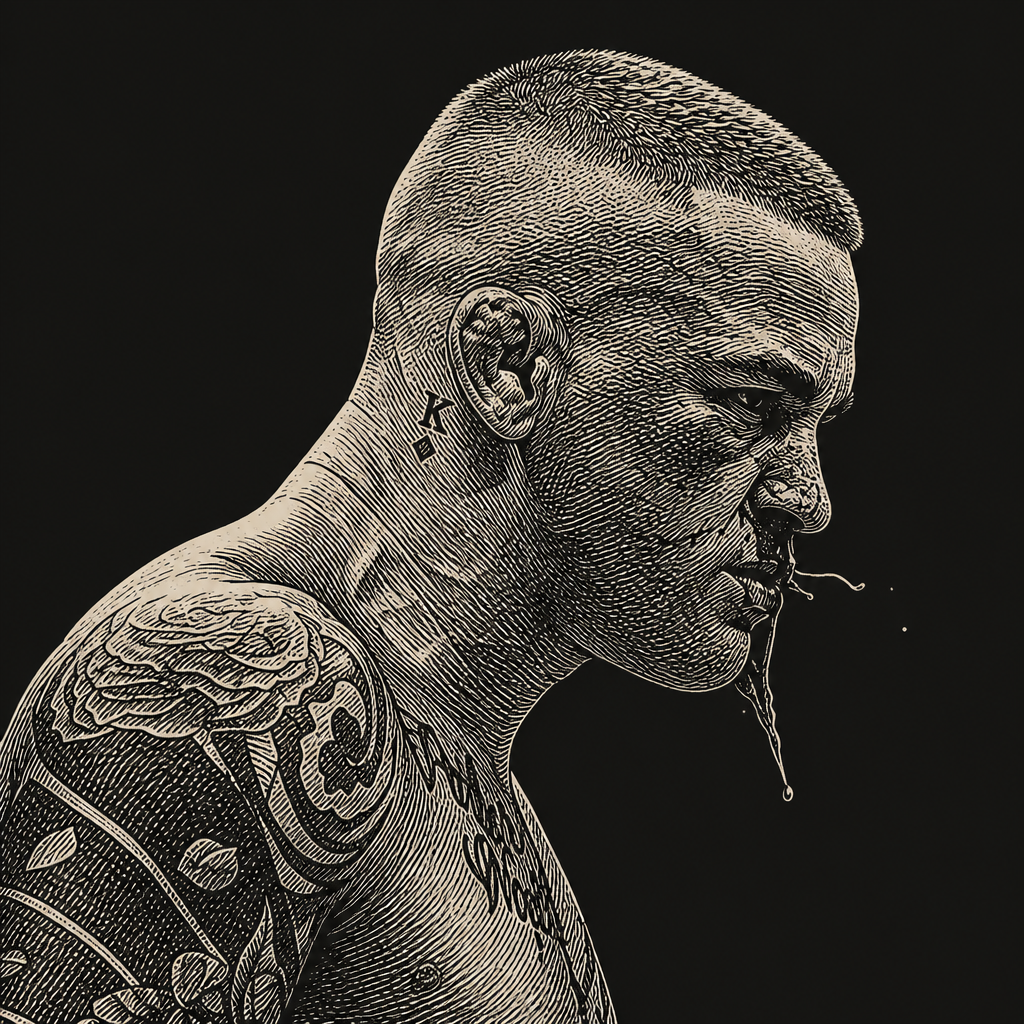
He was supposed to fly from Lafayette to Atlanta, then to South Florida, then Los Angeles to shoot a commercial for three days, then Las Vegas to work for CBS over the weekend. “We didn’t even get the first leg,” he said. On the flight from Lafayette he drank two champagnes. During a layover in Atlanta, he went to a restaurant bar, kept drinking champagne, met men who came in and took shots, and then went to his gate. He remembers getting into it with a desk agent, but not what he said.
AXON BODY 4 footage places him at an airport counter, interacting with a police officer and an airline employee. The on-screen bodycam timestamp reads “2024-06-21 17:01:21 -0400,” with the visible text “i really messed up.” In the footage and in Poirier’s account, his language becomes confrontational. He is shown saying, “Man, fuck you and fuck her. Fuck her.” Another clip shows him telling a police officer, “I’ll fight you right now.” The officer replies, “No, I don’t want to fight, bro.” A later bodycam frame includes the visible text: “This guy is a UFC Fighter...”
Poirier has not watched the video. His wife watched it. A friend he trains with five days a week watched it. Between what they told him and what he remembers in flashes, he says he has enough of the “base standing” of what happened. He does not want to see himself in that condition: disrespecting police, airport workers, himself, and his family. Watching it, he said, would not benefit him. It would only make him keep thinking about it.
To see myself in that condition, disrespecting police officer, disrespecting workers at the airport, disrespecting myself, disrespecting my family... I just don't feel like it's going to benefit me to see that.
The charge, according to Poirier, was public intoxication. He said he spent the afternoon or night in jail until he sobered up, then was released on bond. He has not yet been to court. He emphasized that the officer handled the situation professionally and that the incident could have been much worse. He asked his lawyer in Atlanta to obtain the officer’s information so he could send a letter or call him directly. “What if it was a young hothead cop who wanted to be a superstar?” he said. “I could be sitting here facing serious charges.”
The footage also contains a turn Poirier had only heard about secondhand. Steven Bartlett told him that after becoming aggressive and offering the officer a fight, he seemed to leave politely, dapped the officer up, and told him he did a good job. Poirier had not seen that part, but said his friend’s wife thought it was the best part of the video. His own interpretation was tentative: perhaps, even in a drunken stupor, he realized what was happening.
His explanation of the incident is not an attempt to excuse it. He returns to that distinction repeatedly. He was angry at the world, he was thinking about his father, and alcohol made it worse. But he also says he knew better. When he is in that mental state, he knows he should not drink. That day, he drank anyway.
“I did these things,” he said. “I know better. I know right and wrong.”
Father’s Day exposed the weight of his father’s addiction
Dustin Poirier links the emotional trigger of the airport incident to his father, who he says is homeless and has struggled with alcohol for Poirier’s entire life. He is careful not to make his father the cause of his own behavior. But the timing mattered: on Father’s Day, while traveling to work, he could not stop thinking about him.
His father’s alcohol use, in Poirier’s telling, has damaged marriages, friendships, family relationships, and relationships with his children. Two of his children do not speak to him, and another is “off and on.” He has been jailed “plenty of times” for alcohol-related issues. Poirier called him “a classic drunk” in the sense of someone selfishly returning to alcohol even as the consequences accumulate. At the time of the interview, his father was homeless in Louisiana, sometimes sleeping in a truck Poirier’s sister had given him.
After returning from Atlanta, Poirier went to therapy in the morning and then drove to where his father sleeps. He went to the sheriff’s office and contacted the coroner to sign an order of protective custody, trying to have his father picked up against his will. It did not produce the result he wanted. He went too early in the morning; when officers found his father, he was not disoriented, so they released him.
Later, Steven Bartlett and Poirier discussed a photo sent by Poirier’s sister, apparently of his father getting out of the truck at a park. Bartlett describes him as shirtless and without shoes. Poirier says his sister gave him the truck he is living in. The latest update was that two days earlier his father had been sleeping in his truck behind a business.
Poirier’s feelings toward him are not simple anger. He is upset to see his father continue to do the same thing, even when he knows better, because addiction keeps pulling him back. He and his sister are still trying to get him to help himself; his wife is supportive of those efforts. But he has also reached a limit in how he understands his responsibility.
That's not my weight to carry, you know. I'm trying my best. I'm a father now too. I gotta look out for me and mine. I can't babysit my father.
That boundary has not removed the dread. Poirier said that for months he has been waiting for a call telling him his father is dead. His father is 74 or 75, not in good health, and Poirier does not know whether he is eating. Every call from his sister about him feels like it might be “the one.”
Bartlett raised the familiar dynamic in families affected by addiction: one person keeps trying to save someone who is destroying himself, while others step away and seem to live more peaceful lives. Poirier did not reject the framing. “Almost lost my mind on Father’s Day,” he said. “I’m the guy you’re talking about.”
The childhood context makes that present-day crisis more legible without making it simple. Poirier’s parents divorced when he was in kindergarten or first grade. His earliest memories of them together are “fighting and violence.” His mother and grandmother raised him; he describes his mother as “everything,” still calling and texting every day to check on him. As a grown man and father himself, he sees his father’s absence differently than he could as a child. He contrasted his father’s choices with his own mornings making breakfast for his children, saying he cannot imagine living that way.
He says he was a happy kid, but he was also fighting often, struggling in school, and drinking young. He was expelled for a fight. At 14, he was sent to juvenile detention after a chain of trouble: he had been living with his father at one point, got into a fight and hurt someone, was arrested, was already on probation, was not going to school, was picked up for truancy and other issues, failed a drug test, and was sent away. He began drinking, he estimates, around 12 or 13.
When Bartlett asked what was going on in that young man’s mind, Poirier said he does not have a clear answer. He had nowhere to put his focus. He was not trying to be the best at anything. He had no goals. He was living day to day.
Fighting gave him an outlet that retirement removed
Dustin Poirier says fighting was not only a career. It was an organizing force, a purpose, and a form of therapy. For 20 years, he could wake up and ask how to become a better fighter: technically, physically, mentally. No matter what else was happening, he could go to the gym, drown out the noise in his head, and pursue something measurable.
That is why retirement frightened him before it happened. He knew he was losing the outlet that had contained him. He could still train, but without a fight on the calendar it did not feel the same. “If I’m just training just to spin my wheels,” he said, “it doesn’t feel the same.” Training for a fight meant preparing “for your life and your family’s well-being in front of the world.” Ordinary workouts could not reproduce that.
The retirement came in Louisiana, in New Orleans, on July 30. A photo shown to him captures Poirier standing in the UFC octagon, holding up his black gloves, surrounded by his team, UFC officials, and spectators. His mother is in the background. He called the people in the picture his brothers and his family. The UFC, he said, had printed his wife’s and daughter’s names on the canvas without him knowing; later, the organization cut those pieces out and framed them in a shadow box with fight photos.
Looking at the photo made him emotional. It reminded him that putting the gloves down was not symbolic in a shallow sense. He felt he had left a piece of himself there.
Those gloves, me putting them on the mat is a piece of myself I left, you know? I really truly believe that.
He said fighting taught him how to be a man, how to do business, and how to understand himself. He did not go to school in a conventional sense; fighting was his education. It allowed him to travel, meet people, and sit at tables he never imagined. If he could go back to age 16 or 17, he said, he would do it again, even knowing the damage, the ups and downs, and the unknowns. “Nobody rides for free,” he said. Everyone exchanges something for something, whether in an office or fighting men around the world.
The psychological problem is that the exchange does not end cleanly. Poirier retired at 36. He is financially secure, he said, and has businesses and investments. But the identity shock remains. A friend told him that if a man is lucky, he gets to die twice. Poirier uses that line to describe what retirement has felt like: the fighter who woke up every day to be the best is dead, while the father, businessman, analyst, and next version of Dustin are still being formed.
For 20 years I was dreaming about being the best. I just wanna dream again, you know?
He has tried to stay near the sport. He works with CBS and Paramount as a desk analyst and appears on a Monday podcast about fights. He enjoys the desk work because it keeps him connected to the sport that gave his family everything. He proactively told Paramount he wanted to sharpen his skills and was coachable. Fighters are used to being coached, he argued; if he was missing television etiquette or doing something wrong, he wanted to know.
But analysis is not a replacement for fighting. Asked to quantify how close it gets, Poirier said perhaps 20 percent, not 50. Being a father is fulfilling and rewarding, but it also does not fill the particular void fighting left. He does not know what could consume him in the same way. “I was in love with it,” he said.
The instability of retirement shows up in his daily thoughts. Some days he wakes up convinced he made the right decision: he needs to be home, present with his children, making breakfast. Other days he wakes up thinking he can still beat the top fighters on upcoming cards and could still become world champion. The next day he may feel relieved not to fight them. He does not know whether that competitive voice ever leaves. He imagines being 60 years old, drinking coffee, still saying he could beat the current guys.
When Steven Bartlett asked whether there was any chance he would return to the UFC, Poirier put it at five percent and said the percentage has gone down since retirement. He would first have to get his wife on board. He would also have to re-enter the drug testing protocol and, by his understanding, complete six months of clean testing before being eligible to compete again. That means not just desire, but procedural and family barriers.
Alcohol became dangerous when the old structure disappeared
Dustin Poirier does not describe himself as someone who drank constantly throughout adulthood. As a young person, he drank frequently, probably every weekend. Once he became focused on fighting, he went years without drinking. Training camp imposed discipline: he had to wake up, run miles, train, make weight, and perform. He would drink at celebrations and gatherings, but not weekly or daily.
Retirement changed the constraints. Without camp, alcohol “slowly became more and more and more.” His own account is not that he is physically dependent in daily life. He says he has “never been an alcoholic.” But he says he has always had a bad relationship with alcohol because when he drinks, he tends to go all in.
“If I drink, we’re drinking till the bottle’s gone,” he said. He envies people, including his wife and a close friend, who can have two drinks and stop. He has told himself many times that it would be different, that he would have only two. It has never worked out. The trait that helped him in fighting — the need to be the best, to keep going, to push past everyone — becomes dangerous when attached to drinking.
Steven Bartlett framed this partly through a prior interview with Dr. Anna Lembke, saying alcohol produces a dopamine hit and that different people are vulnerable to different vices. Poirier accepted the point. He described alcohol as a quick release and a quick dopamine hit, but one that is not benefiting him in any way.
His decision after the arrest is to cut alcohol completely out of his life. The vow is partly personal and partly familial. He does not want to become like his father. He does not want to make another mistake like the one at the airport. He told his wife it would never happen again, and she told him it cannot happen again.
I'm gonna cut alcohol completely out of my life. You know. I've made that decision. I'm not gonna be like my father or make another mistake like I made in the airport.
The difficulty, he said, will be socializing. In everyday life, being sober is not hard for him. But being the sober one in social situations is harder. He does not present sobriety as a dramatic biological withdrawal so much as a necessary rule because moderation has not worked.
The professional consequences landed immediately because the arrest interrupted work in progress, not an idle trip. Poirier was traveling for a three-part work itinerary: South Florida first, then Los Angeles for a commercial shoot, then Las Vegas for CBS. All three commitments for that week were canceled. He said the day cost him embarrassment, embarrassment to his family, money, gigs, and potentially the post-fighting career he had been trying to build.
The sponsor damage had already begun. One major sponsor was no longer a sponsor, and he expected he may have lost others. He was waiting for the smoke to clear. “I’m losing sponsors, I’m losing gigs and losing things that I had set up,” he said. When Bartlett asked whether future gigs were gone as well, Poirier distinguished what he knew from what remained uncertain: the three jobs that week were gone, and a big sponsor was gone because of it.
The uncertainty around Paramount and CBS is particularly important because broadcast work was not a casual side project. It was one of the main ways he hoped to remain useful in the sport after retiring. He said he had a year contract with Paramount CBS to work the desk for fights, but added, “we’ll see.” He expected to return to the Monday podcast in two weeks, but did not yet know whether everything else would continue.
Poirier is financially insulated from disaster in a way many athletes are not. Asked directly whether he is set up sufficiently, given that he may need to provide for his family for decades and given public debate about UFC fighter pay, he said the career he had means he does not have to work another day in his life. He attributes that not only to fight earnings but to early planning. He began investing at 23, before he was making “real money,” and has always planted seeds because he knew fighting could end any day.
He also joked, with some seriousness, that gambling remains on the list of things he needs to stop. His wife had noticed another deposit to a gambling account. His reply to her was that he could not quit everything cold turkey at once. Gambling, he said, is “a couple steps up on the list,” after more urgent issues.
That aside connects to his broader worry about impulsivity. Later, in the context of brain health, he cited spontaneous decisions as one of the changes he notices: putting $5,000 on a bet, or deciding in an airport to get as drunk as possible. He is not sure whether those decisions are who he is now, the product of head trauma, retirement, emotional distress, or something else. He is cautious about drawing clean lines when he is searching for answers.
Therapy changed from a fix to a practice
Dustin Poirier first began noticing significant depressive episodes in recent years, especially after his second fight with Justin Gaethje. In a UFC clip shown during the interview, Gaethje celebrates a knockout victory while the referee tends to Poirier on the mat. Poirier said he came home from that loss and, while everything seemed fine externally, he became unusually emotional. Some days he was fine; some days he was sad. He felt something was off. That pushed him toward therapy.
He has had bouts with depression throughout his career, but when it hits, it hits hard. On Father’s Day it felt like everything had its own gravity pulling him toward the negative. He described it as a cloud in his head that he cannot get out from under. It is hard to explain, he said, unless someone has been through it. His wife is usually happy, and he struggles to communicate the feeling to her.
It just feels like everything has its own gravity and it's gonna pull me towards a negative no matter what it is. It's like a cloud in my head that I just can't get out from under.
His wife, Jolie, has known him since middle school. She has told him she believes some of this was always present. When they were younger, he did not want to be around big crowds or go to all the parties. He wonders now whether that was anxiety. The vocabulary is still new to him. He only began noticing the pattern more clearly in the last three or four years.
Therapy initially helped, but he stopped practicing what he learned once he felt better. The airport incident changed that. The day after he got back from Atlanta, before he tried to help his father, he went to a therapy session. He says he now understands therapy not as something one completes, but as ongoing work. In the week before the interview, he had been waking early, reading, writing, doing something hard in the morning, and returning to the routines that helped him three years earlier.
The main thing therapy has revealed is that childhood material may still be carried unconsciously. He does not wake up thinking about his parents’ violence or his father’s drinking, but when he sits with a professional and opens things up, he sees that some of his reactions may be linked to those experiences. Steven Bartlett added that, from interviews he has done with psychologists and therapists, boys without a stable father figure, especially with violence in the home and parental addiction, often carry increased risks around anger, depression, and life difficulty. Poirier’s response was that he had not thought about those things through most of his life; only in therapy did the links become visible.
At first, publicly saying he was in therapy felt weak to him, especially in a “tough guy sport” built around fighting, bleeding, and beating elite opponents. In hindsight, he sees it as strength. The gym and fighting had been his therapy for years, but once that outlet was no longer the center of life, professional help became more important.
The challenge now is consistency. His mental health after retirement has been “big time” up and down, though it had been fairly even until recently. Over the past few months, there were days he did not tell Jolie how he was feeling. Sometimes he tells her when he is really down. But when he is only slightly off, he may say nothing, because he does not want her waking up wondering which version of him she will get that day. He does not want his daughter, nearly 10, asking why dad is staying in bed all day. There have been days where he stays in bed, though not often.
Bartlett pressed on whether unspoken feelings find other exits. Poirier agreed: if something is bottled up long enough, it finds a way out. That, he said, could have contributed to the airport incident, though the days leading up to it did not feel dangerously severe to him.
The rule he is trying to follow now is simple but difficult: do not stop the practices when he feels good. He believes whatever is going on with his brain requires daily work, probably for the rest of his life. There is no eureka moment where he is fixed.
Context did not change his view of responsibility
Steven Bartlett told Dustin Poirier that the public reaction to the arrest had been unusually sympathetic. Poirier had not seen it because he posted on Instagram after the incident and then removed social media from his phone. He assumed people were making fun of him and talking about him. As a long-time public athlete, he said, he knows how it goes.
The Instagram post displayed from Poirier’s account says he needs help, walking away from fighting has not been easy, alcohol is not the answer, it ruined his father’s life, and he will not allow it to ruin his. The visible text includes: “my family deserve me at 100%. I’m trying to do everything I can to get my mind right and take the right next steps.”
Bartlett said the reaction was not mainly “this is a bad person,” but rather that Poirier was going through something and was fundamentally a good man. He attributed that to Poirier’s conduct throughout his career, his values in victory and defeat, and his previous openness about struggle. Poirier said he has never bitten his tongue once he could identify what he was going through. When he did not know, he could not speak on it. As he got older and went to therapy, he became able to.
Two prior podcast clips helped frame the reaction. In a clip with Theo Von, Poirier says that when he has nothing circled on the calendar, he is “a danger to myself.” He says he beats himself up mentally, drinks at home, and needs some kind of battle. In a clip from The Joe Rogan Experience, he describes the all-in trait as “a gift and a curse”: whether it is fighting or drinking, good or bad, people built that way go all in. He says fighting always pulled everything together, and that retirement is scary because the days are long and he has no fight to prepare for. He wakes up after laying the gloves down and is “a fucking civilian.”
Bartlett said those clips gave viewers context for the airport footage. He also told Poirier that fighters including Jon Jones and Matt Brown had posted supportive comments. Poirier had heard about that from his training partner and said he appreciated it. But he also resisted sympathy becoming exoneration.
It's not okay. You know? You know. It's not.
He wants mental health, retirement, alcohol, family trauma, and possible brain trauma taken seriously. But he does not want any of them used as a crutch. He says he chose to drink that day when he was not feeling well. The responsibility is his.
His language is often harsher toward himself than Bartlett’s. Bartlett repeatedly placed the incident within a larger human context: a retired athlete losing purpose, a son watching his father’s addiction, a man navigating mental health. Poirier accepted the context but returned to accountability. People who know him know that airport behavior is not how he rolls, he said. His intentions are good “99.9% of the time,” which is why the video hurts. He let himself down, his family down, and at times finds it hard to look in the mirror.
The conversation with Jolie after he returned home is part of that accountability. She had known he was in custody because the officer called her while he was in a holding cell. Poirier had not been arrested in decades and did not know how to face her except by apologizing. He told her it would never happen again, that he would focus on himself and be better. She told him it could not happen again.
Jolie’s role in his life is not incidental. They met before high school and dated in middle school. She dropped out of nursing school and moved with him to South Florida so he could chase fighting. Poirier said he does not think he would have reached the level he did without an anchor like her at home. That made the airport incident more painful: he did not only let himself down; he let down the person who had sacrificed for the career, and the children who should never see him intoxicated or acting against his own values.
He framed the decision to quit drinking as something that will change the trajectory of his family’s life. The arrest was bad, he said, but if it means his son and daughter never grow up seeing him intoxicated, then it will benefit them in the long run.
Brain injury remains an unresolved fear, not an explanation
Dustin Poirier says retirement was also shaped by concern about brain health. Steven Bartlett introduced CTE as a progressive brain disease associated with repeated head trauma, citing several figures in his question: older adults with a history of traumatic brain injuries having a 230% greater risk of Alzheimer’s than those without; 61% of UFC fighters saying they worry about potential long-term brain damage; about 21% noticing differences in brain function after their fighting career; and a 2023 study finding more than 40% of brains from contact sport players who died before age 30 had CTE. He also displayed a side-by-side image labeled “Normal Brain” and “Advanced CTE.”
Poirier said part of laying the gloves down was that his wife had become worried about his behavior a few years earlier. He saw a neurologist and had a scan with contrast. The scan showed changes, but he emphasized a major limitation: he does not have a baseline passport of his brain from before or throughout his career. There is only a snapshot.
The neurologist, he said, told him CTE cannot be diagnosed definitively while he is alive; it must be studied after death. Looking at what was present, the doctor could not say he had it. Poirier said he had scarring, a thinning in the back of his brain in a part he could not name, and a separation in the septum of his brain. He said the neurologist thought the left and right sides might not be communicating as smoothly as they should because of that separation. Asked whether the suspicion was head trauma, Poirier said they do not know.
He also noted that fighting is not the only source of head impacts. He played football throughout his youth and assumes his head has been “rattled a good bit.”
The mental-health implications remain uncertain. Poirier says he feels normal aside from mood swings and some spontaneous decision-making. He can imagine drawing links between brain trauma and many things: gambling impulsively, drinking heavily in an airport, emotional ups and downs. But he distrusts easy explanations. When someone is scrambling for answers, he said, it is easy to draw lines and say this caused that. He does not know if those lines would be correct.
That uncertainty matters because it prevents the brain-health discussion from becoming a clean causal claim. It remains a live concern, one reason for retirement, and one possible piece of the puzzle — not a diagnosis or excuse.
He still needs a dream big enough to organize the next life
Dustin Poirier said his practical next step after the interview was modest: a vacation with his family in 30A, Florida. Sit in the sun. Stay off the internet. Keep working on himself. Have good mornings.
The larger next step is unresolved. He says he needs something terrifying: a goal he cannot stop thinking about. Steven Bartlett suggested that someone who has accomplished what Poirier has by his mid-30s could aim the same energy at another mountain. Poirier agreed that he feels anything he sets his mind to he can accomplish. He is not afraid to work. The problem is not confidence, but direction.
His post-fighting life already includes meaningful work, especially through The Good Fight Foundation, which he and Jolie started after packing up their home to move from South Florida back to Louisiana. They had fight-worn gloves and shorts from major fights and had seen a news article about Officer Middlebrook, a Lafayette police officer killed near where they went to school, who left behind a wife and children. They sold the gear and donated the money to the family. For a year or two, they kept doing similar work under Poirier’s name, auctioning fight-worn items and donating to causes such as a food pantry and the fallen officer’s family. Eventually, they formalized it as The Good Fight Foundation so it could become bigger than “Dustin Poirier does this” and invite others to join.
Poirier sees the foundation as a way to use the platform built through fighting to benefit as many people as possible. His fights already carried weight for him and his family; he began asking why he could not “stack more” on his back, go in with a cause, sell what he wore that night, and benefit a person, family, or organization.
Bartlett said he had seen the foundation’s work in Lafayette and Uganda, including delivery trucks, school supplies, and multiple water wells. He also noted that Poirier received the first Forrest Griffin Community Award, given by the UFC to recognize exceptional volunteering and charity work.
Poirier spoke most concretely about the foundation’s annual backpack drive. In the coming weeks, he said, they expected to prepare roughly 1,300 backpacks, each filled with every school supply on Louisiana’s school supply list. The work is hands-on. They buy bulk backpacks and supplies, break down pallets, and pack every backpack themselves. He said the foundation keeps costs minimal and has no paid staff so the money stretches further. No child, he said, should go to school without the proper supplies.
That work gives him pride and continuity, but even here charity does not simply replace fighting. The next identity is still being built. Poirier’s answer to the closing question — what are you doing to improve the world? — is that he is trying to leave it better than he found it, make mostly right decisions, show that people care, and teach his children to do the same.
He also knows the airport incident now sits inside that effort. He hopes talking about it, his struggles, alcohol, retirement, and mental health helps somebody. Bartlett told him the incident may help people indirectly in ways he never gets to see. Poirier said he hopes that is true.