The AI and Iran Debates Turn on Who Pays the Costs
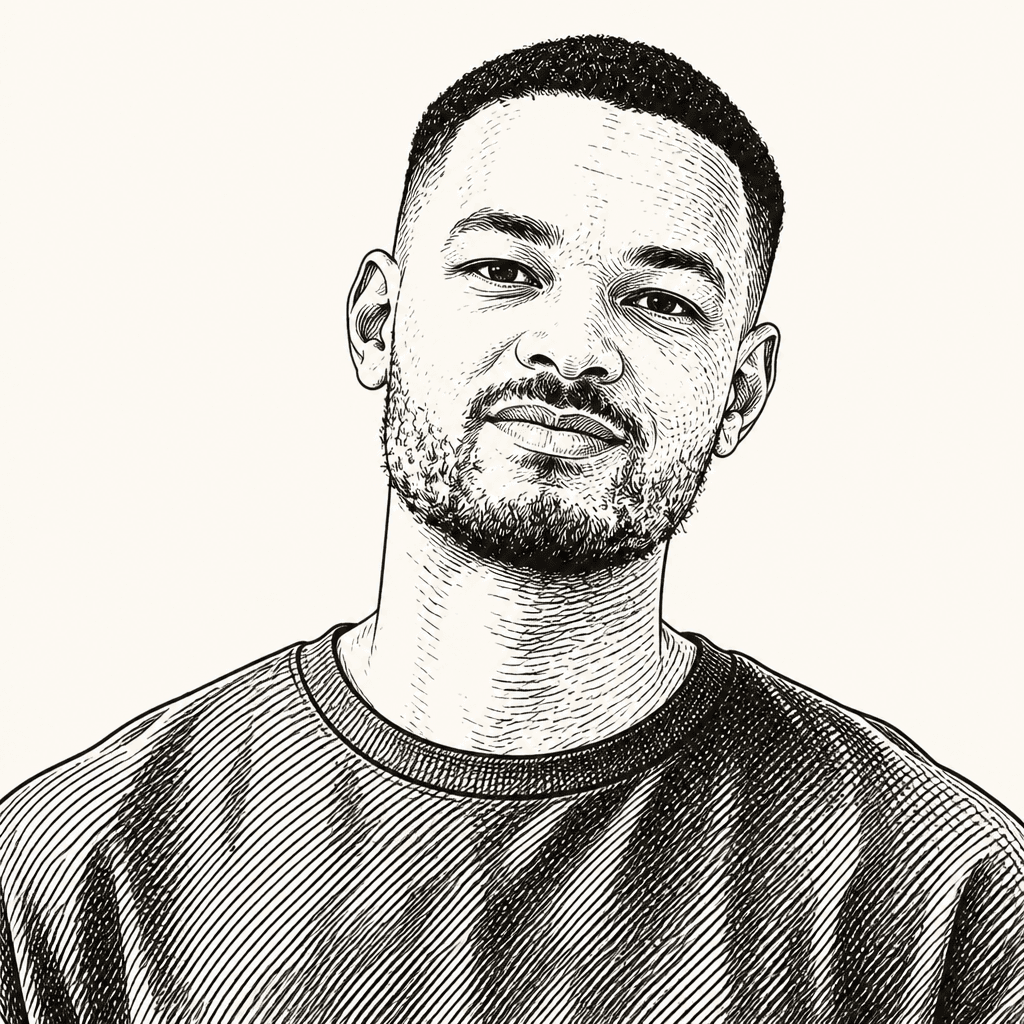
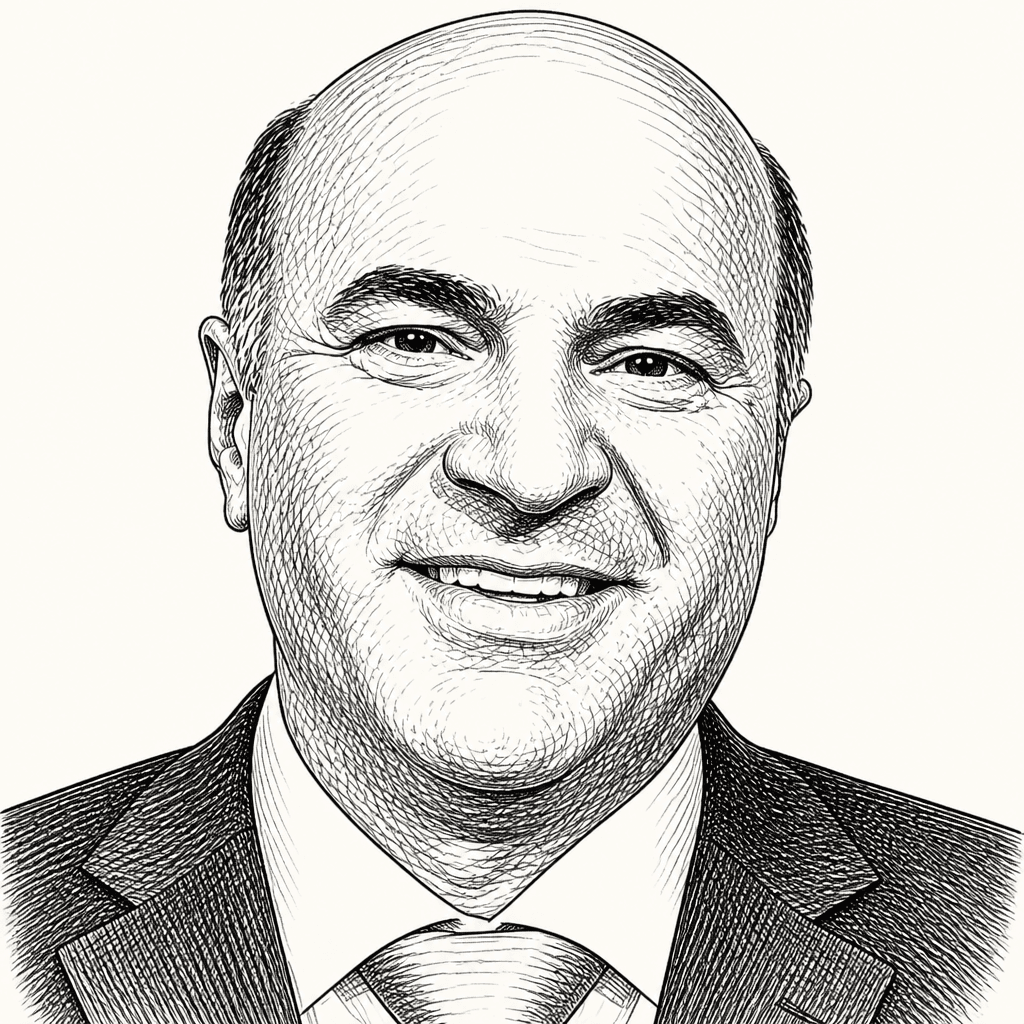
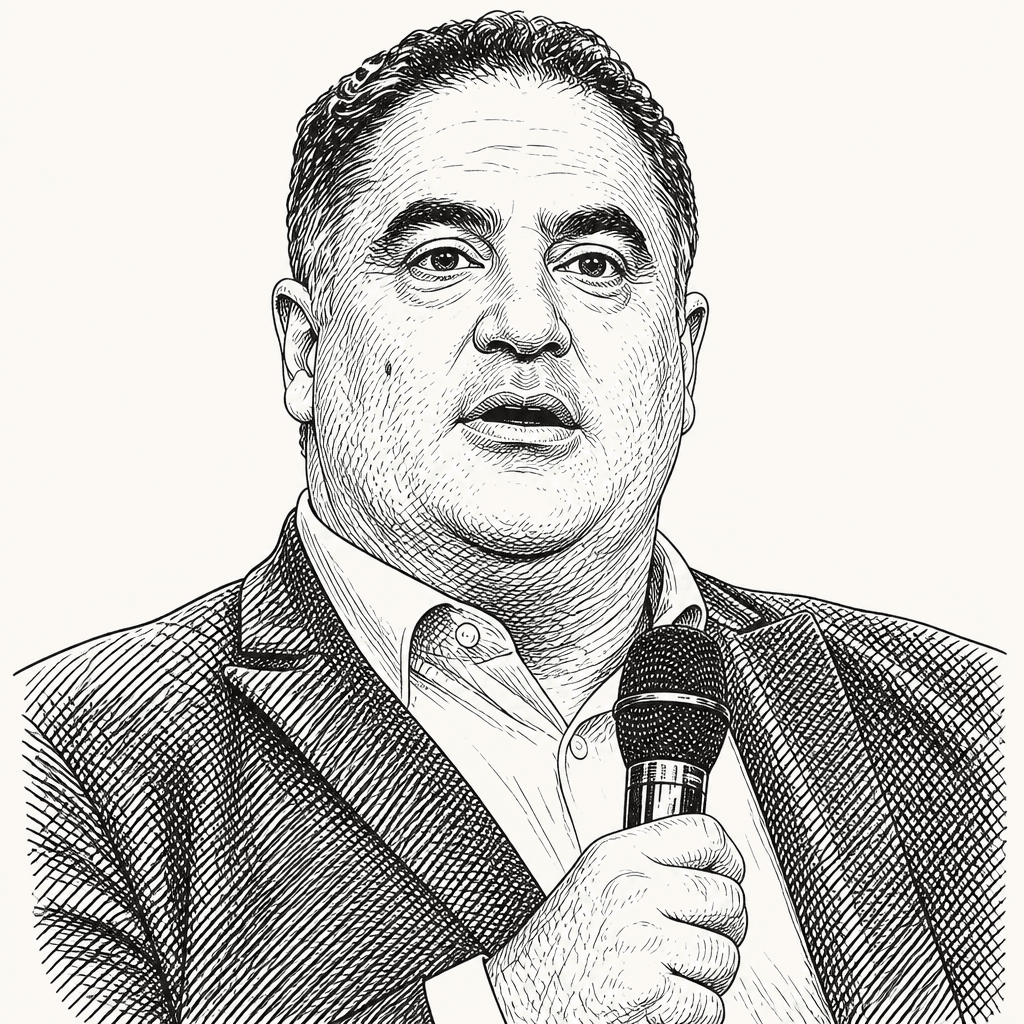
Kevin O’Leary and Cenk Uygur use a Diary of a CEO debate to split over whether AI and the Iran conflict are manageable shocks or evidence of a political system failing in real time. O’Leary argues that the US must build AI capacity to stay ahead of China and trusts markets, entrepreneurs and geopolitical incentives to absorb the disruption. Uygur argues that AI-driven unemployment, donor capture and war costs are being pushed onto workers and voters while the companies and lobbies driving them avoid responsibility.
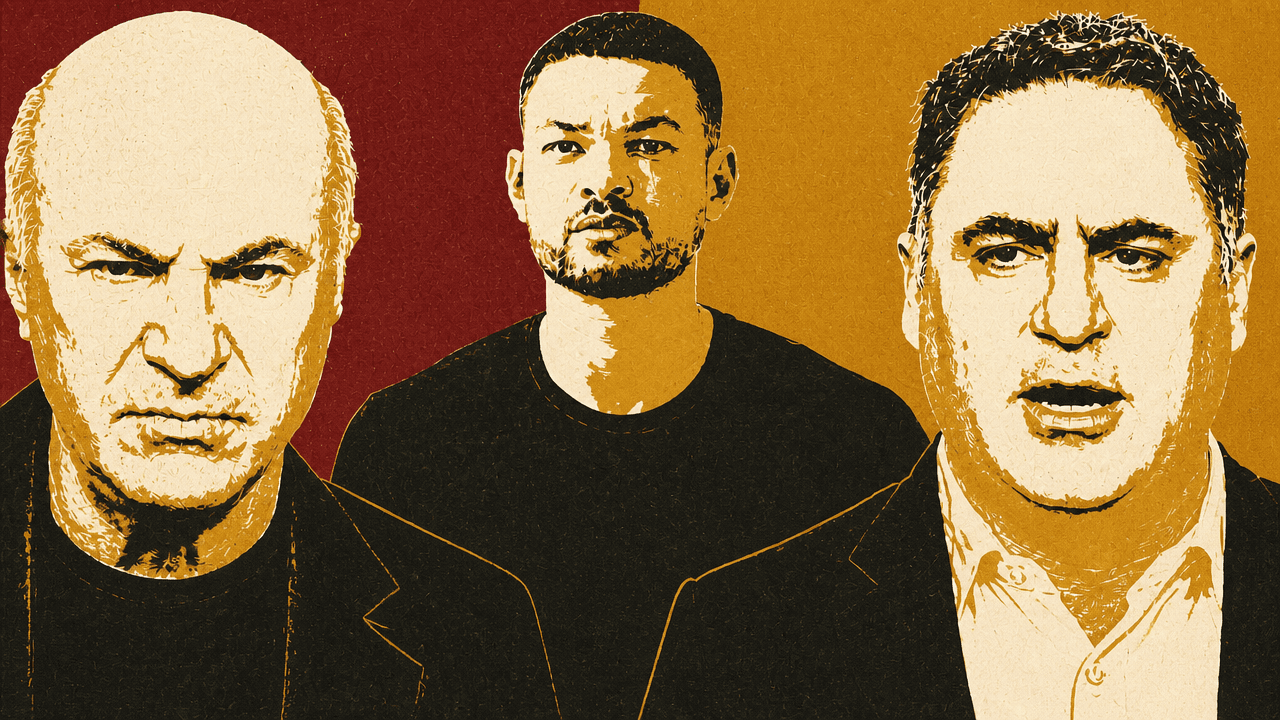
The AI dispute is not whether disruption is coming, but who pays for it
Cenk Uygur framed the AI argument around an unemployment shock that he believes corporate America is already preparing to create. His claim was not that AI should be stopped, or that technological change is inherently bad. He described himself as an entrepreneur, a capitalist, a Wharton graduate, and someone who wants America to remain a place of opportunity. The issue, in his view, is that the current rollout lets private companies capture the upside while communities, workers, and taxpayers absorb the costs.
The immediate evidence on screen was a Gallup chart shown by Steven Bartlett indicating that seven in 10 Americans opposed local construction of AI data centers. The chart asked whether respondents would favor or oppose a data center in their area to support AI technology in the United States. In March 2024, 7% strongly favored, 20% somewhat favored, 23% somewhat opposed, and 48% strongly opposed local construction. The article treats those figures as the on-screen Gallup data shown in the source, not as an independently rechecked poll.
| Response | Share of respondents |
|---|---|
| Strongly favor | 7% |
| Somewhat favor | 20% |
| Somewhat oppose | 23% |
| Strongly oppose | 48% |
Kevin O'Leary treated that opposition as a mixture of understandable discomfort and, in the Utah case, what he described as foreign-backed misinformation. New technologies, he said, are always disruptive and uncomfortable, but in the American economy they have historically produced productivity and opportunity. He argued that cancer research, education, space exploration, productivity across the S&P 500, and productivity in small companies all depend on AI — and that AI cannot exist at scale without data centers.
O'Leary also alleged that opposition to his Utah data-center project had been financed or amplified through a network tied to China. He named Arabella and Neville Singham, said he had hired forensic auditors, and said IRS 990 filings, IP scraping, and social-media data had produced evidence that he had turned over to the White House, special agents, and the FBI. He said the negative claims about the Utah project — that it would use water it would not use, draw power it would not draw, or occupy 40,000 acres — were false. Bartlett asked whether O'Leary was saying the pushback was Chinese-sponsored and bot-driven. O'Leary clarified that he meant contributions through what he called a cloaked network, plus foreign IP addresses appearing across his social-media feeds on X, Instagram, and LinkedIn.
The China allegation mattered because it let O'Leary connect a local infrastructure fight to a national-security argument. He said that, while the United States had been stymied in building new power, China had built 400 gigawatts of coal-fired power in 19 months. He described that as a strategic advantage created by an authoritarian system that can order coal plants and data centers built without democratic delay. In his view, China wants to slow American power construction because the country with the strongest AI will have the advantage not just economically but militarily.
Uygur rejected the China explanation. He said he did not think China had anything to do with public anger over AI infrastructure. For him, the data-center issue was a cost-allocation issue: if a company builds a data center, it should pay for the energy, water, and infrastructure it requires. He argued that if ordinary taxpayers are forced to subsidize the costs, then the public should take equity, just as he believes the public should have taken equity in bailed-out banks in 2008 and should receive equity when it funds pharmaceutical research.
O'Leary partially conceded that point. He agreed that data centers should not simply tap into existing grids and raise electricity costs for libraries, churches, and community centers. He said that had happened in Virginia, and that it was no longer acceptable. In Utah, he said, his project would bring its own power and put some energy back into the grid. On that narrow question — whether data-center developers should internalize power costs rather than shifting them onto local ratepayers — the two men largely agreed.
Their divide opened on employment. Uygur argued that the real source of public anger is not data centers but fear of mass job loss. He said the business community is already moving toward layoffs, and that the first companies to cut labor aggressively will be rewarded by the market. If every firm acts that way, he said, the result will not merely be a recession but a depression unlike anything in living memory.
Everybody is in a rush to fire 10 to 25% of their workforce.
O'Leary called that “Cenk's shopping list of disaster.” He argued that the United States has repeatedly absorbed new technologies and emerged more productive. He pointed to record highs in the stock market as evidence of strong American companies, and said companies with 5 to 500 employees are already using AI for productivity, customer acquisition, and maintenance. He did not deny disruption. He denied the apocalyptic framing. His shorthand for that framing — repeated throughout the discussion — was “robots eat the children,” a phrase Uygur repeatedly said nobody was using.
Bartlett pressed O'Leary with statements from AI leaders themselves. He cited Sam Altman saying in March 2021 that AI would probably replace most jobs people do today and that entire job categories would be gone. He cited Elon Musk in May 2024 saying probably none of us will have a job unless work becomes a hobby. He cited Anthropic founder Dario Amodei saying in 2025 that AI could eliminate half of entry-level white-collar jobs within five years and push unemployment to 20%, and that the public was being sugarcoated on what was coming.
O'Leary responded that the quotes were selective. He said Amodei had also warned that if the United States did not build more compute capacity within six months, China could catch up through DeepSeek. That was O'Leary's core constraint: even if AI creates serious domestic disruption, America cannot simply slow down, because China will not. In his formulation, shutting down U.S. compute would amount to sitting around a campfire singing “kumbaya” while China develops the technology and uses it strategically.
Uygur accepted that there is a race. He named China, Russia, North Korea, and Israel as countries that would continue regardless of American hesitation. He did not propose stopping AI. His objection was that the United States had taken “absolutely zero steps” toward making the race serve voters rather than AI executives and shareholders.
Universal basic income did not reassure him. He used the example of a coder making $120,000 a year who might be moved onto $3,000 a month, or $36,000 a year, under a UBI program. Even if such a program could be passed immediately, he said, the loss of middle-class purchasing power would be devastating. And he did not believe UBI would be passed quickly in the United States.
For Uygur, the economic mechanism is straightforward: workers are customers. If companies remove tens of millions of incomes from the economy, they also remove demand for their own products. He invoked Nick Hanauer's “middle-out economics,” arguing that money given to the middle class is quickly spent, while money given to the wealthy is not. He said Wall Street was being shortsighted by rewarding layoffs without asking who would buy the goods afterward.
O'Leary argued that the new jobs are not yet visible. In Utah alone, he said, his data-center project would create 4,000 construction jobs over roughly nine and a half years, plus 2,000 engineering and support jobs. More broadly, he said AI could help enable projects in space, including a NASA moon base and Elon Musk's Mars ambitions, creating hundreds of thousands of high-paying jobs in engineering, analysis, coding, manufacturing, and infrastructure.
Bartlett challenged the comparison by bringing in robotics. He described Figure AI showing a humanoid robot sorting parcels on a factory floor for four days, allegedly faster and better than humans. He quoted Musk predicting that humanoid robots could eventually outnumber humans two to one. Bartlett said his own hiring decisions had changed in the previous six months: for entry-level jobs, he now looked first for AI proficiency, because a candidate skilled with AI could be five or ten times more effective. He also described visiting a San Francisco robotics accelerator where founders had shifted from software to robotics because the missing piece — intelligence — had become cheap.
O'Leary's answer was that engineers are not hired merely to write code; they are hired to solve problems, and code is one tool. He also argued that many layoffs attributed to AI were actually corrections of overhiring and corporate “fat.” Bartlett then asked him directly whether he could be wrong about unemployment.
No. How about that for an answer?
That refusal sharpened the contrast. Uygur said the problem is the interregnum: even if O'Leary's optimistic future arrives, it may take 20 years, while truck drivers, assembly-line workers, and older workers lose their jobs now. A 61-year-old assembly-line worker in Cleveland, he said, cannot simply become an engineer on a Mars project. The question is not whether future work may exist, but what happens to people during the transition.
Bartlett added that Dara Khosrowshahi, Uber's CEO, had told him Uber would move quickly toward autonomous vehicles that could automate 9.4 million driver jobs, and when asked what those people would do, had answered, “I don't know.” Bartlett also said Khosrowshahi had told him privately that tech executives are not transparent about AI and discuss the level of disruption behind closed doors more bluntly than they do in public.
O'Leary's final position on the employment question was uncertainty about what comes next, paired with confidence that opportunity will exceed loss. Uygur's position was that uncertainty itself is the problem: the country is racing toward an employment shock with no credible plan.
Regulating AI runs into Uygur's larger claim: America no longer has a working democracy
When asked what a responsible AI race would look like, Cenk Uygur said the hard part is not merely technical regulation. It is political capture. He argued that the United States has “legalized bribery,” citing Supreme Court decisions in the 1970s and Citizens United, and that politicians now serve the donor class rather than voters.
In his account, AI companies are already participating in primaries and using money to eliminate opponents. That makes meaningful regulation nearly impossible in the short window before AI-driven unemployment, he argued. If the politicians who would write the rules are funded by the companies being regulated, then the public interest will not be represented.
His proposed response was not a full regulatory architecture. It was a principle of liability: if AI companies create unemployment as a cost of doing business, they should pay for that cost. He suggested that AI companies could fund unemployment insurance and other programs that would help displaced workers. He warned that if AI executives and shareholders keep the money while workers lose income, public anger will become severe.
They created this cost, which is unemployment, why don't they pay for it?
Kevin O'Leary rejected the premise that AI companies are currently extracting huge profits. He said they are losing billions of dollars, raising capital, and still searching for monetization. The market funds them, he argued, because it sees future productivity, cancer research, educational democratization, and national competitiveness. He also pushed back against higher taxation of the wealthy, arguing that the rich already pay most taxes in America and will leave if taxed too heavily.
His argument was mobility. Raise taxes past a certain point, he said, and wealthy people move from California, New York, New Jersey, or Massachusetts to Florida or Texas. Push them too hard nationally, and they will find “a new America,” as he said happened historically with England and as he said happened with wealthy French people moving to Monaco. Socialism and communism fail, in O'Leary's phrase, because “you run out of other people's money very quickly.”
Uygur answered that capitalism should not mean “crush the average guy and make sure the corporate CEOs get everything.” He said the American project depends on a strong middle class made up of productive citizens, voters, and consumers. His warning to the wealthy was not primarily moral but commercial: if the middle class is hollowed out, companies lose customers. “When you don't have any consumers,” he told O'Leary, “that's going to be your main problem.”
That disagreement carried through the AI discussion. O'Leary emphasized investment, entrepreneurship, and the ability of markets to discover new work. Uygur emphasized transition costs, bargaining power, and the danger of allowing companies to externalize social damage. O'Leary saw the fear as recurring American alarmism that appears every generation. Uygur saw the optimism as a refusal to confront a specific near-term shock.
Uygur's campaign-finance argument also tied the data-center and unemployment issues to his broader model of American politics. He said the same system that lets oil companies, drug companies, defense contractors, and foreign-policy lobbies get favorable treatment also makes AI regulation unlikely. In his view, the formal legality of campaign contributions does not change the practical effect: politicians respond to donors, not voters. That is why he repeatedly described the system as “legalized bribery.”
The point was not incidental. Uygur argued that a responsible AI race would require a government willing to say no to powerful companies, force them to internalize costs, and prepare for mass displacement before the shock arrives. He does not think the current government can do that. O'Leary, by contrast, treated the political system's imperfections as real but not fatal. For him, the market, state competition, entrepreneurial opportunity, and national-security necessity remain more important than the risk of capture.
Steven Bartlett occupied a middle position. He accepted O'Leary's geopolitical concern that China would continue if the United States paused. But he also accepted that AI leaders' own statements point toward large-scale job displacement. He was less interested in whether AI was good or bad than in whether anyone had a plan for the transition. On that point, even O'Leary said: “We don't know what comes next.”
The Iran argument turns on whether the war serves American interests
The dispute over Iran did not turn on whether the Iranian regime is good. Both Cenk Uygur and Kevin O'Leary described it as brutal. The disagreement was over why the United States was involved, whether the nuclear threat justified the war, and whether Israel or American interests were driving policy.
The political backdrop was President Trump's declining approval rating and public confusion over ceasefires, renewed bombing, defensive strikes, the Strait of Hormuz, and claims that a deal was imminent. A DOAC chart shown on screen displayed presidential approval with disapproval at 49% and approval at 40%. The chart was shown by the program; no external source was displayed beyond the DOAC attribution.
Uygur said Trump's numbers had been “decimated” by the war, on top of damage from the Epstein files and failure to address affordability. He claimed Trump had lost support among both non-MAGA Republicans and hardcore MAGA voters, and said 68% of the country believed the United States was going in the wrong direction while 76% were dissatisfied with the economy. The war, he argued, was driving gas prices and inflation through disruption around the Strait of Hormuz, affecting not only the United States but also Asia and Europe.
The affordability link was central to Uygur's case. He said the war was not an abstract foreign-policy issue because oil, gas, and fertilizer costs move through the rest of the economy. He described shortages and conservation pressure in South Korea and India, and argued that the price shock was already hitting countries that had no interest in the war. From the American voter's perspective, his argument was that a conflict sold as national security becomes higher prices at home.
Uygur's central claim was that the war served Israel, not America. He argued that America needed the Strait of Hormuz open, a reasonable peace deal, and verified Iranian non-weaponization. In his telling, Iran had repeatedly offered not to build nuclear weapons and to accept international monitoring. If that were the only U.S. interest, he said, the United States could make a deal: open the strait, lift the blockade, verify enrichment below weapons level, and leave.
He connected that argument to campaign finance. Uygur said the Adelson family had given Donald Trump more than $317 million in campaign contributions, and described Trump as “accidentally honest” about Miriam Adelson caring deeply about Israel and Sheldon Adelson pressing him on policy. Uygur also claimed that Israel gives to 94% of Congress and that the Israeli lobby is the top lifetime donor to major U.S. leaders including Trump, Joe Biden, Hakeem Jeffries, Chuck Schumer, and Mike Johnson. Those claims were presented by Uygur as evidence for his view that American policy is being bought in the same way he believes other industries buy policy; the source did not provide independent documentation for them.
He made the analogy explicit. Oil subsidies, drug-pricing rules, and defense spending are, in his account, examples of lobbies turning public power toward private or special interests. Israel, he said, is treated differently by mainstream media: similar criticism of Big Pharma or Big Oil is allowed, while criticism of Israel is policed as antisemitism. That claim underwrote his larger view that the war is not an accident or a miscalculation, but the predictable result of donor power and political fear.
O'Leary framed the region differently. He described Iran as a historically advanced Persian society captured by “bad management” — a regime of roughly 150,000 people controlling and brutalizing nearly 100 million. He said the regime uses energy revenue to pay a militia and its proxies, creating chaos across the region. In his view, the United Arab Emirates, Bahrain, Qatar, and Saudi Arabia tolerated the situation while it remained relatively contained, but the status quo changed after missile attacks and the disruption of shipping.
For O'Leary, two outcomes were necessary: Iran could not have nuclear weapons, and Iran could not control the strait. He proposed that the strait might eventually be policed by neighboring countries in a model analogous to the Suez and Panama Canals, with fees and management preventing any one country, including China, from controlling the route. He estimated that policing the strait might cost $5 billion a month and said that would be affordable for Gulf states that need the passage open.
He also argued that China has a strong incentive to force a settlement, because 48% of its energy comes through the strait. Iran, in his account, is not only negotiating with Trump. It is also dependent on a China that cannot tolerate prolonged energy disruption. O'Leary predicted that before November, China's leader would put pressure on Iran to settle.
Uygur did not dismiss that possibility as absurd. He called it “not a crazy theory.” But he argued that China could also watch the United States and Russia exhaust themselves in wars while China builds roads and bridges abroad and presents itself as a lower-cost partner to Africa and Latin America. From that angle, he said, America's war posture is bad business strategy as well as bad foreign policy.
The nuclear issue became one of the debate's central disagreements. Bartlett asked about the premise that Iran was weeks away from enriching uranium to weapons-grade levels. Uygur said Netanyahu had been making that claim for 30 years. He argued that Iran did not have a missile capable of delivering a warhead to America and had not enriched uranium to the 90% level required for weapons-grade material. He said Iran had reached about 60%, and that Trump had bragged about destroying its facilities. He also cited a religious fatwa from the former Grand Ayatollah saying Iran should never build nuclear weapons.
O'Leary treated the nuclear threat as intolerable regardless of those arguments. He said “you don't want to give those people a nuclear bomb,” referring to the Iranian leadership, and said they would continue to be bombed until they gave up enriched uranium. He described ongoing strikes as pressure on the regime's ability to maintain control.
Uygur's response was that the United States and Israel had already tried regime change and it had not worked. Killing leaders at the top, he said, only allows others in the regime infrastructure to rise. He argued that every time a peace deal nears, Netanyahu calls Trump and the terms become impossible. He referred to a New York Times article that, in his description, said Netanyahu and the head of Mossad urged Trump to attack. He also said Trump's position had repeatedly shifted from peace toward new demands after calls with Netanyahu.
The deal Uygur described was simple in American-interest terms, and impossible in Israeli-interest terms. He said the United States could lift the blockade, Iran could open the Strait of Hormuz, hand over highly enriched uranium once it could be recovered, commit to no weapons program, and accept international monitors for uranium enriched only to energy levels. But he said Netanyahu had added conditions that made peace impossible: immediate surrender of uranium buried underground, joining the Abraham Accords, and a demand that other parties stop fighting while Israel retained freedom to keep attacking Lebanon.
| Issue | Uygur's proposed American-interest deal | Why he said it fails |
|---|---|---|
| Strait of Hormuz | Iran opens the strait and the U.S. lifts the blockade | Continued Israeli attacks keep Iran from accepting peace |
| Uranium | Iran hands over highly enriched uranium and accepts monitoring | A demand for day-one handover is impossible if material is buried |
| Regional normalization | U.S. secures non-weaponization and exits | Joining the Abraham Accords, in Uygur's account, makes the deal about Israel rather than U.S. interests |
O'Leary maintained that peace is still likely because it is commercially rational. He sees the Middle East as one of the world's largest consumer markets: Iran, Egypt, Jordan, Sudan, Saudi Arabia, and others contain people who want jobs, families, stability, and goods. He said he keeps a footprint in the UAE because it was “the capital of capital” until the recent conflict and could become so again. His optimism rested less on moral trust in leaders than on the idea that most people want peace and consumption, not permanent war.
Uygur's prediction was far darker. If Israel continues attacking Lebanon, he said, Iran will not agree to peace. He predicted renewed U.S. bombing, possible use of American ground troops already positioned on ships, Iranian attacks on oil and gas fields in Gulf countries, a spike in gas prices, and perhaps a worldwide recession or depression. He said damaged infrastructure could take five to ten years to rebuild.
The first tech war made AI a defense question, not only an economic one
Kevin O'Leary repeatedly linked AI infrastructure to defense. His claim was not only that data centers support productivity, but that future wars will be conducted with AI and advanced compute. That moved the AI argument beyond domestic jobs. If the United States falls behind China in AI, O'Leary said, it risks falling behind in the military systems that will decide future conflicts.
He described the Iran conflict as “the first tech war.” The ordnance being used, in his account, relied on advanced GPS systems controlled from space. He also emphasized an asymmetry in drone economics: inexpensive Iranian drones, which he described as carbon-fiber wings with lawnmower engines costing about $35,000, were being shot down with American ordnance costing between $1.2 million and $3 million per missile. That imbalance, he said, shows why the Pentagon needs compute power and why cheaper drone-blocking and drone technology will become important within the next two years.
For O'Leary, this reinforced the case for building American AI capacity. A country cannot separate the commercial AI stack from the defense AI stack if the same infrastructure, compute, and engineering talent underwrite both. He saw data-center obstruction, energy shortages, and anti-AI politics as constraints on national power.
Cenk Uygur drew the opposite lesson from AI's military use. He said he was “super worried” about AI being used more in life-and-death decisions and specifically said he did not trust Palantir. Uygur referred to reports that AI was used in targeting a girls' school in Tehran where, in his account, more than 160 innocent schoolgirls were killed. He later described what he called an Israeli AI targeting program in Gaza called “Where's Daddy,” saying it selected targets through loose association and waited until people went home before bombing houses and killing families. The source presents those as Uygur's claims; no visual document or external citation was shown for them in the provided MDX.
Those claims were part of Uygur's broader warning about letting military and surveillance systems define the AI race. He cited Larry Ellison as saying citizens could be tracked anywhere and that such technology could be brought to America. Uygur used that as an example of what he feared from an Israeli-style surveillance state influencing U.S. policy and technology deployment.
The same technology, then, produced opposite political instincts. O'Leary saw AI-enabled precision and defense superiority as reasons to accelerate. Uygur saw AI-enabled targeting and surveillance as reasons to constrain military use and distrust the governments and companies deploying it.
Bartlett's questions made the link explicit. If AI and robotics are already disrupting labor, and if AI is also becoming central to warfare, then slowing down is not a simple option. But racing ahead without rules, in Uygur's view, means the technology will be shaped by military contractors, foreign-policy lobbies, and private executives rather than voters.
AI, war, and affordability are becoming one election argument
Steven Bartlett tied the AI and war arguments to American politics by asking whether declining approval ratings, economic dissatisfaction, AI anxiety, and anti-war sentiment were pushing the country toward socialism. He cited Gallup polling as showing positive views of capitalism at an all-time low, nearly 70% of Democrats viewing socialism positively, roughly 40% of Democrats viewing capitalism favorably, and 62% of young Americans holding a favorable view of socialism. He also pointed to Zohran Mamdani's election in New York as part of a broader socialist narrative driven by wars, technology, AI, and wealth inequality. Those figures were introduced by Bartlett from material he said was in front of him; the provided source context does not include an on-screen table for them.
Kevin O'Leary rejected the idea that socialism is about to take over America. As a history buff, he said the country periodically cycles back toward socialism or communism every 17 to 20 years, only to rediscover that it does not work. He cited AOC, Bernie Sanders, and Elizabeth Warren as successful political communicators, but not as likely presidents. He said his students are all socialists until they get their first paycheck and see taxes deducted. Then, he said, they become capitalists.
His broader theory is that the United States is protected by state competition and voter correction. If one administration swings too far one way, the pendulum snaps back. Midterms provide an early “smell test.” He would not predict whether a Democrat or Republican would win in 2028, but said the Democrats had lost their way and needed a more moderate, pragmatic leader focused on jobs. He described California, and Los Angeles in particular, as poorly managed and lawless, suggesting that even a Republican mayor in LA was possible.
Cenk Uygur challenged both the crime picture and the socialism framing. He said he lives in Los Angeles with his family, goes out regularly, and does not regard the city as unsafe in the way O'Leary described. He acknowledged that crime rose in large cities between 2019 and 2023 and said The Young Turks covered that honestly, but argued crime declined significantly in 2024 and 2025.
On economics, he said the United States does not currently have capitalism so much as corporatism or crony capitalism. Industries capture government, bribe politicians, and secure rules that serve them. He cited the inability to negotiate certain prices and described “socialism for corporations” as more accurate than free markets. To return to capitalism, he said, the country must remove money from politics.
He also argued that “socialism” is rarely defined clearly. If the term means Cuba, he rejected it. If it means Northern Europe, he said those countries are mixed economies with private businesses and stronger public provision. His preferred term was “democratic capitalism”: capitalism checked by democracy, where CEOs and shareholders look after companies while legislators and presidents look after citizens and constrain corporations when necessary. He named Ro Khanna as the American politician closest to that model.
The 2028 disagreement became more concrete when Uygur predicted that Republicans would face both the disaster of the war and the disaster of AI unemployment. He said Republican voter enthusiasm would be “obliterated” in the midterms. But he also said Republicans had one person who could win in 2028: Tucker Carlson.
O'Leary initially laughed, then reconsidered. He said he knew Carlson and had recently debated him on AI. Carlson had shifted from a pro-Trump posture to something else, O'Leary said, and had a massive base, his own network, and the social-media infrastructure needed for modern politics. After thinking about it, O'Leary conceded that Carlson as a candidate was “a possibility.”
Uygur's larger prediction was that populists win. His lesson from 2016 was that voters dislike politicians who chase donors, whether the donors are Israel, Big Pharma, or corporate CEOs. Kamala Harris, he said, lost because she bragged about having 90 corporate CEOs on her side.
The candidate Uygur thinks can win is not necessarily far left. He said a candidate too far left on identity politics would struggle nationally, and that The Young Turks is not aligned with that politics. He described the winning lane as “democratic capitalism.” His final point was that America is tired of fake politicians who promise to serve voters and then back donors.
O'Leary did not accept the anti-capitalist direction of the argument, but he did accept that AI could become an election issue. Six months earlier, he said, it had not been one. By the coming midterms, affordability, the border, and AI-related jobs could all be central themes.
The unresolved question is whether the system can absorb shocks it has not planned for
The sharpest disagreement was not over whether AI will change work, whether Iran's regime is brutal, or whether American voters are dissatisfied. On those broad points, there was overlap. The unresolved question was how much confidence to place in the system's ability to absorb shocks.
O'Leary's answer was confidence in American adaptation. Data centers should bring their own power. AI companies are not yet profitable extraction machines. New technologies always destroy some tasks and create new ones. America's markets, entrepreneurs, state competition, and capital inflows remain the strongest engine available. The country must keep building AI because China will build regardless. In war, China and Gulf states have incentives to reopen the strait and force stability. In politics, socialism rises periodically but fails when voters confront taxes and practical governance.
Uygur's answer was that optimism without preparation is negligence. If companies lay off 10% to 25% of workers, if older and less mobile workers cannot retrain into high-end AI or space jobs, if AI companies use money to block regulation, if Israel keeps pulling America into wars that raise prices and drain resources, and if politicians remain dependent on donors, then the system will not self-correct in time. His fear is not merely technological. It is institutional: the United States does not have a functioning mechanism to translate public interest into policy before the shock arrives.
Bartlett's role was to keep pressing the same practical question from different angles: can both things be true? Can AI be a geopolitical necessity and an employment crisis? Can the United States need to compete with China while still needing a plan for displaced workers? Can the Iranian regime be bad while the war still fails to serve American interests? Can capitalism remain the dominant American model while voters increasingly favor more public control because they feel the current system is rigged?
The answer, by the end, was not a shared program. O'Leary said the future was bright enough to require sunglasses. Uygur said the country was heading for an iceberg. Bartlett closed by noting that many of the key questions had produced the same answer: “I don't know.”