A £200 Million Offer Was Not Enough to Leave Manchester United

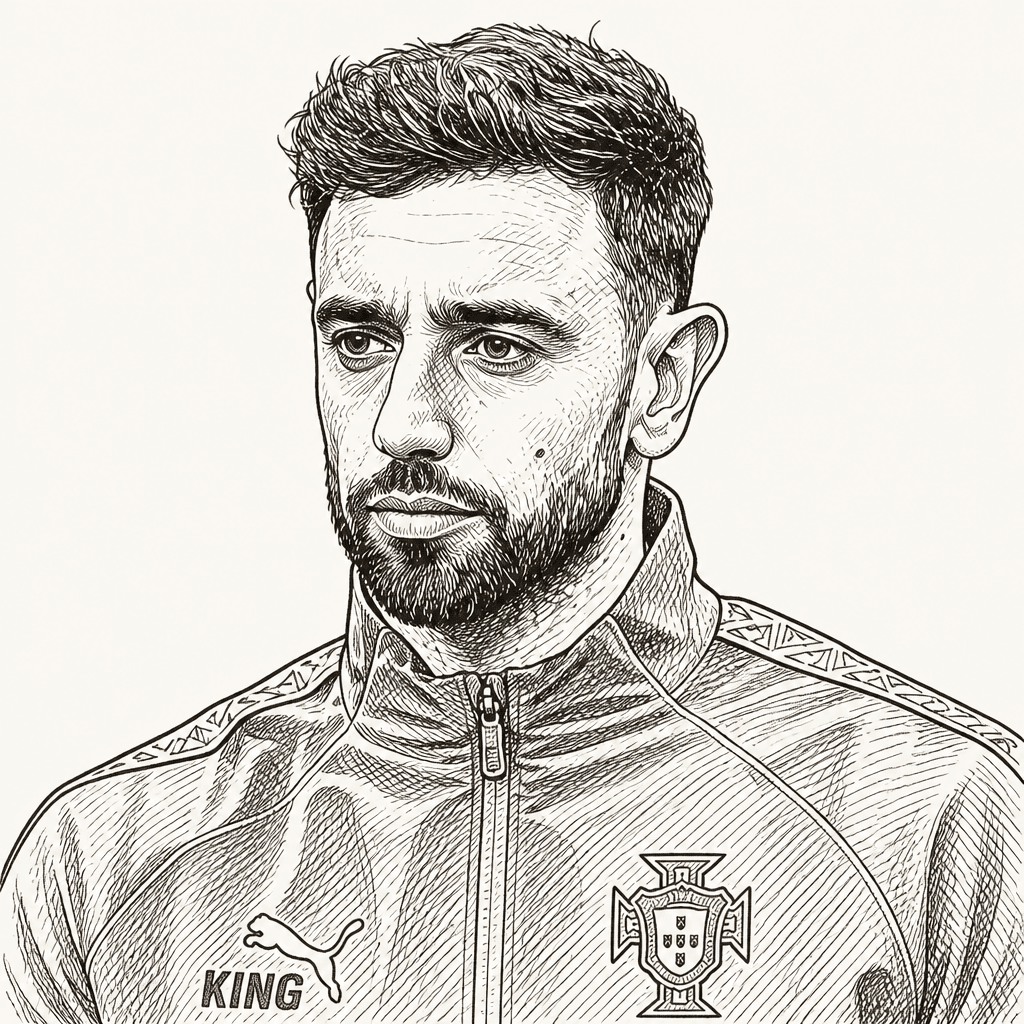
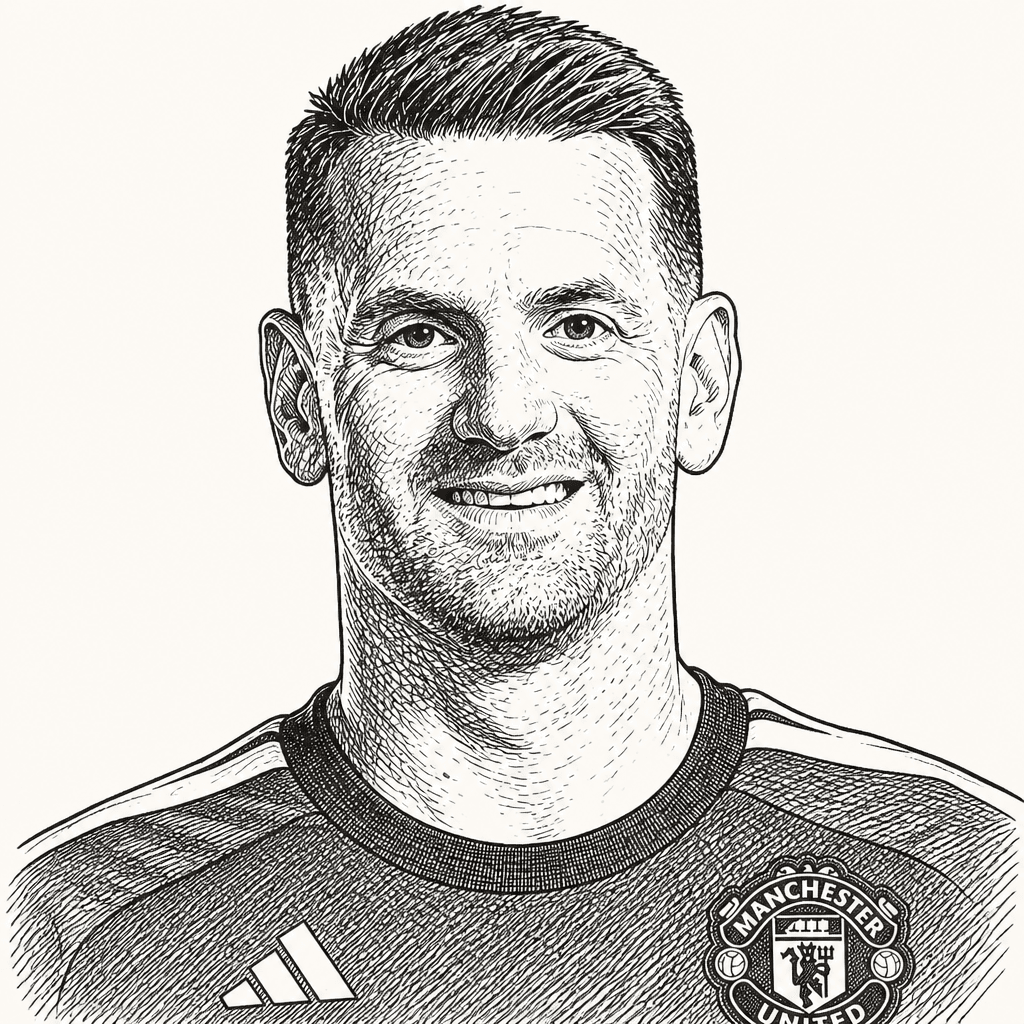
Manchester United captain Bruno Fernandes tells Steven Bartlett that he rejected a reported £200 million offer to leave because he has not fulfilled the ambitions that brought him to Old Trafford. In the interview, Fernandes argues that United’s recovery depends less on individual talent than on stable management, club-led recruitment, everyday standards and players willing to live with pressure. He also rejects Roy Keane’s criticism as based on a misrepresentation of his words, saying scrutiny is acceptable but fabrication is not.

Fernandes stayed because the United project is still unfinished
When Bruno Fernandes was asked why he did not take the reported offer Steven Bartlett put to him — a contract worth up to £200 million to leave Manchester United — his answer was direct: the work he came to do at the club is not finished.
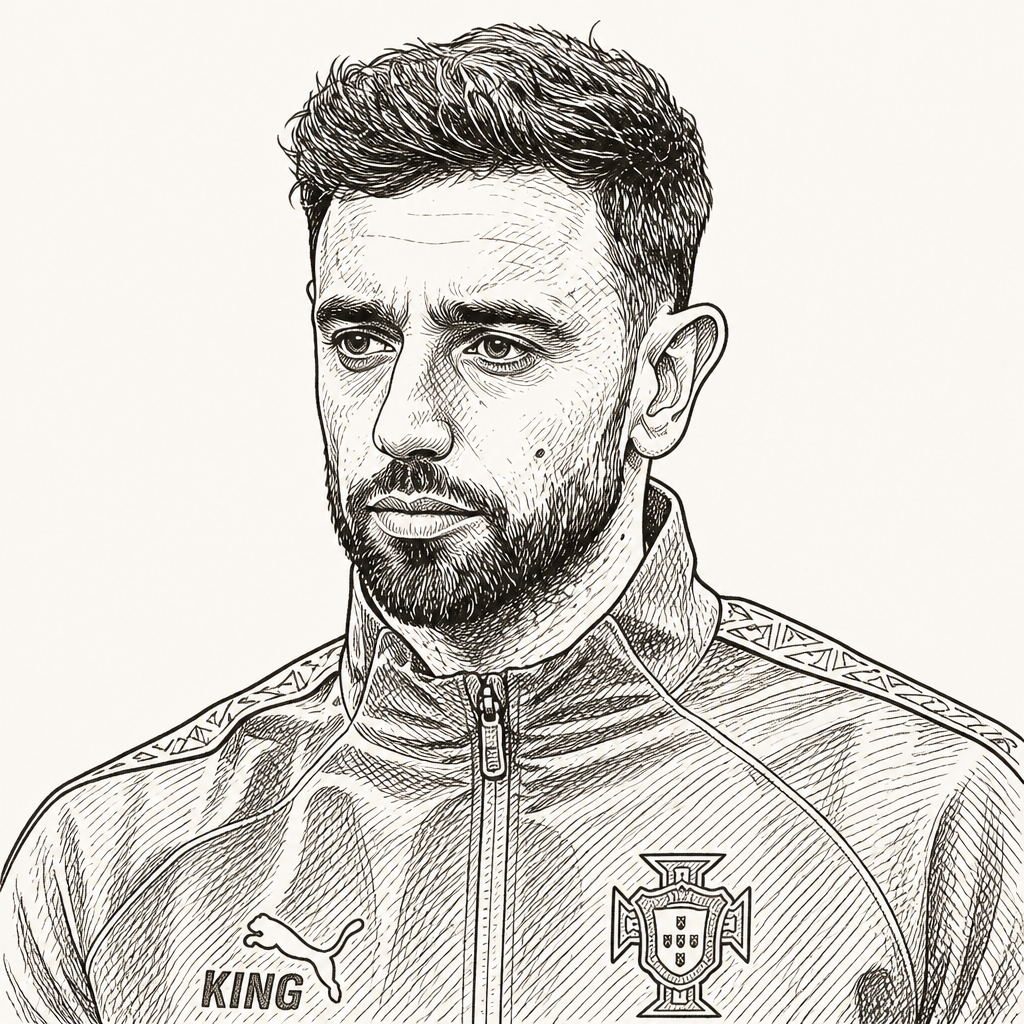
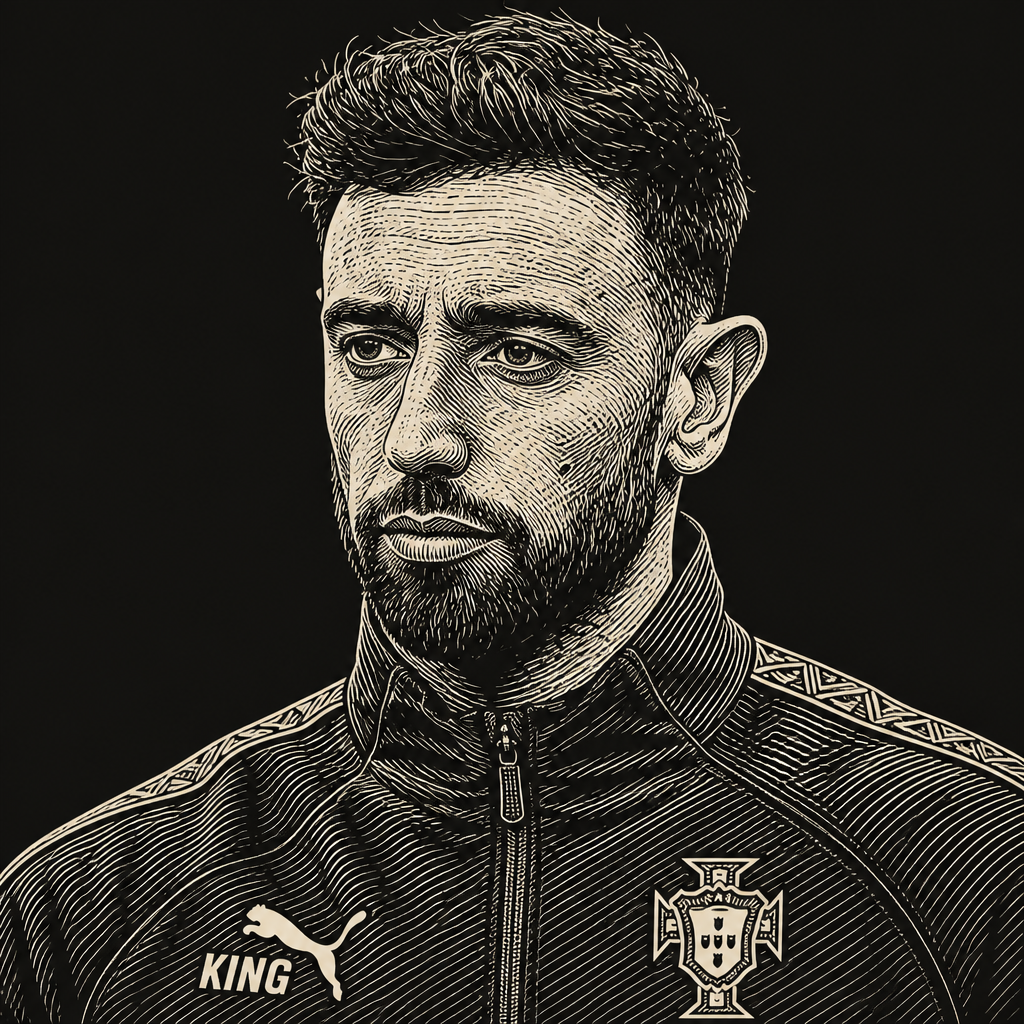


Fernandes said he had not “fulfilled” his dreams at United. Bartlett framed the decision as one that could have brought far more money and, in his view, potentially a more certain route to silverware. Fernandes did not dispute the scale of what was being described. He said he spoke first with his agent, then immediately with his wife, as he does on major career decisions, because his choices now move a family of four.
His wife’s question was the one that clarified it: had he achieved everything he wanted to achieve in his career, and was this the next step he wanted? Fernandes said the answer was no. The Premier League remained “the best league in the world,” the place where he believed he would enjoy his football most, and Manchester United remained the club where he still had dreams to fulfill.
That position is tied to the way he describes his original move to United in 2020. When his agent Miguel told him that United had reached the point where the decision was his, Fernandes was at home, in his wardrobe, getting ready for bed. His wife was putting their daughter to sleep. He had deliberately kept himself away from transfer speculation after an earlier move to Tottenham had collapsed at the end of the window. His standing instruction to his agent was simple: do not tell him about interest until a club is close enough to making a real offer that a decision is required.
When Miguel told him “Man United is coming for you,” Fernandes went silent for 10 or 20 seconds. He was crying and did not want his voice to crack. His wife came in and asked why he was crying; his agent, still on the phone, heard and asked the same thing. Fernandes hung up, tried to explain it to her, while Miguel kept calling back because he needed an answer.
Fernandes said he did not ask about anything else. “Just tell them I’m going,” he told his agent. Sporting had been important to him, and he said he had become probably the best version of himself there, but United was “100% of the dream complete”: the Premier League, at the club he wanted in England.
That helps explain why the later reported offer to leave did not function, in Fernandes’ account, like a simple financial decision. He described his wife as the person who had chosen to live his dream with him since they were teenagers. At 17, when he moved to Italy to join Novara on €1,500 a month, she left behind her own life and uncertainty to support him. He said she “always has a say” because his career has never been carried by him alone.
I haven’t fulfilled my dreams here, you know, at this club.
Talking about that family burden visibly affected him. In football, he said, “the ones that suffer the most” are the family: they see the good moments, the bad moments, the good side, and the bad side, and “they always stand by you.” His wife, he added, also keeps him grounded. He called her “the second version of my dad” because she pushes him back down when he is “feeling too big” and points out what still needs to improve.
The same language — dreams, values, unfinished work — returned at the end when Fernandes was asked what would have to happen over the next five years for that period to be a huge success. He named the Premier League and Champions League with Manchester United. He also named the World Cup with Portugal, which he called probably his biggest career goal because representing the national team means representing “your people,” his parents, siblings, wife and children, and a “small nation” that he described as big in quality, love and fearlessness.
For United, the consequence is that Fernandes is not presenting his loyalty as nostalgia or comfort. He is tying it to a live obligation: the club he joined as the fulfillment of a dream has not yet become the club he still believes it can be.
Fernandes accepts criticism; he rejects having words put in his mouth
Fernandes repeatedly distinguished between criticism and what he sees as fabrication. His father, he said, trained him from childhood to accept criticism. After games in which Fernandes had scored two or three goals, his father would focus on the mistakes. A 98% score at school was not treated as perfect; it meant 2% had been left. The lesson was not that nothing was good enough, but that there was always a margin to improve.
That upbringing, Fernandes argued, made him suited to a club like Manchester United, where attention and criticism are constant. He does not like criticism, but it does not “hurt” him or change how he behaves. It makes him look again at his game and ask whether something needs to be changed.
His objection to Roy Keane’s criticism was therefore narrow and forceful. Steven Bartlett said Keane had criticized Fernandes’ mentality based on a quote he had “completely backwards”: according to Bartlett, Keane claimed Fernandes had said he should have shot but made passes, and used that to suggest he was chasing assist records. Bartlett said the full interview showed the opposite: Fernandes was criticizing himself for shooting when he should have passed.
Bruno Fernandes said Keane’s version was “a lie.” He accepted that Keane might not like him as a player, might not think he is a good captain, or might criticize him severely. What he would not accept was Keane putting words in his mouth.
He can criticize me, killing me, say that I’m not good enough, that I’m not a good captain for him, that I’m not a good player for the club, whatsoever, it’s bad, it’s okay, I don’t mind.
Fernandes said everything was on record, which mattered because otherwise people might believe the misquotation. He also said his style has not changed because of an assist record. His chance creation has been consistent since he arrived in the Premier League; he described himself as a player whose game is built around risk-reward, creating chances for teammates and getting the best out of others.
His frustration was that the same actions can be interpreted in opposite ways depending on the critic’s preferred story. If he scores, he can be accused of shooting too much. If he assists, he can be accused of passing too much or chasing an assist record. “People will always make the balance the way they want,” he said.
Fernandes said he had always shown respect for Keane and what Keane had done for United. He even asked Ole Gunnar Solskjaer’s former assistant to text Keane and arrange a conversation, because he wanted the distinction made clear: criticism is acceptable; misrepresenting what he said is not.
The assist record itself was treated by Fernandes as a byproduct of team performance, not the point of the season. Bartlett noted his 20-assist Premier League season, placing him alongside Kevin De Bruyne and Thierry Henry at the top of the single-season list shown on screen. A screenshot of a WhatsApp exchange with Thierry Henry was also shown, with Henry asking Bartlett to send his regards and writing, “I love him! Braino Fernandes!”
Fernandes said he began thinking about the record only when he reached 16 or 17 assists and realized he was close. His normal target, he said, was to improve on his previous season — better numbers, better output, better performances — not to set a historic mark.
| Measure shown or stated | Value | Context |
|---|---|---|
| Total assists | 72 | Displayed in an on-screen graphic while Bartlett described Fernandes’ Premier League assist output since joining United |
| Premier League goals since 2020 debut | 71 | Displayed in an on-screen graphic during Bartlett’s introduction |
| Single-season Premier League assists | 20 | Shown on a chart placing Fernandes level with Kevin De Bruyne and Thierry Henry |
| Sir Matt Busby Player of the Year awards | 5 | Bartlett said Fernandes had won the award for the fifth time, the most by any United player |
| Player of the Match awards in the season discussed | 12 | Bartlett said this was the most by any Premier League player |
| Premier League assists in the season discussed | 20 | Bartlett cited the figure when asking why the season stood out |
Bartlett also cited 34 appearances in the season being discussed, eight goals, 20 assists, 12 Player of the Match awards, six Player of the Month awards, and Fernandes’ fifth Sir Matt Busby Player of the Year award. Fernandes’ own interpretation was restrained: “when the team shines, the individual comes up.” He acknowledged that the assist record created headlines, but said he had been consistent across his six years at United and that in other seasons different players may have stood out more publicly.
The statistics therefore sit in tension with the criticism he rejected. They explain why more attention came toward him, and why his choices were more heavily interpreted. But Fernandes’ account of the season was that numbers followed a team rise and a consistent creative role, rather than a player changing his game to chase an individual marker.
His idea of leadership begins with who gets respect at the training ground
Fernandes’ definition of leadership at United is less about ceremonial authority than daily conduct. Asked about culture at the club, especially in the shadow of Sir Alex Ferguson-era stories about small standards and how staff were treated, Bruno Fernandes identified respect and care for non-playing staff as non-negotiable.
If a player comes to Manchester United and does not respect the physios, stewards, front-desk staff, restaurant staff, chefs, cleaners or anyone else who supports the club, Fernandes said, that is unacceptable. His argument was practical as well as moral: a club with a base of respect and care has a more positive environment.
He connected this directly to his mother’s work cleaning houses. As a child, he did not want anyone to treat his mother badly or “downgrade” her work. Now, he said, he applies that in his own home. When someone works in his house, his children are not allowed to speak to her disrespectfully or order her to pick things up. If they need help, they must ask respectfully; if they can do something themselves, they should be taught to do it.
At United, he said, he greets people the same way whether they are players or cleaners. If he says good morning to one group, he says it to the other. If he gives a handshake to teammates, he gives one to others. The reason is not symbolism for its own sake: those people make the environment function. If a cleaner does not prepare the space properly, he argued, everyone notices. The workplace feels wrong.
That view also shaped how he responded to the captaincy. When Erik ten Hag asked whether he wanted to become Manchester United captain, Fernandes’ first reaction was gratitude — he said being captain of his dream club was not something he had even dreamed of. His second thought was Harry Maguire.
Maguire was still at the club, and Fernandes knew it was unusual for a captain to be replaced in those circumstances. Before accepting, he went to speak with Maguire. His first question was whether Maguire was leaving. Maguire, Fernandes said, told him that if anyone deserved the armband it was Fernandes, and that if he had to take it off himself, he was happy it was going to him.
Fernandes said that conversation confirmed he had been doing things right, though he acknowledged it must have been difficult for Maguire. His message to Maguire was that losing the armband did not mean losing leadership. Maguire remained one of the players Fernandes consults when decisions need to be made for the team.
Leadership, for Fernandes, also includes demanding more from teammates without withdrawing care. He said he treats players the same in principle, though he has learned to speak to them in different ways. If a week’s training has prepared the team for a specific pattern, he demands that everyone execute the basics, regardless of status. Individual quality — the pass, the goal, the tackle — varies, but the collective preparation is expected.
The line he uses with teammates is revealing: the day he stops shouting at them or talking to them is the day he no longer believes they can improve. In that sense, his demanding style mirrors his father’s criticism. Praise is also deliberate. Sometimes he praises a player because he thinks that player needs it to reach the next level, but he makes clear he expects more.
The voice messages Bartlett played from current and former teammates reinforced this distinction between footballer and person. One teammate said Fernandes was among the first to help others, citing his leadership, care and consistency. Tom Heaton said Fernandes was a consistently world-class footballer, but that his best quality was how he was “as a human being”: caring, compassionate, supportive, demanding at the right times. Another message described the way Fernandes treats people, looks after them, and lifts others.
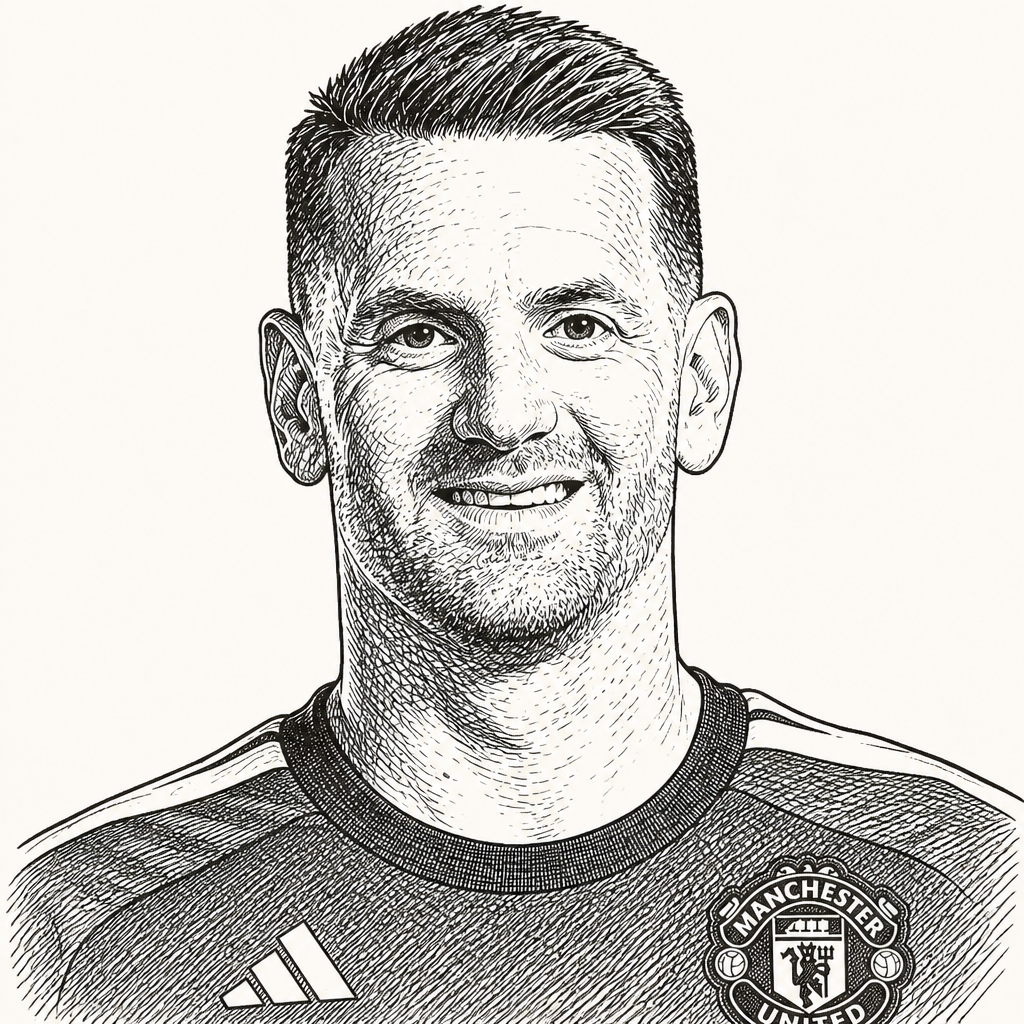
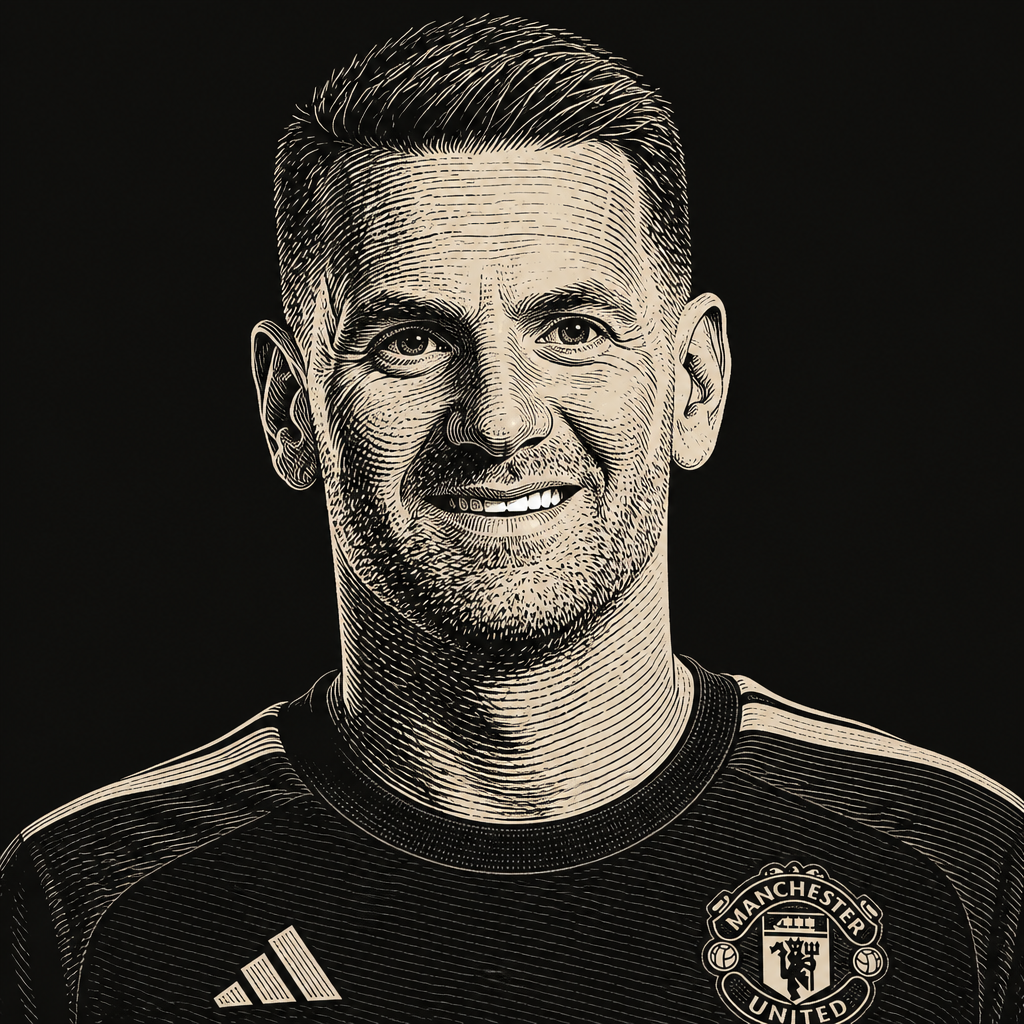
Fernandes’ reaction was emotional because the messages emphasized him as a person rather than as a player. He said football will bring him into contact with many good players, but what remains at the end is how someone behaves and treats others. Hearing teammates speak about him in the language of values made him feel that he had carried forward what his parents taught him.
For United, that makes leadership less dependent on the armband than on repetition: who is greeted, who is corrected, who is protected, and whether standards survive when form drops.
United’s recruitment problem was instability as much as character
Fernandes did not reduce Manchester United’s post-Ferguson problems to bad individuals. Steven Bartlett described a fan’s view that the club had at times recruited famous or high-profile players without clear fit, and that the culture now looked more coherent. Bruno Fernandes agreed that character matters, but he located the deeper problem in repeated changes of manager and strategy.
“The main mistake,” he said, was that the club moved from manager to manager with very different ways of playing. A player recruited for one system could become unsuitable for the next. The club then had to buy another set of players, and the strategy kept changing. Character can be a problem, he said, and some players may not have been perfect fits, but tactical and strategic discontinuity created much of the churn.
His recruitment principle was blunt: Manchester United should recruit for Manchester United, not simply for the current manager. A player usually receives a five-year contract; a manager may receive two. If things go wrong, the manager is typically removed before the player because moving players is harder. Therefore the club should bring in players who fit the club, and then managers who fit both the club and the players already there.
The recruitment has to be for Man United because the player will get normally a five years contract and the manager will get two.
Fernandes contrasted that with the way he understood Jürgen Klopp and Pep Guardiola’s success. In his view, they and their clubs chose players together who fit the club, system and intended style. Mistakes still happened, and not every signing worked, but more worked than failed. Just as importantly, he said, the squads were strong enough to look after players who were not playing and were struggling.
Character still sits at the center of Fernandes’ ideal recruitment model. United should bring in players who want to be at Manchester United specifically — not merely because it is a big club, but because they understand the task of making the club successful again. Quality is assumed at that level. “You don’t bring a player to Man United that doesn’t have qualities,” he said. Character determines what happens when form drops: whether the player pushes himself back up, and whether he can help others when he is struggling.
Social media discipline is one expression of that character. Bartlett observed that the public noise around players’ families, agents or associates posting complaints appeared to have disappeared. Fernandes said the improvement was “a little bit both”: partly the club being stronger with players when something is not right, and partly having the right people. The club, in his view, must speak not only with players but also with agents and families when posts or comments create problems.
Fernandes said he had set that boundary with his own family from a young age. His parents, brother and sister were not to speak publicly about him without his knowledge, especially when he was not playing. Not because they could not speak, but because they might not understand the consequences. His mother suffers when she sees criticism, he said, but he tells her to take it in, pray, and leave the noise alone. He does not want family members replying to defend him, because it is not good for them, for him, or for his environment.
That same discipline applies to managers. Bartlett noted that Fernandes had played under Ole Gunnar Solskjaer, Michael Carrick, Ralf Rangnick, Erik ten Hag, Ruben Amorim and others, without visibly changing his public attitude toward them. Fernandes said he likes every manager who comes his way because each teaches him something and asks him to do different things. He does not want to give a manager the option of thinking, “I’m not going to play Bruno.”
If he disagrees with a manager’s plan, Fernandes said, he still makes himself fully available. He does not go to the manager asking him to change formation or style. If asked, he gives his opinion. If not asked, he does not.
The implication for United is demanding: better culture is not only about removing the wrong profiles. It requires a club-level football idea strong enough that managers, players, contracts and recruitment cycles stop pulling in different directions.
At the time of the interview, Carrick represented stability and player responsibility
Fernandes described managerial change as “probably the worst thing in sports” because it means starting from zero again. Even if players feel for a manager differently depending on whether they were playing, he said the process itself is disruptive. A team wants to reach the end of a cycle and understand what the staff, manager and group can become together.
The season he described involved another reset. Bruno Fernandes said the club had started a process with Ruben Amorim that was expected to take three or four years, but a break in the relationship between manager and club led to change. Michael Carrick then brought results and, according to Fernandes, from Carrick’s arrival to the point of the exchange United had probably made more points than any other team. Steven Bartlett later said that point was statistically accurate.
Fernandes’ account of Carrick’s effect was built around stability and peace of mind. Because Carrick had played at United and worked there as a coach and manager, Fernandes believes he understands how the club wants to play and what supporters want to see. He called Carrick a calm presence who speaks well, chooses the right timing and words, and becomes more forceful only when the squad needs it.
Tactically, Fernandes described Carrick as giving players a base, foundation and non-negotiable rules, then making them responsible for solving problems inside the match. Preparation can be precise, but opponents change. A team may prepare all week to press a 4-3-3 and then face a 3-5-2. The manager cannot stand on the sideline and instruct every press or movement. The players must understand the principles well enough to adapt: get compact, protect the block, use the ball, and reach halftime for further correction.
Fernandes rejected the word “freedom” when Bartlett used it. In his description, Carrick gives freedom with the ball to make decisions, but within a structure. He cannot tell a player where to pass or shoot in the moment; he can show where the space is likely to be, where the opponent has gaps, where United can overload, and how the team should counter-press. The player must then choose.
Fernandes gave a concrete example: a chance against Nottingham Forest in which he passed to Brian, who scored. United had seen the same chance from Aston Villa against Forest, with the same movements and passes. The pattern worked because the team had visualized it and recognized it. That, in his account, is Carrick’s method at its best: preparation that equips players to see the solution, not robotic instructions that replace decision-making.
The larger club structure also matters. Bartlett said people associated with INEOS had told him there had not been enough structure when they arrived. Fernandes did not say there was none, but said it had been difficult for players to know where to go in certain situations. Now, he said, it is clearer: Jason, then Omar, then Sir Jim. That clarity gives players a better foundation for knowing which person or place to approach when something is needed.
Asked what United needs next to compete for the title, Fernandes said recruitment. Casemiro’s departure was described as “pivotal,” requiring replacement either internally or through a signing. But he again rejected the idea that United simply need “the best player in the world.” They need players who want to come to United, understand the process, and know that while the aim is to win the league, it may not happen immediately. He praised the previous summer’s recruitment under Amorim for bringing good characters, good players and good professionals.
Carrick, in Fernandes’ account, matters because he fits the club rather than merely the job. But the point is broader than one manager: United’s next step depends on giving any chosen direction enough stability, structure and aligned recruitment to become more than another reset.
Risk is not a flaw in his game; it is the job description
Fernandes’ on-ball risk-taking was discussed not as recklessness but as a positional responsibility. Steven Bartlett described him as a player who loses the ball more than safer midfielders but also creates more opportunities. Bruno Fernandes answered that the relevant calculation is always risk and reward: how much reward can come from the action, and whether the risk is good for the team.
For a number 10, he said, taking risks must be one of the main skills. His job is to put forwards into positions where their chance of scoring is higher. If he misses two or three passes but gets one right and it becomes a goal, that is a justifiable risk-reward outcome. The aim is not to lose the ball, and the loss must be minimized, but some positions require more risk than others. Wingers lose the ball in one-v-ones; fullbacks cross more than centre-backs; number sixes tackle more than strikers.
I might miss two or three times, but if I get one right that can become a goal for us.
The balance of a midfield also determines who should take risks. If Fernandes plays with Kobbie Mainoo and Casemiro, he said, they are not the risk players in the same way. If he takes four risky passes and they take one each, the team has six risk moments. Their responsibility is to build, move the team up the pitch, and feed the players whose role is to risk the final action. Without those players, Fernandes said, the team ends up merely circulating the ball.
He used Manchester City as an example despite their association with Guardiola’s possession game. Kevin De Bruyne, Rayan Cherki, Phil Foden, Jérémy Doku and Riyad Mahrez were named as the players who take the risks — passes, dribbles, one-v-ones — inside an otherwise controlled structure.
The same logic applies to shooting. Erik ten Hag, Fernandes said, once asked him to take fewer shots from outside the box. Ten Hag showed him a board with success rates: shots on target, shots off target, goals, and the positions from which he was more effective. The lesson was not “never shoot,” but choose better shooting zones. From 25 yards, scoring one in five would already be a lot. From 18 yards, closer to goal, he suggested the chance might be three in five because he can put more power on the ball and be more effective.
Fernandes’ preferred pitch areas reflect the same balance between creation, control and risk. He said the central areas where he can help the team play, access the final pass and arrive near the box are where the best version of him is most visible. Different managers have used him differently: as a left-sided 10 dropping to help midfield build, as a traditional number 10 drifting to receive and switch play, and at times deeper as a number six with two eights. He said he enjoyed the deeper role because it forced him to become a different player — more aggressive without the ball and more responsible for covering space.
The non-negotiable, wherever he plays, is commitment. “Running, fighting, and team spirit can never miss,” he said.
That commitment is also how he explains his durability. Fernandes acknowledged good genetics, but said the difference is that he trains at 100%. He treats training like a game. If he does not feel the session was enough, he adds extra work — shots, crosses, something that lets him leave tired. The reason is specific: games are decided when players are tired. Shooting practice and final-third passing are more valuable to him when fatigued because in the last 20 minutes of a match the brain slows, the body is tired, and both need to be trained to function in that state.
The practical claim is that United cannot ask Fernandes to be both the safest passer and the player who breaks games open. His value, as he describes it, comes from taking the right kinds of risks often enough that the reward justifies the losses.
The fearlessness came before the football career
Fernandes’ account of himself begins not with ambition to become a professional footballer, but with wanting the ball at his feet. At five, he joined FC Infesta. After one futsal session, he was moved onto the grass and into an older group, playing with seven-year-olds. He said he did not see older or bigger opponents as people to fear. They were like his brother, five years older: if he had to beat him one-on-one, he would try; if he had to tackle, he would tackle; if he was tackled harder, he would tackle again.
He did not claim to be the best in every category. Technically he was good, but not necessarily the best. He was quick, but not the quickest. He was not the strongest or tallest. What he had was no fear. If someone was faster, he would sprint with him and try to get close. Bartlett cited reports that referees sometimes asked his coach to substitute him or they would have to send him off because he was so aggressive. Fernandes accepted that as part of the same fearlessness: he did not look at faces or sizes and decide he could not compete.
That early trait mattered because Fernandes’ career repeatedly put him into situations where impatience or fear could have narrowed him. At 17 he left Portugal for Novara in Italy. He was promoted to the first team after three months and later joined Udinese, where Francesco Guidolin became, in Fernandes’ words, a father figure. Guidolin’s lesson was not only to be fearless, but to understand timing.
Udinese nearly sent him on loan to Watford because the clubs had the same ownership. Fernandes had been told to pack his things and was questioning what he had done wrong. Then the sporting director called: he could not go because Guidolin wanted him to stay. The manager liked his attitude, wanted him to learn, and believed he would succeed at the club, even if he might not play much that season.
That mattered to Fernandes because Guidolin made players feel valued while still making clear they were not finished products. He helped Fernandes understand that being left on the bench is not simply proof the manager dislikes you. Managers are managing processes, player development, squad balance and moments that young players do not always see.
By 18, Fernandes’ ambitions were explicit. Once he became a professional player, he wanted top clubs, Champions League football, trophies and to become like the players he watched. He said he never doubted he could.
The Tottenham near-move sharpened the Premier League dream. Fernandes said he spoke with Tottenham and was very close to an agreement, but Sporting decided in the final day or two of the window not to sell because they needed him. He wanted the move because he considered the Premier League the best and most competitive league in the world: full stadiums, top clubs, top players. United was his dream English club, but Tottenham was the option in front of him then, and he was happy with the project, manager and facilities. When it collapsed, the later United call carried the weight of a second chance — and with it the club he had wanted most.
The through-line is not inevitability. Fernandes’ own story is full of almosts: a loan that nearly happened, a Tottenham move that collapsed, a United call that came only after he had tried to stop thinking about transfers. What carried through those interruptions, in his telling, was the same trait that got a five-year-old moved into an older age group: compete without fear, then keep looking for the next margin to improve.