Lost-Civilization Theory Frames Ancient Anomalies as a Modern Collapse Warning
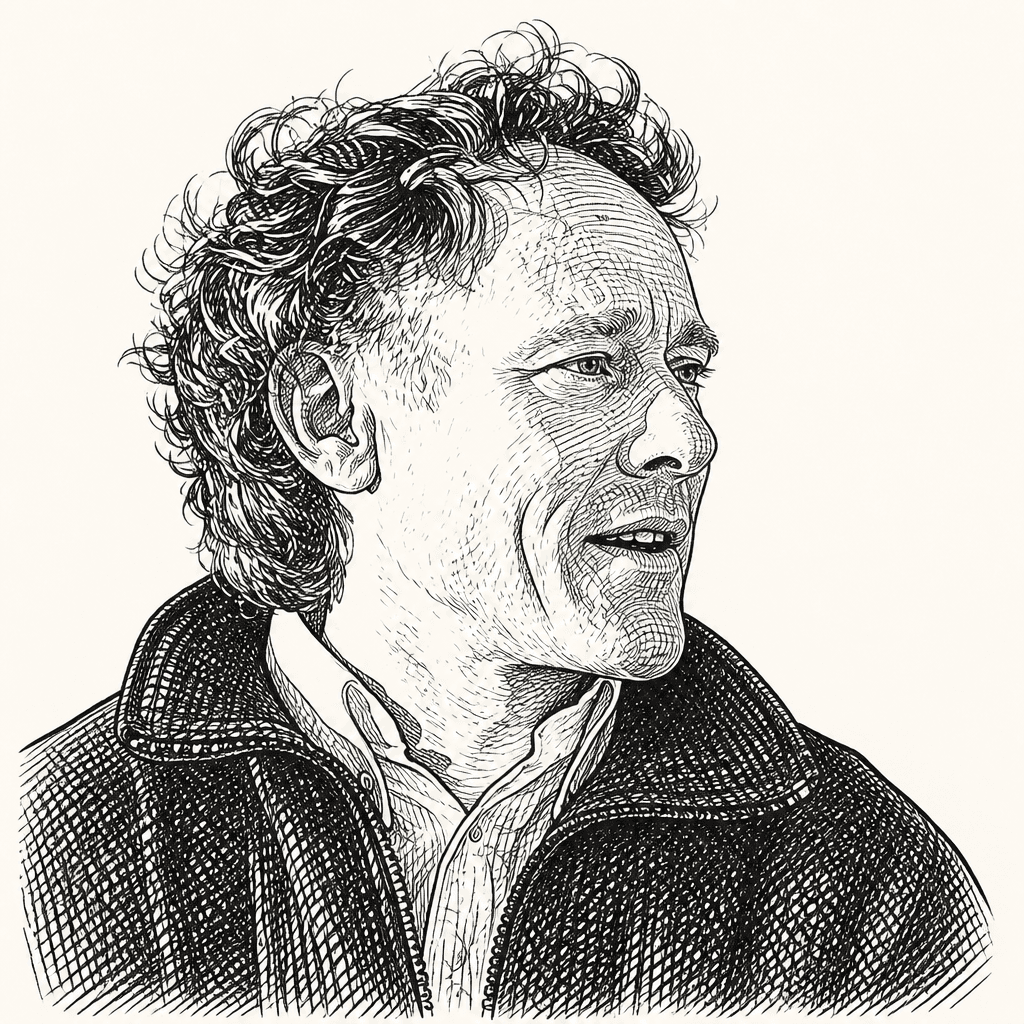
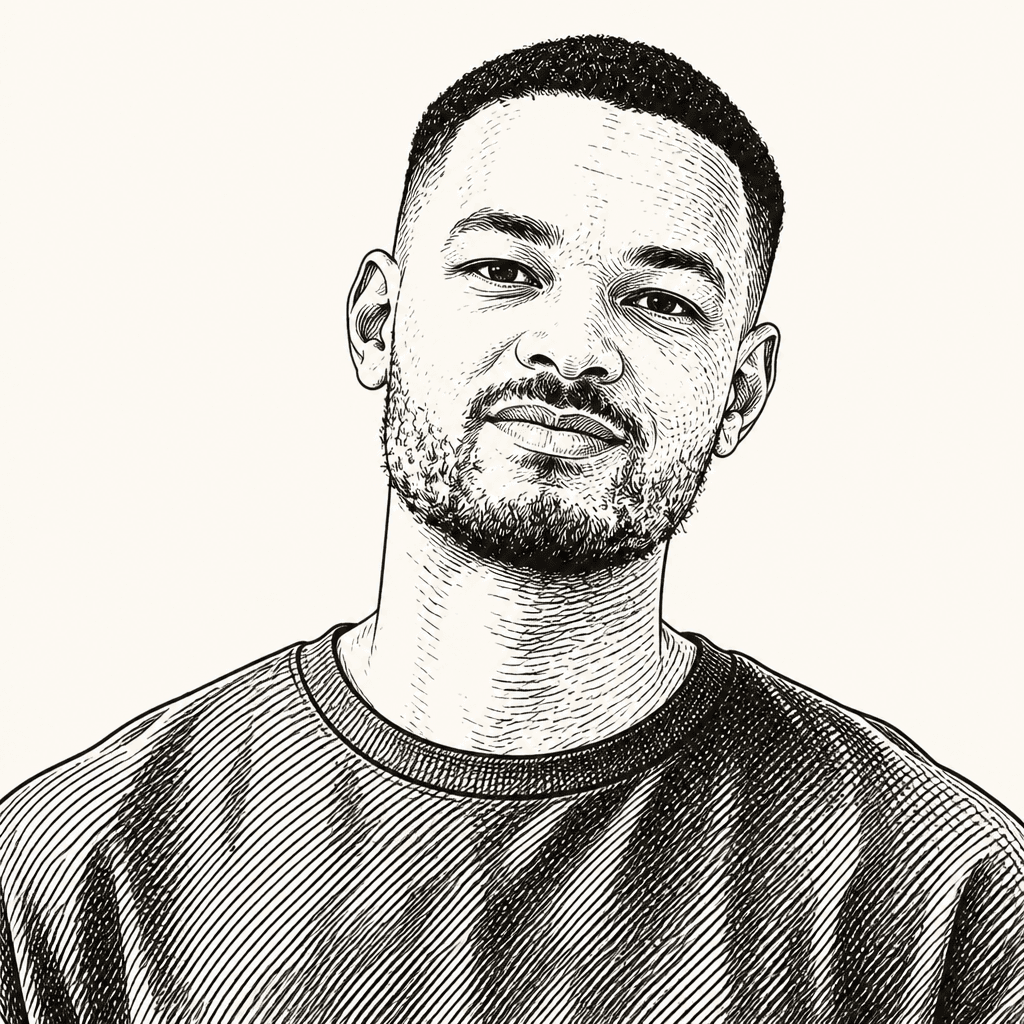
Graham Hancock, the writer and presenter of Ancient Apocalypse, uses a long interview with Steven Bartlett to restate his disputed case that the accepted history of civilization may be missing a prehistoric chapter. He argues that myths, monuments, ancient maps, Amazonian earthworks and the Younger Dryas climate shock point to the possibility of an earlier knowledge-bearing civilization, while insisting he has not proved it. The deeper warning, for Hancock, is that modern civilization could also become a fragmentary memory if its technology continues to outrun its judgment.
Ancient history becomes a warning about civilizational fragility
Graham Hancock frames his life’s work as an inquiry into “a major forgotten episode in the human story,” not as a proved doctrine. The ancient-history claim matters to him because it changes the status of the present. If another civilization rose, became powerful, and was then almost erased, modern civilization is not the inevitable summit of the human story. It is temporary, vulnerable, and capable of becoming myth.
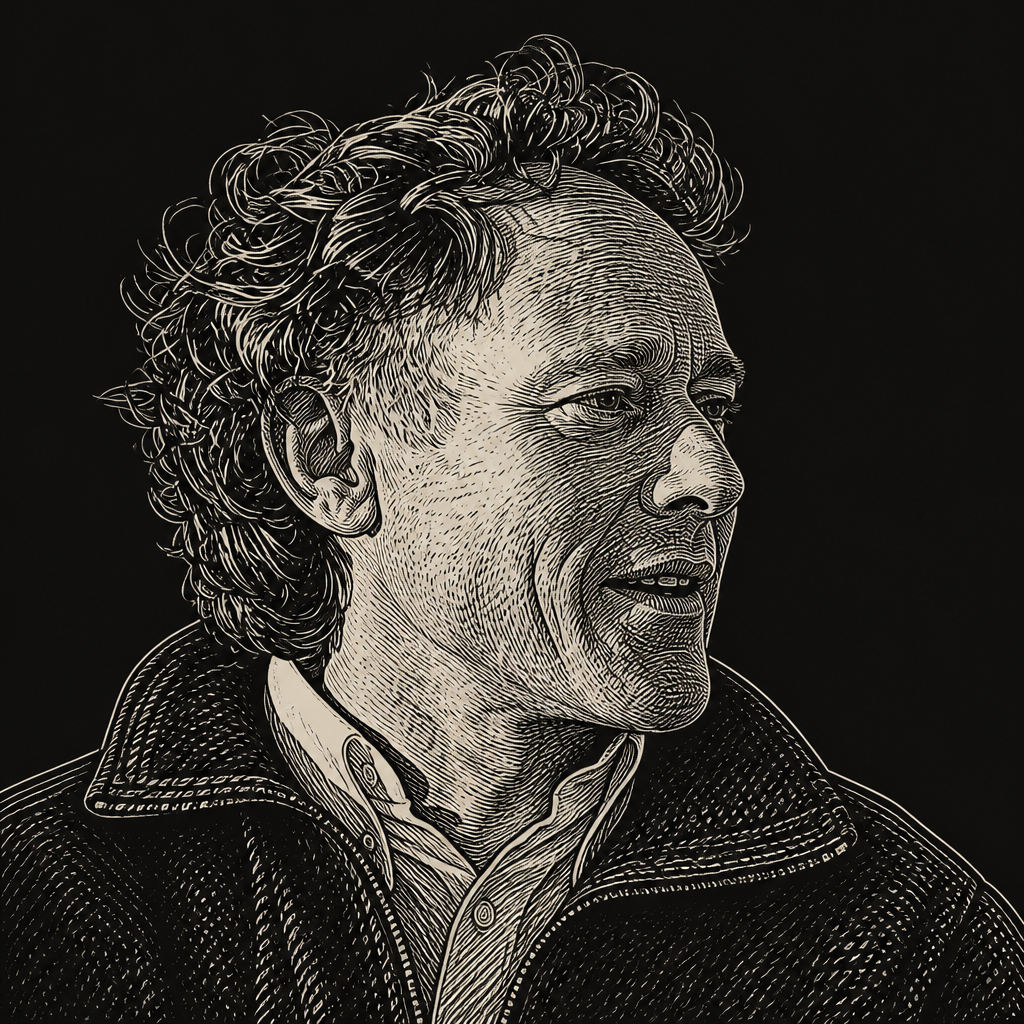
That warning runs through Hancock’s argument. He reads flood myths, abrupt climate change, unexplained monuments, old maps, and altered-state traditions as clues that the accepted story of civilization may be missing a chapter. He also treats those clues as a mirror. The myths often say catastrophe was not merely something that happened to humanity; in some way, humanity brought it on itself. Looking at the present, Hancock says he sees “a civilization that ticks all the mythological boxes” for becoming the next lost civilization.
The standard archaeological boundary, as Hancock presents it, is that civilizations become clearly visible roughly 5,500 to 6,000 years ago. That is when cities, writing, and complex state-level societies appear in places such as Sumer and Egypt, with the Indus Valley and Caral-Supe in Peru appearing in a broadly similar window. Hancock accepts that this is when civilization becomes archaeologically visible. His question is why human beings, if anatomically modern for hundreds of thousands of years, would have waited so long to organize at scale.
He points to the shift in the dating of Homo sapiens as one reason for reopening the question. When he began this work in the late 1980s and early 1990s, he says, anatomically modern humans were often placed at around 50,000 years old. He then cites finds from Ethiopia, which he describes as 196,000-year-old anatomically modern remains, and from Jebel Irhoud in Morocco, which he describes as roughly 315,000 years old. If modern humans had the same basic brain, neurology, and anatomical “kit,” Hancock asks why the recognizable civilization story appears so late.
That question leads to his central hypothesis: perhaps the apparent delay is misleading because a part of the story is missing. He does not mean an industrial civilization. He rejects the caricature that his lost civilization had mobile phones, modern machines, or lunar travel. The civilization he imagines would have been different from ours, but it may have “conquered a number of peaks,” especially navigation, ocean seafaring, astronomy, and the ability to preserve knowledge.
Before written records, he argues, the evidentiary problem changes. Decipherable writing, in his account, reaches back only about five and a half thousand years. Earlier than that, archaeology relies heavily on what can be dug from the ground. Hancock’s criticism is that material evidence alone may not exhaust the record. He treats myth, scripture, and oral tradition as “the memory banks of our species,” especially for the period before writing.
That is where he diverges most sharply from mainstream archaeological habits as he describes them. He says archaeologists often explain flood myths as local river floods exaggerated into global events. Hancock finds that unsatisfactory. The flood of Noah, in his telling, is one example among hundreds. Plato’s Atlantis is another tradition that preserves the idea of a former era destroyed by flood, leaving only survivors. He does not ask readers to accept the stories literally in all details. He asks why such stories should be dismissed as “primitive superstition” rather than compared against scientific data for possible correspondences.
His use of myth extends beyond flood imagery. Hancock relies on the 1960s book Hamlet’s Mill by Giorgio de Santillana and Hertha von Dechend, whom he identifies as historians of science at MIT and Frankfurt University. He says they found numbers and imagery in ancient myths that point to the precession of the equinoxes, the slow wobble of Earth’s axis over roughly 26,000 years. To observe, record, and predict precession, he argues, would require very precise astronomical observations maintained over hundreds of years or more. If such information is encoded in widely dispersed ancient traditions, he treats that as a clue that ancient knowledge may have deeper roots than the conventional account allows.
Steven Bartlett repeatedly presses him on the epistemic status of the argument. Are these stories not simply fiction? Hancock’s answer is direct: people are welcome to say that, but he thinks they are not merely fiction. He also insists that he does not claim to have proved a lost civilization. “Any archaeologist who says Hancock claims he’s proved that is lying,” he says. His stated claim is that he is mystified, that the patterns deserve investigation, and that he will continue pursuing them as long as he can.

| Claim Hancock advances | Evidence or example he cites | How Hancock qualifies it |
|---|---|---|
| A forgotten civilization may have existed before the archaeologically visible civilizations of the last 6,000 years | Anatomically modern humans are described as at least 315,000 years old; myths and monuments appear to preserve older memories or knowledge | He says he has not proved a lost civilization and calls the position an investigation |
| A global catastrophe around 12,800 years ago may explain flood traditions and a missing chapter in human history | The Younger Dryas climate reversal, megafaunal extinctions, sea-level pulse, and a black boundary layer with materials he associates with impact events | He acknowledges academic criticism of the Younger Dryas impact hypothesis and says other explanations, including solar activity, may be involved |
| Specific old maps may preserve inherited knowledge of Ice Age geography and longitudes | The Oronteus Finaeus map and other Portolano-style maps, which he says show Antarctica or accurate relative longitudes before modern discovery and chronometer navigation | He presents the maps as unresolved anomalies, not as standalone proof |
| The Great Pyramid may encode geodetic and precessional knowledge | Hancock says its height and base perimeter map to Earth dimensions at a scale of 1:43,200 and that the number belongs to a precessional sequence found in myth | He says archaeologists regard the relationships as coincidence; he argues the chosen scale makes coincidence unlikely |
| The Amazon was not an untouched wilderness, in Hancock’s account | Geoglyphs, LiDAR surveys, roadways, terra preta, and city-sized communities as described by Hancock, with related DOAC visuals and Bartlett’s on-screen chart | He uses the Amazon as an example of how quickly an assumed wilderness can become legible as a managed human landscape |
The catastrophe in the argument is the Younger Dryas, even where its cause remains disputed
Hancock’s catastrophe story is built around the Younger Dryas, the abrupt climatic reversal beginning around 12,800 years ago. He describes Earth as having been emerging from the Ice Age for roughly one or two thousand years before that point. Conditions were warming. Then, around 12,800 years ago, there was a sudden interruption: instead of continuing to warm, the planet returned to deep cold for about 1,200 years. Around 11,600 years ago, he says, it warmed again abruptly.
The catastrophe itself, in Hancock’s telling, is not the disputed part. The dispute is over cause and degree. He presents the mainstream explanation as involving glacial lakes in North America growing, overtopping ice dams, and releasing water into the Atlantic, disrupting the Gulf Stream. He does not reject glacial lakes as part of the event. His objection is that the lakes filled “at a massive speed” and that the broader pattern needs explanation.
The explanation he finds most persuasive is the Younger Dryas impact hypothesis. He emphasizes that it is a “mainstream hypothesis” but also one severely criticized within academia. As he lays it out, a very large comet entered the solar system about 20,000 years ago, perhaps 100 to 200 kilometers in diameter, and was captured into an orbit crossing Earth’s orbit. A single large object would be unlikely to strike Earth. But comets caught by the gravity of a sun or large planet break up. Hancock describes the result as a “shotgun blast” rather than a single bullet: thousands of fragments, some of which proponents associate with Comet Encke.
He distinguishes the proposed event from the dinosaur-killing impact. The fragments, in his telling, were not comparable to the Chicxulub impactor. Many would have exploded in the atmosphere. But an airburst from an object around 100 meters in diameter, he says, can be equivalent to a substantial nuclear blast. As Earth rotated through a storm of fragments, he says, impacts or airbursts would have occurred across broad regions.
The physical evidence he cites includes a black Younger Dryas boundary layer, described while looking at a photograph of himself with Allen West from the comet research group. Their hands are placed on a dark stripe in an exposed river-cut bank. Hancock describes the layer as soot from wildfires, about five inches thick, containing nanodiamonds, microspherules, platinum, and iridium — signatures he associates with cometary impact. Bartlett describes the image for viewers as “a slice of earth” with a black line running through it.
A DOAC community note shown on screen narrows the description of the broader evidence: researchers did not find solid rocks or crust across the west coast of North America, Belgium, and Syria, but a cosmic dust layer they suggest may have come from an ancient comet explosion around 12,800 years ago, possibly linked to the ancestor of Comet Encke.
The Younger Dryas, for Hancock, also explains an otherwise puzzling sea-level rise. A cold phase should normally store more water as ice, not raise sea levels. But if heat and airbursts from comet fragments drove rapid melting of ice sheets, a pulse of meltwater at the beginning of the Younger Dryas would make sense. In the same window, he says, many Ice Age megafauna disappeared: woolly mammoths, mastodons, and giant ground sloths.
He concedes another possible explanation: a radical change in solar activity may have been involved. He does not find that as persuasive as the impact hypothesis. But the larger argument rests on a more limited baseline: something large, global, and disruptive happened to Earth and to human ancestors around 12,800 years ago.
Göbekli Tepe and Caral-Supe weaken the old sequence from agriculture to monuments
Hancock uses Göbekli Tepe to challenge a model in which agriculture comes first, creates surplus, allows specialization, and then makes monumental projects possible. He describes Göbekli Tepe in Turkey as 11,600 years old: a large and sophisticated site with T-shaped megaliths weighing up to 20 tons, precise astronomical alignments, and evidence of planning and organized labor.
The site was shown through a tabletop “Human Civilisation Timeline” board, with small models marking the Ice Age, the Younger Dryas impact, Göbekli Tepe, the pyramids, later empires, and the present. The visual functioned as more than decoration: it compressed Hancock’s central chronology into one line. On that timeline, Göbekli Tepe appears immediately after the end of the Ice Age and long before the conventional 6,000-year civilizational threshold.
His point is not that Göbekli Tepe proves his lost civilization. It is that it overturns what he says archaeologists used to claim hunter-gatherers could not do. The site required labor organization. It required design. It could not have been made by “two or three people working together.” Yet, in Hancock’s telling, when Göbekli Tepe began there was no agriculture happening there. Its builders were hunter-gatherers.
That matters because the standard sequence once made a site like Göbekli Tepe difficult to explain. If specialists such as astronomers, architects, and engineers require agricultural surplus, then such a site should not appear before widespread agriculture. Hancock says archaeology is now being forced to come to terms with the reversal: hunter-gatherers could organize complex projects. He also notes that within about a thousand years of Göbekli Tepe being built, agriculture appears across the region, suggesting to him that the origins of agriculture are earlier and more complicated than commonly taught.
Bartlett identifies the chronological compression: if the Ice Age ended around 11,700 years ago and Göbekli Tepe is around 11,600 years old, then something sophisticated appears within roughly a century of the end of the Ice Age. Hancock cautions that these dates are not exact to the year, but accepts the broader point. In that warming window, a major project emerged.
He pairs Göbekli Tepe with Caral-Supe in Peru, which he describes as a 5,500-year-old civilization with pyramids and circular plazas. He notes that people often think of Peru through the much later Inca and Machu Picchu, which Bartlett places at about 600 years ago. Caral-Supe, in Hancock’s account, is thousands of years older and unexpectedly sophisticated. Its builders used an earthquake-resistant technique: rather than constructing only with large blocks, they placed small stones in textile bags, allowing shifting during earthquakes.
Hancock characterizes Caral-Supe at that time as “not an agricultural civilization” and as a “hunter-gatherer civilization.” The source also showed a DOAC note describing Caral-Supe as the oldest known civilization in the Americas, with ceremonial pyramids, planned urban centers, and complex social structures. In Hancock’s use of the example, the point is that sites conventionally associated with organized civilization can appear in contexts that do not fit the older linear model from farming surplus to specialists to monuments.
Bartlett’s on-screen chart reinforces the broader theme of changing archaeological beliefs. It compares older beliefs with later discoveries: modern humans once placed at 50,000 years versus fossils from Morocco reclassified as human from about 310,000 years ago; Malta’s Ġgantija temples as the oldest megalithic site versus Göbekli Tepe at roughly 11,600 years old; the Amazon as untouched wilderness versus more than 1,000 geoglyphs; Egypt’s pyramids as the world’s oldest pyramids versus Peru’s pyramids at least 5,000 years old; humans arriving on Easter Island 800 years ago versus evidence of banana cultivation dated to 3,215 years ago; and humans reaching the Americas 16,000 years ago versus broken mastodon bones suggesting human activity from 130,000 years ago.
| Old belief shown | New discovery shown | Revised belief shown |
|---|---|---|
| Modern humans existed 50,000 years | 1961: fossils discovered in Morocco, reclassified as human, from 310,000 years ago | Humans are at least 310,000 years old |
| Malta's Ġgantija Temples are the oldest megalithic site | 1963: Göbekli Tepe discovered in Turkey, approximately 11,600 years old | Göbekli Tepe is the oldest known megalithic site |
| The Amazon was an untouched wilderness | 1970s: more than 1,000 geoglyphs have been discovered | The Amazon was likely home to advanced ancient societies |
| Egypt's pyramids were the world's oldest pyramids | 1993: new pyramids found in Peru are at least 5,000 years old | Peru's pyramids are the oldest known pyramids on Earth |
| Humans arrived on Easter Island 800 years ago | 1998: evidence of banana cultivation on the island dates back to 3,215 years ago | Humans arrived on Easter Island at least 3,215 years ago |
| Humans reached the Americas 16,000 years ago | 2017: broken Mastodon bones suggest human activity from 130,000 years ago | Humans have been in the Americas for at least 130,000 years |
Hancock’s use of these cases is methodological. “Every turn of the spade in an archaeological dig can change the whole story,” he says. Bartlett’s response is similar: when the record has changed repeatedly in recent decades, it would be arrogant to assume the current story is complete.
Specific old maps are treated as clues to inherited seafaring knowledge
Hancock’s claim about ancient seafaring turns on maps that he says show the world as it looked during the Ice Age. The most prominent example he discusses is the Oronteus Finaeus map, shown on screen as an antique dual heart-shaped world projection with a large southern landmass highlighted. Hancock says it was drawn in 1531 and shows Antarctica. He also says at one point that Antarctica appears on a map drawn in 1521, while describing the same class of problem: Antarctica appearing before the modern discovery of the continent in 1820. The date discrepancy is not resolved.
The puzzle, as Hancock frames it, has two parts. First, why is a southern landmass resembling Antarctica on the map before Antarctica was known to “our civilization”? Second, how did some of these maps preserve accurate relative longitudes? He emphasizes longitude because accurate longitude at sea, in the DOAC on-screen note, became possible for modern navigation in the 18th century through precise timekeeping. Hancock refers specifically to Harrison’s chronometer in the mid-18th century. Before that, he says, a ship sailing east or west could be hundreds of miles closer to a coastline than expected.
Hancock says the Oronteus Finaeus map was based on older source maps and that the mapmaker’s legend refers to uncovering material “previously hidden in darkness.” He treats that as a clue that cartographic knowledge may descend from earlier sources.
He also gives the counterposition as he understands it. Mainstream explanations, in his account, are that mapmakers placed a landmass in the south for balance, or that the similarity is coincidental and not historically significant. Hancock finds that unsatisfactory. He stops short of saying the map proves ancient Antarctic discovery; he treats it as an unresolved anomaly.
The maps support his proposed profile of the lost civilization: not industrial, but capable of ocean navigation and serious astronomy. He notes that humans reached Australia around 60,000 years ago, which required significant sea journeys, and Cyprus around 14,000 years ago. He points to Polynesian navigators as an example of long-distance seafaring without modern instruments. The claim is not that ancient boats resembled modern vessels, but that relatively simple craft can support major ocean journeys when used by skilled navigators.
A definitional issue follows from that. If people were traveling the seas in boats, why would they not be classified as a civilization? Hancock’s answer is that, under the mainstream model he is challenging, “there was no such people.” The maps, in that model, become coincidence or irrelevant oddities. For Hancock, their existence is one more reason to suspect a missing background.
The Great Pyramid is treated as an encoded statement about Earth
The Great Pyramid of Giza is the densest part of Hancock’s evidentiary case. He begins with the ordinary attribution: it is attributed to Pharaoh Khufu of the Fourth Dynasty. Then he emphasizes physical precision and scale. Each side is roughly 750 feet, and he says the side lengths vary by only fractions of an inch. The monument weighs about 6 million tons and contains more than 2 million individual stone blocks. Its original height, he says, was 481 feet. Its slope is 52 degrees.
He argues that this precision was not incidental. If a pyramid’s base is mismeasured, errors compound upward and the result becomes distorted. He also emphasizes that the Great Pyramid is aligned to true north — astronomical north, not compass north — within three minutes of arc, or 3/60ths of a degree. Achieving that alignment on a 6-million-ton monument is, in his view, a profound technical and symbolic choice.
Hancock rejects the popular slave-labor image. He says there was not slavery in the Old Kingdom and calls the Great Pyramid “a work of love,” made with skill and care. The mystery, for him, is not whether humans could build it; clearly they did. Nor does he say modern civilization could not build it. He says the motive and specification are the strange parts: why build such a massive monument, align it so precisely to true north, and incorporate such exact relationships?
The key relationship he identifies is the scale 1 to 43,200. In Hancock’s argument, if the original height of the Great Pyramid is multiplied by 43,200, the result is the polar radius of Earth. If the base perimeter is multiplied by the same number, the result is Earth’s equatorial circumference. He says archaeologists know this and call it coincidence.
The distinction between Hancock’s reading and an established archaeological interpretation is essential. Hancock is not presenting a conceded meaning of the pyramid; he is arguing that the dimensional relationships are deliberate. His case turns not only on the claimed match to Earth dimensions but on the number chosen. He says he might accept coincidence if the scale were arbitrary. But 43,200 belongs to a family of numbers based on 72, which he says appears in ancient mythology around the world and is tied to precession.
In his explanation, Earth’s axial wobble causes the sun’s equinoctial rising position to move backward through the zodiacal constellations. The full cycle is conventionally 25,920 years. Each zodiacal age lasts roughly 2,000 years. The Age of Pisces gives way to Aquarius. A DOAC community note shown on screen says the Age of Pisces began roughly in 68 BC and will last about 2,160 years, placing the transition near the year 2597; Hancock says ancient astrology would put the transition within about the next 150 years. The difference is not resolved.
His broader claim is that precessional numbers were known and encoded long before they were supposed to have been discovered. He refers to Hipparchus of Alexandria as the Greek credited with discovering precession around 2,000 years ago. If the Great Pyramid encodes precessional knowledge 4,500 years ago, he says, then the current model of the history of science is wrong.
This monument speaks to the earth. This monument is locked into the true North of this planet. This monument gives you the dimensions of this planet.
The implication, for Hancock, is that the builders knew the circumference of Earth. But he then qualifies where he thinks the knowledge came from. He does not think the Egyptians necessarily discovered it themselves. He thinks the knowledge was inherited from an earlier civilization and transmitted into Egypt.
This leads to one of his more speculative proposals: long-lived knowledge-bearing groups. In Egypt, he mentions the “followers of Horus.” In Sumer, the Apkallu. He describes them as sages, advisers to kings, and in some traditions “seven sages.” In Sumerian traditions, he says, the Apkallu existed before the flood, taught knowledge to humanity, were largely destroyed by the cataclysm, and then some survivors appeared after the flood as advisers to the earliest historical kings.
Hancock does not claim to present the evidence for this idea in the discussion. He says he is pursuing it for a future book and will abandon it if it fails. But at the moment, he says, it appears to fit a range of information. The proposed mechanism is twofold: knowledge preserved in memorable stories and possibly in organized priestly or secret-society structures that carried information until the “right time to switch the engine of civilization back on again.”
The Giza underground question exposes the conflict between curiosity and dismissal
Hancock says there is “definitely” something beneath the Great Pyramid, beginning with what is already accessible. Visitors now enter through the so-called robbers’ tunnel, or Ma’mun’s hole, which he says was cut into the pyramid in the 9th century by Caliph Al-Ma’mun’s workers after they could not find the original entrance under the smooth casing stones. While tunneling, they reportedly heard something fall into a hollow space, moved toward the sound, and reached the original corridor system.
From there, visitors can ascend through the Grand Gallery or descend to the subterranean chamber, about 100 feet vertically below the pyramid’s base in the bedrock. Hancock thinks that chamber may have been the original sacred site of the monument. He describes the descent as oppressive, especially for anyone claustrophobic, because of the awareness of a 6-million-ton structure overhead in a seismic region.
A cross-section diagram shown on screen labeled the pyramid’s internal spaces: King’s Chamber, Queen’s Chamber, air shafts, Grand Gallery, ascending and descending passageways, entrance, escape shaft, subterranean chamber, and ground level. The visual mattered because Hancock’s claim is not only that there are hidden spaces, but that the known internal architecture already points attention downward into the bedrock beneath the monument.
The broader possibility is an underground landscape beneath the Giza plateau. Hancock references Filippo Biondi, whom he says has announced evidence of enormous structures under the second pyramid, the one attributed to Khafre. As Hancock describes the claim, these structures extend hundreds of feet down and include spiral-like stairways. He criticizes mainstream scientists for reacting dismissively rather than examining the claim further.
His proposed test is pragmatic. Use the same technology in Turkey, at known underground cities such as Kaymakli, where rooms and passages are already mapped. If the technology accurately reproduces what is already known underground there, Hancock says, then it would be stronger evidence that it can accurately detect what lies beneath the Giza pyramids. Until such work is done, he argues, dismissal is premature.
The underlying dispute is not only about Giza. It is about scientific temperament. Hancock says science has become, for many people, a substitute for religion. He insists he is not anti-science — he says science is about to save his life through heart surgery — but he objects to treating science as the only tool or as something to be trusted without challenge.
His closing answer to a question about whether humanity is sleepwalking into worshiping a machine god returns to the same point. He says humanity is already worshiping one, insofar as science has been elevated into a religious position in many minds. His alternative phrase is not “trust the science” but “investigate the science.” For him, the scientific ethic is to question and challenge, not to defer.
The Amazon is the live example of a vanished landscape becoming visible
The Amazon rainforest gives Hancock a current case of historical reversal. Bartlett raises the former belief that the Amazon was an untouched wilderness. Hancock says that view has collapsed. He describes Amazonian geoglyphs — geometric earthworks such as squares, circles, triangles, rectangles, U-shapes, and octagons — that were not known until about 40 years ago because dense canopy concealed them.
Hancock’s spoken claim is that the Amazon once supported far larger and more organized populations than the old wilderness model allowed. Bartlett’s on-screen chart states that more than 1,000 geoglyphs were discovered from the 1970s onward and gives the revised belief as: “The Amazon was likely home to advanced ancient societies.” A DOAC text overlay defines Amazon geoglyphs as huge geometric earthworks made by ancient Indigenous societies before Europeans arrived, with ditches forming squares, circles, U-shapes, and octagons.
Initial discoveries followed forest clearance. More recently, Hancock says, LiDAR has made it possible to see through canopy cover and map raised or cut features beneath the rainforest. A DOAC community note defines LiDAR as laser-pulse mapping that can create detailed 3D maps of landscapes and help archaeologists uncover roads, cities, and earthworks hidden under forest canopy.
Hancock mentions work in Acre province in Brazil involving Finnish archaeologist Martti Pärssinen and Brazilian geographer Alceu Ranzi, both associated in the discussion with LiDAR survey work. The method allows researchers to identify shapes beneath the canopy and then go in with low-impact teams to verify and excavate.
The higher figures in this part of the argument are Hancock’s. He says the known geoglyphs number at least a thousand and that LiDAR work now points to thousands more — perhaps 3,000, 5,000, or 6,000. He also says there are roadways running more than 100 kilometers. He presents the Amazon as formerly supporting a population of millions, living in city-sized communities connected by long, straight roads. Those populations, he says, managed rainforest soils through terra preta, a man-made soil still used in Brazil.
The importance of this example, in Hancock’s use of it, is that it shows how a landscape thought to be pristine can become legible as a human-made or human-managed environment. He treats the Amazon as an “untold story” now emerging as the veil is pulled back. The presence of precise geometry beneath the rainforest raises, for him, the same kind of question posed by older monuments: why is this level of planning and geometry present where it was not expected?
He also connects the Amazon geoglyphs to shamanism. In footage from his Netflix work, he says he spoke with a local shaman who described the sites as places made by ancestors for shamanic gatherings and contact with the world beyond. Hancock’s broader claim is sweeping: all civilizations, including ours, emerged from shamanism, even if modern societies deny it.
Shamanism and psychedelics are presented as technologies for inquiry
Hancock defines shamanism as the use of altered states of consciousness to gain direct access to other levels of reality. Psychedelics are one route. DOAC’s on-screen notes also mention rhythmic sound, deep meditation, plant medicines, and ecstatic trance. Hancock calls psychedelics the most efficient route into altered states and describes Amazonian shamans as masters of plant medicines, especially ayahuasca.
He explains ayahuasca as a “clever technology.” DMT, he says, is the active ingredient, but DMT is not orally active because an enzyme in the gut destroys it. The ayahuasca vine contains a chemical that shuts that enzyme down, allowing DMT to be absorbed orally and producing an experience lasting hours. Smoked or vaped DMT, by contrast, produces a much shorter journey — about 10 minutes, in Hancock’s description.
He says he has taken ayahuasca around 80 times. He stresses that psychedelics are “extremely serious matters” and should not be taken trivially. The value he emphasizes is moral rather than recreational. Experienced ayahuasca users, he says, often report being shown their own lives from the perspective of people they hurt. Words or actions once justified as deserved can be felt as pain inflicted on another person. That confrontation cannot change the past, but it can prevent repetition.
For Hancock personally, ayahuasca has helped him work on swift anger. He says he has become gentler and softer, though not gentle enough. The medicine is not a magic pill. The real work begins afterward, in integration: what one does with the experience.
He is also critical of irresponsible psychedelic use. He says some people exploit ayahuasca like drug dealers, offering it to groups of 100 or more. He calls that “really stupid.” Ayahuasca, in his view, is intimate and should be used in small groups, with care, research, and serious intention.
Steven Bartlett brings his own experience of working in a psychedelics company and studying ibogaine, ayahuasca, and DMT. What interests him most is the similarity of people’s DMT reports: vivid realms, entities, hybrid animal-human presences, intense color, and beings who seem to inspect or claim the visitor. His philosophical inference is that ordinary reality may be more fragile than assumed. If a single inhalation of a chemical can move consciousness into another convincing reality, then one’s confidence that the present world is “base reality” becomes less secure.
Hancock agrees. For him, psychedelics are therapeutic tools, but their importance goes further: they are instruments for investigating consciousness and the nature of reality. A DOAC visual says Imperial College London is studying intravenous DMT as a fast-acting treatment for severe depression alongside therapy. Hancock says the Imperial work uses anesthesia-style infusion to keep participants in a peak DMT state because, unlike other psychedelics, DMT does not produce tolerance in the same way. He also mentions trials at the University of California, San Diego, and in Costa Rica.
His frustration is that anomalous reports are often dismissed because they do not fit materialist assumptions. Consciousness, he says, is not understood. Reducing it to the physical matter of the brain may be wrong or incomplete. Reports of people receiving small doses of DMT and experiencing similar “other realities” should be investigated, not waved away.
This becomes part of his civilizational argument. Humanity, in his view, is not ready to export itself into the universe because it has not understood itself. He supports exploring other planets, but says the inward inquiry should come first. The species should not export its toxicity before it has grown up.
The lost civilization argument becomes a warning about our own collapse
Hancock’s mythological reading is not only retrospective. He says ancient traditions often carry the feeling that humanity brought catastrophe upon itself. In the Noah story and its Sumerian precursor involving Enki and Atrahasis, gods become angry and send a flood to wipe out humanity, while one figure is warned to build a survival ark and preserve the seeds or animals needed for renewal.
The question is whether this is simply ancient people misunderstanding natural forces and attributing disaster to divine punishment. Hancock offers the opposite possibility: perhaps it reflects a deeper understanding of nature, one that includes human beings as a force within nature. He says humans are not only a geological force but a psychic force — full of anger, hatred, suspicion, and mutual destruction. In an integrated system, he argues, human behavior affects the whole.
That is the bridge to the present. Hancock says our civilization “ticks all the mythological boxes” for the next lost civilization. He imagines people 10,000 or 15,000 years from now treating us as myth: a civilization said to have spoken across the planet, flown to the moon, and gone to the ocean depths. Future archaeologists might dismiss those accounts as fantasy. But they would have been true.
The danger, in his view, is not primarily another comet. He does mention the Taurid meteor stream, which he associates with Younger Dryas comet fragments and says Earth passes through twice a year, in June and October-November. He says there are “hundreds of deadly objects” in it and that impact danger remains possible. But he thinks the more likely way civilization is driven back toward the Stone Age is nuclear war.
Our technology has outgrown our mentality.
He describes nuclear weapons as “mass species suicide” and criticizes world leaders as low-consciousness individuals who define reality in material terms. He also attacks nationalism as an extension of tribalism that humanity must outgrow. He clarifies that he is not advocating world government; he calls himself an anarchist, in the literal sense of “without government.” His point is that accidents of birth — skin, nation, group identity — should not define whom people love, fear, respect, or hate.
Bartlett notes that people elected these leaders. Hancock says that shows how easily narratives can be manipulated. Elections reward the best communicator, not necessarily the best or most ethical person.
His proposed remedy is not a political program. He repeatedly admits he does not know exactly how humanity changes. He imagines change occurring one person at a time, through experience and word of mouth. Psychedelics, used responsibly, may play a role because they can generate self-knowledge and a sense of oneness. He says that if he had the power, he would require every world leader to undergo at least a dozen ayahuasca sessions before applying for the job. He thinks many would not apply afterward; those who did might do better because they would understand themselves.
The lesson he draws from the past is therefore conditional but urgent: if a previous civilization made a terrible mistake and fell, ours can too. Whether or not every element of the mythic record is literally correct, he thinks its warning is relevant. The species must become more conscious of what it means to be human and of the fact that the privilege of being human belongs to everyone.
The personal stakes are unusually explicit
Graham Hancock chose to speak before major heart surgery because the risk, however small, made the record feel urgent. Since January or February, he says, he has been noticeably unwell and short of breath. One failed valve is causing blood to regurgitate inside the heart rather than pumping through the body, leaving oxygenated blood unable to reach his lungs properly. Without surgery, he says, he might live another two or three years, perhaps five, but with very low quality of life. He cannot walk up three stairs without exhaustion.
The operation is scheduled for the same month. He calls the chance of not making it off the operating table tiny, “absolutely minuscule,” but real enough that he wanted to speak openly about his work and life. He also says a journalist with “very bad blood” toward him has been trying to publish a story about him for more than two years, and he expects it to come out soon. He did not want that to be the last word on his life.
Asked what he wants the last word to be, Hancock says he hopes people understand he is not the person a small minority of archaeologists have mobilized social media to present him as. He rejects labels such as grifter, hoaxer, and con man. He says he is deeply committed, has devoted more than 30 years to the work, and feels “called” to do it.
He is especially hurt by accusations of racism. Critics, he says, have claimed that by suggesting a lost civilization influenced known historical civilizations, he takes away the authenticity of Indigenous achievements. He says those accusations have been made “without receipts” and are especially painful because he has a multi-ethnic family. Unlike other attacks, he says, this is one he cannot forgive.
The discussion of mortality also opens his childhood. Hancock was born in 1950 and spent part of his early childhood in India after his father, a consultant surgeon and missionary, moved the family to the Christian Medical College in Vellore. Hancock says his father took him, at around age five, to watch dissections of prisoners after hangings. At the time, it was presented as normal. Looking back, Hancock agrees with Bartlett that it was traumatic. He remembers not gruesome nightmares, but dreams of loss, loneliness, abandonment, and being completely isolated.
His family was marked by grief. Hancock says his mother lost three children besides him: one carried to term and born dead before him, and two younger children who died at around a year old. As a father, he now understands the catastrophe that must have been for his mother. He regrets not having matured enough to understand why his parents were difficult and not forgiving them for the strangeness of his childhood.
He also describes boarding school in Durham as cruel. He says he was repeatedly beaten on the bare buttocks by a sadistic headmaster and never fit in with other children. Yet he now interprets outsiderhood as part of his role. He does not feel victimized by it. He thinks it gave him the chance to take a different view of things.
The moral frame returns through ancient Egyptian funerary texts. Hancock describes the judgment scene: the deceased enters a hall before Osiris, led by Maat, goddess of truth, justice, and cosmic harmony. A heart or soul is weighed against the feather of Maat. Forty-two assessors ask questions: did you steal, did you kill, and many more. The issue is not human perfection, because Egyptians understood frailty. The issue is whether one learns from mistakes or repeats them.
As he approaches surgery and old age, Hancock says he is trying to undo wrongs where possible and avoid creating new ones. He wants to be nurturing, positive, and useful to people around him, and perhaps useful to the species.
Love, not archaeology, is what Hancock says he will care about at the end
Graham Hancock says he is happy in many ways. He feels blessed by travel, adventure, and especially by his wife Santha. They met around age 40 and, he says, have not been apart for more than four days in over 30 years. They work together: he writes, she photographs. They traveled, explored, and scuba-dived together.
He credits Santha with holding together a blended family of six children from three broken marriages: two from her previous marriage, two from his first, and two from his second. He says she made them into loving, committed siblings who support one another. He also speaks of nine grandchildren and says much of the family’s cohesion is down to her.
Steven Bartlett reflects that after all the discussion of ancient civilizations, romantic love remains central to happiness. Hancock agrees. Love, he says, is giving yourself to someone else and putting the other person first. He says Santha does that with everyone. Without meeting her, he thinks his life would have “gone down the tubes.” He needed a loving steering hand.
Asked what he will care about on his last day, he answers: the love of his family, and the feeling that he did his best. The work began by accident, he says. He was a current affairs journalist in the 1980s and did not expect to descend into ancient history. But having gone down that path, he feels committed to carrying out the task.
Bartlett says he judges people as he finds them and sees Hancock as someone curious about humanity, offering an expansive possibility rather than a demand for unquestioning belief. Hancock accepts the value of that framing. For both men, the benefit of the inquiry is not that every claim must be accepted, but that it keeps possibility alive and resists narrowness.