Juan Pujol Used a Fictional Spy Network to Mislead Hitler

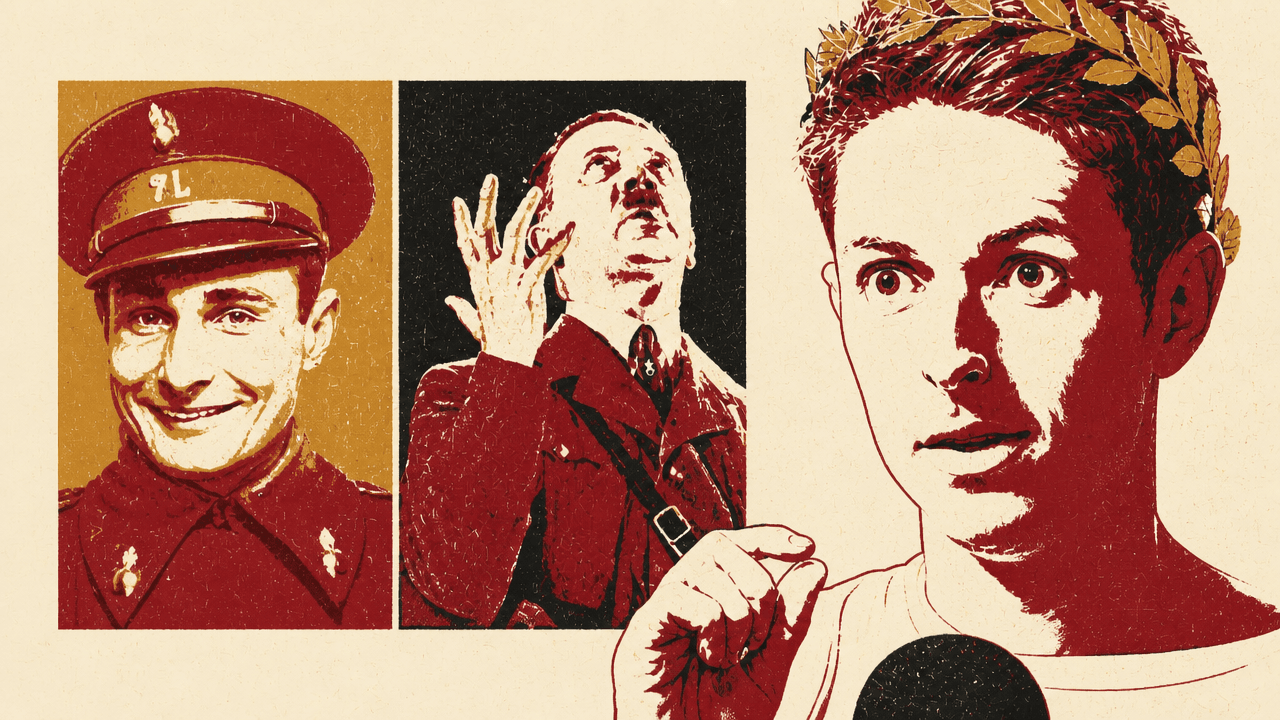
George Mack argues that Juan Pujol, a Spanish chicken farmer repeatedly rejected by Britain’s embassy in Madrid, made himself indispensable to British intelligence by first gaining the trust of Germany. Posing as a Nazi agent, Pujol built a fictitious network of 27 British sub-agents and supplied deception that, Mack says, helped convince Hitler that the Allied invasion would come at Calais rather than Normandy. Chris Williamson presents the story as a case for changing the evidence behind a request after rejection, rather than simply repeating it.
Pujol did not just persist—he changed the evidence Britain had to judge him
Chris Williamson draws a distinction between continuing to pursue a goal and giving a gatekeeper new reason to say yes. In the story George Mack tells, Juan Pujol did both.

Pujol initially wanted to work for Britain. In 1941, Mack says, the Spanish chicken farmer walked into the British Embassy in Madrid and asked for a job with MI5, offering to spy on the Nazis. He was turned away repeatedly. The embassy’s response—asking him to put the request in writing—was, as Mack puts it, effectively a dismissal.
Pujol’s answer was not to make the same appeal more forcefully. After several rejections, he went to the German embassy instead and offered to spy on Britain. He professed loyalty to Hitler and the Third Reich, claimed to hate Britain, received training and small assignments, and learned to use invisible ink. Once he had established himself with German intelligence, he returned to the British side with a different proposition: Germany already considered him useful.
So he got rejected, rejected, rejected, and was like, okay, I’ll take matters into my own hands.


Williamson’s reading is not that every rejected applicant should simply keep trying until an institution relents. Britain had little apparent reason to hire an unknown man who claimed he could help. Pujol created a form of proof that his initial application lacked: he gained the confidence of the adversary Britain wanted to deceive.
That required what Williamson calls theory of mind—working out what the rejected party would need to see in order to regard him as valuable. Pujol retained the original destination, working for Britain, but changed the route and the evidence.
A fictitious network gave Germany reason to trust one man
George Mack describes Pujol’s eventual value to Britain as resting on an elaborate fiction. He built a supposed network of 27 sub-agents in Britain, all of them invented. He created individual identities and reports about their activities, and German intelligence believed the network was real.
The effect, in Mack’s telling, was to make German intelligence believe Pujol had access and reach inside Britain. He was not merely presenting himself as a lone source; his reports appeared to come from an apparent web of agents operating on the ground.
MI5 called Pujol “Garbo,” Mack says, after Greta Garbo and in recognition of his acting. The codename captures the central task: maintaining a role sufficiently convincing that German intelligence would act on information connected to people who did not exist.
That credibility is what made the deception consequential around D-Day. Mack says Pujol supplied false information that convinced Hitler and Himmler the Allied invasion would take place at Calais. Germany consequently sent important armies there while the invasion occurred elsewhere. Mack places Pujol alongside Eisenhower and Montgomery as one of the three people with the greatest impact on D-Day.
He builds up a network of 27 sub-agents inside of Britain that the Nazis believe are true, but it’s all his own imagination.
The same German confidence produced an unusual outcome. Mack says Hitler awarded Pujol the Iron Cross, while Britain awarded him an MBE; in Mack’s telling, Pujol was the only agent to receive both honors.
He’s the only agent to get both an Iron Cross from Hitler and an MBE from the King.
The maneuver worked only because Pujol’s loyalty ran the other way
The strategy had an obvious danger. As Chris Williamson notes, it was fortunate that Pujol genuinely wanted to work for Britain. A man capable of winning German trust, building a believable intelligence network, and producing information influential enough to shape German expectations could otherwise have been a major asset to the Nazis.
That is why Williamson treats the story as more than an example of grit. The relevant question after rejection is not always whether to push harder. It can be whether the rejection reveals a missing credential, missing proof, or missing perspective—and whether there is a legitimate way to acquire it.
Pujol’s response combined persistence with a radical pivot. He did not abandon his objective after the British Embassy rejected him. But he did not keep presenting Britain with the same unsupported promise, either. He went away and made himself harder to dismiss.
Mack adds a final extension of the story’s logic. Pujol was believed to have died of malaria in Mozambique in 1949, but had reportedly faked his death and moved to Venezuela, where he ran a bookstore. Mack frames the disappearance as protection from retaliation by surviving Nazis. When former MI5 colleagues encountered him again in the 1980s after decades of believing him dead, one reportedly broke down in tears.