Engineered Euphoria Could Turn Plague Victims Into Unwitting Spreaders
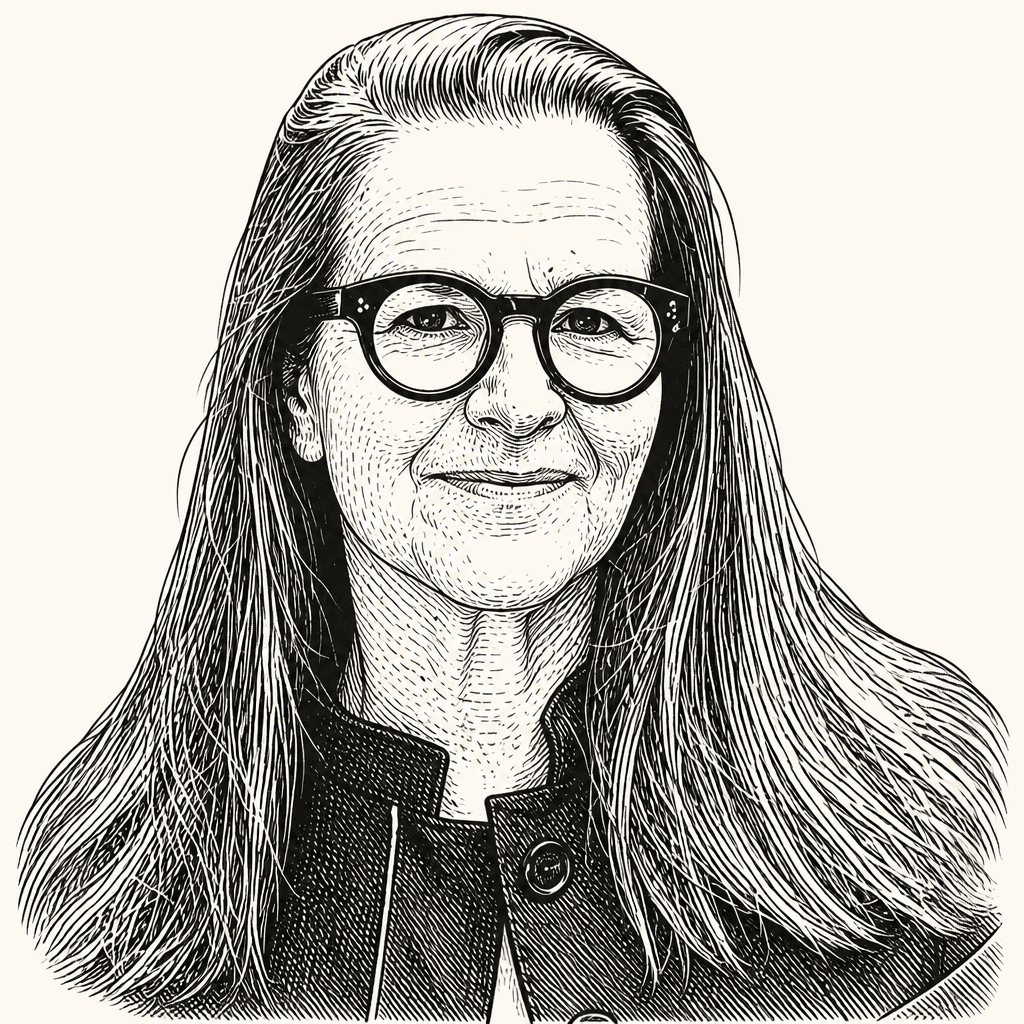
Annie Jacobsen argues that a genetically engineered plague could be made more dangerous by giving infected people temporary euphoria, removing the symptoms that ordinarily keep sick people home while they spread disease. Drawing on an account of Soviet interest in a “super plague,” she describes how delayed recognition—especially where early cases resemble routine medical crises—could exhaust a narrow containment window. By the time authorities visibly mobilize, Jacobsen says, the priority may shift from stopping transmission to protecting critical infrastructure and managing disorder.
A plague designed to make its victims spread it
Annie Jacobsen describes a biological-war scenario built around a perverse epidemiological premise: illness ordinarily limits its own transmission when people become too sick to move. A person with plague or flu goes home, gets under the covers, and encounters fewer people. The weapon in her fictional model reverses that behavior by engineering Yersinia pestis with a gene for euphoria.

Jacobsen says the premise was informed by what Dr. Hein told her about Soviet work on a “super plague” weapon. As she relays that account, Soviet researchers were working on the idea of making infected people euphoric rather than incapacitated during the early stage of illness. She chose it as the real-world analogue for her scenario. USAMRIID doctors and scientists, she says, regarded the concept as “straight up evil” because it would turn ordinary social behavior—going out, dancing, gathering—into a delivery mechanism for disease.
Absolutely. It is genetically modified to have euphoria. So the first 24 hours, people are spent euphoric and they only essentially collapse into the disease when the euphoria wears off and now they're shedding bacteria.
The point is not simply that infected people travel. It is that the usual behavioral warning sign—withdrawal because someone feels sick—has been deliberately removed during the period when travel and contact are most consequential.
Jacobsen’s fictional transmission chain begins with an outbreak in Siberia. International hunters encounter a scientist and board flights home across several continents; another infected contact reaches Los Angeles through a UCLA student. The plot mechanics matter chiefly because they establish the governing problem: people disperse while feeling exceptionally well, rather than being slowed by symptoms.
Detection fails when a novel outbreak looks like a routine emergency
In Jacobsen’s scenario, the Los Angeles outbreak takes hold in a homeless encampment after the UCLA pre-med student, who does pro bono work on Skid Row, unknowingly brings infection there. She says she chose that setting after consulting epidemiologists because America’s homeless population is not included in BioSense, the nationwide syndromic-surveillance system she says the CDC created after 9/11.
Chris Williamson asks why that exclusion is dangerous. Jacobsen describes BioSense as a system through which more than 7,000 hospitals, urgent-care facilities, and emergency rooms feed outbreak information to the CDC in real time, with the aim of identifying an outbreak before it becomes an epidemic or pandemic. She says America’s 800,000 homeless people are outside that system.

Los Angeles, she says, has 75,000 homeless people, including 4,000 on Skid Row without healthcare or facilities. But Jacobsen’s emphasis is less on a generic claim about density than on diagnosis. At free clinics, nurses and doctors are already confronting fentanyl overdoses, tuberculosis, flu, alcoholism, and other serious physical-health problems. A bad cold or coughing up blood can be read initially through those familiar crises rather than as evidence of a new pathogen.
That produces a second impediment to detection alongside the engineered euphoria. First, people are moving and socializing before their illness presents itself. Then, when cases do appear, their symptoms can resemble routine emergencies in a setting where clinicians must distinguish among many acute conditions. Jacobsen calls the resulting encampment outbreak a “super spreader event,” but her account makes delayed recognition the central failure.
Williamson identifies the political tension that follows. Officials want to reassure the public and avoid panic, anarchy, and civil breakdown. Yet that same reassurance can postpone the mobilization needed to stop transmission.
Once governments visibly mobilize, the mission may already have changed
Annie Jacobsen’s central operational claim is blunt: speed of containment is “everything.” An outbreak can be stopped early, she says, but only before it expands beyond a controllable area. In the international scenario, that also depends on transparency and cooperation from the country where it begins.
The United States has a chemical, biological, radiological, and nuclear response force—CBRN personnel trained for weapons-of-mass-destruction contingencies—which Jacobsen says includes 18,000 people ready to deploy. But Chris Williamson presses the geographic constraint: those forces are in the United States, while immediate containment of a Russian outbreak would need to happen locally. Jacobsen agrees that the host nation must act.
Russia has RKhBZ troops, Jacobsen says, and could deploy them. In her scenario, their deployment eventually reveals the seriousness of the event. But that disclosure comes too late.
Once we see they've deployed those troops, we know, but now it's too late.
Jacobsen places the viable containment window at roughly the first 24 to 36 hours of her scenario. At that point, she says, intervention remains possible if the outbreak is recognized and the host government is transparent. After infections have dispersed and uncertainty around symptoms has persisted, the task changes.
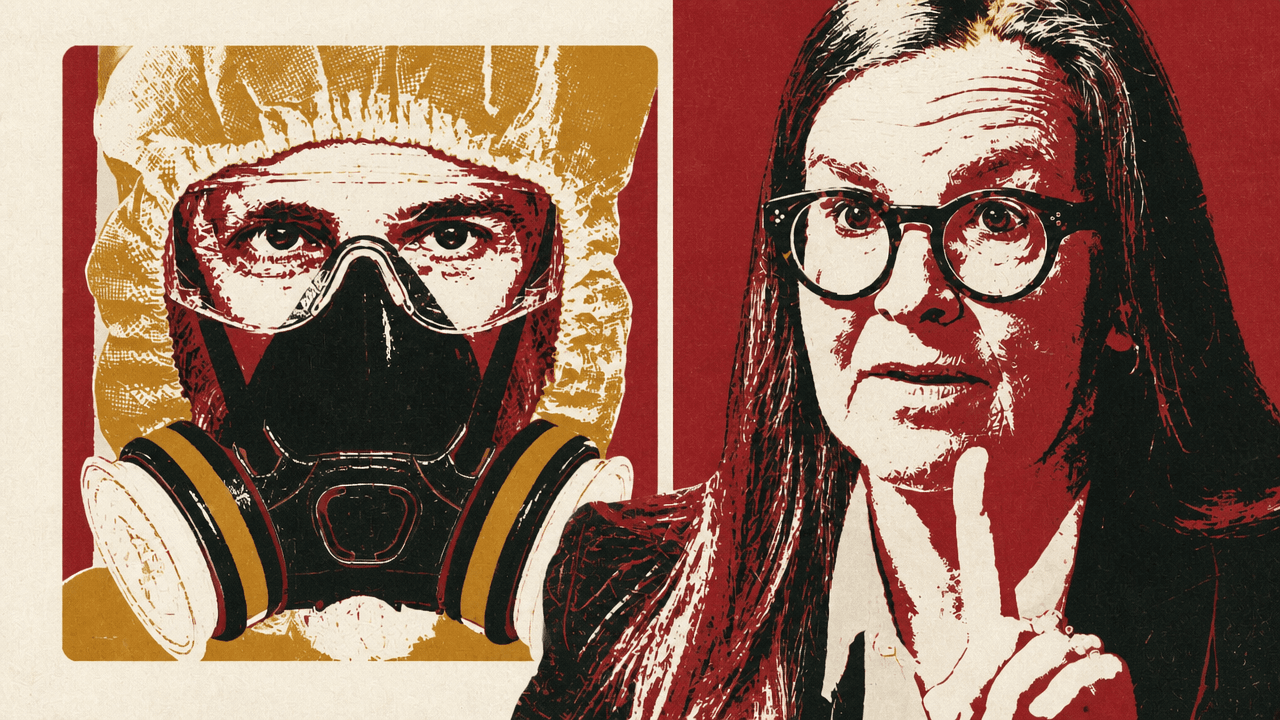
Her fictional plague reaches anarchy in six days. What surprised Jacobsen in studying Defense Department wargaming, she says, was the institutional pivot once response orders escalate from a WARNORD, or warning order, to an EXORD, an execution order. Personnel in biohazard suits and gas masks deploy, but the priority is no longer simply protecting the broader population from infection.
Instead, Jacobsen says, the focus turns to critical infrastructure: roads, water systems, nuclear power plants, and Defense Department facilities. The initial CBRN force is directed toward those functions, followed by the broader Defense Department. The concern she says she encountered was not only the original outbreak, but the secondary effects of distrust: anarchy and insurrection after confidence in the system breaks down.