Escaping Ordinary Work Turned Freedom Into Constant Vigilance

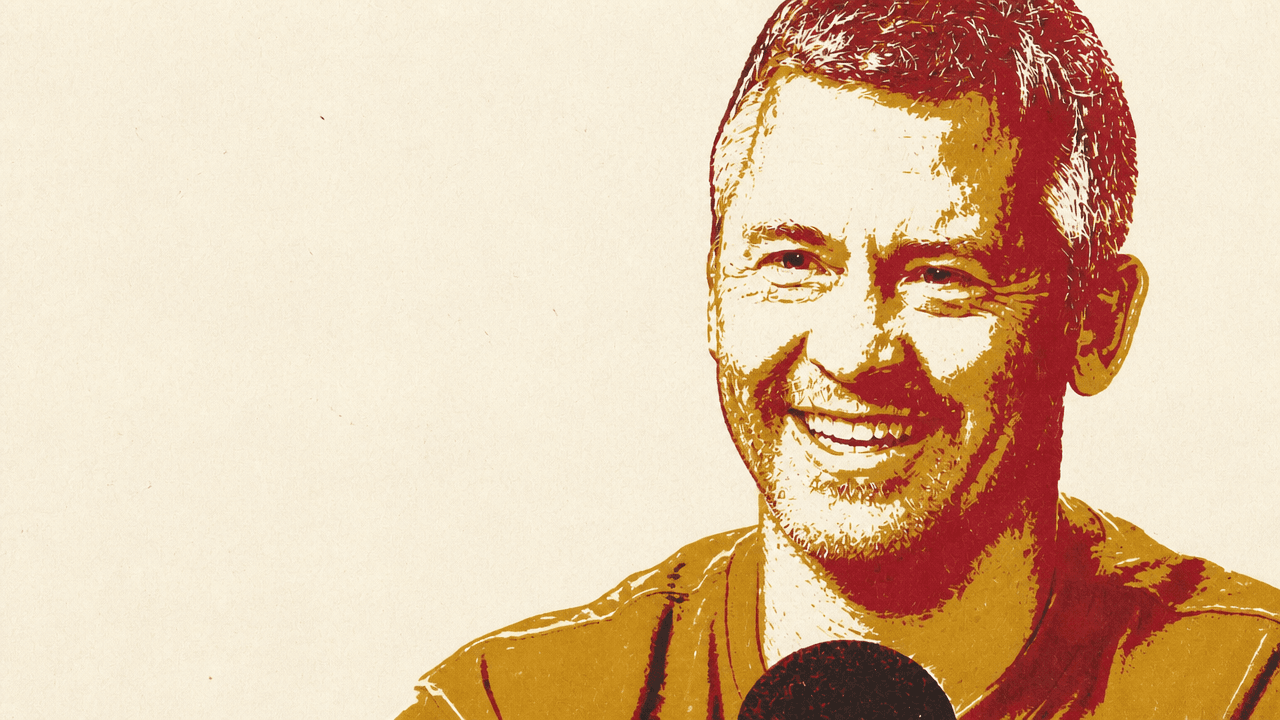
Comedian and writer Matt McCusker argues that much of adult life involves choosing among forms of hardship rather than escaping hardship altogether. Drawing on his years selling drugs, his experience of fatherhood and his changing view of conventional work, McCusker tells Chris Williamson that safety, family and ordinary responsibility became more meaningful after he learned what a life organized around avoiding discomfort could cost. Their discussion also tests that moral framework against severe mental illness, particularly in the Lindsay Clancy case, where explanation and public protection remain in tension.
Psychosis may explain an act without resolving what society owes afterward
The Lindsay Clancy case forces together questions that are usually easier to keep separate: what severe mental illness can do to agency, what responsibility means after catastrophic harm, and what protection requires when the person who caused the harm may also have been acutely unwell.
Chris Williamson says his first response was simple: Clancy killed her children. That certainty weakened after he spoke with a psychiatrist who, Williamson says, had worked on the ward from which Clancy was discharged and knew the clinicians involved in her care. The psychiatrist described psychosis as totalizing and compelling, shaped by pharmacology and neurology in ways that can make ordinary deliberation beside the point.

The example that stayed with Williamson was deliberately mundane. A person who realizes, after using the bathroom, that they need to go again does not hold an internal debate; they simply act on the compulsion. In the psychiatrist’s account, as Williamson relays it, psychosis can work with a similar immediacy. The person is not calmly weighing alternatives and selecting one. The illness can narrow the space in which agency ordinarily operates.
That account left Williamson conflicted rather than convinced of a particular legal outcome. The deaths remain the central fact. But if psychosis can reach the point of overwhelming someone’s capacity to choose, he asks, how should a society distinguish explanation from excuse, care from punishment, and public protection from moral condemnation?
Matt McCusker approaches the same problem from the other side. He says the entire situation is tragic and that he felt for Clancy’s husband after reading about the case, particularly because years have passed and he has apparently had to rebuild his life. McCusker accepts that medication and psychosis may have been central to what happened. Still, he cannot get past the practical question of recurrence. If someone has killed their children during a profound break with reality, what arrangement can safely follow—even if the person was not acting with ordinary criminal intent?


McCusker says he could be wrong about the legal details, but understood that an outcome based on psychosis could mean psychiatric confinement reviewed periodically. What unsettles him is the prospect that a person who has reached such an extreme state could eventually be released after reassessment. His position is personal rather than legalistic: however unfair and awful the circumstances, he thinks someone capable of that level of violence has to be kept away from the public.
Williamson frames the difference as the reason for confinement. Clancy may be “parked” either way, he says. The question is whether she is held as someone culpable for a crime or as someone whose illness explains why the crime occurred. That distinction changes the moral account of the person, even if it does not produce an easy path back to ordinary life.
Williamson says the psychiatrist gave him figures meant to show both the rarity and reality of the condition at issue: about three cases of postpartum psychosis per 10,000 births, and homicidal thoughts or ideation in roughly 5% of those cases.
Using the psychiatrist’s estimate of roughly 60,000 births a day in the United States, Williamson argues that an extremely rare condition can still produce real cases at population scale. The numbers do not make any individual tragedy predictable. They help explain why a case such as Clancy’s can become a public conflict rather than a consensus horror.
Williamson sees the public split, especially among mothers, as part of that conflict. Some women who have experienced postpartum depression or periods of feeling unlike themselves may recognize a frightening continuity between their own distress and the possibility of a mind overwhelmed by illness. Others experience the case through an intensified protective instinct: their awareness of a child’s vulnerability makes violence against children more incomprehensible and more enraging. Williamson says support for Clancy appears disproportionately female, but mothers themselves divide between those two responses.
McCusker broadens the problem through a thought experiment he attributes to Sam Harris about Uday Hussein. Suppose someone is born to a violent, powerful father and grows up in a culture that normalizes cruelty. At two years old, nobody would treat him as meaningfully accountable. At six, if he bullies children or pulls wings off flies, people can still point to youth, imitation, environment, and reinforcement. But eventually that child becomes an adult capable of terrible acts. At what point does causal understanding become compatible with full responsibility?
Neither speaker puts a clean answer on that question. Legal systems recognize some version of the problem through distinctions between juveniles and adults, but a statutory age line does not resolve the underlying issue. A person can be shaped by parents, social conditions, temperament, illness, and incentives, while ordinary moral life still requires some way of treating people as answerable for what they do.
McCusker says remembering that another person was once somebody’s child can be useful in ordinary life. A rude stranger, an aggressive driver, or someone who causes a minor offense may be carrying circumstances invisible from the outside. But he draws a boundary at irreparable harm. Compassion for someone’s origins does not, in his view, prevent exclusion once they have devastated another person’s life.
The case remains unresolved because the speakers refuse the two simplest conclusions. Psychosis may alter blame in a profound way; it does not make the deaths less grave. Public protection may be necessary; it does not settle whether the person being confined should be understood primarily as evil, sick, or both.
New parenthood has been made into a private endurance test
For McCusker, the Clancy case raises a prior failure: new mothers are often expected to endure the period after birth with far too little sustained support. His claim is not that community support would eliminate severe psychiatric illness. It is that the prevailing arrangement—brief attention after birth followed by isolation with a newborn—looks fundamentally wrong.
Matt McCusker says women in particular are not supposed to be alone after having children. The first week or two may bring visitors, congratulations, and offers of help. Then the attention falls away. The mother may be home for long stretches, nursing frequently, dealing with hormonal changes, physical recovery, concerns about milk supply, and sleep disruption while the infant’s needs continue without pause.
McCusker sees that condition as an unnatural privatization of an exhausting transition. A person who has just given birth can end up sitting alone in a house for months with a baby, expected to manage a demanding biological and emotional event as though it were simply a domestic scheduling problem. He says that setup is “really fucked up.”
Chris Williamson connects that thought to a discussion with an expert who wrote Dad Brain. Williamson says the expert described cognitive changes in new parents: they may become worse at some executive tasks, such as remembering keys, managing calendars, or handling finances, while becoming more responsive to information concerning their child. The important variable, in the expert’s view as Williamson recounts it, was whether the parent feels held and contained by a local community.
Williamson also brings up “lying in,” a practice Louise Perry had described to him. In his account, a woman who had just given birth spent a month resting while other people brought food, helped with washing and basic care, and took on some childcare. He jokes that an introvert might eventually want all that attention to stop. But the arrangement treated recovery as a period requiring collective labor, rather than an interruption one person had to absorb before returning to normal output.
The contrast with contemporary family economics is sharp. McCusker describes parents calculating whether their income exceeds the cost of daycare. If it does not, staying home becomes the economic decision. If it does, the parent returns to work while still recovering, effectively running in place to remain ahead of childcare costs. Williamson calls it a treadmill: move fast enough, or get thrown off the back.
Williamson says maternity leave in the UK can last nine months, with parents able to choose how much of that leave falls before and after birth. He raises the comparison to ridicule the thinness of the alternative: a major physical event is followed by pressure to return because there are emails to send. The mismatch is between the scale of childbirth and the scale of the demands used to curtail recovery.
McCusker’s account of watching his wife give birth makes the point personal. He says childbirth changed his sense of women’s physical capacity. He does not mean that minor pain is unreal or that women need praise for meeting an expectation. He was struck by seeing someone enter a terrifying physical event with what looked to him like military steadiness. In labor, he recalls, she was telling him what to do if she passed out. Williamson jokes that it was like Jocko Willink stepping into McCusker’s wife’s body.
The experience also changed what McCusker thinks attention is for. Before children, he says, his thoughts naturally looped around himself: what he wanted, what he had not accomplished, what irritated him, and what future he was trying to build. A child puts another person into that internal space. The child’s needs return automatically, often before the parent’s own plans can be completed.
He does not romanticize the arrangement. Children wake him early, require meals, make messes, and repeatedly injure him by accident. McCusker returns to the comic but practical fact that small children are often at exactly the right height to jump on, hit, or collide with their father’s groin. The parent reacts as though a stranger has attacked him, then has to stop and explain the pain in language a child can understand.
The rewards are no more rational than the costs. McCusker describes finding an inflatable alien toy at the top of the stairs dressed in a Princess Peach costume, an arrangement his children had created. He laughed for several minutes. Those pointless moments are part of the return: not a clean exchange in which sacrifice earns measurable value, but a stream of absurd scenes that would not otherwise exist.
When you have a kid, it’s like it clicks into a very obvious set groove in your brain where you’re like, yes, this makes sense why I’m doing this now.
McCusker had spent years trying different activities, ambitions, and forms of freedom while still asking why he was doing any of it. Parenthood did not make life easier. It made the reason for certain effort feel more obvious. He calls it a “baked-in” purpose: an orientation that does not depend on the day’s mood, income, status, or personal advantage.
Williamson offers Jimmy Carr’s image of having a child as a surgical procedure in which one’s heart begins living outside one’s body. McCusker recognizes the shift in how he responds to other people. An insult aimed at him can be dismissed. Hostility directed at his children cannot. That heightened vulnerability makes strangers more imaginable as well: every adult was somebody’s child, and every child belongs to someone who feels that exposure acutely.
It also changes the meaning of a quiet house. McCusker says he dislikes the silence of a hotel room when he travels for stand-up. Williamson, whose housemate is away, describes coming home to a room in which every object is exactly where it was in the morning and finding that stillness despondent. He wants someone to move a cup or create a different mess. Disorder becomes evidence that life is happening around a person.
The speakers do not present children as a solution to aimlessness or loneliness. Williamson notes that parenthood can also torpedo a person’s life if they cannot afford it. Their narrower point is that care for another person interrupts obsessive self-concern, and that the social arrangements around childbirth should acknowledge how destabilizing, demanding, and consequential that interruption can be.
Trying to outrun ordinary work gave McCusker a more dangerous life
McCusker’s earlier life was driven by a determination not to be trapped in ordinary employment. He recalls office jobs as intolerable and says he would take one, last a few weeks, and quit. A nine-to-five did not feel like a modest compromise. It felt like something he had to escape.
That impulse brought a version of freedom that was neither calm nor secure. Matt McCusker says he sold marijuana for roughly a decade and, for a shorter period, tried selling cocaine despite never using it himself. He had guns pulled on him twice, was robbed repeatedly, and lived with constant fear of arrest. Looking back, he says it would not have been surprising if he had died during those years.
He describes himself as conscientious by the standards of his own trade. He was punctual, cared about quality, says he did not cheat customers, and would not sell marijuana to high-school students. With cocaine, his conscience became a commercial liability. He says he would tell regular customers they were using too much and needed to slow down. Williamson calls him an ethical drug dealer; McCusker accepts that this made him a bad one.
The distinction McCusker draws is between selling small amounts of marijuana to people he considered like-minded and moving into larger, more dangerous transactions. The former could feel relatively relaxed. The latter brought people with serious criminal intent. He says he knew someone who was shot in the face while trying to arrange a deal involving 50 or 60 pounds of drugs and a cross-country meeting. Selling small amounts to friends could gradually become bigger money, and bigger money could bring people for whom robbery and murder were ordinary business tools.
One story captures the instability. McCusker gave a man money to acquire drugs on his behalf. The man returned without the drugs, accused McCusker of having robbed him, cocked a gun, and held it on him. McCusker’s roommate, who had nothing to do with the business, emerged during the confrontation and was chased outside. McCusker says he froze.
His response afterward now seems as revealing as the threat itself. He continued working with the same person, reasoning that if drugs were fronted to him rather than bought with cash in hand, he would be less tempting to rob. He compares the logic to returning to an abusive relationship: he went back, but tried to establish terms that would stop the same thing happening again.
The risk that most occupied him, he says, was arrest. Other problems felt solvable. Being pulled over by police once meant immediate panic—his life was over, he was going to jail. Now a police stop can be an ordinary interaction. The distance between those reactions makes the old life’s tension more visible. McCusker says years of being “adrenalized” every day may have fried his nervous system. His hair went gray unusually fast, though he notes early graying also runs in his family.
Chris Williamson presses on the reversal. McCusker rejected office boredom and entered a life of vigilance, robbery, cash shortages, police anxiety, and concern that someone might break down his door. The conventional worker he once pitied now looks enviable: colleagues eating lunch together, regular hours, predictable time off, and evenings without the prospect of a gunman or a police search.
McCusker says he has seen office workers sitting together at lunch and felt genuine envy. The old picture of conformity became a picture of safety and companionship. At one point, he says, he began to crave boredom. Not having to solve 90 different problems or remain alert to danger sounded increasingly attractive.
Their argument is not that everyone should accept any job, nor that independent work is a mistake. Williamson says autonomy has obvious advantages: ownership, flexibility, and a closer relationship to one’s work. But he rejects the reflexive hierarchy in which university, a normal job, or a nine-to-five is automatically inferior to working for oneself. Independent work can mean never switching off, taking responsibility for payroll, and bringing every anxiety home.
What shit do you want?
Williamson’s question cuts against the fantasy that fulfillment means the absence of unpleasant effort. Some people can tolerate the predictable frustrations of conventional employment: commuting, bosses, routines, limited control. Others can tolerate entrepreneurial uncertainty, endless responsibility, and the collapse of any boundary between work and life. The choice is often between different costs, not between hardship and freedom.
Even aligned work can feel terrible in the moment. Williamson imagines a writer with an ideal morning—the sunrise, training, caffeine, a quiet house—who still sits before a blinking cursor. McCusker says he loves writing but can spend hours revising one sentence until he feels as though the blood has drained from his brain.
His revision of his younger self is therefore not a conversion to corporate life. He says he should have found something he was interested in, preferably something that benefited other people, and endured the difficult early years. Instead, he tried to leap over the humiliating or boring phase of a career. The effort to avoid ordinary discomfort produced years of instability.
Fatherhood made that realization practical. McCusker recalls sitting in a hospital room after the birth of a child and watching a worker replace the paper towels in a dispenser. The old fixation on finding the perfect job loosened. He thought he could do that work if he needed to. A job did not have to be his entire identity. It could provide money for the life that had become more important.
The old advice becomes persuasive only after the alternatives fail
The same reappraisal shapes how both men think about dissatisfaction. McCusker says he can turn small annoyances into all-day crises, especially when life is otherwise good. A trivial irritation becomes “this is fucking bullshit,” and he can spend hours focused on it despite knowing that it is not a real problem.
Matt McCusker describes his daily task in plain terms: not becoming “shitty and nasty.” It is less a productivity practice than an attempt to stop feeding a habit of grievance. When his life contains obvious problems—a bad boss, no money, dangerous work—dissatisfaction has clear targets. When those problems recede, he says, he can create substitutes.
Chris Williamson gives the tendency a broader form. Complaining often reflects a gap between expectation and reality. Traffic is not an injustice simply because a person failed to account for traffic; and the person complaining from a car is part of the traffic. That does not deny that unfair things happen. It targets the private grievance that treats ordinary friction as though reality has breached an agreement.
Williamson illustrates the point with a story Morgan Housel told about a long-planned family holiday. A couple had researched the resort, the restaurant, a table with the best sunset view, and the cocktail they planned to order. Once they arrived—with their children looked after for a brief moment—the father started noticing sand between his toes, wondering whether he should have ordered the drink blended, doubting that his table had the best view, and resenting the sun in his face.
The human like curse is to for everything to kind of be not quite as nice as you thought it was going to be and then for you to focus on all the ways in which it’s not as nice.
The complaints are individually plausible. What makes them absurd is what they replace: years of anticipation, a major trip with children, and a rare quiet moment the family had worked to create. McCusker recognizes the pattern in his own career. When a hated job and lack of money supplied obvious grievances, he knew what he was fighting against. When some of that pressure lifted, the absence of misery was strangely disorienting. The old problems had become familiar enough to supply structure.
The Tolstoy diary entries shown during the discussion offer a compact comic version of the same gap between ideal and behavior. One 1858 entry reads: “Sept. 19: Decided that one must love and work, and that’s it. Sept. 20: Tired. Didn’t love and didn’t work.” Williamson also reads an entry in which Tolstoy wakes everyone at six but sleeps until nine himself, and another in which he records falling in love—or imagining he had—then buying a horse he did not need.
McCusker likes the entries because they make a canonical writer recognizable as tired, impulsive, distracted, and ridiculous. Russian literature more broadly gives both men a harsh contrast effect: hunger, illness, broken carriages, dead horses, bitter quarrels, and lives with far fewer comforts than their own. Williamson jokes that perhaps reading it teaches a person something; perhaps it simply makes present-day life feel better when the book ends.
But the more durable lesson they take from older writing is that clichés may become intelligible only after someone has spent years trying to evade them. McCusker discusses G. K. Chesterton’s Orthodoxy, in which Chesterton attempts to establish his own philosophical system and realizes he has reconstructed Christianity. Chesterton’s image is of a sailor who believes he has discovered a new land, only to find that he has sailed back to England.
Williamson offers a similar thought from The Alchemist: returning to where one began after a journey is not the same as never having left. The detour can be costly, but it establishes why an old answer holds. Someone who learns, after years of risk and self-absorption, that safety, family, community, ordinary work, and responsibility matter has not merely obeyed a cliché. He has tested an alternative.
That is why McCusker makes a modest case for reflection rather than a grand demand for self-optimization. People need to work and act, he says. Sitting still is not a substitute for building a life. But even ten minutes spent walking, writing, or asking what one is doing and why may prevent a person from blindly throwing activity at the wall in hopes that something will finally explain them.
Williamson supplies a version of the same warning through a story about a former employee. She had moved to Bali, was earning about $5,000 a month doing one-to-one nutrition coaching over WhatsApp, and told him she was happier than she had ever been. Williamson’s immediate impulse was to explain how she should scale: build a website, create a lead magnet, collect emails, develop products at several price points, learn sales, and buy advertising.
Halfway through, he realized what he was doing. She had just told him that she was happy, and he was trying to install the same growth problem that people spend years trying to escape. He stopped himself and told her to disregard the advice.
The exchange captures the limit of the self-improvement and entrepreneurship instinct running through their discussion. More scale, more productivity, more optionality, and more independence are not automatically improvements. A person can optimize a life away from the conditions that made it good.