Algorithms Exploit Fear, Novelty, and Social Judgment to Shape Behavior
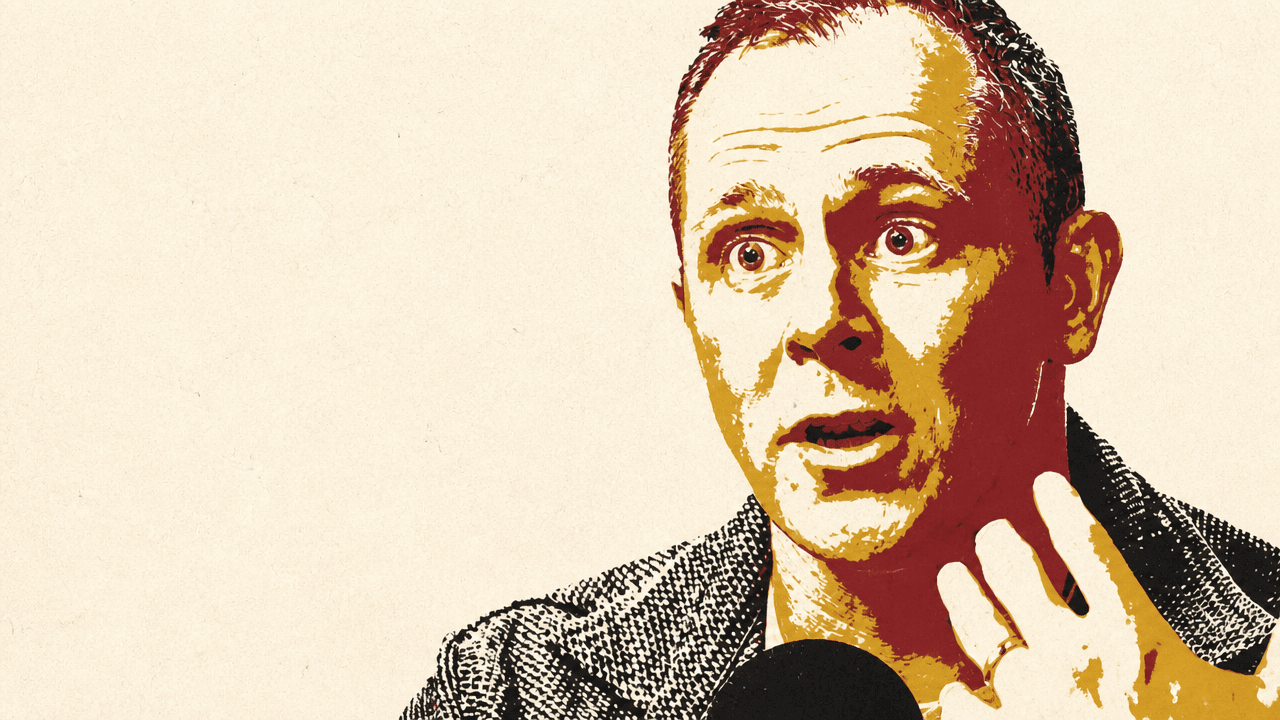
Former U.S. Navy chief and influence specialist Chase Hughes argues that modern manipulation works less by changing minds directly than by engineering the conditions in which certain choices feel automatic. In a wide-ranging conversation with Chris Williamson, Hughes says social media, interrogation, leadership, body language and shame all turn on the same mechanics: attention, fear, context, pressure and permission. His central claim is that people become easier to move when they are destabilized, performing for imagined judgment, and offered a simple release from uncertainty.
Manipulation is easier when people are performing for a larger tribe than they can psychologically manage
Chase Hughes describes his work as teaching “everything from brainwashing to interrogation” and applying it both to oneself and to other people. Much of his current work, he says, is training sales teams, but the larger interest is behavioral change: how the brain works, how human behavior shifts, and what mechanics make those shifts possible.
His starting claim is blunt: this is, in his view, the most psychologically manipulated era in human history. Not because manipulation is new. Hughes points to ancient Rome as an example of distraction by spectacle: when something politically inconvenient happened, “do the lion fighting thing with the guy” and redirect public attention. What has changed, he argues, is pervasiveness. Digital media has scaled the audience before whom people fear judgment.
Hughes roots that fear in an older social nervous system. Public speaking is often named as the number-one fear, but he says the underlying fear is not speech; it is being judged and ostracized. To a brain adapted for small groups, being kicked out of the tribe meant death, loss of mating prospects, and loss of future offspring. In an earlier social environment, doing something embarrassing in school or adulthood might expose someone to judgment from 30 or 40 people. Social media turns that into the imagined judgment of five or ten million.
That escalation, Hughes argues, has changed society. The consequences of being wrong, awkward, or condemned feel “unbelievably, exponentially increased,” and he connects that to loneliness. His explanation is not simply that people spend time online instead of in person. It is that increased fear of judgment produces increased performance. People show a polished self, conceal shame and guilt, and come to believe that even when others praise or love them, those others are responding to the costume rather than the real person.
Chris Williamson sharpens the point by distinguishing the person from the persona. A persona, he says, “is incapable of receiving love, it can only receive praise.” He compares it to celebrity identification: people do not love Chris Hemsworth, they love Thor; they do not love Russell Crowe, they love Gladiator. If success and approval attach to the role, the person underneath may still feel unseen.

Hughes uses a scene from the Nicolas Cage film Pig to make the same point. Cage’s character, as Hughes describes it, has stopped performing. He confronts a chef who is pretending to be a certain kind of person for professional success and tells him, in effect, that none of it is real; there will be less and less of him every day until nothing recognizable remains. Hughes says people may imagine themselves as the awakener in that scene, but often they are the person who needs to be shaken awake.
The loneliness claim matters because it sits underneath the later discussion of influence. A person who is afraid of social expulsion, performing constantly, and unsure whether anyone knows them is easier to move. The costume is not just an emotional burden. It becomes a point of leverage.
Brainwashing, persuasion, interrogation, and threat detection are all condition-setting problems
Chase Hughes repeatedly reduces influence to named sequences. The labels differ by domain, but the pattern is consistent: capture attention, change the felt situation, lower resistance, and make the desired action feel permissible or automatic.
| Framework | Sequence | What it is used to explain |
|---|---|---|
| FEAR | Focus, emotion, agitation, repetition | Brainwashing and social-media emotional cycling |
| PCP | Perception, context, permission | How context makes a behavior feel allowed |
| Confession sequence | Socialize, minimize, rationalize, project, alternative question | How interrogation reduces resistance to admission |
| COPE | Concealment, oxygenation, preparation, expenditure | Warning signs around aggression or threat |
The most important of these is FEAR: focus, emotion, agitation, and repetition. Hughes says brainwashing is real and begins by repeatedly breaking a person’s predictions. Novelty captures mammalian attention quickly. He uses the example of walking in the woods and hearing a stick break behind a tree. The entire attention system narrows around the unexpected sound. For humans and other mammals, novelty generates focus because it signals possible relevance or threat.
Brainwashing is absolutely real. There’s a four-step process. And it spells out the word fear. It’s focus, emotion, agitation, and repetition.
Emotion, in Hughes’s model, works through a dynamic he connects to hypnosis: fractionation. He describes fractionation as moving someone in and out of a hypnotic state in quick succession, with each return making the person more responsive. He translates that into physiological language: more GABA, which he calls a “safety chemical,” and a greater theta-wave brain state. The mechanism he wants to emphasize is oscillation: up and down, relief and threat, safety and alarm.
He then maps that pattern onto social media feeds. Scroll for a few minutes, he says, and the sequence appears: focus, authority, tribe, emotion. The feed grabs attention, shows an authority figure, communicates something threatening, activates fear of judgment by the tribe, intensifies emotion, then offers a brief lift. The lift might be a heartwarming video: people bottle-feeding a baby deer, then a fast cut to the grown deer sleeping in a child’s bed. The user is brought up — then pushed back down into fear, scarcity, anger, or alarm. Hughes says that after the fear sequence, the feed will often either bring the user up or show an ad.
He is careful not to claim immunity. Knowing the mechanism does not vaccinate him against it. He says he has bought “the dumbest shit in the world on Instagram” and calls himself only “a well-informed victim.”
The third step, agitation, is not merely a surprising event; it is a disruption in one’s ability to predict the environment. Oil prices rise, a critical resource is threatened, the landscape itself seems to shift. In a detainee environment, Hughes says the formula can be applied more literally: repeated waking by strobe lights, loud sounds, cold water; emotional pressure from family photos projected on the wall; disruption of prediction; then repetition. The cycle, he says, can create “a blank slate.”
When Chris Williamson says that this is exactly what social media is using, Hughes agrees but distinguishes between emergent algorithmic incentives and deliberate manipulation. He does not picture social-media executives around a dark conference table plotting psychological harm. He thinks the feed’s emotional cycling is largely an algorithm optimizing for revenue. Showing an ad is easier, in his account, after a baby-deer uplift or after destabilizing fear about the water supply.
But he draws a harder line around political division. If a user is on the left, Hughes says, the feed will show the “dumbest” and most extreme examples of people on the right; if on the right, the same pattern appears in reverse. The intended mental result, as he describes it, is a permanent judgment: those people are crazy, all of them, and cannot be trusted. He calls this “engineered division.”
His strategic claim is that if people are fighting horizontally, they will not look up. Hughes says destabilization reduces critical thinking “by like 50%,” and that destabilized, distrustful people are “10 times” easier to manipulate. He presents these numbers as part of his account of the phenomenon, not as a detailed review of specific studies. His metaphor is falling off a cliff: arms and legs flail, and the first solid thing that touches the body gets grabbed, even if it is a thorn bush or barbed wire. A destabilized population, presented with something clear and simple — especially a pre-packaged enemy — becomes more likely, in Hughes’s account, to accept it.
He links this to Unrestricted Warfare, a translated paper or book he attributes to two Chinese intelligence officers, which he says discusses asymmetric warfare against a hypothetical country resembling the United States: get citizens fighting one another, make them distrustful, destabilize from inside because a terrestrial war cannot be won. Hughes also says some foreign state actors are involved in manipulation, and gives as an example a former mayor in California whom he says was proven to be an operative for China. He does not claim to know the endgame. He frames the actors more prosaically than conspiratorially: countries that hate each other and greedy, selfish companies.
His rule for news consumption is similarly blunt: if a news source offers no nuance, “you are being manipulated.” In his description, the news tells viewers who the enemy is, how to feel, and what happened, but treats related events as disconnected stories rather than showing the relationships between them.
The most followable leader is not necessarily the best leader
Chase Hughes distinguishes leadership quality from followability. In destabilized contexts, he says, humans do not follow the best leader; they follow the most followable.
The first element is perceived authority. Hughes lists five qualities that make people trust another human being: confidence, literacy or clarity, discipline, leadership, and gratitude/enjoyment. Confidence comes first: a person speaks clearly, with no visible reservations, and in language that can be understood. He says presidents who speak at lower grade levels are more likely to be followable, and claims that the president who speaks at the lower grade level is about 35% more likely to win a debate. The point is part of his broader argument: clarity beats complexity when people are deciding whom to follow.
Discipline, in his usage, is not performative morning-routine content. It is self-control that “comes through” and can be perceived. Leadership, gratitude, and enjoyment add emotional stability: the person appears thankful for the moment, steady, and easy to orient around.
In practice, Hughes says the brain’s shortcut is simpler: people follow whoever is loudest, clearest, and least hesitant. Micro-hesitations are therefore costly. He calls them the fastest way to destroy authority, because observers unconsciously read them as a reason not to trust.
Chris Williamson connects this to the earlier discussion of chaos. A pre-packaged enemy resolves uncertainty into a simple explanation: not a million causes, but that group over there. A followable leader performs a similar function: the world is chaotic, but the leader seems to offer order.
Hughes develops this into a pressure model. To influence a system, one can close it down, build pressure inside it, and decide where the pressure will release. “Track the money” is less revealing, he argues, than tracking pressure: financial pressure, economic pressure, shipping and trade pressure, oil pressure. Pressure must find a release valve, and Hughes says that from an intelligence perspective, the release point is often where the real design becomes visible.
When Williamson asks what “they” want — whether the relevant actor is an algorithm, a company, or a state — the conversation shifts to algorithmic preference-shaping. Williamson cites Stuart Russell’s argument that algorithms can improve click prediction in two ways. They can get better at serving content that matches existing preferences, or they can nudge preferences to make users easier to predict. Williamson emphasizes that this need not be a conscious instruction given to the algorithm. An optimization system may learn that walking people down certain sequences produces more predictable behavior. In his framing, radicalization is not only movement toward an ideological extreme; it may also be movement toward an extreme of predictability.
Hughes says this maps closely onto how he teaches persuasion. Instead of engineering only outcomes, the more powerful move is to engineer conditions. He describes the goal as building “the perfect client” or “the perfect recipient” for the thing one wants to deliver. If he wants someone to click on baby-deer videos, he says, he would not simply start showing them those videos; he would engineer the person into the ideal state to receive them.
That leads to his PCP formula: perception, context, permission. Change someone’s perception of the situation; change the context or category in which they understand it; then the action that previously seemed unthinkable becomes permitted. His stage example is extreme: he describes a hypnotist in the 1940s giving participants the context that they were police responding to a party, then introducing the idea that someone in the audience had a gun. An off-duty police officer on stage, according to Hughes’s account, fired a real gun into the crowd. Hughes’s lesson is not that everyone is equally hypnotizable; it is that context defines what behavior is allowed.
He uses the everyday act of undressing for a shower to make the same point. People do not stand in front of a shower debating whether nudity is acceptable. The context tells them what is allowed. The influence question becomes: what context makes the desired behavior automatic?
Milgram’s obedience experiment, in Hughes’s reading, is another context-engineering case. The subjects’ willingness to administer what they believed were dangerous shocks was not produced by a magic script, he says, but by conditions: a lab coat, a setting, an authority structure, and a context in which shocking became permissible.
Interrogation works by making confession feel less socially and morally dangerous
Chase Hughes describes a confession sequence that is not built around catching a lie in the moment. It is built around lowering the internal cost of admission. The person resisting confession is not only protecting facts; they are protecting self-image, social standing, and the possibility that their action might make no sense even to them.
The sequence is socialize, minimize, rationalize, project, followed by an alternative question. In an arms-smuggling example, the first move is confrontation: tell the person they are not giving the full story without directly attacking their ego. His sample line is measured: he appreciates the person, has been doing this a long time, has talked to a lot of people, and knows when he is not getting the full story.
Socialize answers the fear that “people won’t understand.” Hughes would tell the suspect that he thinks they did it because they are a good person, that he has talked to bad people and knows the suspect is not one, and that when people see the steps that led to this, they will understand.
Minimize answers the fear that “this is a huge deal.” He would say he deals with people who have done much worse, that no one is accusing the suspect of being a mass murderer, and that this is not the same thing.
Rationalize answers the fear that “it doesn’t make sense why I did this.” Hughes might point to poverty, background, or a family member’s medical bills.
Project answers the fear that “it is all my fault.” He would say anyone handed those conditions might have made the same choices, and that arms-smuggling rings often use threats and pressure. If that happened, he wants to know so he can understand that the suspect did not deliberately decide to do it.
The alternative question then presents two options, both of which contain the admission: did you do this to make money for drugs and flee, or were you trying to help a family member? Chris Williamson immediately notes that both are admissions of guilt. Hughes agrees. In the conversation, the frame is that they are only trying to understand the reason; structurally, the question is designed to secure the admission.
Hughes also describes diagnostic questions from the interview phase. One is the bait question. In a hypothetical stolen-bike case, the interviewer says officers have been collecting evidence and asks: is there any reason a neighbor’s Ring doorbell camera would show your vehicle in that area? Hughes emphasizes that he has not claimed to possess the footage. The guilty person now faces a dilemma: say no and risk being exposed as a liar, or say yes and place themselves near the crime scene. An innocent person, he says, would typically answer “no” quickly and confidently.
Another is the punishment question: “What do you think should happen to the person that did this?” Hughes illustrates it with his children and spilled chocolate milk on a white rug. One child proposes a long list of punishments: spankings, grounding, no Xbox, no friends, no sleepovers, no eating in the living room. The other says maybe no more chocolate milk in the living room. Hughes says that was his answer: the second child’s narrower proposed punishment pointed toward culpability.
Later, when Williamson asks how to get truth out of someone quickly in ordinary conversation, Hughes returns to the same structure. Make it feel understandable, not catastrophic, sensible under the circumstances, and not entirely their fault. Then ask again. Williamson reflects that the method feels like throwing a lifeline to someone treading water: they no longer have to bear the discomfort, confusion, and isolation alone.
The practical distinction is important: Hughes is not presenting a magic lie detector. He is describing a way to reduce the psychological penalties of telling the truth. The method works, in his telling, because it addresses the four internal objections that keep someone holding the story together: people will not understand, the act is too serious, the reason makes no sense, and it is all their fault.
Rapport is less important than confidence without status
Asked how elite negotiators build rapport quickly, Chase Hughes first names admission: revealing a genuine fault, embarrassment, or insecurity that others might conceal. Outside an interrogation context, an example might be admitting to having worn a mask for 10 or 15 years out of fear of being open around other people, then realizing it was not as big a deal as it seemed and that he himself was not as big a deal as he imagined. Hughes says such admissions are rare because people are so fake, and that rarity makes them powerful.
Another fast path to rapport is ignorance plus fascination about something the other person prides themselves on knowing. If the other person wires podcast studios, Hughes might express genuine fascination and admit he could not do it even after a year of trying. The other person’s competence becomes visible and valued.
But Hughes thinks rapport is overrated. More upstream, in his view, is contagious confidence. If a person’s confidence is high enough, the other person begins to feel confident, and rapport emerges as a byproduct.
He distinguishes this sharply from status confidence. The mistake, he says, is hearing “confidence” and immediately asking: more confident than whom? Higher than whom? Confidence framed as hierarchy pulls awareness “back behind your eyes.” Hughes wants awareness in front of the eyes: present, outward, engaged.
His metaphor is sympathetic resonance. Strike middle C on a grand piano in a store and the C strings on other pianos begin to vibrate. Humans work similarly, he says: “wherever you’re speaking from is where you’re going to speak to in other people.” If one speaks from status anxiety, one activates status anxiety in the listener. If one speaks from genuine confidence rather than posturing, one activates confidence.
Wherever you’re speaking from is where you’re going to speak to in other people.
Hughes rejects the common internet method of teaching confidence by copying its outward symptoms. He compares it to wrapping someone in a heating blanket and squirting water in their nose: it may mimic symptoms, but it does not produce the disease. Observers see confident people standing straight, speaking from the diaphragm, and using large gestures, then turn those symptoms into a checklist. If someone with social anxiety performs the gesture width of a confident person, he says, they may look incongruent or strange.
His definition of confidence has two components. First, a willingness to receive social injury. Second, a broad belief that things will be okay. Social injury might still hurt; confidence does not mean immunity. It means being willing to take the wound without collapsing. He ties permission to the same point. A person who makes $50,000 a year may feel they do not have permission to walk confidently into a luxury store. The solution is not dominance over others but eliminating hierarchy and status from the mental frame.
Chris Williamson restates it: confidence is not about how two people compare; it is internal. “I feel like this is going to go okay, and if social rejection does come my way, I’m fine with it.” Hughes agrees.
This framework also informs Hughes’s assessment of Donald Trump as a communicator. He calls Trump a “fabulous communicator,” self-serving and idiosyncratic, but effective. Trump’s communication is low-grade-level, clear, and highly followable. He is also a “novelty master,” which matters because novelty generates focus. Hughes does not claim Trump is the clearest communicator of long vision or plans. The point is that Trump says things people can easily follow and does so in a distinctive way.
Williamson adds that many culturally influential communicators have a voice that can be impersonated: Jordan Peterson, Andrew Tate, Russell Brand, Trump, Obama. A bad impression still communicates who the target is. For Williamson, that means the person owns “verbal real estate.” Hughes agrees and compares it to caricature: distinctive features can be exaggerated. A unique voice becomes a trademark.
There is no single behavior that means deception
Chase Hughes is most careful when discussing body language. His repeated warning is that there is no behavior that simply means deception. Body language work, in his account, measures stress, change, context, and clusters — not lies directly.
The insecure mammalian response, he says, includes reduced arm swing, incomplete movements, reduced downward eye contact, and body positions that protect arteries. Arms stay closer to the torso, protecting the brachial artery. Shoulders rise and the head lowers, protecting the carotids. Hands may move in front of the body in what Allan Pease called the “fig leaf” gesture, covering the genitals and protecting femoral arteries. Hughes says men are more likely to use that fig-leaf gesture; women are more likely to wrap a single arm around the abdomen, which he frames as protection of the uterus area and attributes originally to Desmond Morris’s observational work.
Incomplete gestures matter because they suggest self-doubt: am I allowed to do this, do I have permission, will this make me look weird, how am I being perceived? Chris Williamson links this to micro-pauses in speech: self-management consumes processing power.
For high-stakes situations such as venture-capital pitches, Hughes teaches people to watch for lip compression. The gesture suggests withholding an emotion or information. The important move is to rewind mentally: what was the person saying immediately before the lips compressed? If someone says the financials are great and compresses their lips, Hughes treats that as a data point requiring attention, not proof of deception.
He grounds some facial actions in infantile origins, drawing again on Desmond Morris. Lip compression, he says, is a first form of withholding: holding in milk. A quick tongue jut after a lie can appear because pushing the tongue out is an early “no,” a way to push a nipple out of the mouth. But he distinguishes that from licking the lips, which he calls a hygienic gesture — an appearance-improving behavior. Sitting straighter, pulling down a shirt, removing lint, or licking lips before a topic begins can indicate that a person is improving their presentation before delivering something questionable.
The bigger rule is change. If someone taps their finger all day, the relevant signal is not tapping; it is when they stop. A baseline matters, as in a polygraph. The observer watches cadence, volume, gestures, language, and physiology, then notes departures. Hughes gives the example of a parent speaking about a missing child: a shift from present to past tense — “he is a good kid” to “he was a good kid” — can be significant in context.
Context can overturn a reading. Arms drawn inward might indicate insecurity, or the room may simply have become cold. A single behavior has little value. Hughes wants clusters: breathing rate increases, pupils dilate, lip licking appears, finger tapping begins when it had not been present, verbal fluency drops, language shifts. Even then, the result is probabilistic. Body-language reading, he says, is more like meteorology than certainty.
Stress does have common physical consequences in Hughes’s account. If stress produces a release of epinephrine, the body may try to burn it off through movement: foot tapping, body motion, or other repetitive activity. The stress began 10 or 15 seconds earlier, he says, before the visible discharge. Some people burn stress through stiffness instead of motion: stillness becomes active tension.
Blink rate is the signal Hughes treats as especially reliable, though still baseline-dependent. He says average blink rate in conversation is around 15 blinks per minute. In stress, it may rise to 85 or 90. In deep focus, it may fall to around two. A low blink rate does not necessarily indicate relaxation; in Hughes’s reading of figures such as Charles Manson staring through interviews, it indicates focus.
He demonstrates this while watching a courtroom clip of Wade Wilson, the “Deadpool killer,” from Law & Crime. Hughes notes that Wilson has not blinked, and when Wilson speaks, Hughes observes lip licking beforehand as a hygienic gesture. Wilson’s backward lean and exposed neck also lead Hughes to discuss defiance: exposing the arteries — neck open, arms out, leaning back — can display lack of fear or challenge rather than insecurity.
For ordinary listeners, Hughes says there is no need to track everything. Learn one or two signals at a time. In conversation, blink rate can be used as feedback: if the other person’s blink rate falls, they may be more focused and engaged; if it rises when terms, APR, finances, or customer projections are mentioned, the moment deserves attention. On a date, he says, the practical response is simpler: change the subject.
Non-threat, threat, and gendered communication are partly about orientation
Chase Hughes says non-threatening signals begin with open palms at navel height. He credits body-language expert Mark Bowden with the “truth plane”: open-palmed gestures around the belly-button level that make a speaker more likely to be trusted. He distinguishes this from hands raised high, which Bowden calls the “ecstatic plane” and which Chris Williamson jokes can feel “cult leader.”
Non-threat also shows up in smoothness of movement and presence. Hughes says one of the first things he looks for when meeting someone is whether they are performing or simply being — whether their awareness is in front of their eyes or jammed back behind them, preoccupied with how they are being perceived.
Threat prediction is harder. Hughes says law enforcement training uses a COPE model: concealment, oxygenation, preparation, and expenditure. In concealment, a person who is about to act violently may break eye contact while keeping the target in peripheral vision for a prolonged period. Dominant foot withdrawal or dominant shoulder movement can prepare the body for action. The body may blade.
For weapons, Hughes says police in America are taught that no one can draw from concealment without making a 90-degree angle with the body. If someone suddenly moves into such an angle, it does not prove they are drawing a weapon, but it demands attention.
Williamson brings in Robin Dunbar’s observation about male and female orientation in conversation. Women, he says, often speak face-to-face, at 180 degrees; men often speak at around 120 degrees, shoulder-to-shoulder. He suggests that if a man rotates squarely face-to-face with another man at close range, the interaction can feel oddly threatening because historically squaring up implied possible conflict. Hughes adds that Old West bars used mirrors so men could sit side by side, facing the same direction, but still see one another’s faces, reducing threat and bar fights.
Williamson connects this to therapy styles and men’s mental-health initiatives. Some therapeutic settings avoid direct face-to-face confrontation. The Australian “men’s sheds” model, as he describes it, got men doing practical work together — fixing a lawnmower with tools, wrench, hammer, welding material — and conversation about marriage, children, and distress emerged while men were shoulder-to-shoulder. His summary is: men relate shoulder-to-shoulder, women face-to-face.
Hughes names two other sex-linked stress behaviors. Men often reach for or scratch the stomach during uncertainty, a self-soothing pacifier. Women, whose longer hair may trap heat around the neck, may unconsciously lift hair off the neck to ventilate when stress builds heat. He says he does not know the deeper origin of the male stomach gesture beyond its soothing function.
Hypnosis can reproduce some states, but context remains the central mechanism
Chris Williamson plays a clip from a prior interview with Danny Trejo describing Charles Manson in county jail. Trejo says Manson was not the imposing figure seen on television but a small, poor, scrawny man with a string for a belt. Other prisoners protected him after discovering he could hypnotize people. Trejo says Manson got him and others “loaded on weed” through hypnosis, then attempted heroin. According to Trejo, two men who had used heroin before experienced it, including vomiting; one who had never used heroin could not be hypnotically taken there because his mind did not know how to respond.
Chase Hughes says this is “a real thing” for some experiences. Speaking as someone who trained in hypnosis, he thinks alcohol could be reproduced very easily through hypnosis. Heroin might be possible, in his view, by creating euphoria and first inducing negative conditions such as vomiting, because the brain more readily makes “bad shit happen.” Once the body believes the negative part is possible, the hypnotist can suggest the positive effects without the negative. Hughes doubts that something as complex and immersive as mushrooms or LSD could be reproduced the same way.
He also mentions a 1980s program called Drug of Choice, possibly by Marshall Sylver, where people could order audiotapes intended to recreate experiences such as marijuana if they had used the drug before. Hughes says he has not tried it but considers the general phenomenon possible.
The hypnosis discussion reinforces the larger frame Hughes has been using: people do not act from raw will in isolation. Their behavior is shaped by remembered states, available categories, permission, context, and expectation. Whether in a stage act, an interrogation room, an algorithmic feed, or a courtroom, Hughes returns to the same question: what conditions make the behavior feel automatic?
Emotional debt is the cost of carrying childhood strategies into adult life
Chase Hughes’s account of emotional debt returns to shame, concealment, and performance. Everyone, he says, thinks they are the only one hiding something. They fear that if they become real, friends will abandon them, they will be outcast, and they will be judged. In Hughes’s view, that fear is universal: “literally 100% of people” are carrying some version of the same hidden material.
Emotional debt begins with childhood strategies. As children, people discover patterns that produce friends, safety, or social rewards such as appreciation and love. If a strategy works, the brain “makes an app” out of it and runs it. For the first few years, the child may consciously click the app in social situations. By adolescence, Hughes says, it has solidified into behavior. Chris Williamson reframes that as the app becoming source code.
The adult consequences can be stark. Hughes imagines a 34-year-old woman in an office who had to appease bullies in middle school and now continues the same pattern as an adult. People carry a “loaded childhood backpack” without realizing that many present-day problems are old strategies still running.
The debt accumulates through concealment. Every time someone hides rather than deals with the material directly, Hughes says, they withdraw from the account and overdraft their life. Concealment is cognitively exhausting — more taxing than calculus, in his phrase. Trying to act as if one has everything together in a social situation is hard on the brain.
He uses the image of a decorator crab: a crab that attaches found objects to its shell. Humans, he says, do something similar. They move through life taking bits of protection, defense, and presentation from others and sticking them onto themselves until they are covered with things that are not them. That returns to the opening loneliness claim: if a person has built a life around additions that are not self, they may know that no one has ever really known them.
To process emotion before it becomes debt, Hughes recommends physicality, especially trauma release exercises associated with Dr. David Berceli. He describes neurogenic tremors: shaking and convulsing that animals undergo after trauma. A tranquilized polar bear, once the drug wears off, shakes, breathes, and lets the body complete an autonomic process. Squirrels, zebras, and impalas do similar things. Hughes references Robert Sapolsky’s Why Zebras Don’t Get Ulcers as part of the broader point that nature does not suppress healing mechanisms the way humans do.
Humans suppress tremoring, Williamson suggests, because it might signal weakness or breached capacity to the tribe. Hughes agrees. He says he went through a version of trauma release after a military deployment and found it one of the most profound emotional transformations of his life, second only to psychedelics. The technique, as he presents it, is not an invented psychological trick but a way of finding a switch the body already has.
On shame, Hughes says it has been institutionalized by many different places. Children learn that shame means concealment, and each shameful thing becomes a walled-off part of the self. He rejects the idea that shame makes someone moral. Feeling ashamed, in his view, does not make a person good; it ruins their life.
Williamson introduces a claim he attributes to Rob Henderson’s reading: guilt tends to be proportional to perceived likelihood of being caught. Severity matters, Williamson says, but the likelihood of exposure changes the felt burden. He uses the Epstein files as an example of people waiting to see what would be released and carrying the concealment tax of knowing their names might be there. Hughes says his mentor described such a person as having a “full safe”: they have locked up so much material that it is ready to burst, and they may be easier to get to confess because the need for a release valve is so high.
Hughes’s suspicion of certainty shapes his view of media and science
Chase Hughes applies the same skepticism to consciousness and neuroscience. After studying neuroscience for nine years, he says, “we have zero clue how the brain works”: where memories are stored, what they are made of, and how consciousness should be understood. The important point is his posture toward explanation. He objects to certainty that outruns what is known.
That posture leads him into examples he treats as challenges to reductionism, including Rupert Sheldrake’s work, Williamson’s story about birds reopening milk-bottle tops after wartime interruption, and Hughes’s story about a 10-year-old boy in Japan who, he says, showed that a butterfly could retain an association learned as a caterpillar and that offspring showed the same avoidance. Hughes also mentions Federico Faggin’s Irreducible and the idea that breaking a cello, an orchestra, or sheet music into parts may explain the materials without explaining music.
Hughes’s point is less a settled theory than a warning about overconfident compression. Saying DMT activates a 5-HT2A serotonin receptor may be technically true, he says, but he thinks it is insufficient to explain the whole experience. His preferred scientific ending is “as far as we know.” It is the same caveat he wants in body language, media analysis, and claims about deception: look for patterns, but do not pretend the pattern is the whole reality.
The same instinct is behind his new media project, Station One. Hughes says its origin was deliberately odd: he took an Adderall one morning, forgot, took another, had also done a daily microdose, and suddenly decided he needed to start a TV station. He says he now owns a television studio and plans a daily news show on YouTube.
The format, he says, follows the President’s Daily Brief from the Director of the CIA. The show will present the news, but also how apparently separate stories are connected, including the “psyops layers” and the documents or “receipts” showing how narratives are framed. Each day, the program is intended to tell viewers what to watch for in the next 72 or 73 hours: certain words in a bill passed late at night, an oil company investment, or some other signal that suggests what may happen next.
Hughes insists the project is not left-right politics, which he says does not really exist, and not another narrative. Its stated ambition is to make framing visible. Earlier in the discussion, he said that if the news lacks nuance, the viewer is being manipulated. Station One is presented as his attempt to answer that condition by showing relationships, pressure points, and narrative construction rather than isolated events.