Hunter Biden Says Public Exposure Forced a Choice Between Secrecy and Sobriety
 Chris Williamson
 Duncan Trussell
 Matt McCusker
 Hunter BidenChris WilliamsonThursday, August 13, 202618 min read
Hunter Biden argues that the laptop scandal turned authentic records of his addiction and private life into a durable political label, making later allegations about Burisma, White House cocaine and his father’s presidency seem credible before their details were tested. Speaking with Chris Williamson, Matt McCusker and Duncan Trussell, he accepts responsibility for his conduct and calls his Burisma board role politically reckless, while contending that shame, secrecy and public exposure shaped both his addiction and recovery. He extends that account into a critique of political and corporate power, particularly Donald Trump’s use of the presidency and social platforms’ product design.
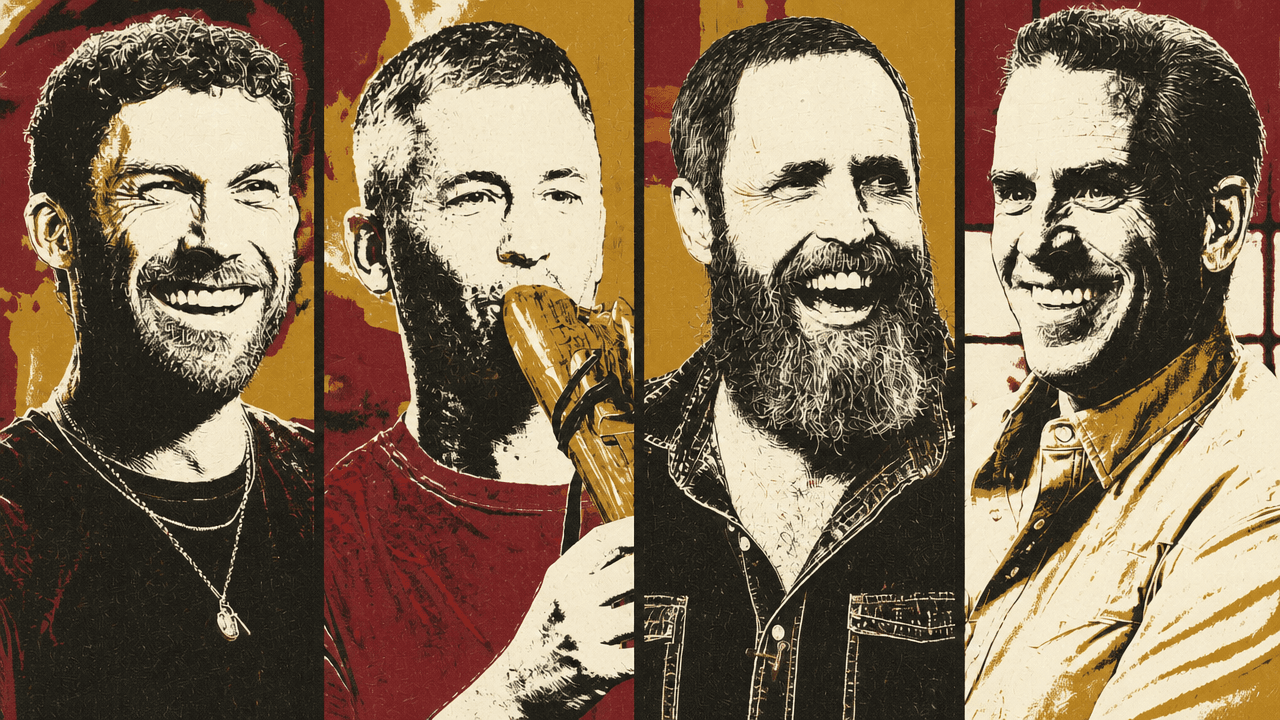
Public exposure turned recovery into a choice between secrecy and survival
Hunter Biden describes the material branded as the “Hunter Biden laptop” as more than a discrete political scandal. In his account, it turned private wreckage into a permanent public object, attaching his name to corruption, Ukraine, China, and the “Biden crime family” regardless of the particular claim being made.
He says he was a little over a year sober when the story emerged. He and his wife Melissa had gone to Palm Springs with their infant son Beau, hoping to turn off their phones as the campaign entered its final stretch. A friend who was also his lawyer called to say that the New York Post was publishing something about a laptop and a repair shop. Biden says he had no warning and did not initially understand that “Hunter Biden laptop” would become a catch-all phrase repeated for years afterward.
Biden does not deny that much of the material circulating online was his. He estimates that roughly 90% came from him: emails, texts, photographs, and records of a life that included addiction. But he argues that the archive was broader than the contents of a single abandoned laptop. It included, he says, 20 years of digital material, including deleted voicemails, deleted texts, and other records he believes were drawn from cloud accounts and multiple sources. His argument is not that the archive was fabricated wholesale. It is that authentic fragments were pooled, stripped of context, and made to support a political narrative.
He connects the publication and dissemination of that material to a larger influence operation. Biden says Lev Parnas had claimed that people were seeking his laptop in Ukraine before the repair-shop account surfaced. He also recounts what Tucker Carlson told him in a separate interview: that people Carlson believed were connected to Israeli intelligence had approached one of Carlson’s producers with images and allegations involving minors before the laptop story became public. Biden says Carlson’s producer dismissed those materials as false. Biden’s point is that versions of the material, or purported material, had circulated through political and intelligence-linked channels before the story reached the public.
None of this is about me. It’s all about power.
He sees the material’s political value in its connection to the presidency: his private failures could be used to make his father’s family a vehicle for political attack. But the experience of exposure was immediate and personal. Biden describes the first day of the story as paralyzing: the feeling of having done something terrible as a child and wanting to stay in one’s room, except there was no private room and no end to the exposure. An allegation about a business deal, he says, could be met with records or an explanation. The publication of naked images and evidence of drug use offered no such bounded defense.
Before the laptop story, Biden had spoken on the record to Adam Entous, then writing for The New Yorker, about his addiction. He says that decision was not a strategy to preempt later headlines. He had simply reached a point where he believed there was no hiding from what he had done. Biden recalls Entous later telling him that Steve Bannon called after the interview and said, “You scooped us.” Biden took that as further evidence that damaging material about him had been held before its release.
The disclosure did not erase responsibility. Biden says some sexually explicit material attributed to him was real and had been recorded by him. Other images, he says, were taken while he was asleep or incapacitated. He identifies one widely circulated photograph of himself asleep with a meth pipe near his mouth as an example, saying another person placed the pipe there and photographed him. He says he did not use meth as his drug of choice; his addiction centered on crack cocaine and alcohol. But he repeatedly rejects the idea that intoxication excuses conduct.
My drug use can never be an excuse. I’m accountable for all of it. No matter what, it’s still me whether I was out of my fucking mind or not. But it is an explanation.
The distinction he makes is between explanation and absolution, and between guilt and shame. Guilt, he says, is an appropriate response to wrongdoing because it requires a person to make amends. Shame is different: it tells someone that they are inherently unworthy of love and permanently defined by their worst behavior.
Biden’s description of active addiction is deliberately anti-romantic. He says that at his worst he could drink a gallon of vodka and smoke roughly three grams of crack in 24 hours. The social world around him narrowed to drug access, company, transactions, and people who could exploit dysfunction. He says he spent time around strippers and party circles not to disparage exotic dancers, but because those were places where drugs and companionship were available. Once he entered that world, he says, ordinary relationships became harder to sustain and predatory relationships became easier to encounter.
The morning after the laptop story broke, he says, made the choice unusually stark. He had not slept. His six-month-old son woke up, and the routine of caring for him began. Biden says he looked at Melissa, whom he credits with saving his life, and at their child, and understood the alternatives as life or death. A relapse, he believed, would have intensified the shame beyond what he could survive.
Melissa had already told him that his drug use had to stop. Biden says he stopped using crack within a week and had his last drink several weeks later. He describes alcohol withdrawal as the more frightening process because alcohol and benzodiazepine withdrawal can be fatal. Cocaine, he says, left his system quickly; the deeper problem was the cycle of isolation, concealment, and the conviction that exposure would make him unlovable.
For Biden, exposure did not become a blessing, and it did not substitute for accountability. But it removed one of addiction’s central mechanisms: the ability to maintain a secret life. The practical question became whether he could live openly with what had happened.
A public label made every accusation feel pre-decided
The laptop story, Burisma, and the White House cocaine rumor serve a common function in Biden’s account: once he was identified as “the crack addict son,” every later accusation could appear self-evident before anyone examined the particulars. Addiction became, in his view, a substitute for judgment about his work, relationships, and alleged conduct.
Biden rejects the portrayal of himself as someone who had done nothing but trade on his father’s name. He points to Yale Law School, his legal career, teaching at Georgetown’s School of Foreign Service, service on the Amtrak board, and leadership positions in policy and nonprofit organizations. But he concedes that his name changed the meaning of any role he accepted, particularly in Ukraine.
The most consequential concession in his account of Burisma is not that the board appointment was harmless. It is that it was politically reckless.
It was stupid of me to go onto the board.
Biden says he joined Burisma’s board near the end of the Obama administration, after his brother Beau had received a terminal brain-cancer diagnosis. In Biden’s account, his friend Devon Archer first brought Burisma to the law firm where Biden was of counsel. The firm undertook legal work and a Kroll background report, he says, before former Polish president Aleksander Kwaśniewski, a Burisma board member, asked him to join the board.
The compensation was substantial and publicly disclosed, Biden says. It allowed him to spend less time traveling for work while Beau was dying. His defense is not that the decision looked prudent. It is that the motivation was personal and financial rather than corrupt, and that his prior board experience made him qualified to perform board oversight.
He describes a board’s role as reviewing financial and legal reporting, receiving information from management, and making decisions under a company’s bylaws. In his account, “Burisma” became an all-purpose verdict: the job itself was treated as proof that American policy toward Ukraine had been bought.
Biden denies that his father took official action for Burisma. He says the opposite occurred with Viktor Shokin, the Ukrainian prosecutor whose dismissal became central to later allegations. Biden characterizes Shokin as corrupt and aligned with oligarchic interests, including Burisma’s owner. He says the United States and international partners pressed Ukraine to remove Shokin because he was obstructing anti-corruption efforts, and that Joe Biden delivered that message. He also notes that his father was neither president nor vice president for part of Hunter Biden’s Burisma tenure.
Biden attributes subsequent bribery allegations to an overlapping network of foreign-influence claims, informants, Ukrainian political actors, and Giuliani associates. The names are numerous because, he says, the story itself became sprawling: Alexander Smirnov, Andrii Derkach, Konstantin Telizhenko, Dmitry Firtash, Rudy Giuliani, Bernard Kerik, and others. His contention is that allegations could be introduced into the public bloodstream, repeated through political media, and attached to the familiar label of Hunter Biden and Burisma before their underlying details could be understood.
Chris Williamson calls that web “unwieldy.” Biden agrees. He argues that the complexity is why a short label wins: a board role, a prosecutor’s dismissal, an informant’s accusation, Russian influence claims, and family association collapse into a single word.
The White House cocaine episode is, in Biden’s telling, a more concrete version of the same dynamic. He says he does not know whose cocaine was found: “I have no clue.” His objection is to the confidence with which people assigned it to him.
Williamson displays a White House area map as Biden distinguishes the presidential residence from the West Wing and the Eisenhower Executive Office Building. Biden points to the South Lawn approach that he says Secret Service used to bring him into the White House and directly to an elevator for the residence. He contrasts it with West Executive Avenue, which he says is the access route used by administration and executive-office personnel heading into the West Wing. Biden says the bag was found in cubbies near the corridor leading toward the Situation Room, close to a small staff eating area.
According to Biden’s account, the two routes did not overlap in the relevant way: he entered under Secret Service escort from the South Lawn and went up to the residence, while the cubbies were near a West Wing entrance used by people arriving from the Executive Office Building. He says he had not been at the White House for between roughly a month and six weeks before the cocaine was found.
He was several years sober by then, he says, and was being tested frequently by federal probation officers. He also notes that the substance reportedly found was cocaine, while his own prior drug use involved smoking crack. None of that identifies who left the bag. Biden’s narrower claim is that the suspicion attached to him because the cultural story was already available.
The practical consequence, he says, is a heightened fear of being set up or disbelieved. When he travels internationally, Biden says, his wife watches him pack. If a bag leaves his sight, he worries that drugs could be placed in it and that no one would accept his denial.
That fear is unusual in scale, but it follows from his account of recovery and public identity. Once someone’s worst conduct becomes globally available, a new allegation need not be established in the public imagination to become plausible. It only needs to fit the identity that has already been assigned.
Political authenticity is not the same as audacity
Biden’s account of public exposure becomes an argument about political incentives. He believes Americans are not as divided as they are told, but he also describes how readily people are drawn into systems that make confrontation feel total and permanent.
He says he can leave a conversation convinced that the country shares more than it thinks, get into an Uber, open his phone, and feel immediately enraged by what he sees. The feeds create a repeated experience of national breakdown. Biden says X, in particular, exposes him to a stream of abuse, while Instagram often delivers supportive messages from people in recovery or pictures of ordinary family life. The content may be the same; the surrounding incentives differ.
Matt McCusker argues that many people, especially younger people, are burning out on all of it. His account is less optimistic than simple disengagement. People who grew up through economic insecurity, debt, unaffordable housing, wars, and constant elite failure may not merely be angry. They may have checked out. Biden agrees that indifference is the more dangerous condition: people stop expecting politics to alter their lives and begin treating it as a joke or a spectacle.
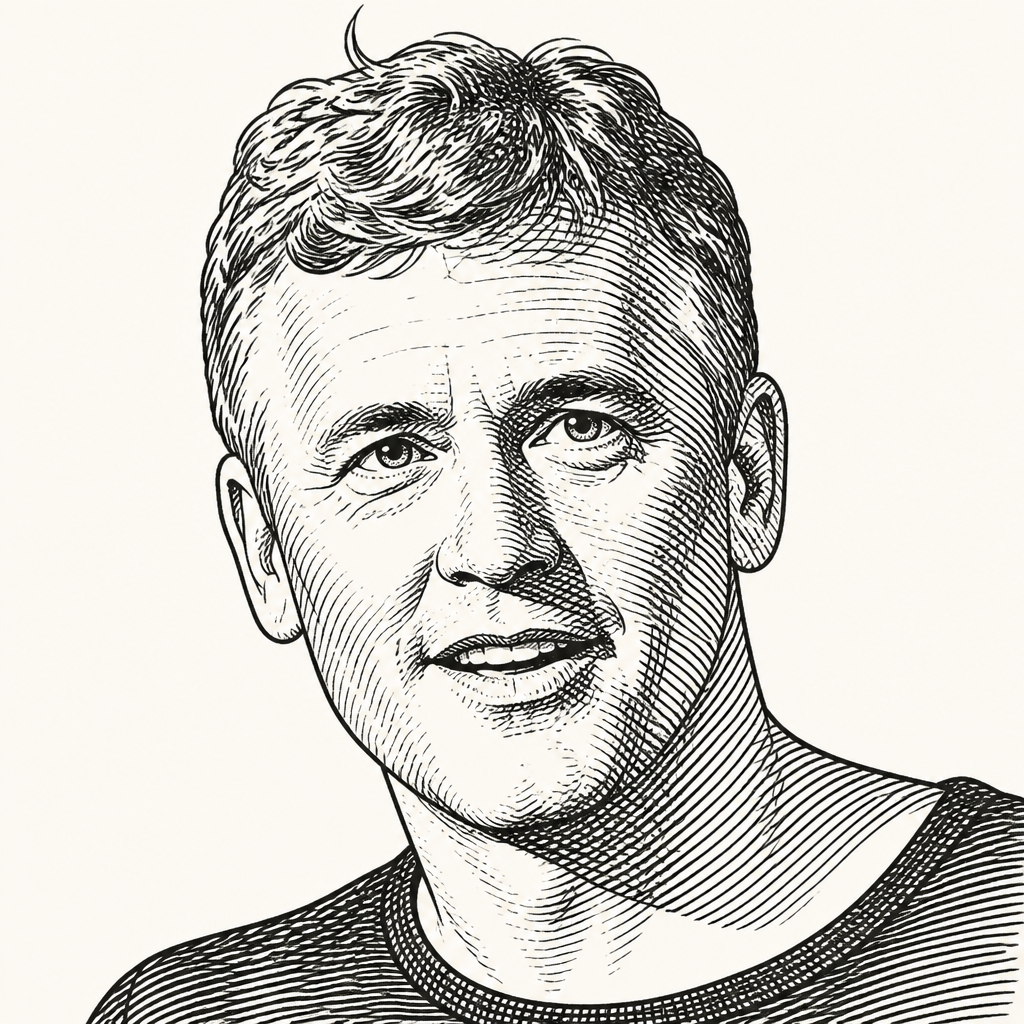
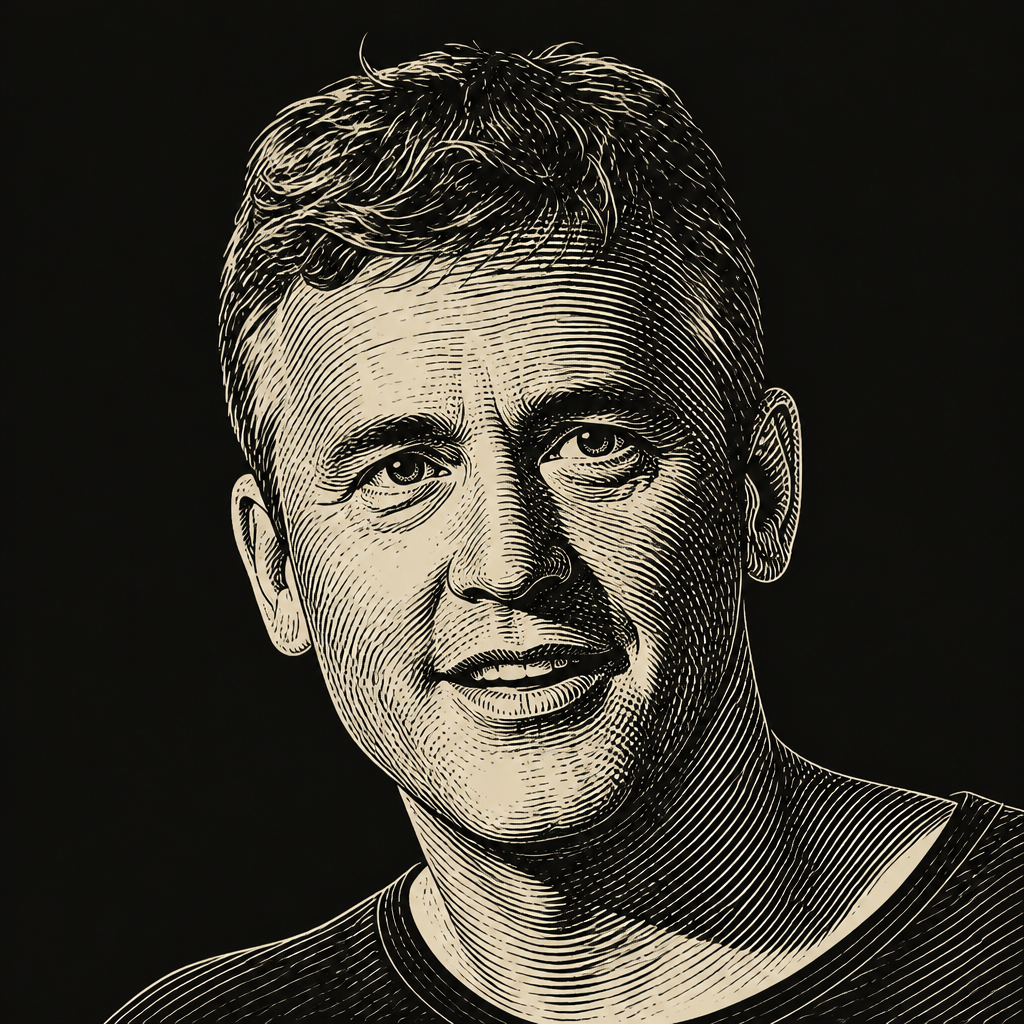
That is why Biden makes authenticity his test for political leadership. But he draws a distinction between authenticity and audacity. In his view, the Trump era taught voters to mistake the willingness to violate norms for candor. A politician says something outrageous, promises something implausible, or insults someone in public, and the refusal to sound conventional is read as evidence that he is telling the truth.
Biden argues that genuine authenticity would mean being honest about difficulty, constraints, and tradeoffs. He does not name a preferred Democratic nominee. He says he would vote for a Democratic socialist, a centrist, or even a Republican who recognized the value of preserving a constitutional republic. Politics, he says, remains local: different places need candidates able to speak credibly to their own constituencies.
He names Zohran Mamdani in New York, James Talarico in Texas, and Abdul El-Sayed in Michigan as examples of candidates whose politics and constituencies differ. His point is not that they represent one coherent ideological program. It is that a party should not demand a single national voice when voters’ lives and priorities vary by place.
Biden’s more structural concern is money. The wealthiest fraction of the country, he says, share institutions, social spaces, and interests, and have disproportionate influence over government. He does not claim to have a complete plan for getting money out of politics, but sees it as necessary if voters are to have a meaningful voice against corporate and donor power.
That concern drives a sustained disagreement over social-media platforms. Biden argues that the issue is not whether government should police opinions. It is whether companies should be responsible for products whose harms they have measured.
Duncan Trussell worries that imposing liability on platforms becomes a route to indirect censorship. If companies can be punished for “unsafe” content, he argues, people with political power will define dissent as unsafe and narrow the public square. McCusker shares the concern that a consumer-safety rationale can become a tool for suppressing unpopular views.
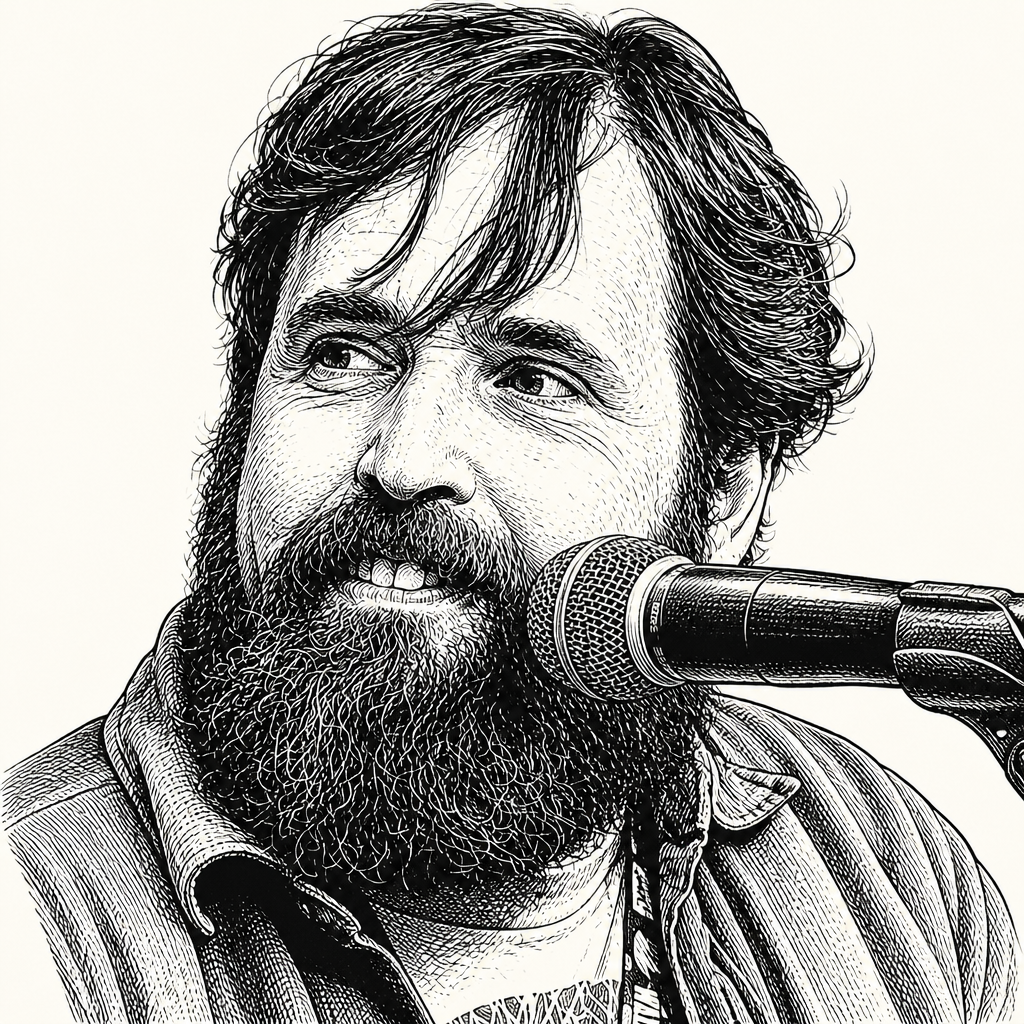
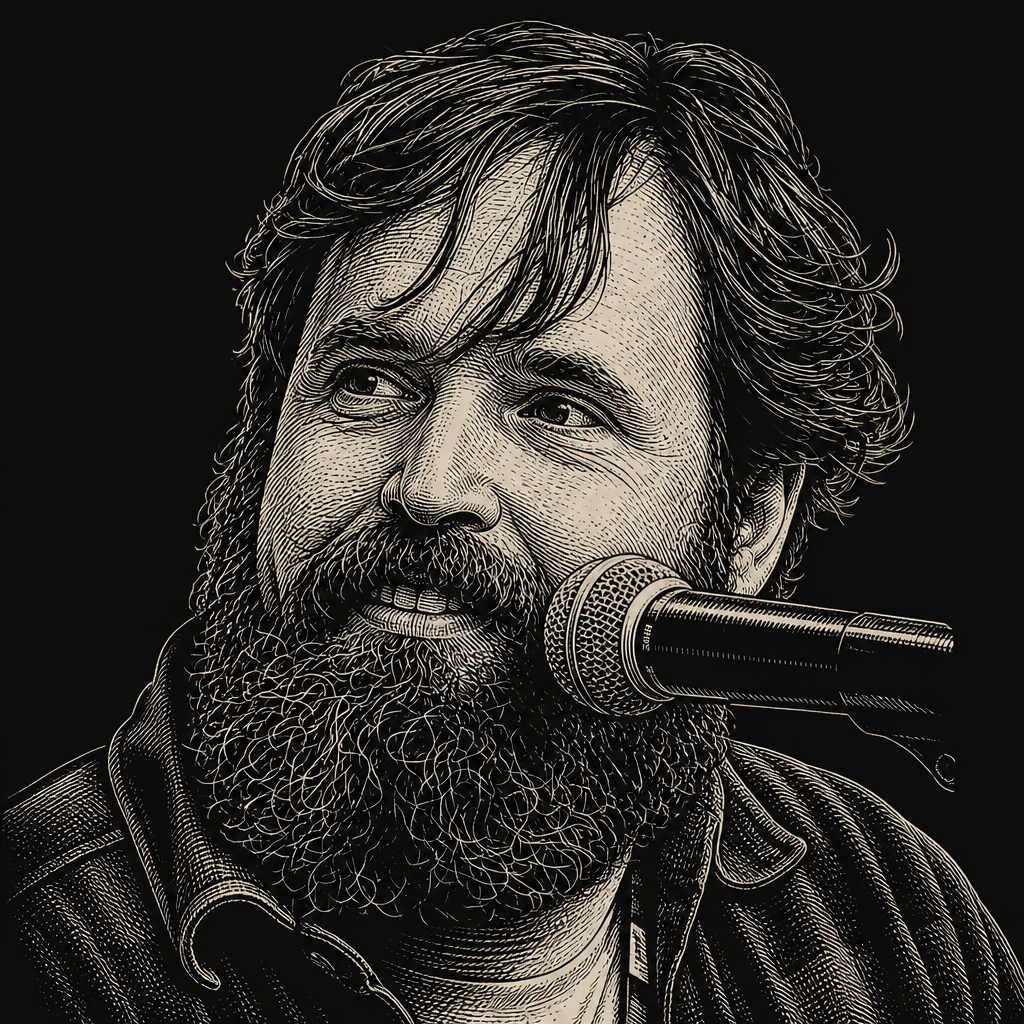
Biden accepts the danger of overreach but insists on separating speech from product design. If a company knows that its recommendation system is worsening self-harm among teenagers, he argues, the company should not be insulated simply because the harm occurs through user-generated content. Likewise, he says, an AI product that encourages a vulnerable user toward suicide should be treated as a consumer-safety problem.
If you create a product that is unsafe, you are liable to the consumer if they are harmed by it.
Trussell sees a real tension between preventing harm and preserving open communication. Biden sees a distinction between punishing people for opinions and holding companies responsible for algorithms or products they know can produce injury. Both agree that platforms shape attention, emotion, and behavior. They disagree about whether regulation can address that power without becoming another instrument of control.
Biden’s metaphor for the smartphone is blunt: it is “the bag of heroin that’s sitting in our pocket.” People voluntarily hand corporations their location, preferences, habits, relationships, and political attention. He does not call corporations inherently evil. Their structural objective, he says, is extraction: how much data, attention, and money can be taken from users.
Presidential power turns dangerous when it becomes private property
Biden argues that the Constitution depends on more than formal limits. It depends on whether presidents accept limits they could try to evade. American presidents have always stretched their authority, he says, and he does not treat constitutional restraint as a simple matter of presidents never acting beyond settled boundaries.
He cites Theodore Roosevelt’s trust-busting, creation of national parks, and Panama Canal as exercises of power that Biden believes advanced public interests against oligarchic concentration. He also invokes Abraham Lincoln and Franklin Roosevelt as presidents whose actions were contested but were aimed, in his view, at national purposes larger than personal gain.
The contrast he wants to draw is with Donald Trump. Biden calls Trump an existential threat, but the core of his case is not a particular policy disagreement. It is his claim that Trump has turned the presidency into a private and family commercial project.
He points to what he describes as Trump’s acceptance of a jet from Qatar, the prospect of retaining it after leaving office, and financial relationships surrounding Jared Kushner’s role in Middle East diplomacy. Biden also cites Truth Social and presidential market-moving announcements as an example of what he sees as a merger of public authority, media ownership, and private financial opportunity. He invokes the Constitution’s emoluments principle and contrasts those examples with what he says was his father’s practice of sending gifts to public archives or paying personally for gifts retained.
Biden’s governing principle is straightforward: if a president can use the office openly for private enrichment, the office stops functioning as a public trust. Elections may still occur, he argues, but the line between government authority and personal possession begins to erode.
McCusker accepts that Trump can be erratic and grotesque, but resists Biden’s tendency to treat Trump as the sole source of political decay. McCusker argues that liberal institutions have their own methods of coercion: professional punishment, ideological conformity, and social destruction justified as moral enforcement. His experience in graduate school left him suspicious of any faction that imagines itself as “the good guys.”
Biden agrees that Democrats and liberals have overreached and that all sides bear responsibility for the way Americans speak to one another. He does not call his own pardon a good outcome for public trust.
It was fucking awful. It is fucking awful. It is a totally bad look.
He says he is personally grateful for the pardon but believes it was harmful for the country’s appearance. He also says that if his father had won reelection, he would not have been pardoned.
Biden describes the facts of his gun and tax cases as he understands them and argues that they left him legally vulnerable. He says the gun case involved a firearm he owned for 11 days, kept unloaded in a lockbox, and never fired, after answering a form asking whether he was addicted to a controlled substance. He says the tax case arose from returns he failed to file during addiction and taxes he later paid with penalties and interest. Biden argues that, had he remained under federal supervision after Trump’s return to office, that vulnerability could have been used to pressure his father.
Foreign policy brings a different tension into the conversation. Biden says his father’s administration did not begin a new war and withdrew U.S. troops from Afghanistan. Trussell challenges the premise by emphasizing civilian casualties, U.S. military power, and the recurring destruction of children in war. Biden replies that the United States did not directly launch a new war under his father, while acknowledging civilian deaths in Gaza during that period.
McCusker and Trussell are less interested in party ownership of violence than in why a country capable of spending enormous sums on weapons cannot provide basic material security. Biden agrees with much of that critique. He calls the scale of military spending outrageous and links it to the absence of universal access to health care.
The group does not share a single explanation for political breakdown. Biden places Trump at its center; McCusker stresses the damage done by liberal institutional culture; Trussell sees a deeper continuity of violence and elite power across administrations. Biden’s principle remains consistent: extraordinary executive power may be unavoidable at times, but using it for private benefit is, in his view, a categorically different threat.
Recovery is the routine practice of being present
Biden’s political arguments repeatedly circle back to a personal change: life became manageable when it was no longer organized around hiding. He says he now wakes early without the “weight of secrets” and can enter a room without calculating how to evade questions about drugs, sex, Ukraine, or his father.
That freedom does not mean he has become innocent or consequence-free. It means he no longer has to perform an alternate version of himself.
He describes the most meaningful part of disclosure as relational rather than public. For years, he says, he imagined what would happen if his parents, children, and loved ones knew the full truth. When they did know, they still loved him. They were not proud of everything he had done, and their love did not erase the need to make amends. But it disproved the shame narrative that he was permanently disqualified from belonging.
For his children, Biden says, the central answer is not a complete explanation of every headline. It is showing up sober, clear-headed, and available. That is how he frames recovery: not as purity, but as presence.
He speaks similarly about Joe Biden. He says his father has always been the center of the family because of affection, guidance, and availability, not because of public office. He offers an example of his father spending time on the phone with young people who stutter, encouraging them not to let it define them. Biden says this is a side of his father that public coverage often misses.
Public illness makes that family relationship harder to discuss. Biden says Joe Biden’s metastatic bone cancer is painful for him to talk about because he adores his father and because public discussion can turn ordinary fear and grief into political evidence. His answer is not to claim mastery over it. It is to keep showing up.
Biden says he does not plan to run for office. He jokes that any announcement in the next few years would be evidence that he had relapsed. What he wants to do, he says, is write, speak, and make recovery less isolating for people who think their own history makes them uniquely beyond help.
If I can stay clean and sober through all of that shit, and get on the other side of an addiction that you can go look at how fucking awful it was, I just think, for that reason alone, to be out here talking to people and to show that I can sit upright in a chair and I can write about it, and I can talk about it, without any shame.
His account of service is notably unsentimental. He does not call it heroic. He calls it selfish in the most practical sense: caring for other people is the only reliable way he has found to escape being trapped in his own head. It can mean caring for Melissa, his children, or his father. It can also mean asking a waiter’s name, connecting with an Uber driver, or treating routine encounters as encounters with a person rather than an instrument.
That is the scale on which he says he now tries to “play the game.” Recovery, in this formulation, is not reputational rehabilitation. It is the repeated decision to be available to people who know his history, to make amends where he can, and to refuse the idea that his worst years are the only truthful account of him.