Hunter Biden Cites Access and Monitoring in White House Cocaine Denial
 Chris Williamson
 Matt McCusker
 Shane Gillis
 Hunter BidenChris WilliamsonWednesday, August 12, 20266 min read
Hunter Biden says he does not know who left cocaine near the White House Situation Room, but argues that the allegation does not fit his access to the building, his absence from it in the preceding weeks, or the probation drug testing he says he faced while under Secret Service protection. In a conversation with Chris Williamson and Matt McCusker, Biden says his public history of addiction makes such suspicions predictable, while also arguing that candour about that history can demonstrate the possibility of recovery.
Biden’s defence is about access, not ownership
Hunter Biden does not offer an alternative explanation for who left cocaine in cubbies near the White House Situation Room. He says he has “no clue.” His argument is instead that the location described to him was outside his usual path through the complex, that he had not been at the White House for weeks when the drugs were supposedly found, and that his supervision at the time would have made a concealed relapse difficult.
The distinction matters because Biden says he did not enter the West Wing as ordinary administration staff did. While under Secret Service protection, he says, he arrived through the South Lawn, entered the central part of the White House, took an elevator, and went up to the residence. Agents, he says, stayed close to him throughout that route.
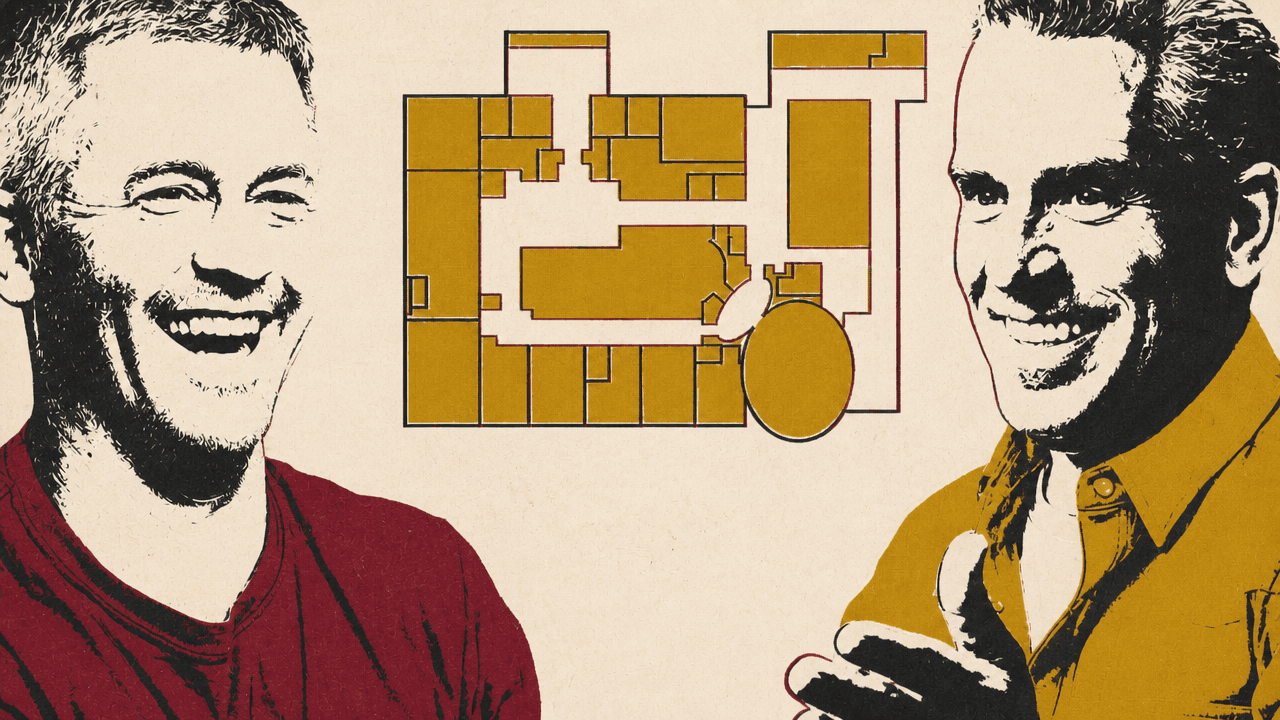
A floor-plan map shown during the exchange labels the White House residence, West Wing, West Executive Avenue, and the Eisenhower Executive Office Building. Biden uses it to contrast his claimed South Lawn route to the residence with the West Executive Avenue entrance used by staff traveling from the executive office building into the West Wing.
He says most people who say they work at the White House actually work in the Eisenhower Executive Office Building and enter through West Executive Avenue for West Wing meetings. In Biden’s description, that entrance is on the ground floor, near a desk staffed by a uniformed Secret Service agent. A hallway to the right leads to the Situation Room; beside it are cubbies and a small cafeteria area used by senior staff offices.
Those cubbies, Biden says, were where a small bag of cocaine was supposedly found. He says he has never been inside the Situation Room because he lacks the required Top Secret clearance.
I smoke crack. But by the way, I have now at this point, I'm not in the White House when it's found. I haven't been in the White House for six weeks to a month when it's found.
Biden is not denying his history of drug use. He is arguing that the details of this allegation do not fit his movements or circumstances at the time. The exchange’s humor repeatedly presses against that distinction: the hosts joke about bathrooms, “key bumps,” and whether the discussion has become a plan for getting cocaine into the building. Biden, increasingly irritated, insists he is explaining why the supposed discovery site was not on his route.
Public candour is his answer to a familiar suspicion
Matt McCusker tells Biden that he genuinely does not think the cocaine was his, but recognizes why the story would feel like “the last thing” Biden needed. Biden’s past makes the suspicion easy to construct: he says plainly that he used crack, and that his addiction and other conduct have been publicly exposed.


Rather than distance himself from that history, Biden argues that it makes a selective denial of a smaller drug allegation irrational. He says he has already spoken openly about being filmed having sex with a prostitute in New Haven, Connecticut, and about smoking crack off Interstate 95. Why, he asks, would someone prepared to discuss those episodes refuse to acknowledge what the hosts characterize as an eight ball of cocaine?
I'll openly talk about having sex on camera with a prostitute in New Haven, Connecticut and off of fucking 95 smoking a crack, but like a like a like a an eight ball...
That is the tension Biden cannot escape. His admissions are meant to establish candour: he says there is no strategic value in hiding an allegation that would be less damaging than conduct he has already acknowledged. But the same admissions supply the reputational logic that lets people attach an unexplained bag of drugs to him without needing to know whose it was.
Biden says the conspiratorial dimension of the allegation drives him insane. He recalls initially thinking the report was strange and then going about his day. By his account, he was four or five years sober by then and subject to drug testing by the Federal Bureau of Probation. Officers, he says, came to his home without advance notice two or three times a week, coordinating with the Secret Service; they could arrive as early as 6 a.m. and observe him while he provided a urine sample.
He presents the testing not as proof of who owned the cocaine but as another reason a relapse would have been hard to hide. The argument is cumulative: absence from the alleged location, a different normal route into the White House, and frequent monitoring.
The allegation has made ordinary custody feel necessary
Chris Williamson asks whether Biden still has someone witness him packing luggage. Biden says his concern is especially acute when traveling internationally. If a bag leaves his sight, he says, he worries about what could be put into it—and about the near-impossibility of persuading anyone that drugs found in his possession were not his.
He explicitly connects that fear to the White House allegation. If people do not accept his account that he was absent when the cocaine was supposedly found and did not use the staff entrance he describes, he asks, what chance would he have if drugs turned up in his luggage or on him?
Biden also raises the possibility that someone could plant drugs. McCusker says it is conceivable. The conversation does not establish such a plot; it shows the practical consequence Biden draws from being a person whose prior addiction is public: keeping personal belongings within sight becomes a precaution against an accusation that could arrive already burdened by his history.
Recovery is the public purpose he says he can serve
Hunter Biden says he wants questions to be unrestricted, including questions about drugs, his politics, Donald Trump, and the parts of his life that have already become public spectacle. He says his value is not that listeners must agree with him. It is that someone can look at the record of his addiction and see that recovery is still possible.
He does not describe recovery as absolution. Biden says he feels guilty about things he did, made terrible decisions, and absented himself from his family—especially his children. He says he is not remotely perfect in recovery. But he rejects the idea that speaking about those failures without shame is itself a weakness.
There is getting to the other side of stuff. And being transparent about it isn't a weakness, it's a strength.
When Williamson asks whether Biden’s increased visibility could lead to a run for office, Biden says no. He says he is honored that the question can be asked with a straight face, particularly given where he was before joining X earlier that year. Then he makes the prospect of a campaign into a joke with a serious recovery premise: if he announces for office in the next few years, he says, people should take it as a sign that he has relapsed.