Futile Effort Can Build Resilience Without Becoming Self-Punishment


Dr Alok Kanojia says his lowest point was not failing college while spending most of his days playing video games, but realizing that medical school was unlikely after years of trying to qualify. In an interview with Chris Williamson, Kanojia recalls that the certainty brought grief and an unexpected calm, and argues that sustained effort without the result you want can still teach you something—provided you do not turn failure into self-punishment.
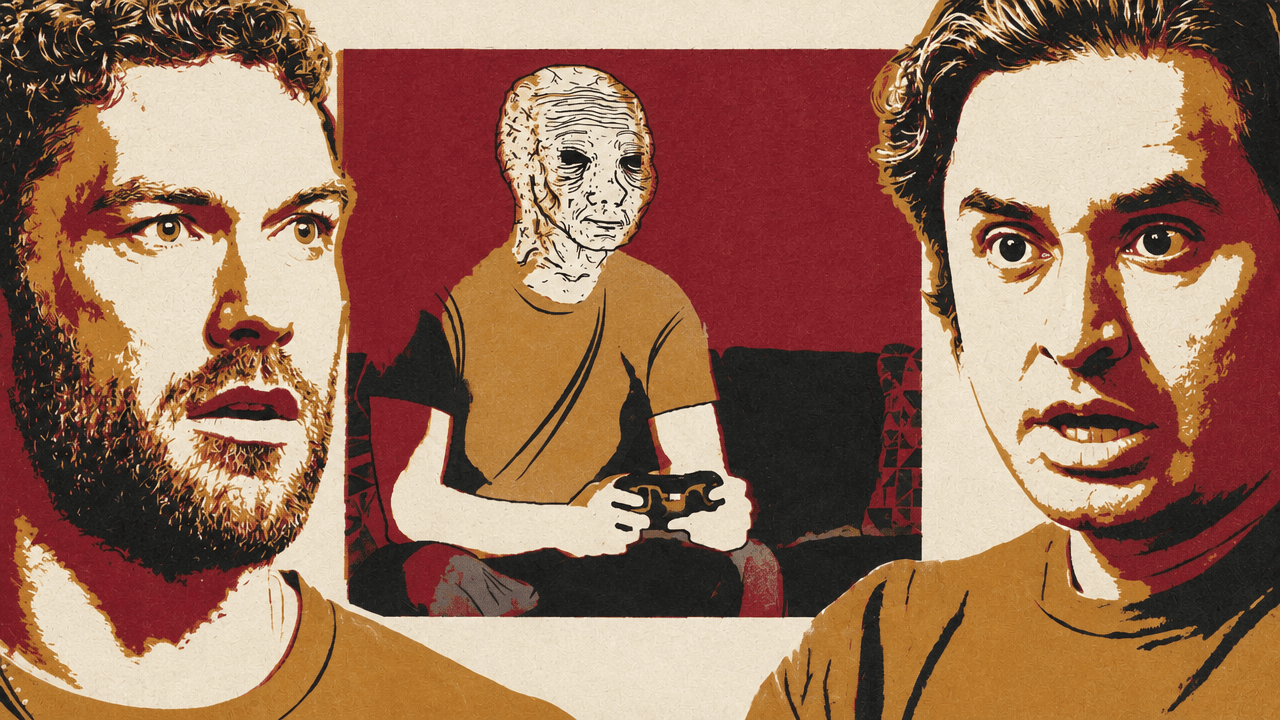
The rock bottom was the moment medical school seemed impossible
Alok Kanojia describes several rock bottoms. The familiar one looks like a rock bottom: he was failing out of college while spending 16 to 20 hours a day playing video games. One morning, he woke to find his Spanish final was that day and decided not to go. He had studied late and slept little, but said it was not a last-minute panic. He simply gave up on the exam.

The moment he identifies as his rock bottom came later, when he became certain medical school would not happen. The contrast matters: the college failure was visible, but the later certainty arrived amid years of effort to change course.
After a couple of years, he went to India and spent 90 days at an ashram. He wanted to become a monk, or take sannyas. The person he regarded as his guru was another student, not one of the ashram’s leaders. Kanojia felt that student was more spiritually developed than the teachers, whom he described as surprisingly narcissistic. When he asked about becoming a monk, the student told him no: he could return at 30 to take vows, but first he needed to finish his education.
The advice went further than a practical instruction. The student told him that the path he wanted was harder than becoming exceptional in the material world; without that capacity, Kanojia would fail at it. He found the advice confusing and destabilizing, but took it seriously.
He returned to the United States intending to become a monk and be celibate. Within a week, he met the woman who would become his wife. A few months into their relationship, he told her he had to become a monk. Eventually, he reconsidered what spiritual commitment required. The visible act of renouncing ordinary life, he said, was not the same as doing the inner work—and a person could pursue an outwardly spiritual life while remaining “spiritually bereft and empty on the inside.”
The certainty brought calm alongside grief
Kanojia graduated after five and a half years with a 2.4 GPA. He had wanted to become a doctor partly because he was the child of doctors and, as he put it, being a doctor seemed like the highest achievement in his Indian community. He had set his sights on Harvard. After working to improve his academic record, taking 24 credits in his final semester and studying for the MCAT, he applied to medical school and received one interview.
He wanted admission badly. He also wanted to marry the woman he loved, who wanted to marry a doctor. After the interview, he meditated and prayed, asking God to let him have medical school. Then came what he described not as a voice, or even a doubt, but a surety:
And it wasn't even like doubt, it was like surety. And it was like this is not going to happen.
He broke down crying, but the experience also felt soothing. Kanojia said he sensed that a painful disappointment was coming and that he would have to keep doing the work futilely for some period—“like two years,” as he put it. The certainty did not make the anticipated hurt disappear. It came with relief alongside it.
His account of that moment led into a broader view of effort and failure. He said people focus on winning and lose sight of what losing can teach. He invoked the saying that the best way to learn Go is to lose your first hundred games. The point is not that losing is itself the goal, but that reaching a desired level may involve a long period of effort without the desired result.
Kanojia also described a “karmic” dimension to that process, while acknowledging that he did not have full insight into it. People he considered more spiritually developed, he said, sometimes described spiritual practice as accelerating karma. In his work with patients, he said, getting to the top could mean passing through repeated falls.
When Chris Williamson reflected on his own experience, he described a change in how he related to failure. He said his eventual progress followed years of frustration and anger at failing, and of beating himself up for it. The shift required reconciling himself to failure rather than continuing to reject it.


Futile effort can matter without becoming self-punishment
Kanojia extended the idea of futile work to recurring depression, writing a first million words, and losing a hundred games of Go. Referring to research, he said people who go through recurrent depression and find themselves on the other side are more resilient than people who have never experienced depression. In each comparison, work or hardship that seems futile in the moment may contribute to what comes next. His point was not that suffering is automatically useful.
The condition emphasized is how someone treats themselves during the struggle: “If you want to be futile effectively, enjoy it, don’t beat yourself up over it.” That qualification echoes Williamson’s account of failure. The work may be frustrating, and the outcome may remain uncertain; turning the frustration into self-punishment adds another burden rather than making the effort more worthwhile.
Williamson’s image was that Sisyphus is still “racking up experience points” as he pushes the boulder uphill. The image keeps both sides of the idea in view: the task is repetitive and apparently pointless, but the effort can still count as practice. It does not promise that every failed attempt will lead to success. It suggests, more narrowly, that effort need not be wasted simply because it has not yet produced the result a person wants.