Caregiving Participation Is Linked to Lower Testosterone in New Fathers

Anthropologist Anna Machin argues that among biological fathers studied in early parenthood, testosterone tends to fall in connection with active caregiving—not simply with becoming a father. She frames the change as an adaptive shift from mating competition and risk-taking toward pair bonding, patience and infant care, while cautioning that the effects of testosterone supplementation on fathers remain poorly studied. Her broader case is that masculinity should be judged by responsiveness to changing roles, not by maintaining permanently high testosterone.
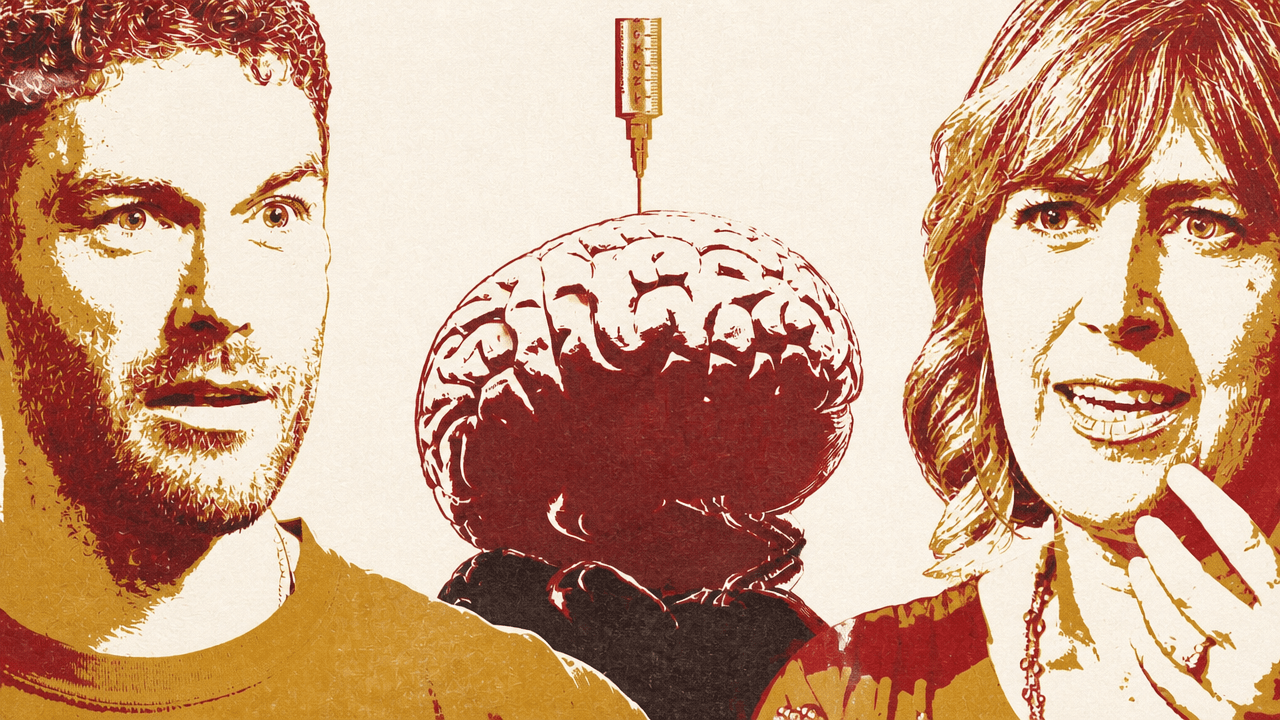
The evidence concerns involved biological fathers, not fatherhood in general
Anna Machin says testosterone changes around the birth of a baby, but she begins with an important limitation: most of the research concerns early parenthood and biological parents. There is comparatively little research on how hormones change for adoptive and step-parents.


Within that narrower evidence base, Machin says the hormonal shift is tied to what fathers do, not simply to acquiring the title of father. When Chris Williamson asks whether testosterone declines more with caregiving—and whether it happens without caregiving—Machin answers that it does increase with care and does not occur in the same way without it.

So it's linked, as are the brain changes, to dad's participation in care.
That distinction matters for the broader interpretation. Machin is not presenting low testosterone as an inherent feature or requirement of fatherhood. Her claim is that, among the fathers studied, participation in care is associated with biological changes that may support caregiving.
She connects lower testosterone to greater investment in a partner relationship, more motivation to maintain a stable pair bond, and lower aggression. Much of the aggression research she cites comes from rodents, where the question can be unusually stark: when a new pup appears in a nest, does the animal attack it or care for it? Testosterone can help modulate where an animal falls along that continuum.
Machin’s practical formulation is blunt: anyone spending substantial time with infants should be less motivated to kill and more motivated to care. She also associates the shift with less risky driving, fewer fights, lower substance use, and more conscientious doctor checkups—behaviors that may help a parent remain alive and able to provide for offspring.
Testosterone serves different reproductive tasks at different times
Machin places these changes within the challenge hypothesis. In her account, testosterone is not a fixed measure of masculinity but a hormone whose usefulness depends on circumstances.
Birds provide her classic example. Testosterone rises at the beginning of breeding season, when animals are competing for mates, seeking status, and attempting to maximize mating opportunities. After mating, Machin says, maintaining perpetually high testosterone is immunologically costly. The reproductive strategy shifts away from producing as many offspring as possible and toward improving the likelihood that each offspring survives; hormones follow that change in priorities.
She says comparable natural shifts appear in primates, rodents, and humans. In risky or competitive settings, higher testosterone may serve men’s goals. In a parenting environment, the same level may not support the qualities needed to sustain a partner relationship, care for an infant, and reduce avoidable danger.
Williamson adds that male risk-taking can itself be socially responsive. He points to research on men crossing roads closer to oncoming cars when women are present, interpreting it as an example of status display. He also suggests that handling weapons or participating in competitive masculine activity can raise testosterone. The implication he draws is that fatherhood involves both a “top-down” commitment—being available for a baby and therefore not driving recklessly—and a “bottom-up” environment that may make that behavior easier to sustain.
Machin agrees that biology and culture work together. Fatherhood, in her description, is occurring amid competing cultural models: the ideal of the permanently high-testosterone man alongside expectations of patience, partnership, and direct care.
The case against perpetual high T is an argument for adaptability
Anna Machin does not claim that high testosterone is intrinsically incompatible with being a father. Her concern is the assumption that manliness means maintaining high T regardless of context.
Williamson asks whether testosterone enhancement during early fatherhood could override the hormonal environment that might otherwise support care, patience, and reduced risk-taking. Machin calls that a fear and a risk, but not a settled finding. She says mothers have anecdotally told her that husbands taking testosterone had little patience with a baby; whether that relationship is real requires better, more rigorous studies.
The trade-off, as she frames it, depends on the environment. A father who had to fight his way out of a cage to bring food home for his child might benefit from high testosterone in early parenthood. But that hormonal profile might not serve the more nurturing style of fatherhood many couples want.
Williamson’s version of the argument is that genuinely risky or competitive settings may themselves produce a higher-testosterone response. The error would be deciding that a permanently elevated number is preferable to the body’s adjustment to circumstances. Machin similarly notes that athletic competition and opportunities to raise status can change testosterone. Responsiveness, rather than constancy, is what makes the hormone adaptive.
I think actually positive masculinity is more about adaptability, being flexible, and showing up in the way that you need to for changing situations.
That view also changes how Machin interprets the apparent costs of fatherhood. She jokes that a book subtitle could describe fatherhood as giving men “a smaller brain,” making them sleepier, sadder, fatter, and lower in testosterone—then add that it is really good. Her counterweight is the meaning, purpose, and late-life neuroprotection she associates with fatherhood.
For Machin, being a good father is not evidence of diminished masculinity. It means rearing the next generation: guiding, protecting, inspiring, teaching, and providing. The relevant measure is not a particular hormone level, she argues, but whether a man is fulfilling the social role and responsibilities in front of him.