Violence Is Learned as Protection, Not Fixed as Identity


Former gang member and California inmate Johnny Chang argues that violence was not an innate identity but a learned system for securing safety, status and belonging after childhood abuse and years in custody. In his account, prison reinforced that system through racial loyalties, coercion and distrust, while release left him unable to shed its habits. Chang says Christianity, reconciliation with his father and a practice of surrendering control gave him an alternative to the self-protective identity that had governed his life.

Violence became a substitute language for safety and belonging
Johnny Chang describes violence as the language through which he first learned to secure recognition, protection, and status. Long before it became a conscious gang identity, it was a response to a home where he says he could not rely on either parent and a neighborhood where conflict was part of daily life.

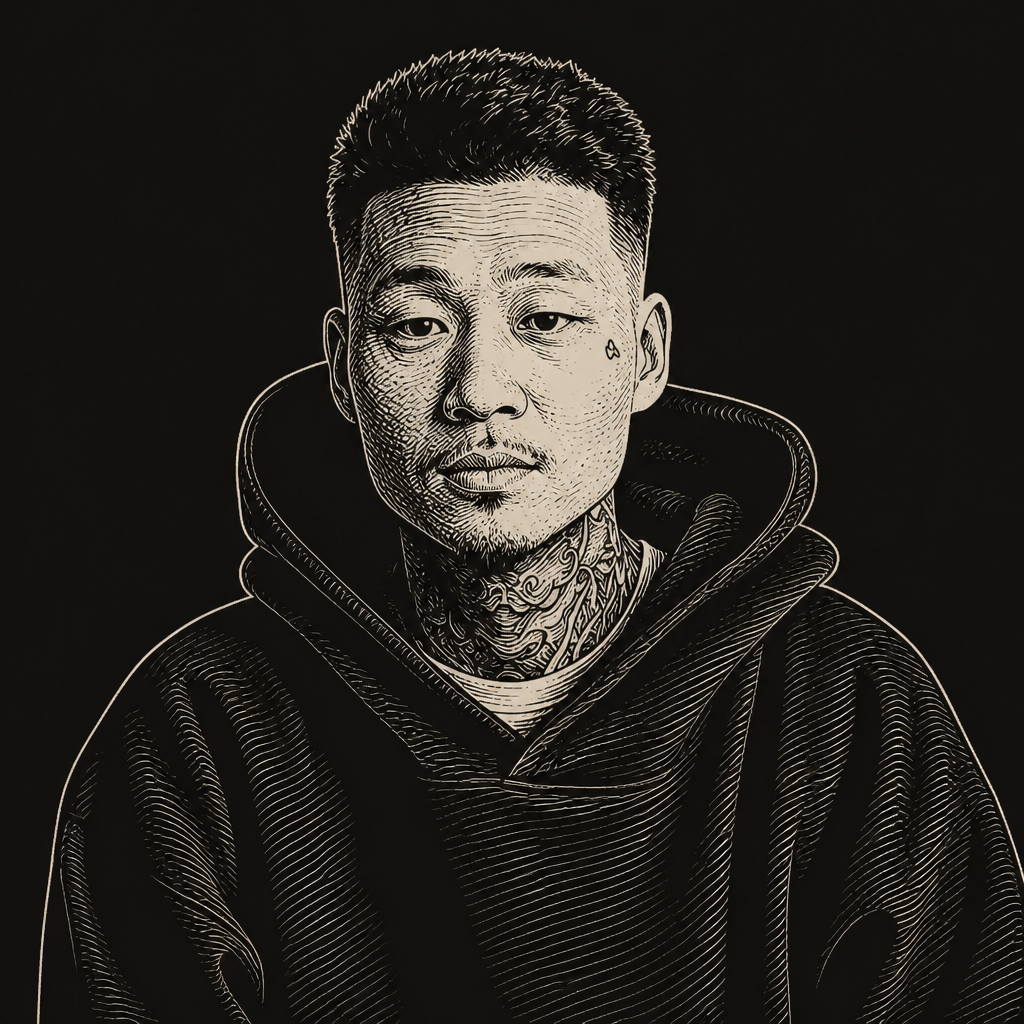
He grew up in project housing in the San Gabriel Valley, east of Los Angeles, after his immigrant parents arrived in the United States expecting a more attainable version of the American dream. His father, a chef, began drinking heavily, blamed others for his disappointments, and became violent toward Chang, his brother, and their mother. Chang says that, by eight, he had stopped seeing his father as dependable and began spending more time outside.
By 10, he was fighting, being suspended, stealing, and carrying a knife to school. He places this in the gang environment of 1990s Los Angeles: crack cocaine, methamphetamine, gangster rap, and conflict between Asian and Mexican gangs. Children could be targeted, Chang says, not because they had joined a gang but because they belonged to a group caught in its conflict.
One incident fixed something in his mind. Four boys beat him, took his backpack and shoes, and left him to walk home bloody and barefoot. When he got home, Chang says, his father refused to believe that he had been jumped and beat him for lying. His mother, under pressure from his father, also participated in the beatings. The conclusion Chang drew was that he could not trust them.
Fighting then ceased to feel recreational or even mainly retaliatory. At 10, Chang says, it became survival, powered by what he calls internalized rage. In his retrospective reading, the gang supplied what his family did not appear to offer him: attention, food, money, status, and a form of masculinity that looked feared, capable, and protective.
At 12, older boys stopped him at gunpoint and asked where he was from. When he said he was not from a gang, they invited him to spend time with them. They took him to eat, then introduced him to an older gang figure who gave him $100 and told him that, with them, he was family.
Chang remembers being struck not only by the man’s authority—tattoos, a gun, a prison history, the respect of others—but by his gentleness. To a child accustomed to violence at home, that combination was compelling. In retrospect, Chang sees it as recruitment through care tailored to a child who lacked it. The same man later asked him to carry out a “mission” against an alleged rival: abduct and rob a drug dealer, with beating or killing presented as possible if necessary.
Chang was arrested with five others. Although it was his first case, he says authorities treated his association with older gang members as evidence that he was being developed into a gang assassin. He pleaded to a reduced gang-related witness-dissuasion charge, received four years, and served half in the California Youth Authority.
Chang describes the youth facility as a place of constant tests: who would fight, who would submit, who could be robbed, abused, or sexually exploited. On his first day, he says, he was attacked after identifying his gang affiliation and then had to fight a succession of boys connected to the first attacker. An older inmate told him to forget about ordinary life: once someone arrived there, he said, they would either catch a murder or catch more time.
Chang also alleges that correctional officers encouraged violence, putting young inmates against one another in what he says was called “Gladiator School” and betting on the fights. Over four years, Chang estimates that he fought more than 40 people. He says violence became a universal language: no explanation was required if someone could be beaten, and the group rewarded the person who did it.
That reward gave him an identity and a place in a group. A boy who had been beaten and disregarded could become someone people talked about, feared, and recognized.
Prison made violence less frequent and more lethal
After 67 days out of youth custody, Chang says he fired at another moving car on the freeway after its occupants exchanged gang signs with him. He was 16, nearing 17. He presents the shooting not as a gang assignment but as youth-custody thinking carried into public life: a perceived enemy, a gun at hand, and no pause between insult and action.
Tried as an adult, Chang pleaded to two counts of assault with a deadly weapon and received a 10-year sentence requiring him to serve 85%. He entered a California level-four prison at 17.
The first lesson was that the code had changed. In youth custody, gang identity had governed loyalties. In the California adult prisons Chang knew, race became the primary alignment. Former neighborhood enemies could become mandatory allies because the operative conflict was no longer one gang against another, but one racial group against another. “Politicking” meant subordinating private grudges to the rules of the larger group.
Chang did not adapt smoothly. Other prisoners recognized him as a “YA baby,” someone formed in youth custody who reacted to every slight. He fought cellmates, spent time in the Security Housing Unit, and says he was beaten by members of his own side for breaking prison rules. The message was blunt: calm down or die.
Chris Williamson captures Chang’s distinction between the two systems as youth custody being more violent but adult prison more lethal. Chang agrees. In his account of California level-four facilities, personal fights were less common because one conflict could trigger a wider racial confrontation. When violence did occur, it was often planned and conducted with weapons rather than fists.


General population, or the “mainline,” had its own hierarchy. Chang says people accused of rape, child sexual abuse, informing, or abandoning a gang were at the bottom and could be removed from the yard. New arrivals could be required to carry criminal paperwork for prison representatives to inspect. But acceptance into general population was not a mark of safety or principle. It meant being legible within a coercive code: keep one’s word, remain physically disciplined, never back down, and participate when the group demanded action.
That code could make an ordered assault feel less like a choice than a test of whether one remained a person at all. Chang says refusing to “raise your hand” for violence could make someone a target. Near the end of his sentence, he was ordered to initiate an attack on a large prisoner alleged to have drug debts and a history of assaulting cellmates. Chang believed jealousy over his approaching release may have contributed to his selection.
He says he knew the assignment could ruin his life. If he were caught committing a serious assault, he could receive a new sentence that might turn a finite term into life in prison. But refusal, in his account, risked being rolled off the yard or attacked himself. He punched the man first, after which six people assaulted him before officers intervened.
Chang does not tell the story as courage. He says he could see the manipulation and still felt the status reward. Prison made violent action intoxicating: a route to infamy and proof that he could satisfy the group’s demands without losing standing.
The violence Chang describes was often calculated rather than impulsive. He recalls seeing a respected prisoner accused of stealing challenged to perform burpees. As the man exhausted himself and raised his heart rate, another prisoner stabbed him in the chest. Chang understood the setup as designed to make him bleed out faster.
The lesson was not simply that people could be dangerous. Apparent friendship could be part of an attack. Someone shaking a person’s hand, challenging him to a friendly contest, or presenting an assignment as duty might be preparing to exploit him. Chang calls the result “massive distrust”: a posture in which no one, including allies, could be assumed safe.
Prison also trained him to see other people’s need, weakness, debt, addiction, and dependence as possible leverage. Food, stamps, drugs, favors, and protection formed an economy of exchange. After release, he says he could spot friends’ vulnerabilities almost automatically, including when someone might be inclined to use cocaine or be susceptible to a particular offer.
Release did not end the prison’s hold
Chang spent roughly five years in level-four facilities and another three to three and a half years in level-three prison. By the time he left, he had spent nearly all the years from 12 to 25 either confined or briefly back in the same gang environment.
He says prison gave him habits that could look useful from the outside: structure, productivity, making his bed, working out, and moving through a day with purpose. But the underlying adaptations were less benign. He watched people constantly, read ordinary behavior as potential disrespect, and knew he could react violently if he felt crossed.
In public, he found crowds difficult. In prison, Chang says, walking in front of someone who was speaking required an apology; outside, strangers could cut in front of him or bump into him without registering it. He avoided people partly because he feared how he might respond to civilian indifference.
A trip to Walmart exposed a more basic institutional reflex. Seeing a uniformed security guard, Chang asked to be escorted to the restroom. On a high-security yard, officers controlled those movements; the possibility that he could simply use a bathroom code and walk there alone did not occur to him. The realization came with chills: he was physically free but not yet free in his mind.
Even smaller routines remained governed by prison assumptions. Friends who had served time noticed that his lights stayed on late. In prison, lights were automatically shut off; Chang says he had not learned to turn them off himself.
He also had to unlearn an aggressive confidence he now describes as pride: the belief that surviving prison made him master of his own destiny. The criminal mindset, he says, remained ingrained. He would instinctively calculate how to hustle, trade, or exploit a vulnerability. His anger could go from zero to 100 at a perceived sign of disrespect, then fall away just as fast.
After participating in a stabbing in prison, Chang says, he felt pride and then heard an internal question: was there something wrong with him? He silenced it by rationalizing what the other person had done. Other gang members later joked that he was never wrong; his instinctive answer, he says, was often to invite a fight, proving the criticism.
His initial attempt at lawful life did not resolve that internal system. Chang says he applied to employers including Walmart and Home Depot but received no callbacks after background checks revealed violent convictions. Some applications understated the seriousness of his record, he says, but the checks exposed it. He experienced the rejection as confirmation that the conventional world had no use for him.
He returned to criminal activity and says he was making $40,000 to $50,000 a month, a figure he characterizes as alleged. He describes a penthouse, drugs, women, and the status markers he had imagined would make him secure. Instead, he found that success intensified a pattern he had already known: at night, one thought became 10, then 50. He felt empty, unable to settle, and at times unable to breathe.
More money and stimulation did not solve the problem because they left the same person in charge of solving it. Chang says he eventually considered suicide. A cluster of deaths sharpened the crisis. During an attempted robbery of a prominent drug dealer, Chang says, an armed man concealed in the dealer’s car shot his friend, who died in Chang’s arms. Another friend from the projects sent him a farewell letter from prison and then died by suicide. A younger gang member whom Chang saw as a version of his 12-year-old self was killed in a car-to-car shooting.
Prison had made death familiar as a possibility. Chang says this period was different: death felt personal, near, and directed at him.
The alternative was salvation, not a more disciplined version of himself
Before release, Chang had found a mentor in a Muslim prisoner whom he describes as educated, disciplined, fit, respectful, and well regarded on the yard. The man encouraged him to read, train, and use his mind. Chang converted and spent two to three years as a committed Sunni Muslim.
The appeal was not incidental. Islam, as Chang experienced it in prison, was respected because it required visible discipline and commitment. It fit an environment that valued rules, self-command, and seriousness. Christianity, by contrast, was commonly regarded in Chang’s prison world as weakness or an escape from the prison program.
Chang’s relationship with the mentor strained when he raised questions about tensions between religious teaching and the conduct expected on the yard. He says the mentor responded defensively, telling him that he lacked the Arabic and standing to ask. The experience revived Chang’s sensitivity to betrayal. More consequentially, the man was released and returned to prison about six months later. Chang had seen him as far more disciplined and capable than himself. If this man could not make a life outside, Chang wondered, what chance did he have?
His sustained encounter with Christianity came after his mother, who had begun working as an interpreter at a church, called him for help when her car broke down in San Bernardino. Chang had no intention of entering the church. The smell of homemade black-bean noodles changed his mind.
The dish carried an emotional history. His father, a chef, had sometimes made it as an apology after beating him. Chang remembers the smell as comforting despite what was attached to it. Out of respect, he accepted an invitation to eat rather than take food and leave.
The pastor’s central claim, as Chang recounts it, was that his problem could not be solved by better behavior, more output, or stronger self-control. Chang expected a familiar account of sin as wrongdoing followed by repentance. Instead, the pastor described sin as an identity condition: people were not merely failing at goodness but unable to rescue themselves through effort.
For Chang, the theological distinction mattered because every system he had known had made survival contingent on performance. Gang life required loyalty and violence. Prison required vigilance and force. Money promised relief if he could acquire enough of it. The pastor’s account offered salvation rather than self-improvement: Chang was not being asked to become strong enough to save himself.
The pastor used a lifeguard analogy. A drowning person cannot save himself merely by trying harder; someone must pull him out. Chang says the pastor connected that directly to the depression, trauma, loneliness, and emptiness he had been carrying. More importantly, he called those feelings normal. After being treated as a monster, a gang member, or a prison number, Chang says the experience of being humanized landed with unusual force.
The pastor then made a request Chang found harder than physical danger: apologize to his father.
The argument was not that his father’s abuse had been justified. As Chang understood it, the pastor’s point was that Chang could be right about what had happened and still remain miserable while acting as the permanent judge over his father. He asked Chang to consider that his father, too, may have been shaped by damage and compulsion.
The next day, Chang called his father, who did not recognize his voice and initially assumed Chang wanted money. They met at a noodle restaurant. Chang arrived afraid that a bad response might provoke him into violence. Instead, he apologized for being a bad son, joining a gang, and destroying the American dream his father had pursued.
His father cried. He told Chang that he had stayed away from prison because he felt he had helped create the person Chang became. Chang says it was the first time he heard both “I love you” and “I’m sorry” from his father.
The pastor had told him, in Chang’s retelling, that he could be right about his father and still be miserable. Chang describes the reconciliation as evidence that surrendering his own judgment could produce something his self-protective instincts never could. In time, he says, his father stopped drinking, began attending church, and rebuilt a relationship with Chang and with Chang’s mother.
Peace required effort without the illusion of control
Conversion did not make peace feel natural. Chang says the strongest resistance came from control. His life had taught him that safety required keeping his hands on the wheel: managing the program, anticipating threats, imposing order, working harder, and reacting first.
He came to interpret his anxiety and depression as tied to that need. When events went his way, he felt safe; when they did not, he felt danger and fear. In Chang’s Christian framework, ultimate control belongs to God rather than to him. That was frightening precisely because Chang had survived through agency.
Chris Williamson names the tension directly: the line between surrendering control to faith and giving up effort can look thin, particularly to someone who values self-direction. Chang’s answer is not passivity. He calls it planning boldly and surrendering daily.
He says he still works intensely and plans practically, but treats the final outcome as outside his control. The right posture, in his view, is to prepare and act while seeking an outcome aligned with God’s will rather than demanding that effort guarantee it. Williamson’s formulation is that God may steer the boat, but a person still has to row.
Chang also rejects a purely emotional test for religious guidance. His own instincts once told him that shooting for his gang meant loyalty and protection. Feelings, moods, and inner voices are unstable, he says; they can be recruited to justify almost anything. He says he has read the Bible cover to cover 27 times because he wants scripture, not impulse, to be the standard against which he tests decisions.
That makes him skeptical of claims that “God told me” when they cannot be connected to scripture. In Chang’s account, discernment comes from the written word and from people who know it, not from whatever desire feels compelling. A good feeling about a deal, a purchase, or an opportunity is not enough.
Becoming Christian initially looked weak through the prison filter. It meant crying, forgiving, rejecting violence, and refusing to make bravado the measure of manhood. Chang came to see that filter as distorted. Pulling a trigger had been easy for him because it could bring status and admiration. Listening to someone he thought was wrong, making himself vulnerable, or confronting his father without violence demanded more.
Williamson extends the point beyond Chang’s history. A person can prove toughness through physical hardship—early mornings, endurance events, cold plunges—and still avoid a difficult conversation with a partner, parent, or friend. Suppression, he argues, is not strength. Chang agrees that pride had taught him to confuse vulnerability with weakness.
Forgiveness is a refusal to let the past keep governing
Chang does not describe forgiveness as declaring that offenders deserve absolution. He describes it as refusing to let an injury permanently govern the injured person. “Forgiveness is not usually for the other person but for you,” he says.
To forgive, in his formulation, is to take off one’s own shackles: to decide that another person will no longer control one’s emotional life. His understanding of his father changed when he learned more about the older man’s history: an alcoholic father, childhood violence, and, at 19, having run someone over and caused that person’s death. It gave Chang a way to recognize continuity rather than pure otherness. “We’re literally two peas in a pod,” he says.
Forgiving himself has been harder. His father’s harm could be understood through trauma and compulsion. Chang’s own guilt centers on acts he knew were wrong while doing them. That consciousness, he says, produces shame and culpability.
He believes many people who have committed serious crimes avoid discussing them not because they feel nothing, but because revisiting them carries too much guilt. Public bravado may exist, but Chang says people he has met who “really have done dirt” often reveal very little. The gap between a person’s outward normality and what they have done can be immense.
Chris Williamson offers a non-theological practice from a meditation retreat: forgive yourself for not yet forgiving yourself. Rather than treating an unwanted part of oneself as an enemy to push away, he suggests acknowledging it as a part that may be trying, however clumsily, to protect or improve something. His image is an overly enthusiastic robot vacuum repeatedly cleaning the same patch of floor: frustrating, but trying hard.
Chang connects that practice to gratitude and faith. In his Christian framing, a hardship may contain a lesson or a blessing. The two approaches do not reduce forgiveness to a formula, but they agree that acknowledgment differs from avoidance. The past cannot be altered; the question is whether it will continue to dictate the life built afterward.
Returning to prison made his past a point of contact rather than a claim on him
Chang says going back to prison as a preacher frightened him more than returning as an inmate had. His pastor secured access to the prison where Chang had served time. He had been out for roughly two and a half years and expected to encounter former cellmates and men who had seen him participate in riots and prison politics.
Before the first visit, he had a panic attack. He feared being seen as fraudulent: he would arrive wearing a visitor badge and speak about Christianity to people who knew the identity he had once valued. He grew angry, demanded that the car turn around, and told his pastor he might leave religion rather than go in.
The pastor did not force him. Instead, he asked Chang to compare this fear with his old conduct. When Chang robbed people or used drugs, he had not experienced the same internal resistance. Now, trying to help people brought terror and anger. The pastor interpreted that as spiritual warfare; Chang initially rejected the framing, then spent a week considering it.
On the second attempt, he again felt panic but entered. Old acquaintances were more supportive than he expected. One man who recognized him asked why he had returned; seeing the visitor badge, he asked where he could sign up. The larger effect came in a class of prisoners Chang did not know.
He told them about the emptiness that had driven him toward suicide. Afterwards, Chang says, prisoners approached him to say they recognized it: escalating thoughts at night, the desire to die, and uncertainty about whether a person could really change. Some did not adopt his theology, he says, but still responded to the idea that they might distrust their own thoughts and stop treating impulse as final authority.
Chang describes leaving that first class in tears. His history, which had once made violence valuable, had become a reason men inside could hear him. He continued returning to prisons and says his classes have included Muslims, Buddhists, atheists, agnostics, and Christians.
His mother made that possibility credible before he did. Chang says she retained conviction and peace that he once treated as delusion, even while living with violence, watching both sons go to prison, and dealing with her husband’s alcoholism. Her faith preceded the changes Chang now sees in his father, brother, and himself. For him, the most persuasive sermon was not an argument but the way she carried herself.
When asked what his 12-year-old self would think of him now, Chang does not romanticize the answer. The child might have been impressed by fame, tattoos, and a public platform, he says, but likely would have dismissed Christianity as lame or insufficiently hard. At 12, gang members were the highest-status people he could see.
The work Chang now describes is to offer people in that position another source of the belonging and recognition gangs had supplied him—one that does not require them to stay governed by violence, fear, or the identity built to survive them.