Political Violence Has Broad Support on Both Sides, Survey Finds

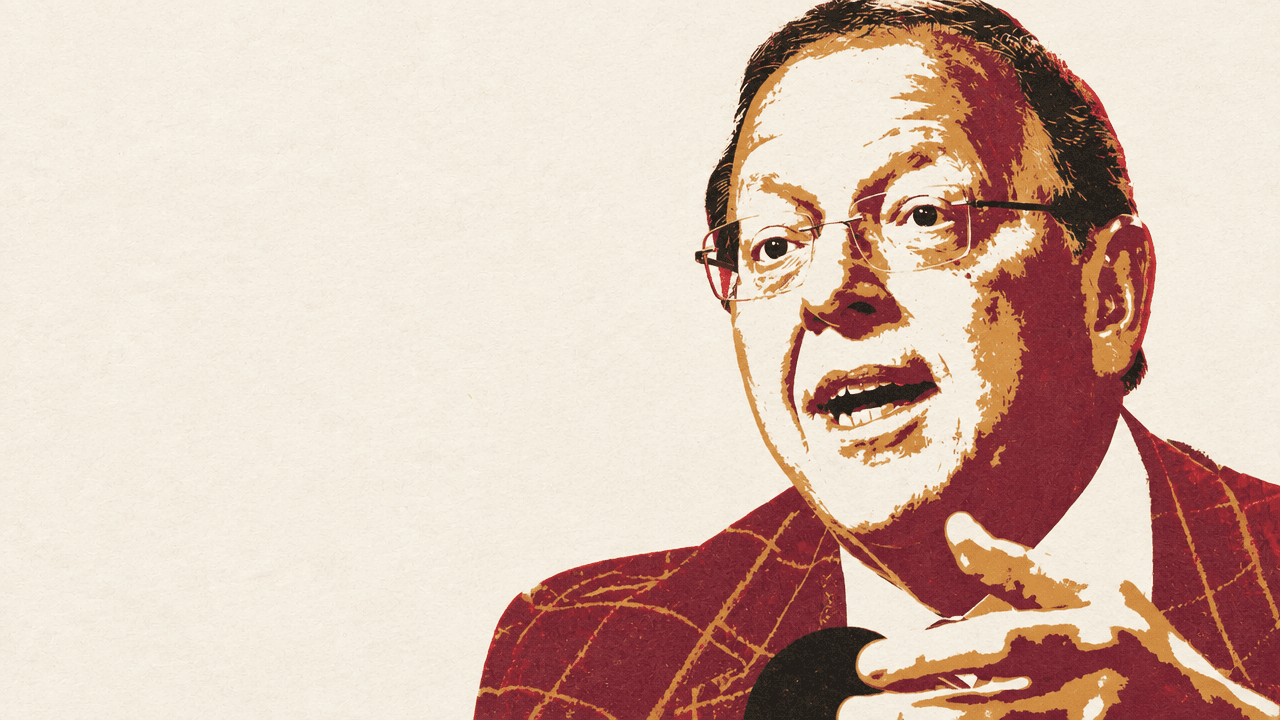
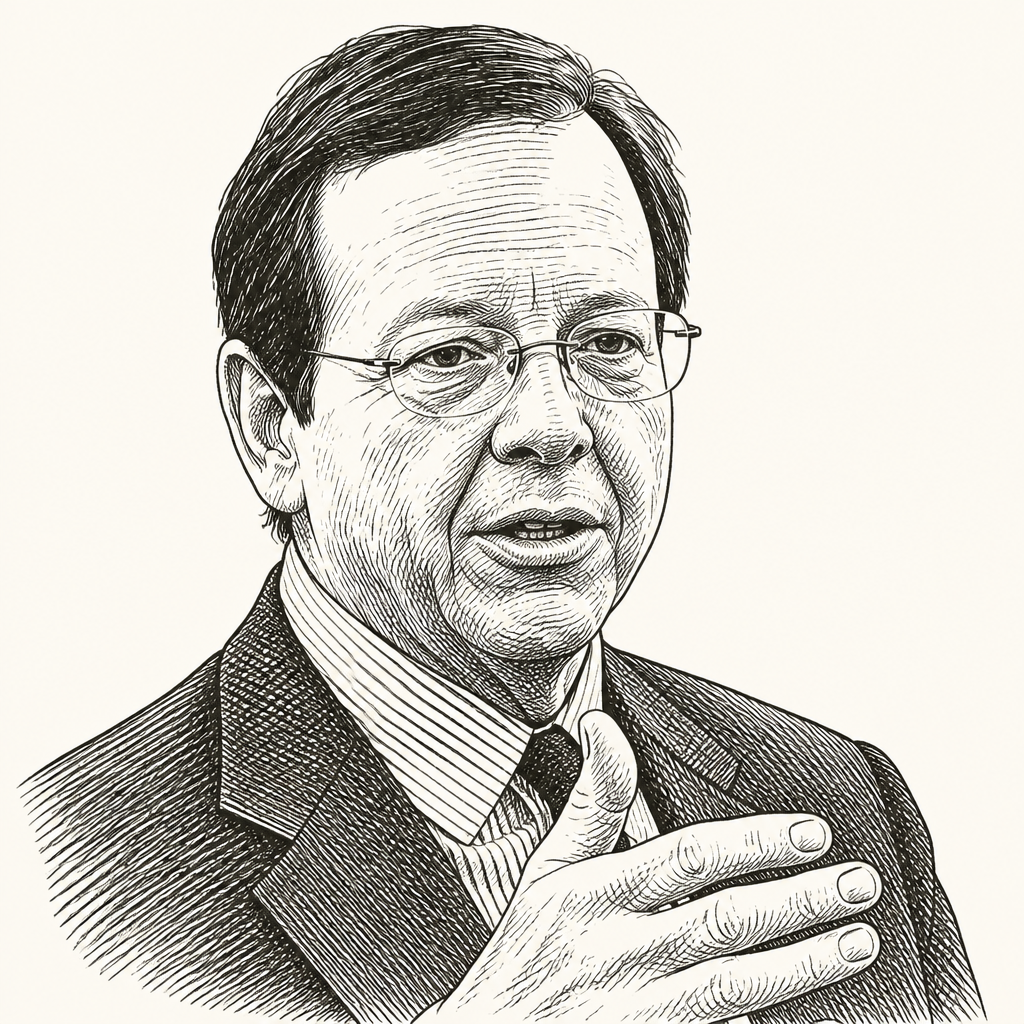
Political scientist Robert Pape argues that support for political violence in the United States has spread beyond fringe groups and now exists on both sides of the political spectrum. Drawing on surveys by the University of Chicago’s Project on Security and Threats, he says that support does not mean respondents will act, but can give would-be attackers a sense of public approval. Pape warns that a close, disputed midterm result could turn that latent support into violence around Congress’s certification of the election.
The survey signal is large, but it measures approval—not a roster of attackers
Robert Pape’s central warning is that support for political violence has moved well beyond fringe groups. He says his University of Chicago Project on Security and Threats has conducted 21 national surveys on the subject over five and a half years, usually every three or four months. The latest survey had been completed shortly before the interview. Pape describes its results as a sharp departure from previous measurements.
The figures he gives concern two different forms of support. Asked whether they supported using force to prevent Donald Trump from being president, 25 percent of American adults said yes. Pape translates that to 65 million adults and says the figure includes 44 percent of respondents identifying as Democrats. For comparison, he says support for anti-Trump political violence had been around 6 or 9 percent several years earlier, rising to 14 percent in September 2023.
Asked whether Trump should use the military to suppress Democratic protesters, 16 percent of Americans said yes. Pape estimates that as about 40 million people and says the respondents were almost all Republicans. He combines the two findings to describe roughly 100 million Americans as supporting political violence. These are answers to distinct survey questions, not a count of unique people or a prediction that all respondents will take part in violence.
Pape’s team has tried to establish what respondents mean when they endorse “the use of force.” He says focus groups and survey experiments go beyond the checkboxes. In one experiment, 55 percent of those who supported force to prevent Trump from becoming president meant assassinating him with rifles, as in the attempt at Butler. Others meant a Democratic riot modeled on January 6. Pape does not say that every respondent had the same idea in mind. His point is that the answer cannot be treated as a synonym for angry language or verbal protest.
The distinction between expressed support and participation matters to the whole argument. Pape is not claiming that 25 percent of adults are potential assassins, or that survey responses tell researchers exactly who will act. He says that support changes the setting in which a person considering violence makes a decision: the person may expect approval from a broader political community. That expectation, in his account, can supply social permission in addition to personal grievance.
The opposing number matters too. Pape says 65 to 70 percent of Americans routinely say they abhor political violence. He calls them a “silent majority,” not because they are inactive in every part of civic life, but because he sees little political leadership or organization giving their opposition a public voice. He asks why a presidential candidate would not make opposition to political violence a defining issue on either side. The absence of that kind of pushback, he argues, lets support for violence become more normal even while most people reject it.
He draws a boundary between normalization and action. A survey can register approval without showing that a respondent will act; approval can also remain widespread without producing an attack for some time. Pape’s claim is that the combination of mass approval and a focal point can make violence more likely. That is why he treats the survey figures as a warning about political conditions rather than a tally of future perpetrators.
A focal point can turn diffuse support into collective action
Pape’s image for the transition from approval to violence is a wildfire. Dry material can remain in place for months without burning. The spark does not create the material, but it can turn a latent risk into rapid escalation. In politics, the “spark” is an event or moment that gives people a reason to act together: a contested election, a leader’s call, a target, or a belief that a decisive opportunity is closing.
January 6 is his clearest American example. Pape says about 120,000 people came to the Ellipse to hear speeches that day. He describes Trump’s speech as naming states where Trump said the election had been stolen, directing attention to congressional Republicans and Vice President Mike Pence, and urging the crowd to march to the Capitol and demand what Trump called the right result. Pape says people began moving toward the Capitol within about 15 minutes of the speech.
In his account, about 10,000 people reached the Capitol and overwhelmed the outer bicycle-fence barriers, which he says were defended by roughly 200 police officers. Pape places Trump’s post that Pence had let the crowd down around the time Pence formally certified the election. He says the breach into the building followed, with people breaking through doors and windows and assaulting officers.
Pape distinguishes among the crowd’s different levels of involvement. Of the roughly 120,000 people who attended the rally, he estimates around 10,000 surrounded the Capitol and about 1,600 broke into it and took part in the violence. He separates those 1,600 from about 400 people who entered later and, he says, were not prosecuted for those acts. His research center reviewed the cases of the 1,575 people prosecuted, including more than 10,000 court documents, he says. He describes the 1,600 as people who forced entry or assaulted police, including people who used flagpoles and bicycle racks as weapons. He says nearly 200 officers went to hospital.
Those numbers do not mean that one in a fixed percentage of political-violence supporters will become violent at a rally. They describe different groups in a particular event: rally attendees, people surrounding the Capitol, and people who broke in or assaulted officers. Pape’s point is about how a large gathering can contain a smaller group whose action changes the conditions for everyone else. He compares the breach to a wildfire spreading and argues that the police force present could not contain the crowd once the breach began. He also speculates that the violence might have been worse if police had mounted stronger resistance at the point of entry.
Pape says Trump did not call the crowd off until around 4:15, roughly three hours after the violence began. He says Trump then told people to go home while also saying he loved them. Pape further argues that Trump’s subsequent praise and pardons of January 6 defendants helped radicalize a substantial part of MAGA, though not all of it. That is his interpretation of the event’s political aftermath, not a claim that every person in the crowd responded to it in the same way.
The wildfire analogy also helps explain why Pape does not equate a large protest with a large number of violent participants. During the protests after George Floyd’s killing in 2020, his center tracked events daily in the 50 largest cities. He says most protests were peaceful. In the recurring pattern he describes, demonstrations began in the afternoon, often downtown, and continued into early evening. Organizers might then ask people to go home. Most did; some remained, and smaller groups sometimes went on to set fires, damage businesses, or attack police facilities.
Pape estimates that 20 to 25 million Americans took part in the protests. Separately, he says five to seven percent of the protests were not peaceful. That percentage describes protests, not the share of attendees who engaged in violence. The difference is essential: the estimate does not mean that five to seven percent of the people who attended were violent. Many people could take part in a peaceful demonstration and leave before violence occurred, while violence in a smaller number of events shaped how the whole movement was described.
Pape says the campus protests after October 7 provide a third example of collective political violence, while stressing that they were less violent than the George Floyd protests. The demonstrations occurred in waves from October 2023 through the end of spring 2024. His team surveyed more than 5,000 undergraduates and 5,000 adults during that period to learn about protest participants and how students experienced events. He says students reported fear and uncertainty about how dangerous the protests might become, but he distinguishes those experiences from the level of physical violence, which he says did not match the scale of property destruction during the George Floyd protests.
The cases are not interchangeable. Pape describes different targets, political contexts, levels of property damage, and crowd behavior. What connects them in his account is not that every protest became violent, but that collective events can move from a much larger peaceful gathering to a smaller group’s violence. The scale of public support matters to that process, but it does not erase the difference between attending a protest, remaining after others leave, and committing an assault.
The present pattern crosses party lines, though the events are not identical
Pape calls the current period “violent populism.” Ordinary populism, as he uses the term, can mean mass anger at an establishment that people believe has shut them out of benefits they are owed. That anger can produce peaceful protest, new political movements, or a change in which party governs. Violent populism adds mass support for using violence to achieve political goals.
He says the United States has experienced political violence across its history, including militia activity and assassination attempts, and identifies the 1920s and 1960s as earlier periods with waves of violence and public support for it. His claim is not that the country has no precedent. It is that these are exceptional periods, not evidence that current levels are routine. He describes the 1960s as a period when violent populism was concentrated mostly on the left, and the 1920s as one when it was concentrated mostly on the right. What he sees as distinctive now is that it is occurring on both sides at once.
That does not mean equivalent acts or harms, and Pape says he is not making a moral equivalence. His comparison is about the role mass support can play in political violence: it can encourage people already inclined toward violence by offering a prospect of social approval. He has spent decades studying individual perpetrators, he says, including more than 8,000 suicide attacks around the world after September 11. In studying manifestos, he looks at how personal grievances and broader social grievances appear together. His account of political violence leaves room for personal pain and psychological problems while also asking how a political community can influence a volatile individual.
The right-left comparison also depends on the period and the kind of violence counted. Pape says studies that conclude most lone-wolf violence came from the right and studies that find a more balanced pattern can appear to disagree because they begin in different years. If researchers count lone-wolf attacks from 1990 to 2025, he says, a majority would be attributed to the right. If they begin in 2015, he says, the balance is much closer, with violence heavily divided between left and right. Those comparisons, as he describes them, generally do not count large crowds such as those at January 6 or during the George Floyd protests.
For Pape, the change in those comparisons is part of the evidence that the character of political violence has shifted. The current cycle is often “anti-Trump” and “anti-anti-Trump,” as Williamson puts it: opposition to Trump and MAGA, and opposition to what supporters see as an attempt to reverse the changes associated with them. Pape agrees, but says the conflict cannot be explained by Trump’s personality alone. He sees Trump as both a cause and a symptom of changes that have made political outcomes feel existential.
Pape also describes a predictable asymmetry in how people explain violence. If an attacker targets a Democratic figure, some people may assume the attacker is pro-MAGA; if the target is on the other side, the assumption may reverse. He says media coverage can minimize the political motive of an attacker aligned with the outlet’s audience while highlighting the other side’s motives. Williamson describes this as minimizing one’s own side and accusing the other. Pape says the pattern is common but not universal: he has seen organizations and political figures make efforts to discuss violence on both sides, though he thinks such efforts are less rewarded.
The same question of public approval appears in Pape’s examples of individual perpetrators. He recounts that the man who attacked Paul Pelosi later said in a radio interview from jail that he wanted to apologize to people in the country for failing to kill Nancy Pelosi. Pape interprets that statement as evidence that the attacker imagined an audience who wanted the same outcome. In discussing Cole Allen, whom he identifies as one of the would-be Trump assassins, Pape says Allen’s manifesto presented the planned violence as a personal sacrifice for a cause he believed others shared. A manifesto can be both an explanation to family and an attempt to connect an act to a political community, Pape argues.
Pape’s comparison extends beyond the current United States. He says that in Northern Ireland, rising Catholic support for political violence in 1969 preceded the Irish Republican Army’s campaign, rather than simply following the organization’s emergence. He also says the Weather Underground, formed from antiwar activism in the 1960s, expected its bombings to attract broader support. Its members later expressed surprise that more people did not follow them, Pape says. He uses these cases to argue that violent groups pay attention to the support they expect from a wider public. He does not claim that most people who support violence will join such groups.
The profile of a supporter is not the profile of a marginal outsider
Pape says the familiar image of a political-violence supporter—a young, unemployed rural man in a militia—does not fit much of what he has studied in recent years. He says that stereotype was more accurate for lone actors from 1990 to around 2014 or 2015, but that the profile changed as collective political violence became more prominent.
His description of the newer profile is a well-educated, middle-class person with a stable home, a career, and savings. He uses Luigi Mangione as an example of someone from generational wealth who attended the University of Pennsylvania and had lived in Hawaii. He describes Cole Allen as a 31-year-old engineer who wrote in a manifesto that he felt called to respond to social injustices associated with the Trump administration.
Pape’s most extensive example is the review of 1,575 people prosecuted for January 6. He says around 45 percent were business owners or had professional jobs, including doctors and nurses. Only about 10 percent, he says, belonged to militia groups. He argues that his team could assess defendants’ backgrounds with confidence because background information is collected through the legal process, particularly at sentencing, when the court considers factors such as the risk of reoffending.
Pape contrasts those profiles with the assumption that perpetrators are people with little to lose. He says many came from comfortable suburbs and had professional or family lives they could put at risk. His explanation is that they believed they were about to lose those things—or the future they expected—if the other side gained power. In his account, a person can have a house, a career, and a family and still see the political situation as a threat to all three.
He gives examples of how that fear can take different forms. Pape says that after the East Palestine train disaster, the absence of prominent Democratic leaders, including President Biden, was read by some in MAGA country as indifference to their community. On the other side, he says, some Democrats see Republican efforts to end birthright citizenship as evidence that future governments could take away rights they consider secure. These are examples of how supporters may interpret political power, not proof that the fears have the same basis or consequences.
The broader claim is that political violence cannot be understood only by looking for people on the margins. Pape says people with resources and status may be especially concerned about losing them. That fear, he argues, becomes politically potent when individuals believe the other party’s victory could permanently change who benefits, who belongs, or which rights remain protected.
Demographic change and concentrated wealth make elections feel like turning points
Pape identifies two social changes as the main drivers of violent populism in the United States. The first is demographic change. He describes the country as moving from a white-majority democracy toward a white-minority democracy. He gives the non-Hispanic white share of the population as 76 percent in 1990 and 57 percent at the time of the interview. He says it could reach 49 percent in 15 to 20 years, depending in part on deportations.
Pape argues that this shift has political consequences because the Republican Party is more heavily white than the Democratic Party. He says immigration became Trump’s signature issue partly because many of his supporters see him as a figure who can stop or reverse demographic change. Some on the left, in contrast, support continued or accelerated change and view Trump and MAGA as a threat to that direction.
He says attitudes about demographic change correlate with support for political violence in his surveys. People who believe white Americans are being deliberately replaced by Democrats, he reports, are four times more likely to support political violence for Trump. People who believe America is and always has been racist are two and a half times more likely to support violence against Trump. Pape presents these beliefs as central to the conflict, not simply as ordinary disagreements about cultural change.
The second social change is the concentration of wealth. Pape says the top one percent held about 17 percent of American wealth in the late 1980s, compared with 26 percent in the most recent data he cites, from two years before the interview. He describes the resulting conditions as a “negative sum society”: people looking for housing or paying rent feel they are losing ground relative to their parents, rather than making the gains they expected.
In Pape’s account, these changes reinforce each other. People who have resources may fear losing them; people who feel excluded may believe the other party will direct benefits to its own supporters. Both sides can come to see an election as the point at which those risks become real. The issue is not only who wins a policy argument, but whether a group’s rights, economic security, or future can be recovered after a loss.
Pape assigns the causes of current unrest in rough proportions: 50 percent to social changes, 25 percent to Trump, and 25 percent to social media and other factors. He says this division is likely to disappoint people who want to focus either on Trump or on social media. For him, the longer-running changes matter because they can outlast any one politician or platform.
He points to the rise of new political figures as signs that the conflict is not dependent on Trump alone. Pape compares Trump’s rapid ascent in the Republican Party with Zohran Mamdani’s rise on the Democratic side, arguing that both have become prominent by speaking to the social conflicts he describes. The substance of their appeal differs, but Pape’s larger point is that new leaders can emerge quickly when they give voice to underlying changes and anxieties.
He says efforts to remove or de-platform particular figures did not extinguish the conflict. In his view, that is because the social pressures remain. Trump’s rhetoric and actions matter, but Pape treats them as one part of a wider process: demographic change, concentrated wealth, and the expectation that political opponents will use power to impose losses.
The midterm risk is a sequence: disputed result, certification, prolonged opposition
Pape’s warning about the midterms is not confined to election day. He says the consequential period may come when votes are counted, a winner is identified, and Congress is due to certify the result and seat its members. He calls the possible cycle an “American domestic escalation trap,” and describes three stages.
First is a legitimacy shock. If the result is close, Pape says, the losing side may believe it did not lose legitimately. He says distrust is already visible on both sides. His concern is not only that people will dispute a result; it is that a close outcome could give already-existing support for political violence a focal point.
Second is the certification and seating of Congress. Pape points to January 6, 2027, as a possible flashpoint because Congress is expected to certify the result then. He asks what would happen if Republicans lost and Trump did not stop supporters from pressuring Congress, or if Democrats lost and protesters gathered in Washington. He also cites Trump’s statements about the Insurrection Act and using the military to suppress Democratic protesters as a factor in the scenario he is describing.
Third, if violence occurs around certification, Pape warns that the conflict may continue as prolonged violent opposition. This is a conditional projection, not a prediction that he says is certain to occur. He argues that the sequence is dangerous because the public has already been primed to see the other side’s victory as an existential loss, and because the survey results show substantial support for using force on both sides.
Pape says he is more than 50 percent worried about the midterms. He points to earlier warnings as evidence that he takes survey changes seriously. In 2020, he says, he warned that the country was nearing a period of major political violence and identified the possibility of attacks against people on the right and military-style immigration enforcement in cities including Chicago. He says events in Portland, Chicago, and Minneapolis followed within months. In 2022, he says, he warned authorities about possible assassination attempts against Democratic leaders; the attack on Paul Pelosi occurred a few weeks later. He presents these as instances in which rising survey sentiment helped him identify risks, not as proof that surveys can predict the timing or details of an attack.
He is unsure that a Democratic victory in 2024 would have changed the underlying danger much. Pape argues that one party winning does not remove demographic or wealth pressures, and rejects the assurance that everything would be fine if only the other side governed. He says both parties have shown a willingness to restrain the other side’s wealthy donors, but he does not see evidence that either has reversed the broader concentration of wealth.
For Pape, political leadership is a missing constraint. Leaders often condemn violence from the opposing camp while failing to restrain their own supporters. He argues that the majority who abhor political violence could help the country pass through these changes without breaking apart, but that they need leaders and institutions able to give their opposition a public voice. In his account, the problem is not that most Americans want violence; it is that the people who oppose it are less organized and less audible than those who justify it.
Foreign actors can exploit division, but Pape sees the main causes at home
Pape says foreign governments can amplify divisions in the United States, but he does not think they can create the underlying conflict from nothing. He points to research conducted at the University of Cambridge after Trump’s 2016 victory, when concerns focused on Russian attempts to manipulate American opinion through social media. In Pape’s reading, the effect was real but modest: foreign actors could magnify existing issues by perhaps 10 or 20 percent, but not manufacture them out of whole cloth.
He also discusses Iranian-made animated Lego videos mocking Trump during the Iran war. The videos, he says, portrayed Trump as ineffectual and were intended to embarrass him and turn American opinion against the war. Pape says the survey results he had just received showed views on the war following political divisions that already existed in the United States. Support was not being substantially rearranged by the videos, in his account.
That result surprised Pape because he says American wars since World War II have generally produced at least a short-term rally-around-the-flag effect, in which people—including some from the opposing party—defer to the president on foreign policy. He says the Iran war was the first case in that period where he did not see the familiar pattern. He argues that if Iranian propaganda were shifting opinion in a consequential way, it would need to move MAGA supporters, the constituency Trump cares about most. Pape says he saw no evidence that the videos were doing so.
He says Russia and China stand to benefit from American division because a country consumed by internal conflict may pay less attention to international affairs or make worse decisions about them. But he does not treat that benefit as evidence that those governments caused the conflict. His account is that foreign influence can take advantage of existing divisions, while the deeper drivers remain domestic.
That distinction matches his broader argument about political violence. External actors may add fuel; social media may make approval visible quickly; political rhetoric may encourage or discourage action. But Pape assigns the greatest share of responsibility to demographic and economic changes that make more people fear what the opposing side will do with power. His warning rests on the combination: mass support for force, a public largely opposed to violence but without strong political representation, and elections that can concentrate those fears into a single consequential moment.