Wade Wilson’s Courtroom Body Language Signaled Defiance, Not Fear
Chase Hughes, speaking with Chris Williamson, reads courtroom footage of Wade Wilson, known as the Deadpool Killer, as a display of defiance and attempted control rather than simple calm. Hughes argues that Wilson’s leaned-back posture, exposed neck, lip-licking and low blink rate point to challenge, appearance management and focused self-possession inside a setting where his autonomy was visibly constrained.
Wilson’s posture read as defiance, not fear
When Wade Wilson appeared in the courtroom footage, Chase Hughes stopped on his body position: leaning back, neck exposed, arms opened out.
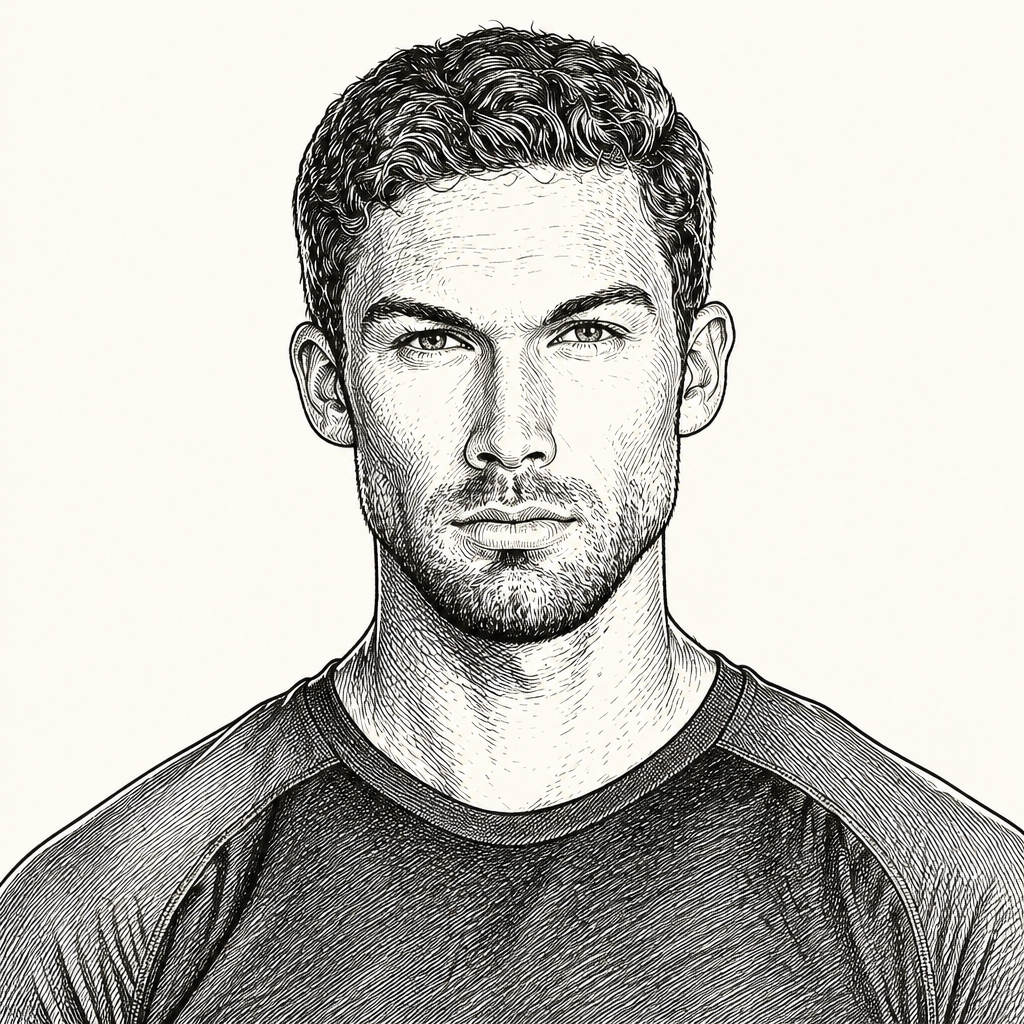
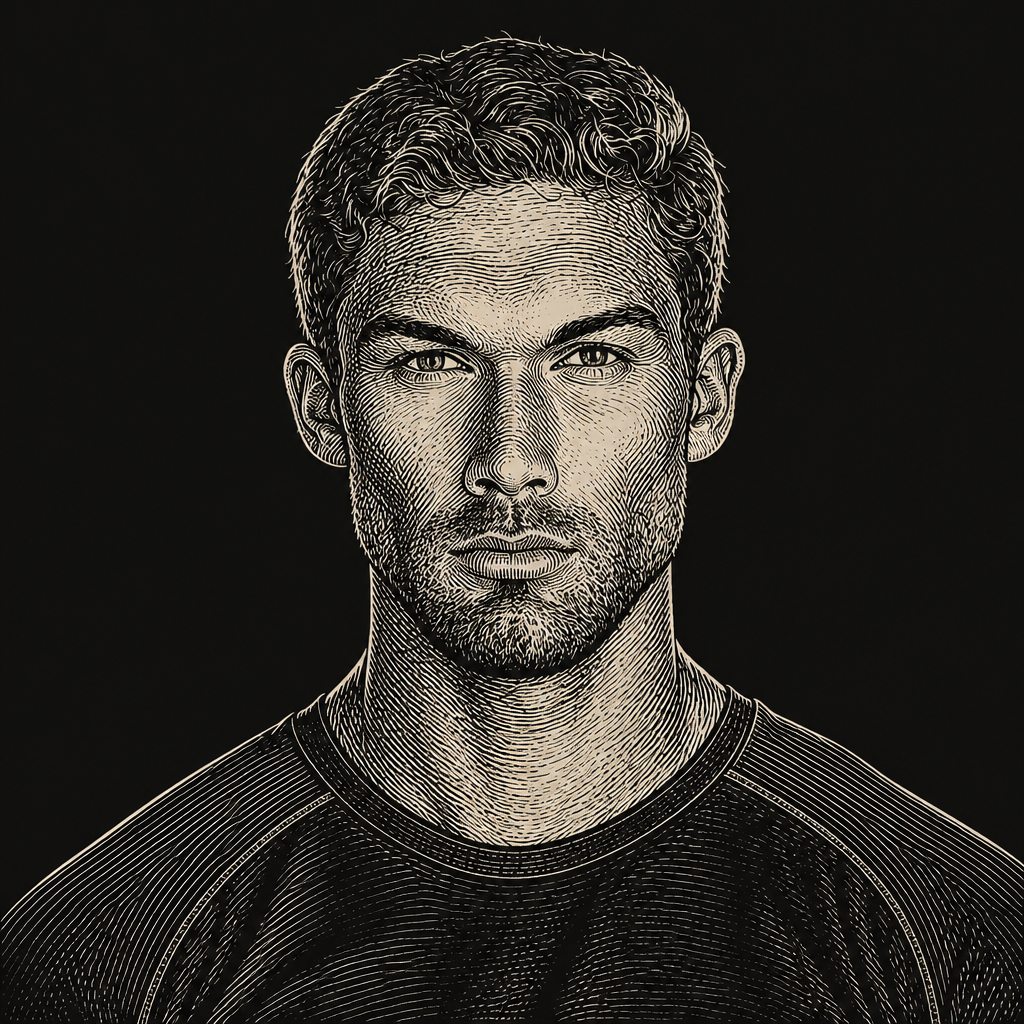
Hughes described that posture as a display he associates especially with men, though he said women can show it too. In his explanation, exposing the neck and other vulnerable areas functions as a nonverbal way of saying, “I’m not scared of you.” He compared it to the posture someone might take before a fight: chin and neck open, body pulled back, arms widened.
Chris Williamson supplied the plain-language reading — “I’m not scared of you” and “dismissiveness” — and Hughes agreed. The point was not that Wilson looked relaxed. Hughes read the pose as “a display of absolute lack of fear,” closer to a challenge than a neutral resting position.
The courtroom footage showed Wilson seated in a red prison uniform, handcuffed, behind legal representatives while a man at a podium spoke about a “broken system” owing something to Christine, Diane, and their families. The footage was attributed on screen to LAW&CRIME and carried a Modern Wisdom watermark. Against that formal setting, the visible posture gave Hughes a specific behavioral cue to read: not fear, but defiance and challenge.
The brief response was treated as a control move
Wilson was given a chance to address the court. The judge explained that he could speak if he wanted to, that no one could prevent him from doing so, and that no one could force him to do so. Wilson answered: “Not today. Thank you. Later, when I come back, I will. Today.”
Chase Hughes paused on what happened just before Wilson spoke. He noted lip-licking and described it as a “hygienic gesture” meant to improve appearance. He also pointed out what Wilson did not do: he did not lean forward, and Hughes did not see him blink during that process.
From that cluster of behaviors, Hughes inferred an effort to maintain some control. His language was tentative: Wilson was “trying to maintain some kind of control in the situation” and “probably thrives on a lot of autonomy,” including the sense that he is self-governing. The answer itself fit that narrower reading: Wilson declined to speak “today,” while reserving the possibility that he would speak “later, when I come back.”
Hughes did not treat the moment as fearlessness alone. The posture and timing mattered because they suggested, in his reading, someone attempting to preserve a degree of agency inside the courtroom exchange.
Low blinking meant focus, not calm
Chase Hughes used Wilson’s low blink rate to explain a broader body-language principle. He called blinking “one of the most reliable body language indicators ever studied,” partly because people naturally look at one another’s eyes during conversation and partly because blink rate can shift dramatically without the person noticing.
His baseline was simple: in conversation, people average around 15 blinks per minute, “give or take.” In a stressful situation, he said, blink rate can rise to “85, 90” blinks per minute without conscious awareness. But low blinking does not mean calm. Hughes emphasized that distinction: when the body focuses on something important, blink rate can fall sharply, even to “like a two.”
The key distinction was between relaxation and focus. Hughes said stress increases blinking, while focus reduces it. He used the example of becoming absorbed in a compelling film: during Interstellar, he said, he may have blinked only three or four times. The example was casual, but it served the technical point: a fixed, unblinking stare can be concentration, not serenity.
That distinction mattered to his reading of criminal-interview footage. Hughes mentioned “psychopaths” in interviews, including Manson, staring at an interviewer with eyes open and hardly blinking. He cautioned that the absence of blinking in those moments should not be mistaken for relaxation.
Stress increases how often we blink and it's not relaxation that that lowers it, it's focus.
Applied back to Wilson, Hughes’s point was that the lack of blinking during the courtroom exchange did not simply indicate ease. In his reading, it indicated focus — a person locked onto the interaction while maintaining his presentation inside it.
Hughes tied the signals to control
The body-language reading came from a small set of visible behaviors rather than from Wilson’s words alone. The open neck and leaned-back posture were read as challenge. The lip-licking before speech was read as appearance management. The absence of forward lean suggested, to Hughes, that Wilson was not moving into the court’s invitation to speak. The low blink rate suggested focus rather than calm.
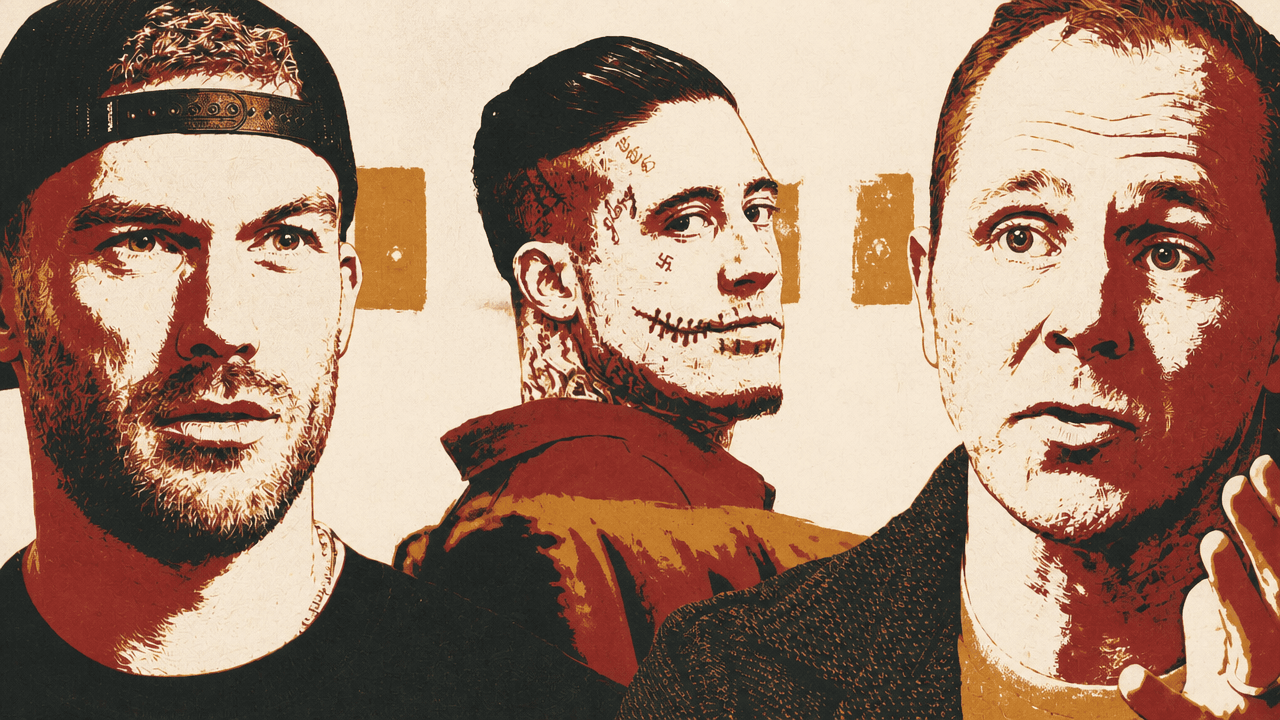
Those details mattered because Wilson was shown in a setting where ordinary control appeared limited. He was in a red prison uniform, physically constrained, seated among counsel, and being addressed through formal court procedure. A close-up showed extensive facial tattoos, including a stitched-mouth design and a swastika. Hughes read the body language as an attempt to preserve “some kind of control” inside that constraint: Wilson appeared, in that moment, to engage only on terms he chose.
Chris Williamson helped sharpen the visible attitude by naming it as dismissiveness, which Hughes accepted. Hughes’s own interpretation remained more tentative than a diagnosis: Wilson was “trying to maintain some kind of control” and “probably thrives on a lot of autonomy.” The analysis rested on that narrower claim — not that the footage proved an inner state, but that the visible behaviors fit a pattern of challenge, focus, and self-governed presentation.