Partial Reprogramming Aims to Reverse Aging Without Erasing Cell Identity
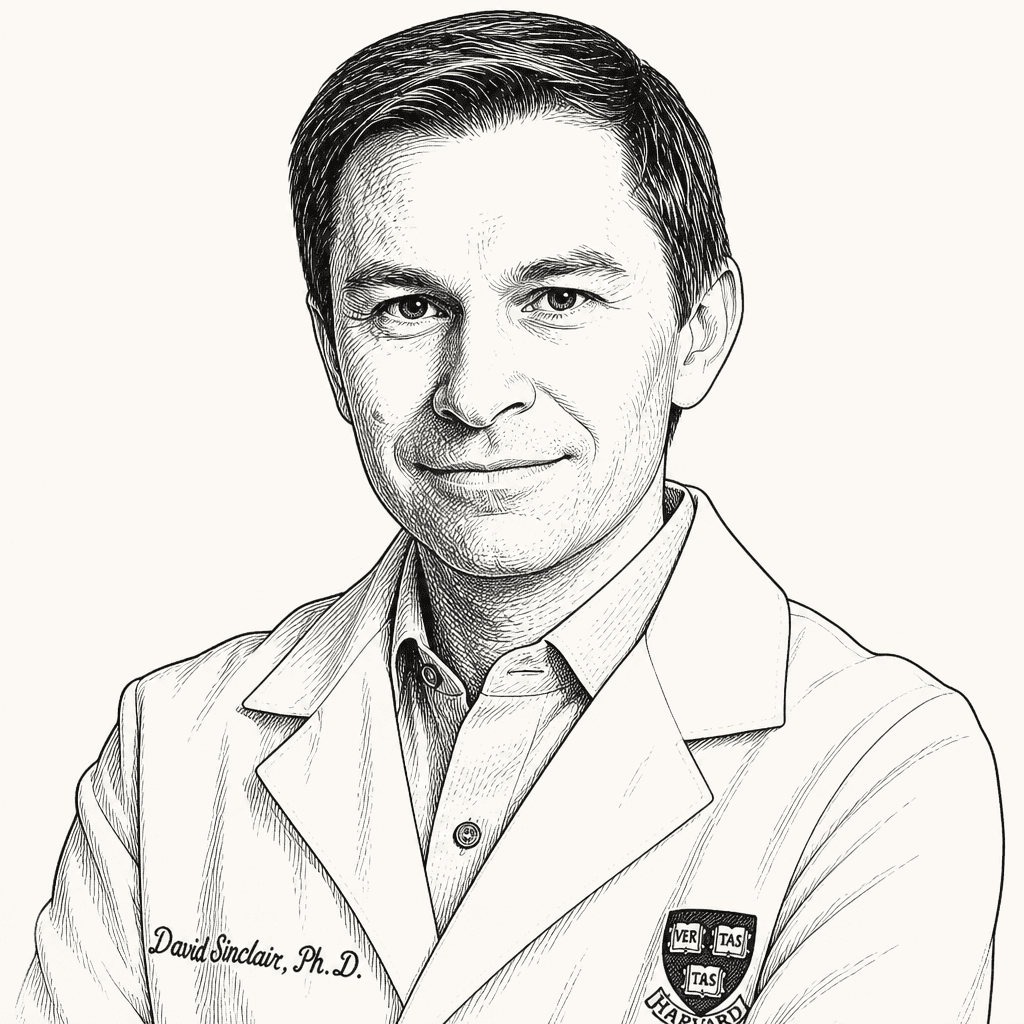
Harvard geneticist David Sinclair argues that aging is partly a loss of cellular information that could be restored through partial epigenetic reprogramming. He says his lab’s first human trial, in the eye, is testing whether a three-gene approach can improve vision without erasing cell identity or triggering cancer; broader claims about whole-body rejuvenation remain based on animal and unpublished work. Until such therapies arrive, Sinclair’s prescription is conventional: protect health through weight, exercise, sleep, diet and risk-specific medical care.
A human eye programme is testing a much larger theory of aging
David Sinclair says a version of his lab’s epigenetic-reprogramming approach has entered human testing in the eye. The treatment, which he calls ER100 for Epigenetic Reprogramming 100, is intended to improve vision or potentially treat blindness. He does not report patient outcomes. The consequential fact, in his account, is the transition from cell and animal work into a human trial.
The evidence base he describes has distinct layers. Human testing is currently limited to the eye. Animal findings include improved vision after optic-nerve injury, laser damage, and experimentally induced glaucoma, as well as results in animal models of macular degeneration and glaucoma. Work in other tissues—including liver, motor neurons, brain aging and memory, and joints—is animal research or work by other groups. The broader claims about oral rejuvenation compounds and whole-body resetting remain unpublished laboratory work in Sinclair’s telling. Forecasts about broad tissue repair, 150-year lives, and eventual body-wide rejuvenation are forecasts.
ER100 uses a subset of the Yamanaka factors, genes associated with resetting cellular state. Sinclair says the genes are delivered with a virus-like vector. The eye was chosen first principally for safety: it is an enclosed space, making it a more controlled site for introducing powerful genes than a tissue where the vector might circulate more broadly.
The choice was not driven by a belief that the eye would be easier to rejuvenate. Sinclair says he initially regarded blindness as an unusually ambitious target and suggested the liver as a simpler place to start. A student in his lab argued that the eye was the safer site for a first clinical application. Sinclair now credits that judgment.
In animal experiments, he says, the approach improved vision after optic-nerve injury, laser damage, and experimentally induced glaucoma. He also describes successful treatment of macular degeneration and glaucoma in animal models. Beyond the eye, he points to work involving liver tissue, motor neurons, brain aging and memory, and joints. He highlights a Chinese study that, he says, used related technology to rebuild bone and cartilage in osteoarthritis.
The theory behind those claims is that aging is not only accumulated damage. It is also, Sinclair argues, a loss of the cellular instructions that tell tissues how to function.
We take three genes that are normally turned on early in life and these three genes make factors that turn on a cascade of events that the cell uses to reboot itself.
Sinclair distinguishes the genome from the epigenome. The genome is the DNA sequence; the epigenome is the system that controls how DNA is folded, packaged, and read. A nerve cell and a liver cell contain the same DNA, but they become different tissues because different genes are exposed or silenced.
His analogy is a phone whose hardware remains intact while its software becomes corrupted. In an earlier version of the metaphor, DNA was the music stored on a CD and the epigenome was the player reading it. Aging, in that image, is a scratched disc: the information remains, but the cell can no longer reliably access it.
Sinclair’s Information Theory of Aging holds that aging partly results from the erosion of this organization. He says his group published work in 2023 in which it disrupted the loops and bundles through which DNA is arranged. Cells lost their identity; nerve cells, for example, ceased functioning as nerve cells. The mice aged rapidly. The reversal work emerged from trying to restore that lost organization.
Embryonic development offers the biological precedent. Sinclair says that after fertilization, early embryos reset their epigenetic state. Partial reprogramming aims to trigger something related to that reset in mature cells without turning mature tissue back into embryonic tissue.
That limit is the technical problem. Full Yamanaka reprogramming can erase cellular identity, producing stem-cell-like cells and creating cancer risk. Sinclair says his lab spent years trying to find a midpoint: enough reprogramming to restore youthful function, but not enough to make a nerve cell forget that it is a nerve cell.
The breakthrough, he says, was leaving out c-Myc, one of the four canonical Yamanaka factors. The remaining three-factor combination—often shortened to OSK—moved cells toward a younger state without fully resetting them.
Without that final gene, it’s called c-Myc, cells don’t go back 100%. They go back about 75 and stop.
Sinclair describes repeated failures before that result: cells either did not change meaningfully or became cancerous. The three-gene combination produced cells that looked younger while retaining their identity. That distinction—partial reprogramming rather than complete return to a stem-cell state—is central to the therapeutic ambition.
Delivery remains a constraint for broader use. Current viral methods cannot reliably reach every cell in a body and may at best reach around half, Sinclair says. He nevertheless reports that partial whole-body resetting has been achieved in mice in his laboratory and elsewhere, with longer life in those animals.
He also reports five years of work on an oral chemical approach. In old mice, the group has administered an undisclosed cocktail three days a week for a month and observed improvements that he says include memory and skin quality. The mechanism is still unresolved, including where the body’s supposed “backup copy” of youthful epigenetic information resides.
What he does claim is that the effect depends on epigenetic resetting rather than generic chemical stress. TET enzymes remove chemical marks from DNA and are involved in embryonic epigenetic resetting. Sinclair says that when his team removes or inhibits those enzymes, the chemical cocktail no longer makes cells younger.
Calling aging a disease is a strategy for building medicines
Sinclair prefers to describe aging as a disease, while acknowledging that the label is partly strategic. If aging is treated as inevitable, he argues, medicine will continue to address late-life diseases one at a time. If it is treated as modifiable, researchers and regulators can build therapies aimed at the underlying process.
Chris Williamson frames the practical implication as a version of longevity escape velocity: staying healthy now may allow someone to live long enough to benefit from therapies that do not yet exist. Sinclair agrees. He says people should think not only about their own health, but about parents and grandparents who may be close enough to future interventions for present-day prevention to matter.

His forecast is expansive. Sinclair says he sees no fixed biological upper limit on human lifespan in principle, pointing to thousand-year-old bonsai trees as evidence that biology itself does not impose a universal short horizon. That does not mean he expects near-term immortality. His claim is that humans may gain far more control over aging biology than evolution supplied.
He believes some people may live decades longer than they otherwise would and that the first person to reach 150 is probably already alive. A convincing demonstration of age reversal in humans, he argues, would become a turning point: investment would expand, first into other organs and tissues and eventually toward broader body-wide treatment.
Those claims are not presented as trial results. They depend on Sinclair’s extrapolation from research in cells and animals, including monkey work he describes, to humans. He says many aging researchers privately share some version of the expectation but are reluctant to say so publicly. The profession rewards caution, he argues, and forecasts about 150-year lives can sound unserious before the relevant medicines exist.
He describes himself as an outsider partly because he is willing to discuss implications of work before publication. Publication can lag laboratory findings by years, he says; his book sometimes discussed work before colleagues had encountered it in journals. He also describes his work as a mission rather than simply an academic career, rooted in childhood conversations with his grandmother about war and humanity’s capacity to do better.
The practical programme is built around cycling growth and adversity
Until stronger therapies arrive, Sinclair divides longevity practice into three categories: lifestyle, drugs, and supplements. Lifestyle includes food, movement, sleep, and stress. Drugs include metformin, rapamycin, senolytics, and potentially GLP-1 receptor agonists. Supplements, he says, are a “wild west,” where manufacturing quality, dose, contamination, and marketing often outrun evidence.
The unifying idea in his lifestyle advice is not permanent deprivation. It is cycling between growth and adversity. Food abundance, muscle-building, and reproduction are useful biological states, he says. But the body should not remain in growth mode continuously. Hunger, exercise, plant compounds, and some forms of physical stress can shift biology toward maintenance and repair.
Sinclair ties this model to SIRT1, a protein he describes as helping protect the epigenome. Hunger and exercise, he says, create conditions that activate it, including through NAD. Fasting, in this framework, is not only a way to consume fewer calories. It is a way to spend time in a distinct metabolic state.
His own eating pattern is aggressive by ordinary standards. He generally eats one meal a day, sometimes two when he is social, and rejects three meals plus snacks as a marketing-driven norm rather than a biological necessity. He says he sometimes fasts for as long as two weeks, while supporting those fasts with hydration, vitamins, minerals, medicines, blood tests, a continuous glucose monitor, and body-composition monitoring.
He does not offer two-week fasts as a general protocol. Sinclair says they are not for people who are elderly, very lean, or otherwise vulnerable. His general starting point is simpler: skip one meal, use water, tea, coffee, or other low-calorie drinks, and allow the body time to adapt to hunger.
After roughly three days without food, Sinclair says hunger subsides for him, his mind becomes clearer, and his energy steadies. He associates that transition with chaperone-mediated autophagy, or CMA, which he describes as a deep-cleaning process for damaged proteins.
The human evidence for calorie restriction remains limited. Sinclair says the CALERIE study improved health biomarkers over a couple of years and had effects on the epigenome, but that no prospective, placebo-controlled human lifespan trial has been conducted. The animal evidence, in his account, is much stronger.
He describes the previously disputed rhesus-monkey calorie-restriction studies as having converged on a conclusion that restricted animals had a lower disease burden, including less cancer, and somewhat longer lives under certain conditions. Even if lifespan effects were modest, he argues, reducing heart disease and cancer in later decades would still matter.
Meal timing may matter independently of calorie total. Sinclair cites mouse work in which animals received roughly the same amount of food but either ate throughout the day or consumed it in a defined window. In his description, the time-restricted animals lived substantially longer. That informs his preference for a shorter daily eating window over continuous grazing.
Protein creates a related tension between muscle-building and longevity. Sinclair rejects the idea that protein is inherently harmful and says he eats substantial amounts himself, mostly from plants. Animal protein and supplements can be useful for building muscle. His objection is to treating a bodybuilding diet—high meat, low plants, continual feeding—as a longevity diet.
He emphasizes plants for polyphenols and argues that persistent excess of the branched-chain amino acids leucine, isoleucine, and valine can be detrimental. Animal studies, he says, link high intake with shorter life, while short-term human studies restricting protein high in branched-chain amino acids have found metabolic benefits.
The mechanism he emphasizes is mTOR. Active mTOR supports cell division, growth, and muscle building. Those functions are useful, particularly for younger people and for older people at risk of losing muscle. But Sinclair says animals with persistently high mTOR activity live less long than animals with lower activity. His practical conclusion is not to avoid protein; it is to make room for periods of reduced growth signaling through fasting, less food, and more plant-focused eating.
The fundamentals remain muscle, aerobic capacity, sleep, and less rumination
Sinclair’s exercise prescription is conventional: combine resistance training, balance, and aerobic work. Muscle helps preserve strength and reduce fracture risk in later life, he says, while aerobic capacity matters because VO2 max is associated with long life.
His operational benchmark for aerobic work is simple: become breathless enough that ordinary conversation is difficult. He suggests doing that at least three times a week for around 10 minutes through running, rowing, sport, or another vigorous activity. Low-intensity movement remains useful, but he does not treat it as a replacement for more demanding aerobic work.
He also favors reducing sedentary time. He uses a standing desk, walks around his office, and incorporates gardening, carrying, and building work into his movement. The point is not a particular hobby; it is a life that includes strength, balance, and regular exertion.
Sleep is not merely recovery from exercise in his model. Sinclair says people should identify how much sleep they need and attend to quality as well as duration. Wearables can make visible the difference between time spent in bed and time actually asleep, a point Williamson reinforces from years of tracked data.
Sinclair says he can sometimes function on five hours because his wearable data indicates high sleep efficiency and substantial deep sleep. He does not offer five hours as a general target. His practical advice is to avoid late caffeine and alcohol, keep the room cool, and use relaxation, breathing, or meditation to fall asleep more easily. A person should wake rested and ready for the day, he says, rather than dependent on coffee and a shower to become functional.
Stress is another biological input, not simply an unpleasant feeling. Sinclair mentions cortisol and DHEA-cortisol testing, but concentrates on rumination: continually rehearsing what might go wrong. Work, money, health, family, and rapid social change create endless prompts for it.
His advice is blunt: learn to interrupt the cycle. He says he has trained himself to defer worries rather than immediately answer every message or solve every problem. At 57, Sinclair says he has learned that difficult events are rarely as catastrophic as they appear in advance and that people become less governed by imagined disasters when they trust their capacity to endure and solve real ones.
Use identified risks differently from personal experiments
Sinclair’s personal stack is extensive, but he draws an important distinction among managing an identified risk, using a tool for self-observation, and experimenting with interventions that remain unsettled. The distinction does not convert any of these into a recommendation for the reader; it is the role he assigns them in his own approach.
| Intervention | Role Sinclair assigns it | Boundary he describes |
|---|---|---|
| Statin or PCSK9 inhibitor | Management of elevated cholesterol risk | He takes a statin because of family high cholesterol and may switch therapies. |
| Low-dose aspirin | Individual cardiovascular-risk decision | He takes it because of elevated lipoprotein(a) and says the decision belongs with a physician. |
| CPAP | Treatment for nighttime oxygen deprivation | He calls it important for people with anoxia rather than a general longevity tool. |
| Continuous glucose monitor | Self-observation and behavior change | He uses it to see individual responses to foods; it is not presented as a treatment. |
| Creatine | Supplement he favors | He gives a general positive judgment without presenting it as a lifespan medicine. |
| Hyperbaric oxygen and red or near-infrared light | Promising but less settled interventions | He is favorable, while treating evidence and use cases as more limited than core lifestyle measures. |
Established management begins with individual risk. Sinclair takes a statin because of family high cholesterol and says he may switch to a PCSK9 inhibitor. He takes low-dose aspirin because he has elevated lipoprotein(a), which he says may place him in a group for whom cardiovascular benefits outweigh bleeding risks.
He does not dispute that broad recommendations have moved away from routine aspirin use for everyone. His point is that population-wide guidance does not settle an individual decision. Aspirin, he says, should be discussed with a physician in light of a person’s own cardiovascular and bleeding risks.
The same logic applies to sleep apnea. Sinclair calls CPAP important for people with nighttime oxygen deprivation, while also mentioning weight loss, alcohol reduction, pillow changes, and sleeping position as possible complements.
The less settled category includes interventions he views favorably without presenting them as established longevity medicine. He supports creatine. He sees stem-cell treatments as potentially useful for specific repair problems, such as joints, but not as a general long-term solution. He is favorable toward hyperbaric oxygen therapy, particularly cycling pressure, based on claimed benefits for brain function, blood flow, and wound healing.
He also favors continuous glucose monitors. For him, grapes and white rice produce large glucose increases while potatoes do not. He says that giving a monitor to his teenage son changed the son’s eating habits. The broader lesson is that personal data can make abstract dietary advice concrete.
Sinclair is less persuaded by electrical claims around grounding, though he believes time outdoors and contact with nature can be valuable. He is also wary of expensive multi-wavelength laser devices. Red and near-infrared light may have emerging support, he says, but he wants better evidence for broader laser claims.
His warning is that optimization can become another form of stress. Sinclair says he can become obsessive himself. His preferred posture is to treat health experiments as a hobby: test, measure, adjust, and do not turn an imperfect night of sleep or meal into a crisis.
Resveratrol and NMN are Sinclair’s strongest personal bets—and his clearest purity warning
Sinclair says his routine has remained broadly consistent since Lifespan. He takes resveratrol, NMN, aspirin, and other supplements and medicines shaped by his own history and risk profile. His confidence in particular compounds is not a claim that the supplement category is broadly reliable.
His case for resveratrol centers on SIRT1. Sinclair says resveratrol, a compound found in stressed plants, binds directly to SIRT1 and makes it more active. A Pfizer group challenged that mechanism in 2010, arguing that the apparent effect was an experimental artifact. Sinclair says his group subsequently defined the interaction at the atomic level and altered an amino acid in SIRT1 to block it.
He says mice engineered with that block no longer received the health or lifespan benefits his group associates with resveratrol. In his view, that settled the mechanistic dispute, even if the earlier negative finding received more media attention than subsequent work.
Sinclair takes roughly a gram of resveratrol most mornings, mixed with olive oil, Greek yogurt, or vegan yogurt. He says resveratrol has been tested in multiple clinical trials and considers the public controversy around it disproportionate to the scientific disagreement he sees.
NMN is a precursor to NAD, which Sinclair describes as fuel for SIRT1. He says NAD participates in reactions through which SIRT1 removes chemical marks from epigenetic structures, and that raising NAD can support healthier cells. He cites work across the field in cells, animals, and humans that he says links NAD boosting to improved metabolic measures in some populations.
Sinclair says his lab has resubmitted a paper reporting that NMN improved health and extended lifespan in older mice, particularly females. He describes the paper as having gone through reviewer comments and further work.
He also rejects the claim that a finding about NAD in white blood cells invalidates the broader theory. White blood cells do not necessarily show declining NAD with age, he says, but that does not determine whether raising NAD can be beneficial in other tissues or settings.
The more consequential practical point is purity. Sinclair says some NMN supplements have contained less NMN than their labels claimed, or none at all. He also says his laboratory found endotoxin contamination in bulk NMN and supplements, including material being fed to mice in longevity experiments. Endotoxin comes from bacteria, can drive inflammation, and can compromise an experiment designed to test health benefits.
His advice is to seek manufacturers that share batch analytics, follow good manufacturing practices, and provide recognizable purity standards. If a company does not make testing data available, he says, consumers should ask for it.
That concern extends beyond NMN. Sinclair says omega-3 products can vary in purity and warns about heavy-metal contamination. He is broadly supportive of omega-3s as anti-inflammatory, while saying their role in preventing heart disease remains contested.
GLP-1s may be longevity drugs in disguise, but they are not consequence-free
Sinclair is strongly favorable toward GLP-1 receptor agonists, especially for obesity. He says people who cannot lose weight on their own should discuss these drugs with a physician because obesity accelerates aging and raises the risk of early death.
He goes further than a narrow obesity argument. Even for people near an optimal weight, he believes small doses may have benefits beyond appetite suppression and lower calorie intake. He points to signals involving brain health and immune function, and says emerging research may indicate protection against dementia that is not explained entirely by weight loss.
Chris Williamson identifies the uneasy social context. GLP-1s appear, in accounts Williamson raises, to affect alcohol cravings and other compulsive behaviors as well as food. That could create momentum: someone who finds eating easier to control may become more disciplined elsewhere. But it also complicates what people mean when they describe their behavior as willpower.
Williamson’s larger objection is environmental. It can feel dystopian, he says, to medicate people out of a food environment designed around hyper-palatable, calorie-dense products. Sinclair agrees with the description, but sees a parallel with aging. Obesity was treated as a disease, drug development followed, and medicine produced interventions that can materially improve outcomes. He wants aging to receive the same treatment.
It’s as close to a longevity drug as we probably have right now given what we’re seeing.
Sinclair also stresses that GLP-1s have downsides, including rare kidney problems and blindness. He has personally tried small doses and says hunger decreased and weight loss became easier, but he did not take them long enough to draw conclusions about broader effects.
The scale of adoption was illustrated by estimates displayed in a ChatGPT interface during the discussion. The display attributed current-use and lifetime-use estimates to Gallup, and a household-use estimate to the Wall Street Journal.
| Measure | Estimate shown on screen |
|---|---|
| U.S. adults currently using GLP-1s | ~11%, or ~29 million people |
| U.S. adults who have ever used a GLP-1 | ~15%, or ~40 million people |
| U.S. households with at least one GLP-1 user | ~20% |
| Non-users interested in GLP-1 use for weight loss | ~30–45% |
For Sinclair, these drugs are a test case for a broader proposition: a treatment initially developed for one risk factor can change how medicine approaches disease burden, prevention, and aging itself.
Heat has a stronger case than cold, while vitamins are easy to overdo
Sinclair says the evidence for sauna use has improved materially since 2019. Regular sauna bathing, particularly in studies of Nordic men, is associated with lower rates of heart disease in the work he describes. He considers the evidence sufficiently consistent to regard sauna as a worthwhile practice.
Cold exposure has a weaker case. Sinclair says cold plunges can increase brown fat, metabolically active tissue rich in mitochondria that helps produce heat. People with more brown fat tend to have better metabolic health, he says, and building it may become harder with age.
But he treats broad longevity claims around cold plunges and contrast therapy as plausible rather than demonstrated. His own behavior follows that evidence balance: he uses heat daily, including steam showers, and cold plunges only occasionally. Williamson agrees that cold exposure can produce an immediate subjective lift, but says he would choose sauna repeatedly over cold plunges when health is the objective.
Sinclair’s clearest criticism is directed at indiscriminate vitamin use. He does not favor routine multivitamins for well-nourished people, particularly high-dose B vitamins. Vitamin C can become pro-oxidant at continuously high doses, he says, and excess B vitamins can be toxic.
The right approach, in his view, is measurement and correction of deficiency rather than maximizing intake. Williamson offers a personal example: while investigating possible methylation problems, he used methylated B12 injections and developed what he describes as severe confusion. The experience reinforced the larger point that an intervention can be intended as health support while creating its own problem.
AI changes the search process, not the need for biological testing
Sinclair says AI is already accelerating laboratory research. A project that would have taken 160 years using older methods, he says, was completed in months. He describes a 19-year-old student who used a leading AI model to analyze terabytes of existing data and identify a pattern potentially relevant to the Information Theory of Aging.
His point is methodological: questions that had occupied several researchers without resolution became tractable in weeks when a new researcher could use AI to examine data at scale.
At the molecular level, he describes a shift from physical screening toward computational triage. The older approach involved chemical libraries stored in freezers, automated testing in plates of 96 or 384 wells, and slow image-based evaluation of cells. AI can now model proteins in three dimensions, estimate how molecules may dock with them, and evaluate vast sets of candidate compounds before physical testing begins.
The virtual system is not one-to-one with biology, Sinclair says. Its value is that it discards many implausible candidates before researchers invest in laboratory work. His lab has identified 200 compounds it thinks may reverse aging, ordered them from a manufacturer, and begun testing them on human cells.
The group has also developed an image-based AI system that estimates whether skin cells from a 90-year-old person appear more like younger cells after treatment. The goal, Sinclair says, is to reduce the lab’s existing multi-compound rejuvenation cocktail to a single molecule that could potentially become a drug, supplement, patch, or cream.
AI does not remove the need for animal experiments or clinical trials in Sinclair’s telling. It changes which experiments are worth conducting, and how quickly researchers can move from an idea to a shortlist of molecules that still have to work in living systems.
The ambition is radical; the present-day assignment is familiar
Sinclair rejects the idea that longer life necessarily means a longer period of frailty. The objective is not prolonged old age, he says, but more years of vigor and function. His father, 87, is the example he returns to: socially active, travelling, and, Sinclair says, enjoying life more than he did in middle age.
Relationships and outlook belong in the picture as well. Sinclair cites Harvard researcher Robert Waldinger’s work as evidence that mental attitude and social life can matter as much as blood pressure and cholesterol. Major shocks—divorce, bereavement, illness, and moving house—can accelerate aging, he says. He describes his own divorce during COVID as a severe event that felt as if it took years from his life.
When asked to reduce longevity to only a few actions, his answer is much less futuristic than his laboratory work. Avoid overeating. Stay lean. Do not smoke. Avoid excessive alcohol. Exercise. Preserve muscle. Eat more plant-focused foods. Learn not to live in chronic stress.
The contrast defines Sinclair’s position. He believes the biology of aging can eventually be reset through therapies that restore lost cellular information. But the work of reaching that future remains ordinary: protect present function through body weight, movement, sleep, diet, social connection, and a life not dominated by rumination.