Sinclair’s Two-Week Fast Relies on Supplements, Monitoring and Exercise
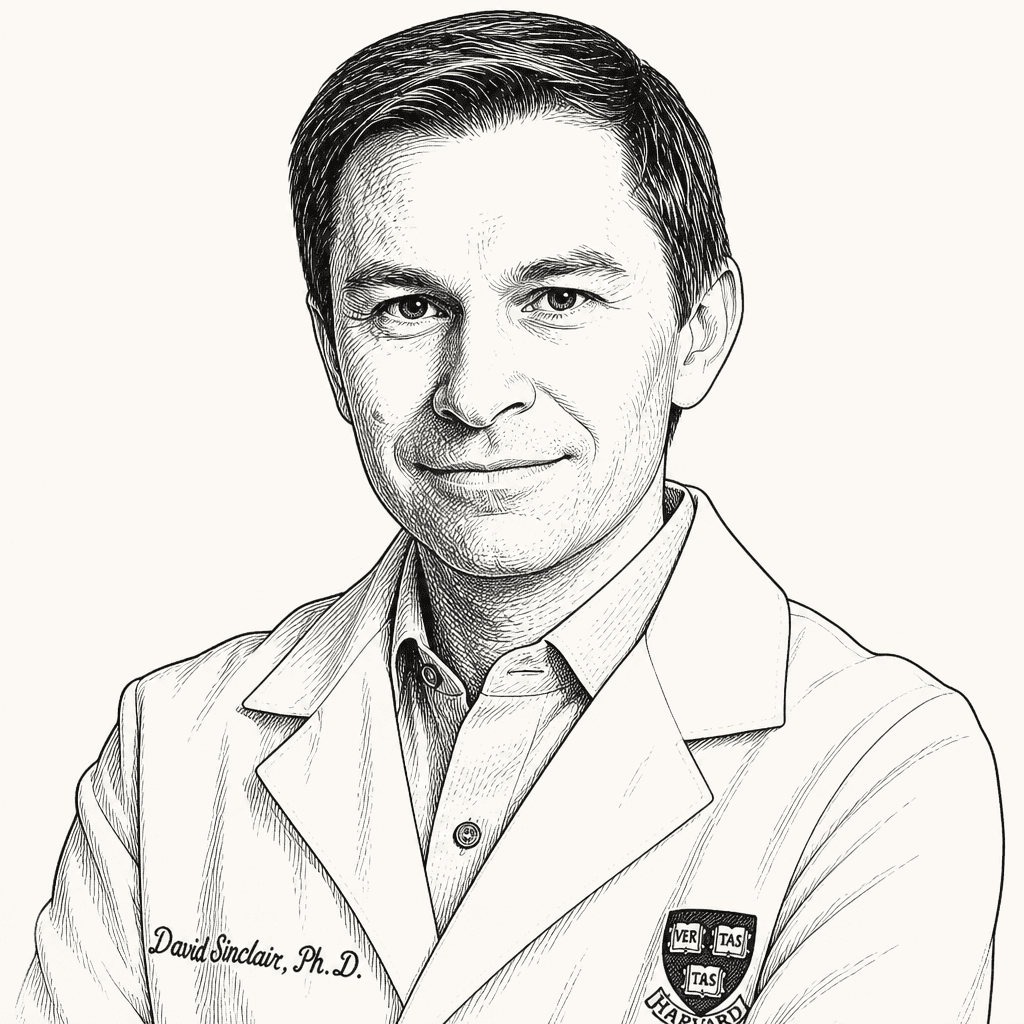
David Sinclair describes his two-week fasts as a monitored, supplement-supported personal practice, not a water-only regimen or general advice, while his broader case for eating less often rests chiefly on animal evidence. He says that after roughly three days without conventional meals, his hunger recedes and he feels clearer, less bloated and more energized.

His two-week fast is not a water-only regimen
David Sinclair says he can go for two weeks with virtually no food, sometimes eating only “a piece of celery or something,” which he does not count as meaningful nutrition. But his account includes far more than water and salt: tea, low- or zero-calorie drinks, supplements, medicines, vitamins, nutrients and deliberate hydration.
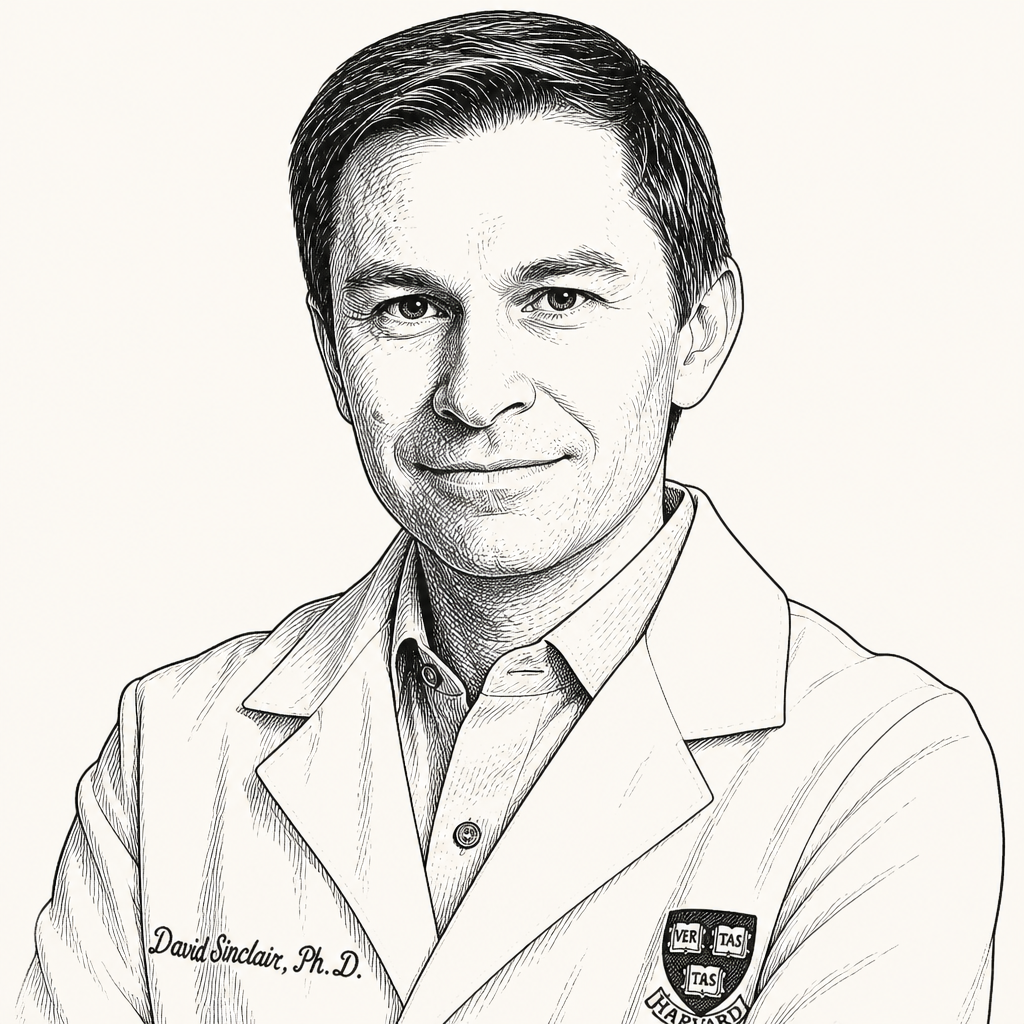

He travels with a carry pack containing products he knows well and uses every morning. “It’s a symphony of supplements and medicines,” he says. He specifically mentions vitamins B and C, along with minerals and other nutrients intended to avoid deficiencies during a long period without conventional meals.
The distinction matters to him. Extended fasting is not something “anybody can do” under the same conditions, he says, because his own practice depends on managing hydration and nutrient intake rather than simply ceasing all consumption.
He also tracks his response closely: a continuous glucose monitor, rings, blood tests, and a Withings scale for weight and body composition. He says he has used the scale since 2013, giving him a long record against which to judge changes in his weight and composition.
That record matters during extended fasts because, in his account, fasting too long can cause muscle loss. He works out more than usual and watches the scale’s lean-mass estimate, aiming to let his weight fall without losing muscle.
Eat less often, tolerate hunger, and do not treat it as universal advice
David Sinclair says longevity may benefit from restricting how often people eat and, to some extent, how much they eat. He says this position has not changed since the 2019 publication of Lifespan. The evidence he cites is mostly from animal research, with some human data.
His personal default is one meal a day. He may eat twice when socializing, but does not usually eat three meals. Three meals plus snacks, he argues, is a marketing-driven pattern rather than a biological necessity. He similarly associates the idea that breakfast is the day’s most important meal with cereal-company marketing.
His intuition is that humans adapted to intermittent food availability rather than continual satisfaction. Unless people had just made an unusually large kill, he suggests, they would often have been hungry. He deliberately tries to tolerate hunger rather than automatically responding to it with food.
We’re not meant to always be satisfied.
That does not mean he describes himself as living under constant restraint. He says he likes food, snacks and staying up late, and that travel can lead him to eat well and gain weight. On returning home, he may go without food for two or three days. The two-week fast is an extension of that personal practice, not his everyday baseline.
He also puts limits around it. Extended fasting is not for people who are thin and have little body fat, or for elderly people, he says. He describes himself as someone who gains weight and muscle easily and whose weight can fluctuate—a personal context he considers relevant to why he can undertake the practice.
After three days, hunger gives way to clearer energy
David Sinclair says that until roughly a year before this exchange, he had not fasted beyond 24 hours. He found it painful, particularly when stressed, when his instinct was to eat. Over the past year, he says, he learned he could continue past that point. After about three days, hunger recedes for him.
After those three days, you know, I start to feel amazing. My mind clears. I don’t feel bloated at all.
He also reports feeling energized and spending less time in the bathroom. With little food entering the digestive tract, he says, stool output changes substantially; he jokes that what remains is “phantom poo,” mostly gas.
Sinclair separately points to chaperone-mediated autophagy, or CMA, which he describes as a “deep cleanse” of misfolded and modified proteins that should be removed in ageing or efforts to slow it. He presents that as part of the molecular biology associated with prolonged fasting, while describing his clearer thinking, energy and reduced bloating as his own experience.
The claimed fuel shift begins with liver glycogen
David Sinclair describes the first 24 hours without food as a period in which the body uses available sugar and then glycogen stored in the liver. He contrasts this with what he regards as the familiar rhythm of eating: bursts of energy, brain fog and afternoon sleepiness.
In his account, fasting changes the source of fuel rather than simply removing it. The liver can provide the brain with glucose, ketones, or both; ketone drinks are also an option. His shorthand is that his liver is “smarter than my eyes and my mouth”: it supplies fuel according to the body’s needs rather than according to the food he sees or wants.
He says the brain “loves ketones,” but does not present fasting as costless or indefinitely sustainable. Muscle loss is the practical limit he emphasizes, which is why his two-week practice is paired with exercise, measurements and a regimen intended to prevent nutritional deficiency.