World Cup Customers Lift DraftKings Handle 20% After Tournament


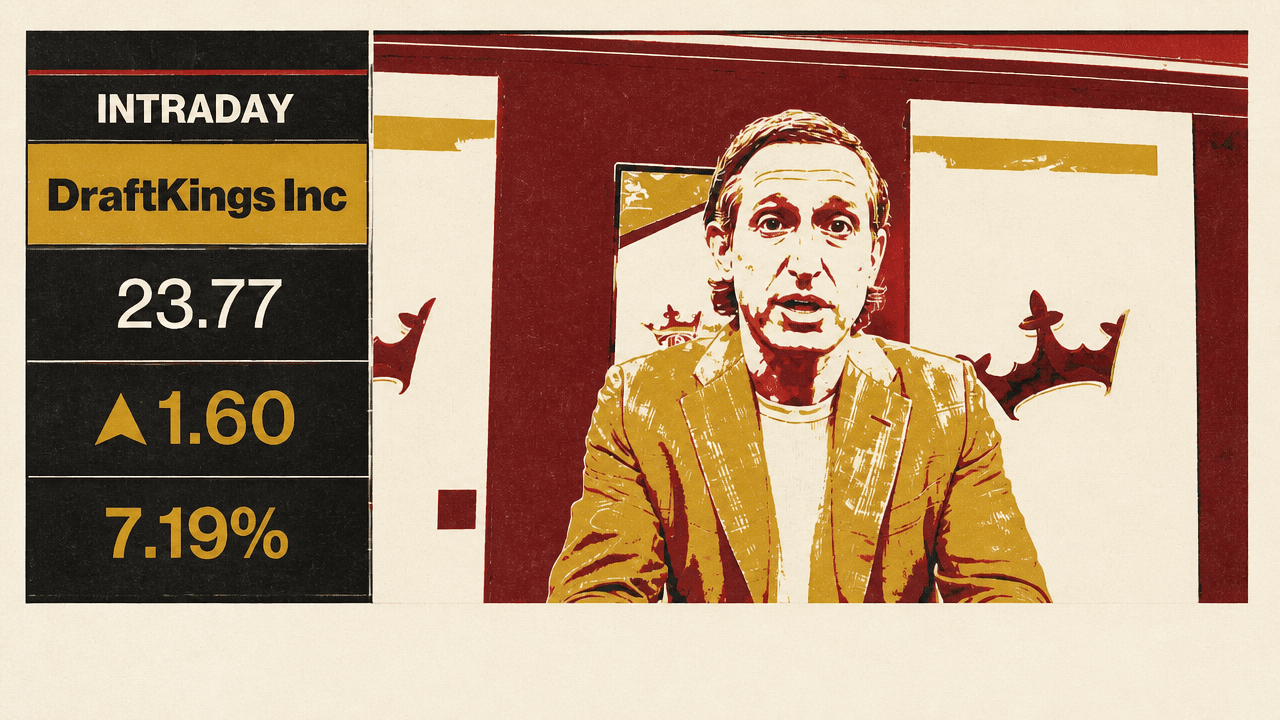
DraftKings CEO Jason Robins argues that the World Cup gave the company more than a temporary customer boost: acquisition costs ran 25% below plan, and betting handle rose 20% in July after the tournament ended. He says the retention of new and reactivated users strengthens DraftKings’ position entering the NFL season, helping investors look past a quarter in which revenue and adjusted EBITDA declined. Robins also casts the company’s growing prediction business as an adult entertainment product, rejecting marketing practices he says prioritize short-term volume over a durable brand.
World Cup customers kept betting after the tournament ended
Jason Robins said the World Cup exceeded DraftKings’ expectations on nearly every metric it tracks. The event brought in more customers than expected for both prediction products and online sports betting, while customer-acquisition costs came in 25% below the company’s plan.

The more consequential result, Robins said, came after the tournament. DraftKings had expected that some World Cup users might arrive to bet or trade on the event and then leave. Instead, July handle rose 20% after the World Cup concluded, compared with the level heading into it.
July, we actually saw a 20% handle increase after the World Cup ended, which is enormous compared to where we were going into it.
That retention matters because the World Cup audience was not composed solely of first-time users. Some were new customers; others were people who had used DraftKings before, gone dormant after the NFL season, and returned for a major sporting event. Robins characterized these moments as opportunities to reactivate customers, with no assurance that they will continue using the product afterward.
In this case, he said, both new and reactivated customers appeared to remain active through July. DraftKings now enters August and September—what Robins called its busiest period of the year—with that user base still engaged and the NFL season ahead. The timing, he said, “couldn’t have been” better.
Robins pointed to core profitability and World Cup momentum after the quarter
Ed Ludlow described the initial response to DraftKings’ second-quarter results as disappointment, with favorable sports outcomes and promotional spending weighing on earnings. DraftKings reported $1.44 billion in revenue, down 4.6% year over year, and adjusted EBITDA of $114.6 million, down 62% year over year. Monthly unique players were 3.6 million, while the company maintained its full-year 2026 guidance.


| Metric | Second quarter 2026 result |
|---|---|
| Revenue | $1.44 billion, down 4.6% year over year |
| Adjusted EBITDA | $114.6 million, down 62% year over year |
| Monthly unique players | 3.6 million |
| Full-year guidance | Maintained |
The explanation Jason Robins offered for the company’s position began with the outlook for its underlying business. He said DraftKings’ core business is on track to produce about $1 billion in adjusted EBITDA this year. A few years ago, he said, that business was losing money; it is now a strong cash-flow generator. He also cited “enormous growth” in predictions over the prior month or two, with the fall season and NFL schedule still ahead.
Our core business is on track to do about a billion dollars in adjusted EBITDA this year. Just a few years ago, we were losing money in that business. Now it’s a very strong cash flow generator for us.
Robins said that, after investors had time to absorb the context around the quarter, they recognized what he considered the company’s strong underlying business position. The World Cup’s acquisition and retention performance formed part of that case: it supplied momentum heading into DraftKings’ most important seasonal period rather than simply offsetting the disappointing quarterly figures.
Predictions are growing, but Robins draws a line around how they are sold
Jason Robins identified predictions as an area of strong recent growth, but framed DraftKings’ approach as distinct from tactics he criticized elsewhere in the category. He said the company is not marketing participation as something people can fund with rent money, or directing marketing at college campuses, fraternities, and similar settings.
We are focusing on marketing to adults and positioning this as an entertainment product, which I think is the right way to do it.
Robins said the practices he described are receiving scrutiny and may eventually be reined in, though he emphasized that those decisions are not DraftKings’ to make. His argument was commercial as well as reputational: tactics that may produce short-term volume are not, in his view, consistent with a long-standing brand trying to play a longer game.
A brief exchange about a market on whether he would say “Kalshi” on DraftKings’ earnings call illustrated a separate concern. Robins said trades on whether an executive will say something during an earnings call were not something he thought “should be out there,” though he acknowledged that such markets exist. Ludlow told him that he had not said the word on the call; Robins replied that he hoped not too many people had taken the positive side of that trade.