Wayve Launches Supervised Uber Robotaxi Rides in London
Wayve has begun offering Uber robotaxi rides in London with safety operators aboard, a supervised launch CEO Alex Kendall says is meant to lead to fully driverless service once the company secures production-scale vehicles, validates safety and gains regulatory approval. Kendall argues that Wayve’s end-to-end AI driver can operate across vehicle types and new cities without high-definition maps, supporting a plan to expand its Uber partnership beyond London while supplying the same technology to automakers.
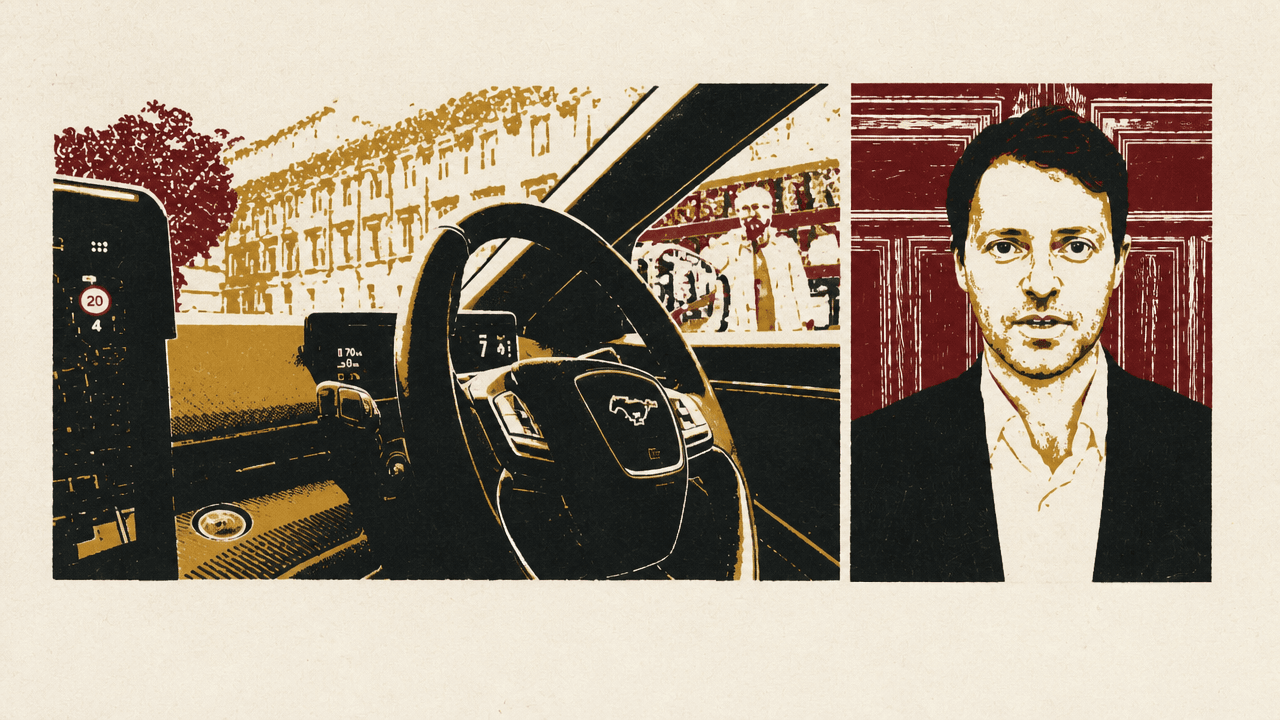
London rides are supervised while Wayve works toward driverless approval
Wayve’s London robotaxi service is not yet driverless. Alex Kendall said the Uber rides begin with safety operators in the vehicle, while Wayve works through the three constraints he identified for removing them: a scalable production vehicle, safety validation for driverless operation, and regulatory permission.
Wayve already has authorization for supervised operations, Kendall said. The company is working with regulators toward a driverless permit. Its vehicle strategy is intended to make that transition commercially scalable: rather than retrofit cars after manufacture, Wayve wants automakers to build robotaxis with the necessary hardware incorporated into mass-production platforms.
The first one is to move to a scalable vehicle platform. You know, our business model works with automakers so that they build the robotaxis, no retrofits, or built-in mass production hardware.
The service is offered through the Uber app. Riders may be matched with a self-driving Wayve vehicle, with the safety driver present in the car; they can rate the trip, but cannot tip.
London is a deliberate proving ground in Kendall’s account. He described it as a 2,000-year-old city with narrow roads and frequent pedestrians and cyclists, and said Wayve has been learning to drive there for a decade. The difficulty is part of the rationale for beginning under supervision rather than presenting the launch as the completion of autonomous operation.
Kendall also pointed to a regulatory backdrop he said is becoming more international. A UN technical regulation published earlier this year, he said, creates a global framework for higher levels of autonomy in consumer vehicles and robotaxis. The UK, Europe, and Japan participate in those regulations, according to Kendall, and the framework provides a basis for the US as well. In Britain, he cited an act passed in 2024 and said Wayve has been working with Transport for London and the government to put the rules into effect.
London matters commercially as well as technically. Kendall said it is one of Uber’s five largest markets by revenue.
Wayve’s bet is that one driver can travel without high-definition maps
Wayve’s technical claim is that its system can generalize across both places and vehicle types without depending on detailed local maps. Alex Kendall described the product as an end-to-end AI driver: a single neural network that reasons and makes driving decisions in real time.
What we've built is an end-to-end AI driver. So it's a single neural network that's capable of reasoning and making decisions in real time.
Kendall said the system can operate in small and large vehicles and that Wayve has driven it “zero-shot” in more than 500 cities, without high-definition maps.
Zero-shot operation is central to the company’s deployment thesis. A system that does not require a high-definition map for each local environment could be applied across consumer vehicles and robotaxi fleets without rebuilding its operating approach city by city. Kendall’s claim is not merely that Wayve can navigate London; it is that the same core driver can be put into different vehicle platforms and brought to new markets.
Automakers supply production scale; Uber supplies the rider interface
Wayve is pursuing two connected routes to market. Automakers are the path to vehicles built at production scale with Wayve’s hardware integrated from the start. Uber is the customer-facing distribution layer: the app through which riders receive robotaxi trips.
Alex Kendall said Wayve is deploying its AI in consumer vehicles with automakers including Nissan and Stellantis, while launching Uber robotaxi service in London. The same driver, in his description, is meant to span both categories rather than treating consumer cars and robotaxis as separate technology programs.
That pairing gives Wayve a way to avoid the retrofit model Kendall criticized while also gaining access to a ride-hailing network. It also means the London launch is only one part of a broader expansion plan. Kendall said Wayve expects to scale robotaxi service to Tokyo by the end of the year and has agreed with Uber to bring the service to 10 additional cities. He did not name those markets.
Asked specifically about the United States, Kendall said Wayve intends to bring the service globally, including to the US, but declined to identify American cities.
Wayve has raised almost $3 billion in cash and recently completed its second employee-liquidity round, Kendall said. He described the company as well funded to continue deploying in consumer vehicles and robotaxi services.
It’s an AI that’s capable of driving any vehicle all the way around the world.