AI Agents Are Reshaping the Memory Cycle

SK Group Chairman Chey Tae-won argues that AI is reshaping the memory market by tying demand less to consumer devices and more to the growing use of AI agents, inference and cached data. He says SK Hynix’s $26.5 billion US ADR listing, planned capacity expansion and data-center investments are parts of a single effort to finance and supply that demand, even as memory remains cyclical. Customers, he says, are already seeking more capacity than SK Hynix plans to build and asking for long-term supply agreements.
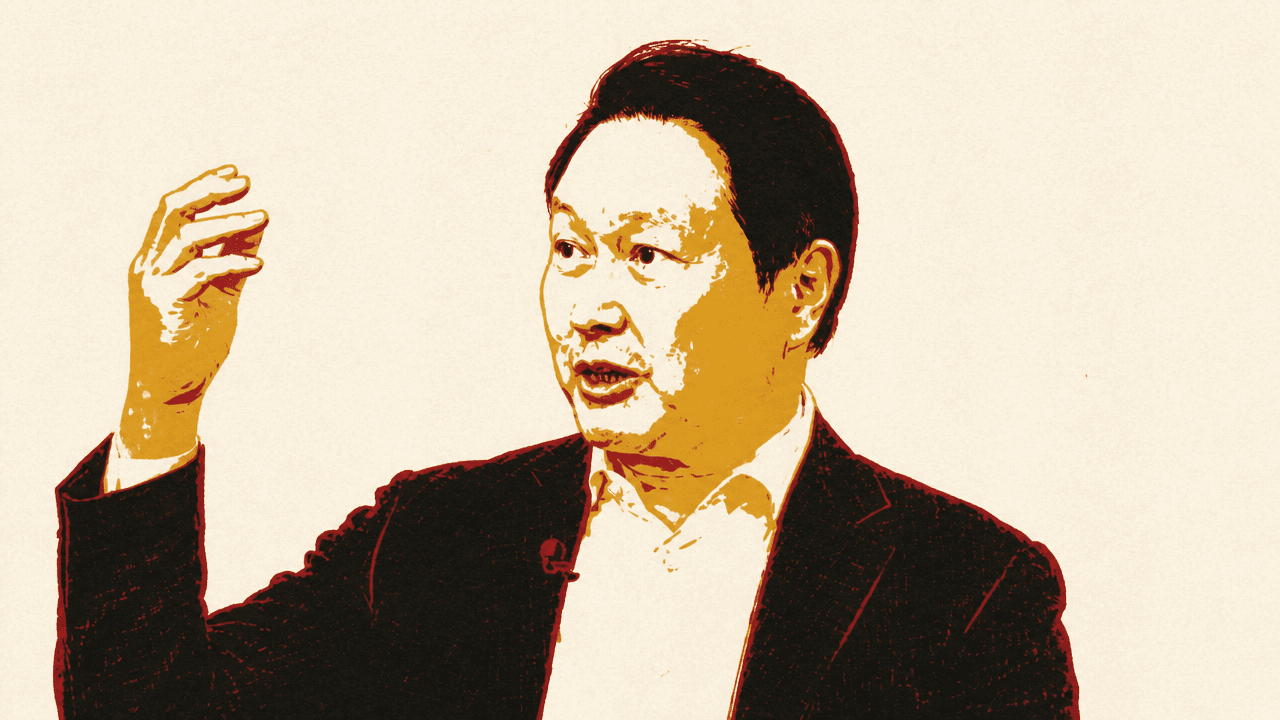
AI demand, capital access and infrastructure investment are one strategy
? chey-won presented SK Group’s US listing, memory expansion and data-center investment as mutually reinforcing parts of an AI strategy. The premise is that AI changes both the scale and character of memory demand: more AI use requires more inference, more cache, and therefore more memory. That demand, in turn, supports capacity investment and gives SK a reason to deepen its access to US investors and talent.
Chey’s view is not that the familiar memory cycle has disappeared. He still described memory as a cyclical business. But he argued that AI has created a different “momentum” from the consumer-device market that once bounded demand. A person may own one smartphone and one PC; in a few years, he suggested, that same person may use tens or hundreds of AI agents, each creating cache that must be stored somewhere.
If you had that well better size of the memory, then it has better performance. It's as simple as that.
The relevant constraint is not only training large language models, in Chey’s telling, but sustaining their performance during use. He referred to “KB caching” as the memory AI systems generate and must retain. More memory enables better performance, he argued, and the number of agents could make demand far less tethered to the number of physical devices in use.
That is why Chey sees memory as moving into a different stage of its business. He does not offer a date at which supply and demand will normalize. His broad view is that capacity will not catch up until human society reaches “some settlement with AGI”; until then, he expects unusually large demand for memory.
The AI economy also needs lower costs, he said. He framed the issue as tokens per dollar, or dollars per token: the token cost has to decline. That does not, in his view, make current AI investment a bubble. He characterized AI as still in an early stage—“only four years old baby”—with the potential to become a more mature productivity tool over time.
The US ADR creates financing, valuation and recruiting options
The $26.5 billion US ADR listing realizes a long-standing objective for SK Group, according to Chey. SK acquired Hynix about 15 years ago, and access to US capital markets was a milestone the group had intended to reach. He called the listing the “earliest moment” at which SK could make that objective real.
Chey did not describe the listing as a one-off financing event. He said SK expects it could expand the size of its ADR presence, although he would not provide details on whether future offerings had been scheduled. The prerequisite, he argued, is stable stock performance and better returns: better returns should draw more demand, while price stability creates room for longer-term upside.
The market signal shown during the interview underscored the importance of that valuation. Bloomberg Technology displayed SK Hynix ADRs indicated to open at $177 each, compared with a $149 offer price. Chey framed access to US capital markets as giving SK more options, but also as creating a responsibility to sustain share value through sound investment.
SK Hynix has enough cash at present, he said, though he left open the possibility that other SK Group companies could issue bonds and access global debt markets. The US listing also has a recruiting role. Chey said ADRs give the group financial tools, including the potential use of US-traded equity in stock compensation, that can help attract talent. Public perception matters too, he said.
His approach to recruiting is explicitly global. He said talent can come from the US, Japan or elsewhere, and that he has instructed SK chief executives that securing future talent is part of their job. The group expects to create jobs as it pursues its investment plans, which will require substantially more people.
Customers want more capacity than SK Hynix plans to build
? chey-won acknowledged that SK Hynix’s planned expansion looks aggressive. The company has announced it will double capacity within five years—an exceptional pace, he noted, for a business it has operated for more than 25 years. Some observers see a risk of oversupply in that plan.
Chey’s customers see the opposite problem. They have told SK Hynix that doubling capacity will not be enough, he said; they want four, five or six times more capacity because they expect demand to grow exponentially. That customer feedback is the basis for his confidence that supply will remain tight, even if he will not forecast the timing of a rebalancing.
Ed Ludlow raised the possibility, cited by Micron, that supply conditions could improve after 2027 as new capacity comes online. Chey did not dispute that future capacity will be built. His point was that present customer requirements are already running ahead of SK Hynix’s own announced expansion, and that nobody can know exactly what will happen in the next several years.

The shortage is also changing contract behavior. Chey said customers, not SK Hynix, are asking for long-term supply agreements to secure their own requirements. SK Hynix welcomes that interest because such contracts could preserve volumes and a certain level of pricing through a downturn.
If we had that some long-term agreement, even though it's a downturn, we still maintain that our volumes and the certain level of the price.
For Chey, long-term agreements could create room to alter the company’s business model rather than simply selling into a spot-driven, boom-and-bust market. The direction is not yet a fully specified replacement for the memory cycle, but a means of making the company’s volumes and prices less exposed to it.
SK is building around the chips, where power permits
Outside SK Hynix, Chey identified AI data centers as SK Group’s most important investment priority. The group has announced almost $1 trillion in investment over the next decade to establish AI data centers, with a target of about 15 gigawatts in Korea and another 5 gigawatts outside the country.
The United States is among the locations SK is considering. But the decisive questions are power availability and electricity prices, Chey said. Those inputs determine whether an AI data-center project works. He said SK’s US investment plan is “much, much bigger” than $35 billion, without giving a figure or detailed deployment schedule.
The strategic case is vertical as well as geographic. AI data centers can create a synergy between SK’s memory-chip business and the infrastructure that consumes memory. Chey described SK Group as pursuing more of the AI stack, not treating Hynix as a standalone component company.
That includes SK Telecom’s work on its own large language model and applications, alongside opportunities in physical AI, robotics and healthcare. Chey did not lay out a detailed product roadmap for those efforts; he described them as areas in which SK is putting resources and seeking future business opportunities.
He also briefly proposed a “memory-as-a-service” direction. Rather than merely supplying memory as a commodity, SK could configure different memory systems and deliver them as a service. No customer model, technical architecture or timetable was specified. The underlying distinction is that SK would take responsibility for an integrated memory system rather than simply hand over components.
The Hynix acquisition was a bet that difficult manufacturing would matter
SK Group’s 2012 acquisition of Hynix supplies the context for Chey’s current confidence. He described it as a financially risky bet: Hynix had deep debt, was fighting for survival, and had spent more than a decade in a Korean bank workout program. The business was unattractive to many buyers because memory was cyclical and required multi-billion-dollar capital expenditure every year, including in periods when the manufacturer was not earning money.
Chey saw the same facts differently. Memory manufacturing, he argued, is among the most sophisticated forms of manufacturing. Making a small silicon chip containing roughly 380 billion transistors demands a level of process mastery that can support broader technological challenges. His fundamental bet was simpler: the digital world would continue to need more memory.
The product shown during the interview illustrates the technical direction SK Hynix is emphasizing. An SK Hynix graphic described its HBM4E as a 12-layer, 48GB stack, with a maximum data-processing speed of 16 Gbps per pin, 20% higher power efficiency and 17% improved heat resistance. The graphic also cited the company’s Advanced MR-MUF process as a means of ensuring structural stability.
Chey nevertheless resisted identifying a single technical edge. Design capacity and process technology matter, he said, but he emphasized organizational cohesion: Hynix as “one company, one team.” Ludlow noted SK Hynix’s work with TSMC on the base die; Chey added another distinction—that SK Hynix does not compete with its customers.
He also declined to define success as catching up with Samsung. The objective, he said, is to make stakeholders happy, while accepting that their interests conflict: shareholders want returns, customers want lower prices and enough supply, and employees need a company in which they can thrive. His answer was not that those tensions can be eliminated, but that management must balance them.
China’s lower-cost approach could still leave room for partnership
Chey described China as an important AI market with disadvantages but substantial resources, especially human capital. He pointed to the number of STEM graduates entering the workforce each year—more than a million, in his account—and said many pursue jobs in technology, with a significant share oriented toward AI.
He sees China pursuing a different AI strategy from the US. Where he characterized the US as focused on top-end niches and token quality, he said China is trying to create cheaper tokens. He did not claim to know which approach will prevail, and said he had not yet seen a decisive result. But he sees signs of progress in China’s effort to reduce token cost.
That divergence need not mean only competition for SK. Chey said the different strategies leave room for partnership, which he presented as part of how SK can maintain relationships across markets.