Sequoia’s AI Strategy Pairs Concentrated Capital With Investor Autonomy
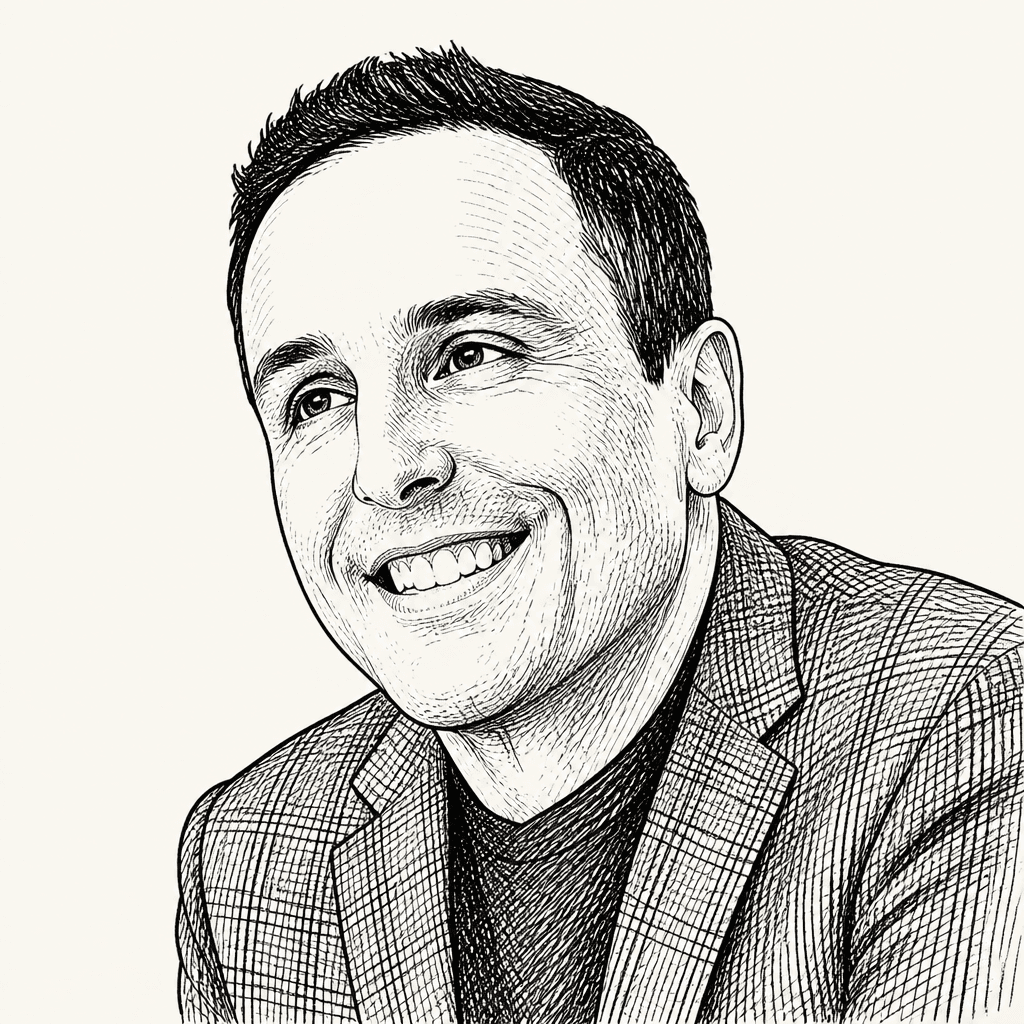
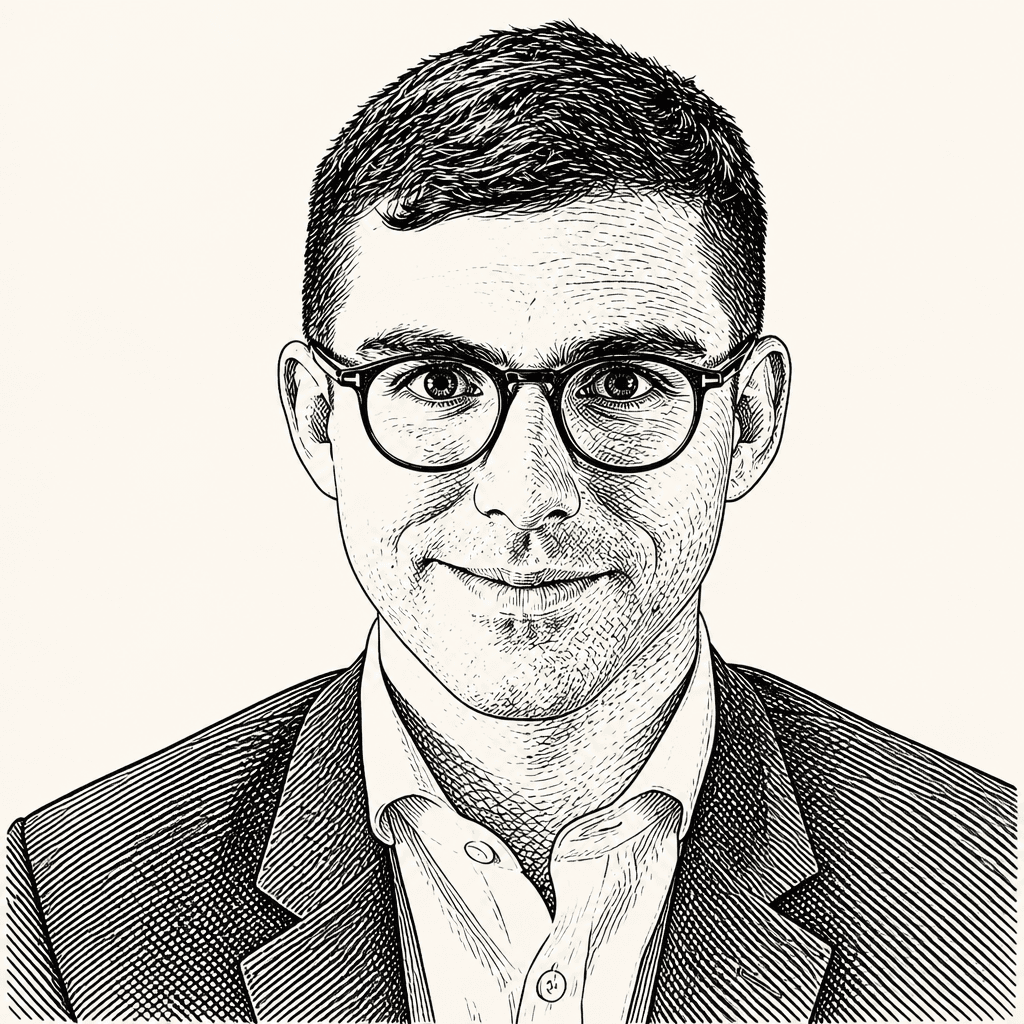
Sequoia Capital co-stewards Alfred Lin and Pat Grady say the firm’s $2.5 billion investment in Anthropic reflects a strategy of making concentrated AI-era bets from its core funds, even when it has arrived late to a company. They argue that scale should not turn Sequoia into a top-down allocator: the partnership is structured to let investors with specialist knowledge press a case through internal skepticism, as it did with SpaceX and more recently Valar Atomics.
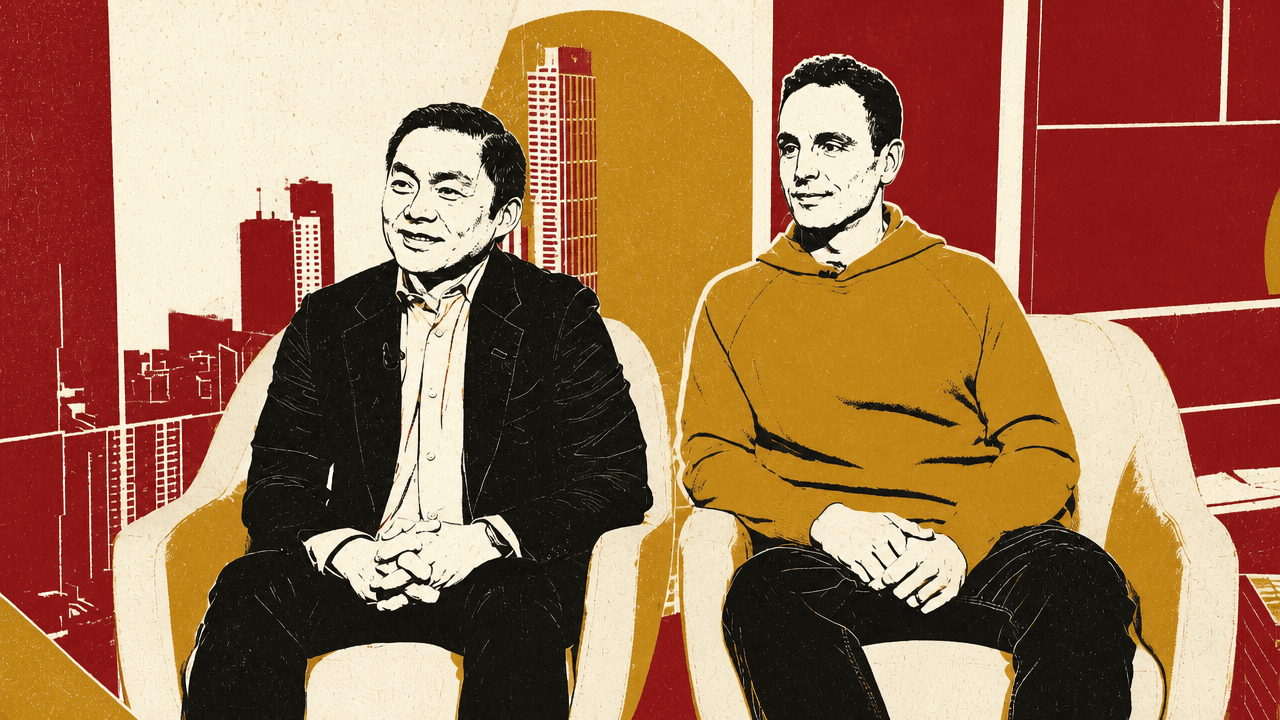
Sequoia used core-fund capital to make a $2.5 billion Anthropic bet
Sequoia had already passed on earlier opportunities to invest in Anthropic. It had been an early OpenAI investor and, for a period, treated that relationship as a reason not to back both companies. That position changed after the firm asked its founders how they were using the two companies’ products. ? alfred-lin said they were using both, for different purposes: OpenAI had begun with consumer applications and information-finding, while Anthropic’s Claude Code was much more focused on coding.
Sequoia’s own engineering team was also reporting that Claude Code worked very well, Lin said. As Anthropic’s revenue continued rising, the firm’s conviction increased. Sequoia made an investment initiated in November and closed in January, then considered a substantially larger commitment in a subsequent round.
Lin and Sonya initially recommended investing $1 billion. The internal discussion quickly widened. Lin said a proposed figure of $5 billion came up before the partnership worked backward to $2.5 billion—the largest amount it could deploy from committed capital across its core funds.
In a perfect world, we would have backed Anthropic many years ago. We didn’t. And so the best thing we can do now is to come in at the most scale that we can muster.
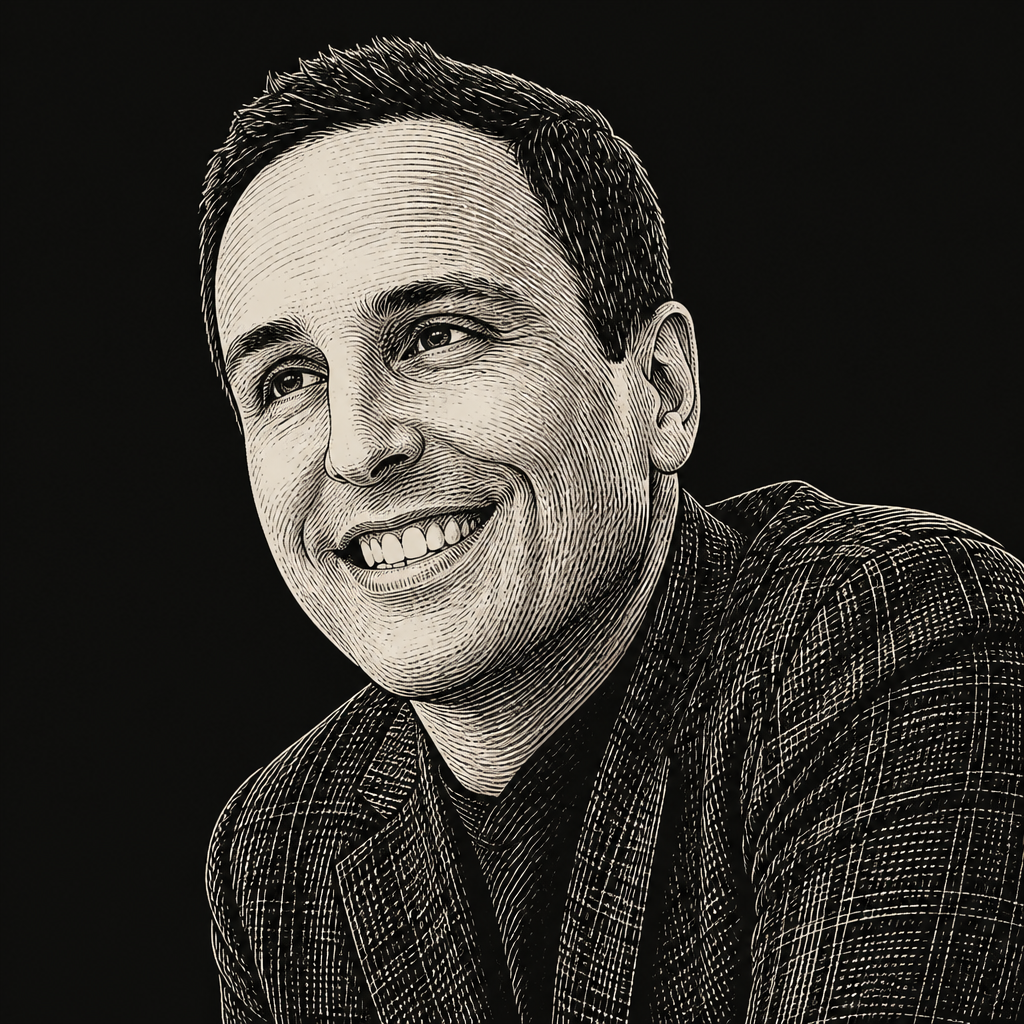
Grady called AI “the tectonic shift of our lifetime.” The $5 billion figure was deliberately provocative, he said, rather than a practical allocation: Sequoia could not put that much to work across all of its funds. Both $2.5 billion and $5 billion would have been comfortable from a firm-risk perspective, he said. The operative constraint was the capital Sequoia could commit from its existing funds. Grady also said Sequoia does not rely on special-purpose vehicles to sponsor investments and then distribute the opportunity to outside capital.
The firm manages more than $80 billion and has raised another $10 billion across its growth and expansion funds, according to Bloomberg. The Anthropic commitment is the practical expression of what that capital base permits: Sequoia can make a concentrated, multi-billion-dollar bet when it believes it has missed an earlier chance to own a defining company.
But the partners’ argument is that size alone is not the strategy. Their model depends on specialist investors building enough conviction to move a broad partnership, even when the initial recommendation is uncomfortable. That claim is central to how Sequoia explains both the Anthropic check and its broader effort to operate at greater speed.
The firm wants to move on the founder’s timetable
Sequoia’s effort to speed up its “metabolism” begins with a simple premise: founders, rather than the investment firm, are the customer. Lin argued that a founder raising capital has a timetable, and Sequoia should work within it rather than make the founder wait for a scheduled Monday meeting.
A partner can bring forward an opportunity at any time. The process may begin with an email or investment document, where partners set out what they like, what concerns them, and what they recommend. Pat Grady described a recent controversial proposal that prompted six Sequoia partners to take red-eye flights to New York. They spent two hours with the company the next morning and signed a term sheet that afternoon. Grady declined to identify the company.
That responsiveness is meant to coexist with internal challenge rather than replace it. Lin said Sequoia still votes on investments, but the objective is not to manufacture consensus. Debate, he said, is supposed to get the partnership closer to the truth; a sponsor who will support a company for years needs genuine conviction.
Grady said Sequoia has recorded data on its investment decisions since 2014. The firm expected its most contentious investments to prove the best. Its conclusion, he said, was that contention itself did not predict returns: it did not matter whether an investment had been broadly consensual or divisive. What mattered was the presence of conviction.
We are tight on principles and we are tight on values. We’re very flexible on process.
The test is whether a sponsor persists after encountering resistance. Grady said Sequoia keeps a list of 40 or 50 potential investment failure modes, including “wimpy sponsor”: an investor who says they love an opportunity, hears one objection, and abandons the case.
You probably didn’t love it if you got one no and you went away.
That freedom to act does not mean each investor simply operates without constraints. Grady said Sequoia wants partners to “play free”—to become the strongest versions of their own judgment and expertise rather than imitate Lin or Grady. The co-stewards’ role, in this account, is to enable that work while holding the firm to shared principles and values.
Stewardship is intended to preserve expertise over hierarchy
Lin and Grady describe themselves as co-stewards rather than managing partners. The distinction is meant to signal that they remain investors inside a partnership, not executives positioned above it. They continue to source and lead investments while splitting administrative duties, including regulatory work, so both can remain “on the field.”
The internal statement they circulated, “Our Sequoia,” frames the firm as an institution belonging to the partnership rather than to any individual leader. Its ordering of priorities is explicit: founders, then limited partners, Sequoia, the team, and finally oneself. Lin said the sequence reflects a compounding relationship: taking care of founders helps founders do right by limited partners; serving limited partners supports the firm and, ultimately, the people inside it.
Pat Grady traced the stewardship idea to Sequoia’s earlier generational transition. He said that when Don Valentine handed the firm to Doug Leone and Michael Moritz in the late 1990s, the usual model would have been for younger partners to buy out the departing generation. Valentine instead gave it to them, Grady said, with an instruction to leave it better than they found it. In that sense, the current partners own the partnership together and are responsible for handing on a stronger institution.
The practical governance rule is that influence should follow expertise and reason, not tenure or hierarchy. On a particular investment, Grady said, another partner may have greater relevant knowledge than either co-steward and therefore should carry more weight in the decision.
Influence should be awarded to expertise and reason and not to tenure and hierarchy.
That is the governance logic behind Sequoia’s concentrated capital deployment. A large fund does not have to become a top-down allocator, the partners contend, if the investor who understands a market or technology best can force the partnership to confront the case.
SpaceX became the proof point for specialist-led dissent
The 2019 SpaceX investment is Sequoia’s preferred example of this model working. At the time, Grady said, software was the consensus trade. Zoom had just gone public, Sequoia had recently begun working with Figma, and the combined market capitalizations of Tesla and Nvidia were roughly equivalent to Salesforce’s. In his telling, software was what everyone wanted.
Shaun Maguire, newly joined to Sequoia’s early-stage team, proposed an investment in a rocket company at a $20 billion valuation. This was before Starlink, Grady said, when SpaceX was principally a launch company whose main customer was the government. The recommendation appeared implausible to some inside the firm.
Maguire nevertheless had done the work, Grady said, and made the case for what SpaceX could become. Sequoia invested; Grady called it one of the firm’s best investments.
? alfred-lin described the episode as an example of courage as well as conviction. In his account, Maguire had developed specialized hardware expertise at Sequoia, wrote a hardware manifesto, helped lead the firm back into hardware, and pressed the SpaceX case even in the face of deeply skeptical partner ratings. Continuing to argue for a company after a general partner rates it a one out of 10, Lin said, is what courage looks like.
The point is not that every contrarian recommendation deserves funding. Sequoia’s own data, according to Grady, says contentiousness is not the relevant predictor. The SpaceX case is instead offered as proof that a specialized sponsor can change a partnership’s view when the underlying work is strong enough.
Lin also pushed back on reducing Maguire to his divisive social-media posts. Grady said the firm is strict about values, principles, the intent behind a partner’s conduct, and the standard of excellence it expects. But Sequoia does not require uniformity of output or opinion; it focuses on whether the inputs meet those standards.
Valar put the same theory to work on a riskier $300 million bet
Valar Atomics applied the same decision model to a company with a much less mature business and substantial remaining technical risk. Pat Grady said Maguire worked on the investment with Liam Corcoran, who had joined Sequoia roughly six months earlier. Corcoran had studied physics at Harvard and came from the nuclear industry, Grady said, giving him detailed knowledge of the market. Maguire brought deep technical understanding.
That combination did not make Valar an easy decision. The business still had multiple layers of technical risk to resolve, Grady said, while its business model lay years in the future. Sequoia is willing to take that kind of risk, he said, but normally writes smaller checks in such circumstances.
The recommendation was for $300 million. “Some eyes popped out of some skulls,” Grady said. The question was not simply whether Valar was interesting, but whether that check size was justified for a company with so much uncertainty still ahead.
Several partners went to visit the company and spent a full day with its founder, Isaiah, and his team. Grady said the visit gave them a clearer view of the pieces Valar had put together, the novelty of its approach, and its execution. He called Isaiah a “one-of-one force of nature.” Sequoia concluded that Maguire and Corcoran were right and followed their conviction.
The Valar decision also illustrates how Lin and Grady want partners to work across conventional investment boundaries. Lin pointed to Grady’s early investment in Harvey and to his own advocacy for later-stage investments in Airbnb and DoorDash. Grady reduced the underlying discipline to two “primitives”: people and markets. A partner who can recognize outlier potential in a founder and understand a market’s trajectory, he argued, should be able to work across early and growth stages, as well as consumer and enterprise companies.
Lin placed Valar and Anthropic within a broader optimistic view of the opportunity set: tectonic shifts in AI, hardware, semiconductors, and the industrialization of America. He said that if he wrote a memo now, it would be a “white swan” memo rather than a black-swan warning.