Perplexity Positions Inference Routing as Its AI Infrastructure Layer



Perplexity chief executive Aravind Srinivas told Bloomberg Technology the company’s Intel partnership is part of a broader push to route AI tasks across local devices, edge systems and cloud servers rather than defaulting to frontier models or centralized compute. He argued Perplexity is both model- and chip-agnostic, positioning the company as an orchestration layer that chooses among models, files, tools, chips and servers based on cost, accuracy, privacy and task requirements.
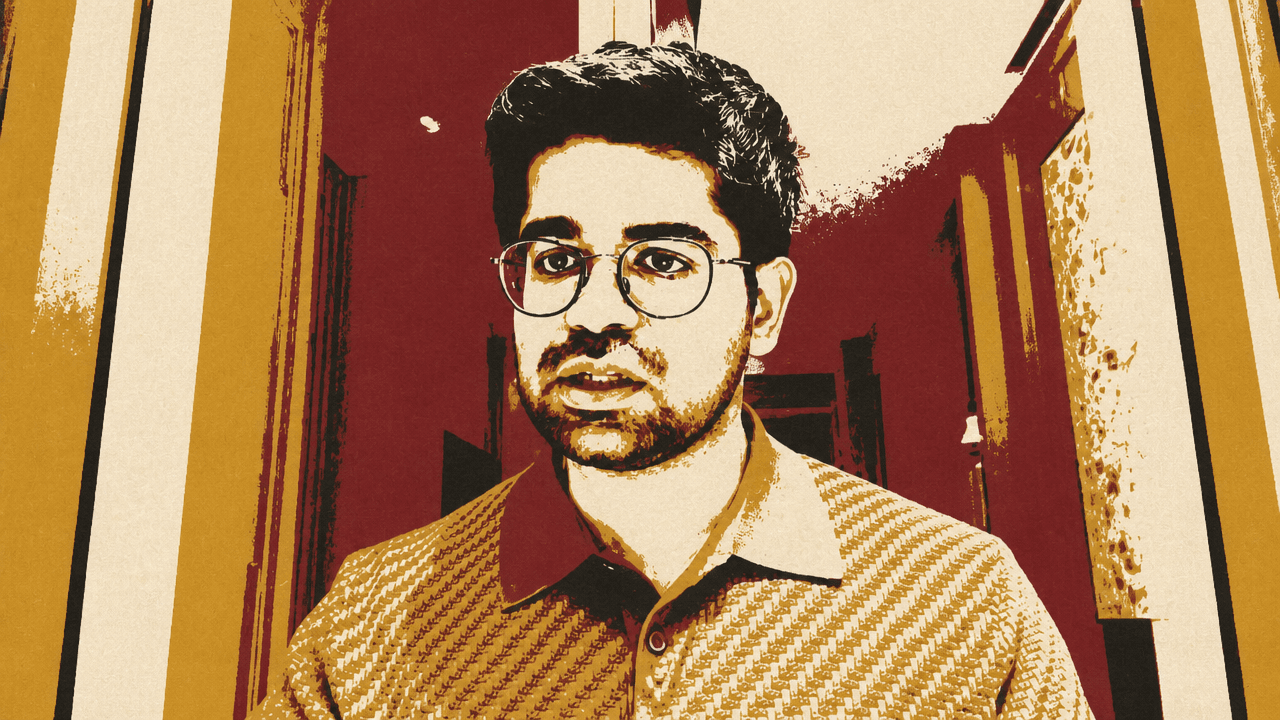
Perplexity wants inference routed by task, not by allegiance to a chip or model
Aravind Srinivas describes Perplexity’s new work with Intel as software for deciding where an AI workload should run: locally on a device, at the edge, or on cloud servers with more compute. Ed Ludlow framed it as an “orchestrator” that determines whether all or part of an AI task belongs on-device or in the cloud. Srinivas said that was “exactly correct.”




The premise is that AI compute should not be centralized by default in “gigantic servers” or pushed through the largest frontier models for every task. Srinivas pointed to concern about token costs, saying some people are “spending half a billion dollars per month per engineer,” and argued that the relevant operating metric is “efficient token value per watt per user.”
That efficiency requires a system that balances privacy, accuracy, intelligence, and cost at the same time. The product Perplexity demonstrated with Intel is meant to be that routing layer: a hybrid local/server inference orchestrator that can decide, for a given prompt or task, whether to use a local model, a local file system, a local subagent, a frontier model, or server-side compute.
You don’t want all your compute centralized in gigantic servers and everything running through the largest frontier models.
The Intel partnership did not mean Perplexity is tying the system to Intel hardware. Srinivas said the company is “chip agnostic,” and that the same approach works with Intel and Nvidia RTX. He compared that to Perplexity’s model strategy: just as the company has tried to be model agnostic, it plans to be chip agnostic.
When pressed on what Perplexity had “cracked” if the breakthrough was not specific to Intel, Srinivas pointed to routing across the system’s inputs and compute choices. He described “one single system” that can route across models, files, tools, chips, and servers, and decide when to use each based on the task, the prompt, and the confidentiality or sensitivity of the user’s files and apps.
Perplexity was identified on Bloomberg’s on-screen graphic as a San Francisco company founded in 2022, described as an “AI-powered answer engine and search platform.” Srinivas presented the next layer as something more like an operating system than a single model or application: software that balances accuracy and cost while choosing among local files, local models, frontier models, chips, and servers.
Frontier model improvements are presented as inputs to Perplexity, not substitutes for it
Caroline Hyde put pressure on Perplexity’s position as an interface and orchestration layer: if major AI labs such as Anthropic, OpenAI, and xAI keep improving, and potentially go public, their progress could be read as a competitive threat to companies building on top of them.


Srinivas rejected that framing. He said Perplexity “loves” Anthropic, OpenAI, xAI, and other frontier labs because every improvement in their models improves Perplexity’s own unified system. Perplexity, he said, routes across them and tries to take “the best of all AI” into one interface and system.
His commercial evidence was Perplexity’s revenue growth. Srinivas said Anthropic’s models had improved significantly since the beginning of the year, and that Perplexity’s revenue had tripled over the same five-month period. When Hyde asked what the revenue had tripled to, she referred to Financial Times reporting that Perplexity was at about $450 million in March. Srinivas said the company had crossed $500 million around mid-April, citing a public tweet, but did not announce a newer number.
The business claim is that Perplexity does not need to own every model in order to benefit from model progress. If users come to Perplexity for research, accuracy, and orchestration across tools and models, then improvements by frontier labs can become inputs into Perplexity’s product rather than replacements for it.
That also explains why Srinivas was openly positive about potential IPOs for major AI labs. He said those companies “completely deserve” them and that Perplexity is “very excited for them.” Perplexity’s advantage, as Srinivas presented it, is not that frontier models stand still. It is that Perplexity can route among them as they improve.
The retention evidence is a shift toward the $200-a-month plan
Aravind Srinivas said Perplexity is not trying to maximize engagement by keeping users inside a chat for longer. For a research product, he argued, accuracy can work in the opposite direction: if the system gives an accurate answer on the first turn, the user is less likely to continue in that same chat.
The metric he emphasized instead was retentive usage: whether the same user keeps returning to Perplexity for more research tasks, not whether one session becomes longer. That distinction places Perplexity closer to a repeated-use productivity tool than an attention-maximizing consumer platform, at least as Srinivas described the product.
His clearest evidence was the company’s subscription mix. Perplexity introduced a Max plan priced at $200 per month. At the beginning of the year, Srinivas said the subscription split between the Max plan and Pro plan was about 9 to 91. By the time of the interview, he said it was closer to 30 to 70. He emphasized that these were users paying roughly $2,000 a year out of pocket, not enterprise buyers, and argued that they were paying for “superior research and orchestration and accuracy.”
| Plan comparison | Beginning of year | At interview |
|---|---|---|
| Max plan share versus Pro | 9 to 91 | 30 to 70 |
| Max plan price | $200 per month | $200 per month |
Bloomberg displayed a graphic listing Perplexity backers as NVIDIA, SoftBank, Databricks, and Bezos Expeditions. Srinivas’s answer focused on user behavior: a larger share of individual subscribers choosing the high-priced tier because they value Perplexity as a repeated-use research system.
On copyright, Srinivas draws the line at facts and truth
Caroline Hyde raised the legal conflict with publishers and media companies, citing CNN as the latest to sue Perplexity for alleged violations of federal copyright law. Her question joined several issues: how publishers get paid, what Perplexity trains on, and what the product sources or feeds back to users.
Aravind Srinivas declined to comment in detail on the specific case, saying Perplexity would let the legal process decide “what the right thing is in that particular situation.” But he stated the company’s position in broad terms.
Nobody has any copyright over truth and facts.
He said Perplexity has been consistent and is confident in its position. That leaves the company’s public posture direct but limited: Srinivas asserted that truth and facts are not owned, while declining to elaborate on the lawsuit itself.