Hybrid Filmmaking Brings AI-Assisted Production Back to Los Angeles

Luma AI COO Caroline Ingeborn argues that generative AI could help bring more film and television production to Los Angeles by lowering costs without replacing creative professionals. She points to “hybrid filmmaking,” in which actors and crews work onstage while AI places performances in different environments, as a way to make ambitious projects more feasible to produce locally.
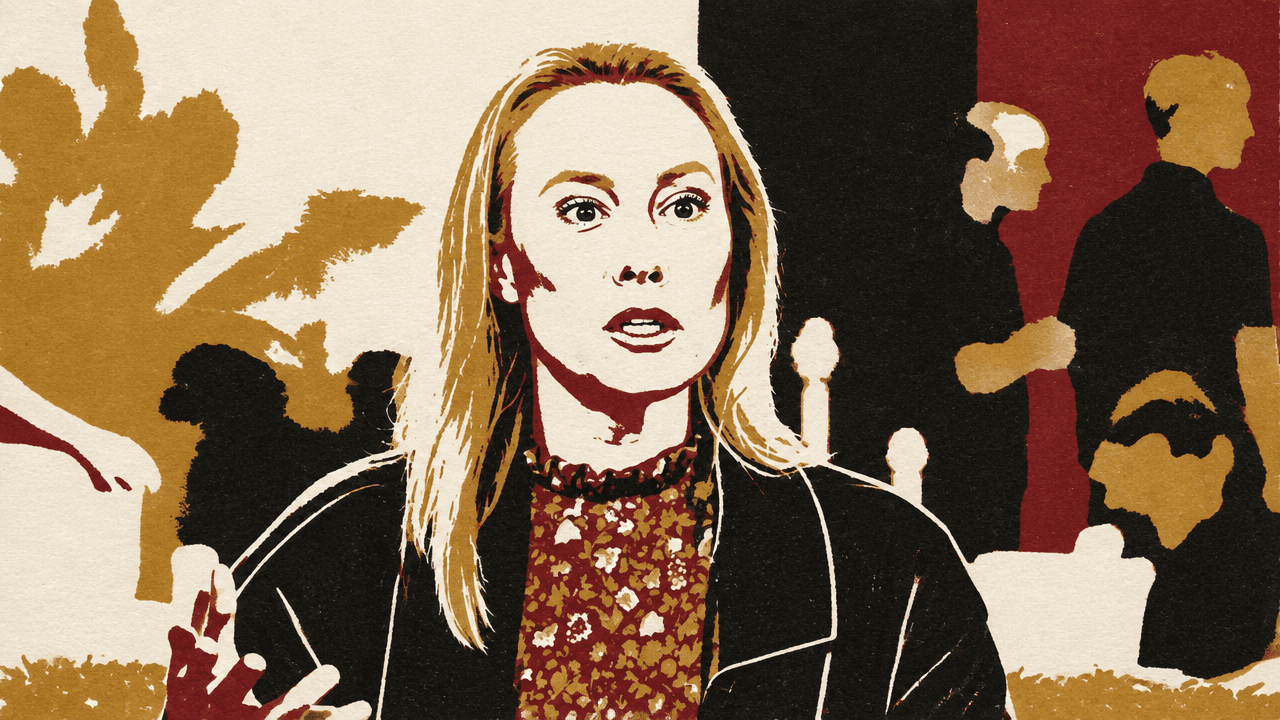
Hybrid filmmaking is the concrete case for keeping production in Los Angeles
? caroline-ingeborn points to Moses, an Amazon television show associated with John Urbin, as a practical example of what she means by “hybrid filmmaking.” She says Urbin had spent years making television abroad because that was how he could get the most from his investments while telling his story. For Moses, she says, hundreds of people worked together on a stage in Manhattan Beach, using AI to move real actors into different environments.
The example gives shape to the argument that AI could make ambitious projects more feasible to produce locally. Ed Ludlow frames Luma’s case as one about lowering costs and making projects easier to produce. Ingeborn describes capital as a constraint on storytelling, whether the creator is a major director or a YouTuber starting out. In her account, the Moses production brought a large group together on a local stage, with AI helping place actors in settings beyond that stage.
Ingeborn says the process retains and enhances the actors’ performances. She adds that, in her view, actors find it more fun than working against a green screen, and describes the result as “fantastic.” She does not present the production as simply AI-made or not AI-made: “No, it’s hybrid.” The distinction matters because the example combines real performers and a crew with AI used to move those performances into other environments. It is not a prompt producing a finished show.
Her argument for production activity in Los Angeles also includes a community-level claim. Ingeborn says people in the city are experimenting with the technology, making content and sharing ways to control it. She describes them as generous, excited and curious, while noting that creators are finding ways to optimize token spending. The Moses production is her concrete example of a local project using this approach; the community activity is a broader sign, in her account, of people learning to work with the tools.
Luma builds products around models that need creative control
Luma began as a frontier research lab and is now, Ingeborn says, a full-stack company. It researches multimodal AI models, but its products are focused on creative work. The models are necessary, she says, but on their own they can be “very unruly.” Products are meant to let creative professionals use the models while retaining control; the company also places creatives and engineers close to users to help adoption happen in practice.
That framing rejects the idea that a single prompt should yield a complete feature film. Ludlow asks whether that was the original vision. Ingeborn says it is neither the reality nor the goal: the technology is a tool, and filmmaking remains collaborative. A visual shown during the discussion paired someone working in video-editing software with an AI-generated Egyptian scene. It offers a glimpse of AI-generated material alongside an editing workflow, rather than a finished film delivered by a prompt. Ingeborn’s emphasis is on tools that professionals can use as part of their work.
Her three-part description of Luma’s work follows that logic: develop the models, build products that make them more controllable for creative professionals, and support their use with forward-deployed creatives and engineers. Model capability alone, in her account, does not ensure that a tool fits the work people are trying to do.
The right model depends on the task
Ed Ludlow describes Luma’s agent as directing a project to the best underlying model, including models from other companies. Ingeborn says the reason is simple: “there is no model to rule them all.” The user’s task, rather than loyalty to one model, should determine which one the agent recommends.


That choice can shift over the course of a project. A creator seeking the highest-quality video may want the latest model. But during ideation, when the aim is to produce a lot of content quickly, Ingeborn says the most prestigious model may not be necessary. The agent is meant to give the creative professional access to the model suited to the immediate problem.
Cost remains part of that decision. Ludlow points out that users are still dealing with tokens, and Ingeborn agrees. Creators, she says, are finding ways to get the most from their token spend. The trade-off is between the quality a task calls for, how much material the creator wants to generate, how quickly they need it, and what they are willing to spend.