The iPhone Duo’s Appeal Depends on App Support and Camera Trade-Offs

Gear Live’s Andru Edwards says Apple’s first foldable iPhone offers a compelling personal phone, but its unoptimized apps and missing telephoto camera keep it from replacing the iPhone 18 Pro for his work. In a discussion with Bloomberg’s Mark Gurman, Edwards also describes the compromises he noticed after a week of testing, while Gurman argues that Apple moved up and expanded the launch despite limited production, leaving many customers facing long waits.
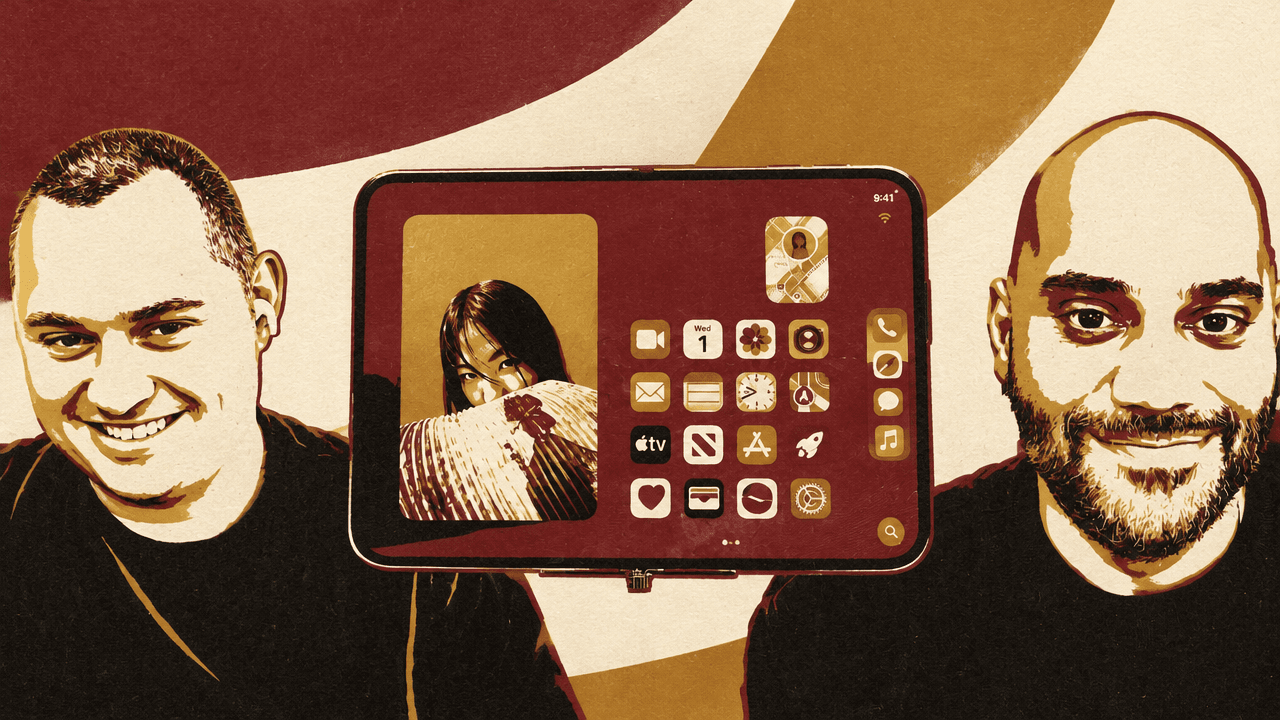
The Duo’s new form factor is compelling, but its best version depends on apps catching up
For Andru Edwards Andru Edwards, the iPhone Duo’s appeal is the range of ways it can be used: folded or open, upright or sideways, and in positions that let an app respond to the hinge. Its limits are just as tangible. Some apps still use layouts that waste the inner display or crowd the outer one, and the camera system does not replace the iPhone 18 Pro for the situations where he relies on his phone to take photos and video.
Edwards had used the Duo for about a week when Mark Gurman Mark Gurman asked whether he would switch to it. His answer depended on the job. If he were buying a phone for personal use, he said, he would choose the Duo. As a content creator, though, he would keep the iPhone 18 Pro as his camera. The Duo would go in his pocket; the Pro would stay in his bag.

That division captures the central trade-off in his review. The Duo is not simply a conventional iPhone with a larger screen. Its layout and behavior change with the way it is held and folded, and the quality of that experience depends on software written to make use of it. Its everyday camera use satisfied Edwards, but its missing telephoto lens mattered enough that he would not trust it as his only phone for work.
The change is apparent even before the phone is opened. The outer display measures 5.4 inches, but Edwards said the Duo feels wider than other iPhones he has used. Navigation and icons sit along the right side. That leaves what he described as an invisible boundary between the app and its controls: some space can feel unusable, and an item that appears centered is centered within the left-hand area rather than across the whole display. His first reaction was that the placement looked off. After using the phone, he said, the right-side navigation made more sense.
App support is what makes that design choice work—or exposes its shortcomings. Edwards demonstrated YouTube Studio, which had not been adapted for the Duo. Its navigation remained along the bottom, leaving the outer screen feeling cramped. On the unfolded display, the app appeared as a small interface centered in a much larger screen, with most of the display unused. Users can resize some apps, he said, much as they can resize an iPhone app running on an iPad, but he considered that a stopgap rather than a good daily experience.
Between that fallback and a Duo-specific layout is a middle category: apps written for iOS 27 but not specifically adapted for the Duo. Edwards showed an RSS reader that used most of the inner screen but did not take advantage of the right-side navigation. He said the operating system could resize apps in this category to fit the display, while leaving some empty space or retaining controls designed for a different layout.
The best results came from apps designed for the Duo. Edwards showed Apple Music filling the inner screen, with the same aspect ratio available on the outer display when the phone was closed. Instagram had also been updated. With controls moved to the side, Edwards said, the app had more vertical space for content. He was still waiting for major apps such as YouTube and TikTok to be optimized; Meta’s apps were among the notable day-one updates.
The demonstrations made the differences concrete: YouTube Studio’s small central interface left most of the unfolded screen blank, the RSS reader filled more of the display without using the Duo’s navigation, and Apple Music expanded across the inner screen. An app designed for another screen can look cramped on the outer display or leave much of the inner one unused. An app built for the Duo can adapt to its full width and different positions. Edwards said new Duo owners would want their favorite apps updated as quickly as possible.
Using those positions takes a change in habit, too. Edwards has used an iPhone since the first model and said he had to remind himself that the Duo could do more than switch between portrait and landscape. It can be opened or closed, folded partway, or set in positions such as tabletop or tent mode. Apps may change as the hinge moves. The number of possibilities makes it easy, he said, to forget to try a position that an app supports.
Some games treat the hinge as an input. Edwards described one in which tilting the phone moves a marble and folding it to particular angles opens doors. Another asks the player to set the phone to a specified angle and scores how closely they match it. Gurman noted that the software must be able to read the hinge accurately for such interactions to work; Edwards agreed.
The inner screen itself was not a major source of concern for Edwards. He called its brightness and color excellent, and said the crease was a non-issue in use. He also said the matte finish did not make the display look washed out. Those impressions sit alongside the practical limitation that many apps had not yet been adapted to take advantage of the screen.
The phone’s form factor did not make left-handed use a problem for Edwards. He tried holding it in his left hand during the discussion and found it comfortable. He thought it could even be easier than holding it in the right: with the phone closed in the right hand, the dock on the right side can get in the way; with it in the left, he said, the dock is clear. Once the phone is open, he considered it a two-handed device, making handedness less important.
If this wasn't my job and I just had to go buy a phone, I would buy the iPhone Duo.
That enthusiasm was not a claim that the Duo was already a complete replacement for the Pro. It was Edwards’s distinction between the phone he would choose for himself and the camera he needs for his work.
The camera makes the Duo a pocket phone, not Edwards’s only phone
Edwards said the Duo’s cameras are good for everyday pictures of friends, family and oneself. The phone also offers uses he said are not available on other iPhones, including taking photos of the user while they pose and using the rear cameras for selfies. But he would not rely on it for every kind of photography.
The comparison that mattered to him came the day after he received the Duo, when he took it and an iPhone 18 Pro to a Doja Cat concert. In low light, photographing a performer from a distance, he said, someone using only the Duo would likely be disappointed by the results. The concert photo shown during the discussion illustrated the kind of distant, low-light subject he was talking about. He emphasized that this was a specific, demanding situation, not a verdict on ordinary snapshots. It would matter most to people who regularly photograph concerts or other distant subjects.
The Duo lacks a telephoto camera, Edwards said, and he also said it did not have the telephoto camera required for spatial photos and videos. That omission shaped his decision about which phone to use for work. He described the iPhone 18 Pro as his video camera and the phone he uses for pictures while on the go. In his view, the Duo could not take over that role.
Part of his disappointment came from what he had expected. Edwards said he had associated the possible “iPhone Ultra” name with a phone that had the best capabilities, including Pro-level cameras. Instead, the Duo’s zoom range and wide camera did not match the iPhone 18 Pro’s. Gurman said Apple was considering a telephoto camera for a future model, but did not know when it might arrive. He described the challenge as one of physical space rather than cost, and said Apple might need to consider computational approaches to zoom.
Edwards wondered whether Apple’s iPhone Handoff feature, which he said lets two iPhones use one phone number, might help people who want the Duo’s form factor and another iPhone’s camera. He suggested that customers might pay their carrier an additional $5 or $10 to keep both phones connected. Gurman questioned how many people beyond those who work with phones would want to carry that arrangement. Neither presented Handoff as a feature created specifically for customers who carry two iPhones.
Touch ID feels like a step back, while durability remains an early impression
The other hardware compromise Edwards noticed was Touch ID. After years of using Face ID, he said, the fingerprint reader felt like a step backward. It sometimes failed to recognize his finger and asked him to try again; Face ID, in his experience, simply worked. On a phone that otherwise felt like a step into the future, Touch ID brought him back to older technology.
Gurman offered possible reasons for Apple’s decision, not a confirmed explanation. The outer display is very thin, he said, and the Duo has more components to fit inside than the iPhone Air. The cost of Face ID could also have mattered, given the price of the phone and what Gurman described as pressure from a memory shortage.
Gurman said Apple was already working on later Duo models and that he had heard of prototypes for the Duo 2 with under-display Face ID and a camera on the outer screen. He related that work to the smaller Dynamic Island and the movement of more components beneath the display on the iPhone 18 Pro and Pro Max. He expected the Face ID issue to be addressed in one of the first two Duo updates, within two or three years.
The combination of Face ID and a telephoto camera matters to the product’s ambitions. Edwards said Touch ID and the missing telephoto made the phone feel like a first-generation product, even though he praised its software, chip and IP68 water and dust resistance. Gurman agreed that Face ID would be needed and said a telephoto would be important if Apple wanted the Duo to become a mainstream phone.
Gurman also asked whether the Duo’s cover display might dent under a fingernail, as he said he had experienced with other foldable phones. Edwards said he had not deliberately tried to damage his review unit, but described the display as feeling well protected. He said it supports Apple Pencil and has multiple protective layers. He had also seen others try to scratch the screen or press a fingernail into it without leaving a mark. After a week with the phone, he expected the display to hold up well.
Gurman recalled a different early foldable experience. In 2019, he said, he removed what looked like a removable screen protector from a Samsung Galaxy Fold review unit; the screen became unusable within a day. He said he posted about the damage, and Samsung collected his review unit after the issue came to light. A screenshot of Gurman’s post shown during the discussion displayed photos of the broken screen and his report that the phone was unusable. Gurman argued that a covering that could be removed easily and damage the device pointed to an engineering or marketing problem. He also said foldable screens had since matured, helping make Apple’s entry into the category possible.
Gurman said AppleCare customers could replace the Duo’s cover sheet for about $20. Edwards’s early impression was that the display felt sturdier than he had feared; he was careful to distinguish that one-week impression from a deliberate durability test.
Battery life was manageable, though it did not match the Pro Max
Edwards had not found himself worrying about the Duo’s battery during his week with it. On the day of the concert, he forgot the external battery he usually takes with him. He had charged the phone in his car and said it held up through the event.
He did not claim that the Duo matched the iPhone 18 Pro Max. Its battery life was worse than the Pro Max’s, he said, but better than the iPhone 18 Pro’s by a couple of hours. He also said this year’s Pro had battery life comparable to the previous year’s Pro Max. For his own use, the Duo’s performance made battery life a non-issue, though he did not describe it as the longest-lasting iPhone.
Setup created a separate demand on the battery and device. Edwards said Siri took five days to finish indexing his data. His review unit had 1 terabyte of storage, with about 600 gigabytes in use.
The launch brought the Duo’s scarcity into the buying decision
The Duo starts at $1,999 and, Gurman said, reaches $3,200. He stressed that he was discussing a luxury phone, not an essential purchase. Even so, the pre-order experience mattered because the Duo was a new form factor from Apple. Edwards called it only the second time in the iPhone’s history that the company had introduced a different form factor, and said that novelty, combined with Apple’s brand, had created substantial anticipation. Gurman said he was excited about it, too.
Gurman’s own order attempt illustrated the immediate constraint. The Apple Store app did not let him in until 5:02 a.m. He tried to reserve a phone for in-store pickup and found none available. His estimated delivery window initially ran from November 2 to November 9, then slipped to November 9–16 while the order was processing. He said he was willing to wait or look for another way to get one sooner, but that many customers were in the same position.
A Bloomberg shipping-estimate headline shown during the discussion reported that delivery estimates had moved into January within minutes of pre-orders opening. The headline said the Duo was in short supply after shipments slipped into 2027, and its text described the $1,999 device as challenging to buy for its October 23 release or in the near future. Gurman connected the delays to the difficulty of producing the phone at scale. He said Apple was making hundreds of Duo units a day, compared with tens of thousands of iPhone 18 Pro Max units, and that some Apple stores were receiving only a few units.
Gurman said Apple had initially planned to launch in late November in the United States and China, which he described as the two countries with the highest demand for foldable phones. He said Apple moved the launch forward by a month and expanded it to 70 countries despite the limited supply. He characterized the timing as a financial decision: in his view, Apple wanted to sell more units during the holiday quarter and give John Ternus a strong start, at a time when services growth was slowing. He argued that the company had not put the customer first in managing the rollout.
Edwards questioned whether a different launch date would have solved the underlying supply problem. He cited figures of about five million foldables a year for Samsung and one million for Google, and asked whether Apple could reasonably be expected to produce in a few months what he said its competitors sell over a year. Gurman agreed that demand might be high, but drew a distinction between orders, production and units available to ship. He said the initial order was closer to eight million units that Apple was trying to get out the door, but that this was not a figure for units available in 2026: the order would carry into 2027. He said there might be six million orders that year, but that there was no realistic scenario in which six million units would be available in 2026.
They disagreed about whether Apple should have waited. Edwards asked how the company could meet pent-up demand for a distinctly new iPhone if it did not announce the device well in advance. Gurman thought Apple could have waited three more weeks, giving it time to build more units and enter the launch in a better position. He also said production was limited to Foxconn in China, with no production in India because, in his account, the country did not yet have the capacity to build this model. He said it remained to be seen how many units carriers, Best Buy and other resellers would receive.
The practical consequence was not only a delayed delivery for Gurman. Edwards said some customers might want the Duo while keeping another iPhone with a better camera. He planned eventually to order a 2-terabyte Star White model, but his own work would still keep the Pro in the picture. He preferred not to use a case, saying he would rather rely on AppleCare than add bulk to a foldable. Apple had sent him two cases, which he had not opened. He liked the magnetic kickstand case but disliked that it was also a folio: getting to the screen meant opening both the case and the phone, like handling “multiple pages.”
Apple’s other product lines offer a brief contrast in how customers choose
The listener questions about laptops and the iPhone mini offer a contrast to the Duo’s unusually distinct form factor: they concern how many choices Apple should offer and which screen sizes still have a market.
On laptops, Edwards argued that the current range was easier to understand than some technology enthusiasts assume. He described the MacBook Air, MacBook Neo and MacBook Pro as good, better and best, with smaller and larger options in the higher tiers. He asked whether Apple’s upcoming touchscreen MacBook Pro would replace the current Pro or sit above it.
Gurman said the OLED touchscreen MacBook Pro would initially be an additional, more expensive tier, with features including touch, Dynamic Island, lower weight and updated components. He did not expect Apple to call it “Ultra,” but described it as an Ultra-tier device. He thought the OLED and conventional MacBook Pros could eventually converge, though that would take years. In the nearer term, he said, the more confusing overlap was between the base 14-inch MacBook Pro and the MacBook Air.
Asked whether Apple would make another iPhone mini, Gurman said he did not think so. He argued that demand had shifted toward screens of six inches and larger, and called the mini a failure that Apple discontinued after two generations. Edwards agreed that the Duo’s outer display could offer a small-screen experience, but noted that it came at a much higher price than the mini.