DraftKings Says Prediction-Market Customers Could Generate $350 Million in Gross Profit


DraftKings CEO Jason Robins says the company’s $650 million to $700 million investment in prediction markets is chiefly customer-acquisition spending, not product development, and should generate returns over the next year or two. His case comes as shares fell sharply after DraftKings cut its earnings outlook, and rests on customer cohorts paying back even if sports contracts are later barred.
A forecast miss put the prediction-market investment under pressure
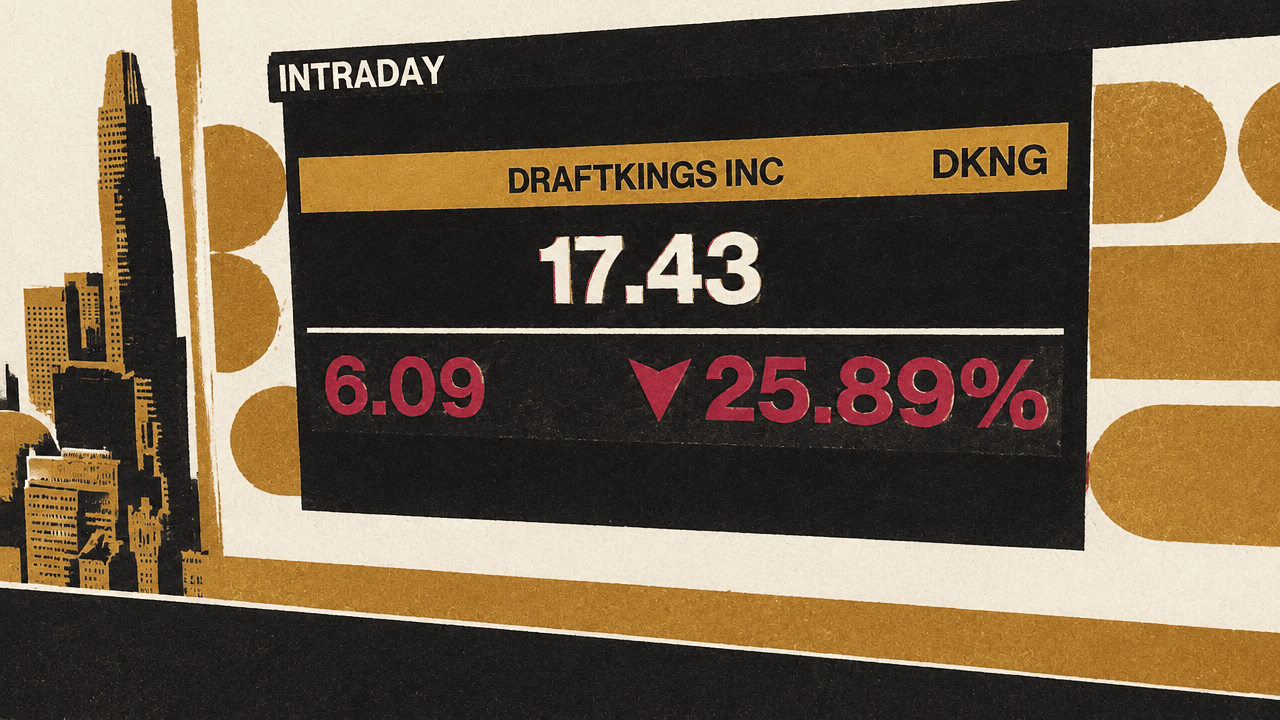
DraftKings shares fell about 26% after the company missed estimates on its 2027 earnings forecast, reported third-quarter revenue below expectations and cut its 2026 outlook. The sharp decline put a question to CEO Jason Robins: why spend $650 million to $700 million on prediction markets when the investment was weighing on near-term earnings?

Robins said most of that money was not spent building the product. DraftKings had developed what he called a “best in class” sports offering for much less; the bulk of the spending went to marketing and acquiring customers. He said the cohorts acquired so far this year had generated very attractive paybacks, and that the company had disclosed data on those returns in its earnings materials.
That estimate covers customers acquired so far, Robins said, not those DraftKings might acquire during the rest of the year. He acknowledged that spending was much higher than investors had expected and that the resulting reduction in this year’s earnings had prompted a reaction. He said he expected the investment to prove worthwhile over the next year or two.
When Tim Stenovec asked whether investors might worry that spending would rise beyond $700 million, Robins said he hoped they did not expect further increases: the current investment was already substantial. He compared the strategy with DraftKings’ earlier period of losses in 2022 and 2023, when the company invested in its core business. He said those cohorts are now producing cash flow outside prediction markets.


The payback case is designed to survive a legal setback
Robins identified legal uncertainty over sports contracts as a reason investors may be wary. Asked whether he thought the contracts would survive a possible Supreme Court review, he declined to predict the result: “Anybody who tells you they can is lying.”
Instead, he argued that the customer investment could pay back even if sports contracts go away. In that scenario, he said, the cohorts acquired so far would pay back in roughly four years, somewhat longer than DraftKings’ typical three-year target. The 2026 cohort should pay back before the projected Supreme Court decision date, he said. The 2027 cohort might not, but he expected it to pay back a couple of years later. If sports contracts remain available, he said, the paybacks would be much better.
DraftKings can also cross-sell customers into non-sports contracts and other products, including lottery and Pick6, Robins said. He framed that range of options as a strategic advantage over two sets of competitors. Traditional prediction-market operators such as Polymarket and Kalshi, in his account, are counting on sports contracts being allowed. Traditional regulated gaming competitors such as FanDuel, he said, are counting on them being shut down, having made less progress in prediction markets.
DraftKings, Robins argued, has positioned itself to do well under either outcome. The investment costs money, and the company expects a return, but he said DraftKings is less dependent than its competitors on a court decision it cannot control. He acknowledged that investors may not yet recognize the value of that position.
Election-market traffic did not translate into much volume
Asked about prediction markets’ role in the year’s elections, Robins said DraftKings saw a lot of traffic from people checking how markets were doing, but not much volume from people actually trading. He distinguished between the larger markets, which he said may be reflective of sentiment when they have decent liquidity, and smaller markets, where very little volume can move the needle.