GTA VI’s Eight-Year Development Reflects Pandemic Disruption, Staff Growth, and Scope


Bloomberg reporter Jason Schreier says *Grand Theft Auto VI*’s eight-year development was prolonged by several pressures rather than a single setback: the pandemic, uncertainty over the game’s direction, staff departures and the challenge of building an unusually large virtual world. Rockstar expanded the team to 4,700 people and offered paid time off for extra hours, but Schreier says the studio’s five-day office mandate and ban on remote access remain contentious. The game is scheduled for release on November 19.
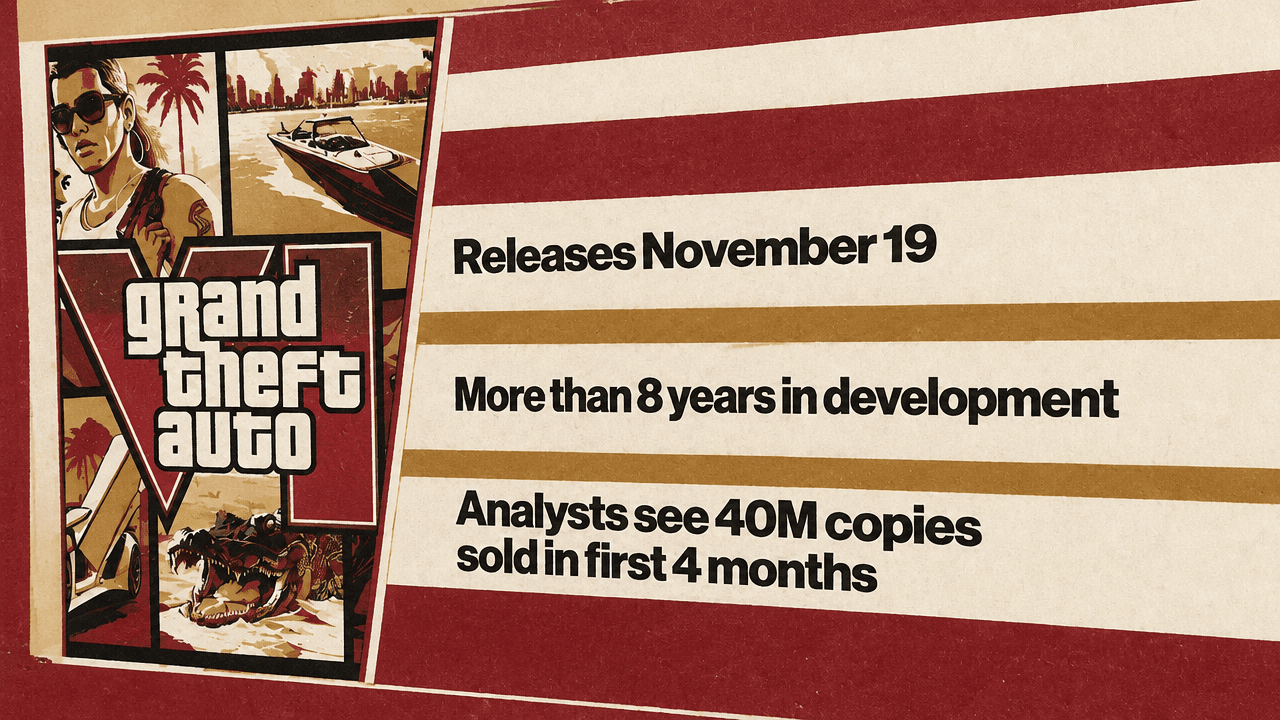
The eight-year schedule reflects several pressures compounding
Grand Theft Auto VI is set to release on November 19, after more than eight years in development. In the interview, Bloomberg’s Jason Schreier described no single cause for the schedule: the pandemic arrived early in production, Rockstar had to work out what the game should look like, key people left, and the project grew to an unusually large scale.


Schreier estimated that the pandemic probably added a year or two. He linked that disruption to the early production period, when the team was still developing the game. The studio also faced uncertainty about its vision, he said, and lost some key people along the way. Those pressures sat alongside the practical difficulty of making a detailed game with what he called probably the biggest virtual world seen in a video game.
The workforce on the project grew from around 2,400 people at Rockstar to 4,700. That expansion meant the studio could make more, but it also created communication and coordination problems that could slow work down. The project’s size therefore brought both greater capacity and a harder organizational challenge; adding people did not make the work itself less complicated.
The expected commercial scale is striking alongside that production history. Ed Ludlow said the game was expected to generate more than $3 billion in its first four months, and Schreier said that estimate might be conservative. Separately, an on-screen Bloomberg graphic said analysts expected 40 million copies sold in the first four months. That sales forecast is the graphic’s figure, not a number attributed to Schreier in the interview.
Hiring and paid time off addressed one workplace pressure
Rockstar’s effort to manage workload followed controversy around its previous game, Red Dead Redemption 2. Schreier said the overtime on that project meant not just occasional extra hours, but nights and weekends for weeks or sometimes months at a time. For GTA VI, he said, the company tried to mitigate that pressure by hiring many more people and offering paid time off in exchange for extra hours worked.
Those measures were intended to address the workload, but they did not resolve every source of tension at the studio. Schreier described a separate dispute over remote work, which followed a major leak in 2022. Dozens of videos showing unfinished gameplay appeared online, he said, and Rockstar responded by cracking down on remote work. As of October 14, he said, the policy remained controversial.
The distinction matters: the measures Schreier described for GTA VI included expanding the team and offering paid time off for additional hours, while the leak prompted restrictions on how employees could work. The source presents them as different developments within the project, rather than as one unified workplace policy.
The remote-work restrictions reached beyond the office
Schreier said Rockstar required employees to come into the office five days a week, with no hybrid schedules. The restriction also applied to access: employees could not log in to work remotely. That meant the policy constrained not only where staff worked during ordinary hours, but whether they could do any work from home when circumstances called for it.
He gave two practical examples: an employee facing a childcare emergency, or someone hoping to finish a couple of hours of work after the children had gone to bed. Under the policy he described, neither would be able to log in from home. Schreier said this had made the rules polarizing among Rockstar staff.
They can't even log in to their work remotely.
The restrictions were therefore more extensive than a five-day office requirement alone. In Schreier’s account, the inability to work remotely at all was part of what made the policy contentious, even as Rockstar was trying to address the sustained overtime associated with its previous game.