SpaceX’s Underappreciated Compute Business Anchors a Five-Layer Growth Thesis


Shaun Maguire, a Sequoia Capital partner and SpaceX investor, told Bloomberg that he plans to hold his personal SpaceX shares “forever” because he sees the company’s launch capability, hardware culture and compute ambitions as a compounding advantage most investors are underestimating. He argued that SpaceX should be understood as five businesses — launch, connectivity, compute, models and other long-dated bets — with Starship as the core moat and terrestrial and orbital AI compute as the expansion layer that could reshape how the company is valued.
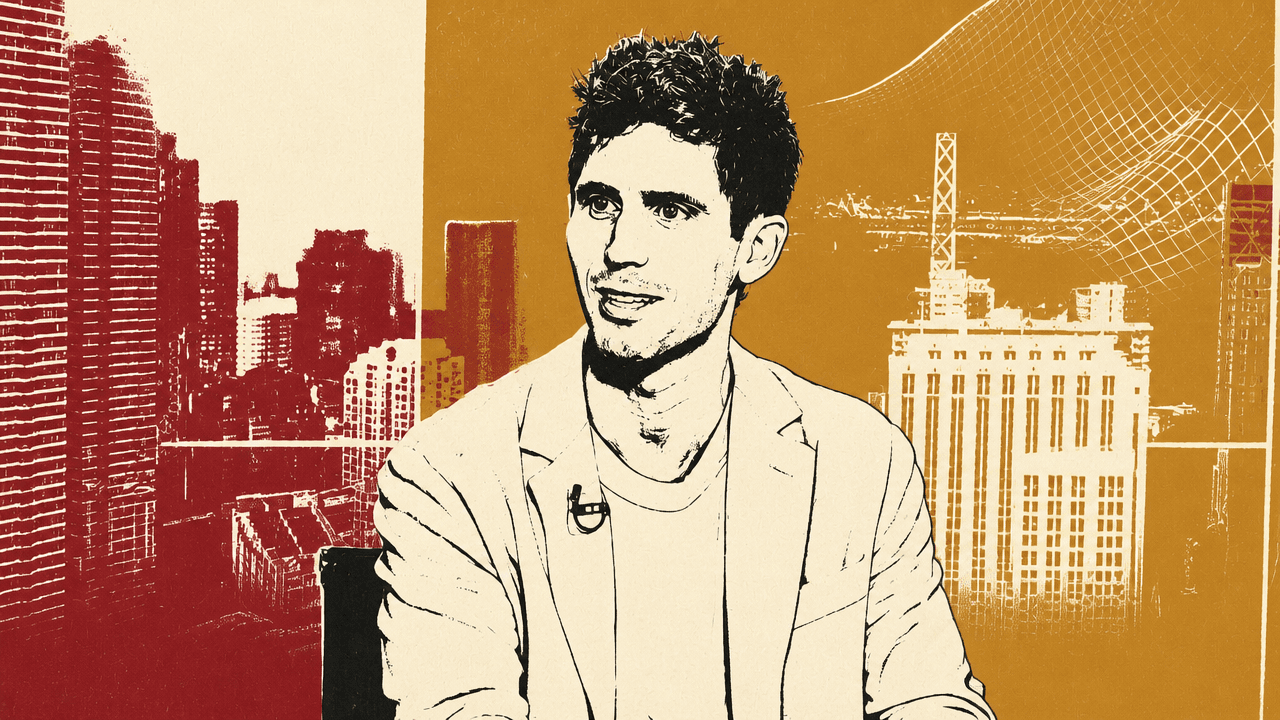
Maguire says he will hold SpaceX shares forever because the compounding is hard to imagine
Shaun Maguire put his SpaceX thesis in unusually absolute terms: he said he intends to hold his personal shares in the company “forever.” He framed that not as a casual expression of enthusiasm, but as the result of believing he understands the business “better than most investors” and “better than almost any investor.”


I am personally going to hold my shares in this company forever. Like quite literally.
Maguire acknowledged that politics or macro conditions could change over a decade. But his base view is that SpaceX combines “the biggest vision,” “the biggest mission,” “the biggest markets,” and “the biggest moat” of any company in history. From that combination, he expects compounding that he thinks is difficult for people to imagine.
Ed Ludlow raised the question in the context of SpaceX’s early days as a public company, with investors focused on its market value and on whether it could be worth more than Amazon. An on-screen Bloomberg comparison put SpaceX at the top of the IPO record book, with a $75 billion offering.

The Bloomberg chart placed SpaceX far above the other offerings in the comparison: Saudi Aramco at $29.4 billion, Alibaba at $25.0 billion, SoftBank at $21.1 billion, AIA at $20.4 billion, and Visa at $19.7 billion. A separate graphic listed companies where Maguire led Sequoia’s investments: SpaceX, The Boring Company, EON, AMP Robotics, Vise, and Factory. The source description states that Sequoia owns just under 1.5% of Musk’s company.
Ludlow pressed on where the moat actually sits inside the “five-layer cake” Maguire described. Maguire’s answer was that launch remains the largest moat by far. He called Starship “the hardest single engineering project that any company has ever done,” and said its intrinsic complexity is “meaningfully beyond” even ASML’s EUV machines.
The second moat, at least in terrestrial compute, is not launch itself, Maguire said. It is the team SpaceX has assembled over more than 20 years. He described that team as the product of a “very heavy distillation process” in which SpaceX brought in top talent from places such as Stanford and MIT, but only “1% or 0.1%” survived.
That team, in Maguire’s view, has learned how to solve “basically every hardware problem in the world.” Applying that capability to terrestrial data centers leads him to believe SpaceX can build data centers faster and better than anyone else. He said it may sound easy to replicate a team, but argued that it cannot simply be recreated because it took decades of selection, training, and cultural pressure.
SpaceX is five businesses in Maguire’s framework, with compute as the underappreciated expansion layer
Shaun Maguire said investors should not assess SpaceX as a single business. His framework has five layers: launch, connectivity, compute, models, and “all the other bets” that most people, in his view, do not yet know how to value.
Launch is the first layer and, in Maguire’s telling, the foundation of the company. Connectivity is the second, currently represented by Starlink and direct-to-cell. He described that business as still early but “kind of proven,” with compounding that he thinks is comparatively easy to underwrite.
The third layer is compute. Today, Maguire said, that means terrestrial data centers; in the future, he expects it to include orbital compute as well. He pointed to deals with Google and Anthropic as evidence that the compute business is “very likely to work,” and said the terrestrial compute side is “a very, very exciting and underappreciated part of the company today.”
The fourth layer is the model layer, where xAI sits. Maguire acknowledged that this is probably the area investors have the hardest time evaluating. It is also where Cursor fits in his framework: not just as a product or talent transaction, but as a move that changes how he assesses xAI’s chances against OpenAI, Anthropic, and others.
The fifth layer is deliberately less defined. Maguire grouped into it “all the other bets,” including Terafab, a future moon base, and even a railgun for launching orbital satellites in space. His point was not that these are presently valued or near-term businesses, but that SpaceX contains options most investors are not equipped to model.
| Layer | What Maguire placed in it | How he characterized it |
|---|---|---|
| Launch | Starship and launch capability | The foundation and the largest moat |
| Connectivity | Starlink and direct-to-cell | Early, proven, and easier to underwrite |
| Compute | Terrestrial data centers now; orbital compute later | Underappreciated and likely to compound |
| Model layer | xAI and the integration of Cursor | Hardest for investors to assess |
| Other bets | Terafab, a moon base, orbital railgun concepts | Options people do not yet know how to think about |
Cursor matters to Maguire because it raises his confidence in xAI’s model-layer chances
Ed Ludlow framed Cursor around Elon Musk’s stated need for xAI to catch up in coding relative to Anthropic and OpenAI. Another guest had called the transaction a “$60 billion acqui-hire.” Shaun Maguire rejected that label.
He argued that a company with a reported run rate of more than $3 billion, after roughly three years, cannot be reduced to an acqui-hire. But his deeper point was about the team. Maguire called Cursor “one of the best teams that’s ever been assembled” and said it had proved over the preceding months that it could keep pace with Musk and the broader company.
The standard Maguire described was not simply technical competence. He emphasized intensity, work ethic, low error rates, and the ability to plug into a broad ecosystem. He said the Cursor team had added value across Terafab planning, orbital satellites, the model layer, data cleanup for training, and future infrastructure planning.
His claim was that the team can go “all the way to the bare metal” in understanding what is needed to build future models. That, he said, makes him personally much more optimistic that xAI will win, or at least become one of the winners, at the model layer.
I cannot stress how good that team is. And for me personally, it makes me much more optimistic that xAI will win or at least be one of the winning players on the model layer.
When Ludlow asked how Musk can integrate a team so quickly, Maguire said the speed was misleading. In his view, the transaction was not something that appeared three days after an IPO. He described “many months” of lead-up, followed by roughly a two-month period of deep partnership.
Maguire said he did not know the right technical term for that period, but described it as a test that “one percent or less” of entrepreneurs could survive. Ludlow summarized it as Cursor having “passed the test.” Maguire agreed: the team had shown it could keep pace, operate without making mistakes, and elevate an already highly talented group.
That trial period is why Maguire put the probability of the acquisition being accretive at “99.999%.” His underlying assertion was that the risk had been substantially reduced before the deal because the teams had already worked together under extreme conditions.
The terrestrial compute argument depends on a shift from legacy cloud to AI cloud
Ed Ludlow characterized the terrestrial compute business as xAI and SpaceX building data centers quickly and operating them competitively on a dollar-per-token basis. He pointed to Colossus 1, Colossus 2, and Colossus 3 in Tennessee, then raised a tension: if Google and Anthropic are paying large sums for compute, why is that capacity not being used to train the newest xAI models or run inference for Grok?
Shaun Maguire answered that the tradeoff is rational because he expects SpaceX to have more compute coming online than many investors realize. He said Amazon and Microsoft are “incredible businesses” and praised their founders and Microsoft CEO Satya Nadella. But he argued that a major part of their market capitalization comes from cloud, and that cloud itself is undergoing a generational transition: from legacy CPU-based workloads to AI cloud.
In that transition, Maguire said, SpaceX AI is “the best in the world” at building next-generation AI clouds. He described it as “not even close” and “an order of magnitude better” at building terrestrial compute for the AI era than anyone else. The reason, again, was not that incumbents are poor operators, but that “the best rocket scientists in the world” are now applying their skills to data centers.
From an investor’s perspective, Maguire said he likes the decision to sell compute to Anthropic and Google. It brings in a large amount of revenue and shows public-market investors that the capital expenditure buildout is not “for nothing.” It also makes the business less dependent on xAI winning outright at the model layer. SpaceX, in his formulation, has a dial: it can decide whether to use compute internally or sell it externally.
He also said people are underestimating the composition and location of that compute. Most of it, he said, is associated with Colossus 1, roughly 10 miles away from Colossus 2 and Colossus 3, and uses heterogeneous GPUs. Maguire’s point was that not all compute should be treated as a single fungible pool that can be redirected without constraint.
The timing matters because Maguire sees terrestrial compute as a temporary but important phase. He described the present as a “weird metastable period.” Over the next five years, he thinks the team will be the decisive moat in terrestrial compute. After that, he expects launch to reassert itself as the dominant moat because orbital compute will, in his words, “dominate net new inference compute.”
Orbital compute is hard mostly because Starship is hard
SpaceX’s orbital data center outlook turns, in Shaun Maguire’s account, less on whether the satellite components are exotic than on when Starship can carry large payloads. Ed Ludlow noted that SpaceX’s prospectus referred to the possibility as early as 2028. The visual material made the concept concrete: a Bloomberg rendering showed a satellite with solar panels, and a SpaceX-sourced diagram specified deployable liquid radiators, a solar array, centralized compute, and power, thermal, and payload details.
| Specification area | Visible SpaceX-sourced detail |
|---|---|
| Compute payload | 150 kW peak / 120 kW average |
| Compute density | 70 kW/ton |
| Thermal system | 110 m² deployable liquid radiator; redundant pumping loops; integrated micrometeor shielding |
| Solar | 150 kW solar array; 250 W/m²; SpaceX-manufactured solar technology from Bastrop, TX |
| Physical layout | Deployable liquid radiators, solar array, centralized compute, deployed height of 20 m, wingspan of 70 m |
Maguire’s position was “incredibly bullish,” which Ludlow dryly said was not surprising. Maguire insisted the bullishness was rational. He argued that many people have never thought carefully about what a satellite is, what its components are, or what constraints govern launch. People who have followed Starlink closely, he said, are better positioned to evaluate orbital compute because the engineering and economics can be extrapolated.
His key claim was that orbital compute satellites are similar in many ways to Starlink satellites. He said Musk had recently stated that the intrinsic complexity of a Starlink satellite is probably a little greater than that of an orbital compute satellite, and Maguire agreed. Starlink satellites, he said, are more complicated; orbital compute satellites are simply bigger.
The size requirement comes from the workload. Maguire said that to make inference useful, “you basically want to put a whole server rack in space.” That minimum useful size creates the need for larger satellites. And larger satellites require Starship.
That is why, in Maguire’s view, the difficulty of orbital compute is not mainly the satellite. It is the launch vehicle. To estimate when orbital compute can scale, he said, the relevant question is when Starship can scale.
He cited Starship payload figures as they were discussed: 135 to 150 metric tons to orbit on paper, with future iterations potentially reaching 200 metric tons and perhaps 400 metric tons. Maguire said he did not know whether 400 metric tons would be achieved, though it “seems likely.” He added that with rockets, making them taller can help because surface-area-to-volume ratio improves drag, while manufacturing at that scale becomes harder.
On the satellite itself, Maguire broke the system into a few main parts: compute, solar panels, radiators, and communications. The compute could be GPUs, TPUs, Trainium, or proprietary chips. The power system is solar panels, which he said are proven and an area where SpaceX has substantial experience. The thermal system is radiators, which move heat from compute chips and radiate it into space through black-body radiation. The communication layer includes laser links between satellites and radio or other links to the ground.
Maguire said every individual component is already proven by SpaceX except the compute side, and he characterized that exception as “not that hard.” His conclusion was that, from his perspective, the satellites themselves are not the main challenge. The gating factor is Starship.
I don’t understand why SpaceX wouldn’t be able to have an orbital compute satellite up within, you know, six months or so of the first Starship payload flight.
If Starship is flying payloads, Maguire does not see the first orbital compute satellite as a distant engineering leap.
Maguire sees room for OpenAI, Anthropic, and SpaceX because demand for intelligence is effectively unbounded
The competitive question is whether SpaceX, OpenAI, and Anthropic can all support the scale implied by their AI ambitions. Ed Ludlow described OpenAI and Anthropic as the “elephant in the room,” saying that on paper the companies look similar if one reads the prospectus and the total addressable market SpaceX describes. He asked whether there is room on Earth and beyond Earth for all three.
Shaun Maguire answered by widening the frame. Intelligence, he said, is “the defining capability of our time.” He believes there is “unlimited demand for intelligence.” On compute, he was more definitive: SpaceX, in his opinion, will be the dominant provider of compute for intelligence.
On models, he was less certain. He said he does not know what will happen at the model layer, but there is “absolutely space” for all of these companies to succeed. That distinction matters throughout his argument. He is far more confident about SpaceX’s launch and compute position than he is about predicting a single model winner.
Asked what black-swan memo he would write for Sequoia, Maguire said the biggest focus would probably be regulatory risk.