Dexterity, AI, and Cost Still Separate Humanoids From Mass Adoption

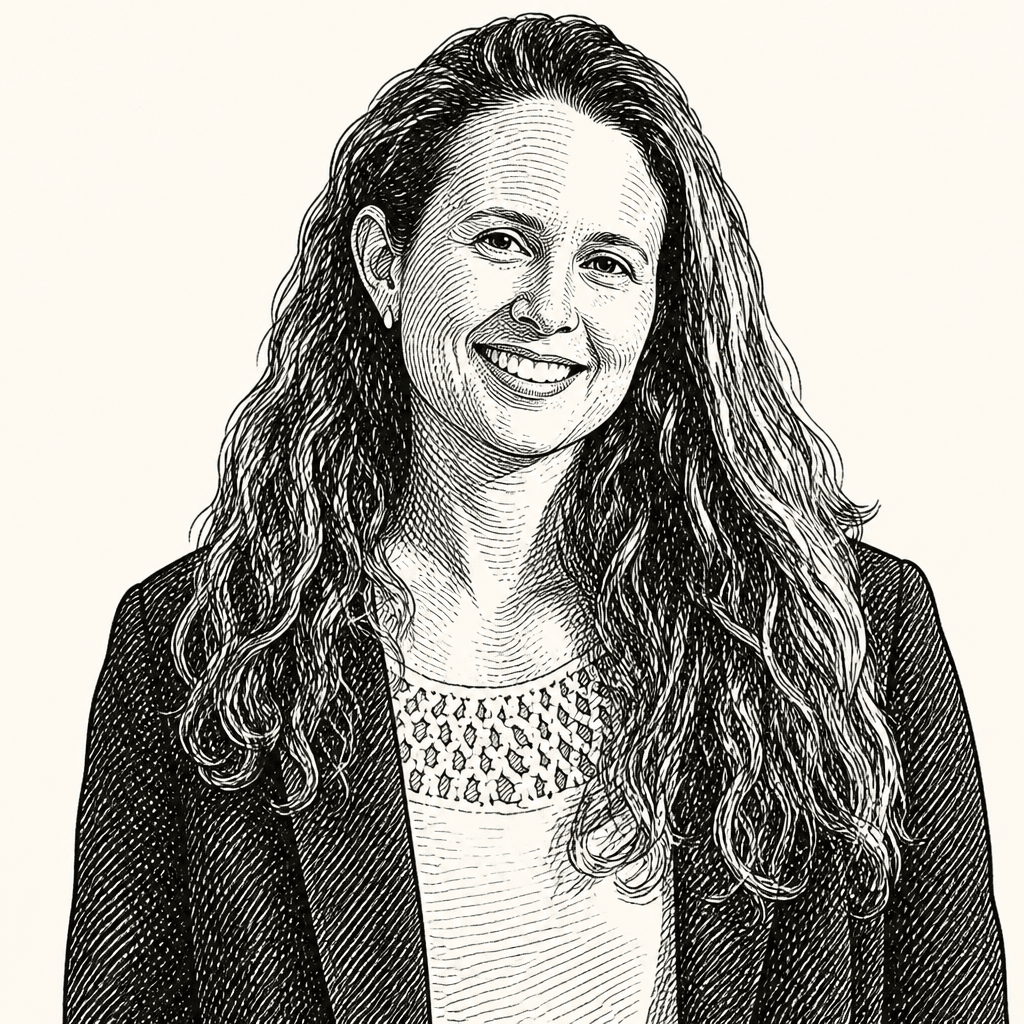
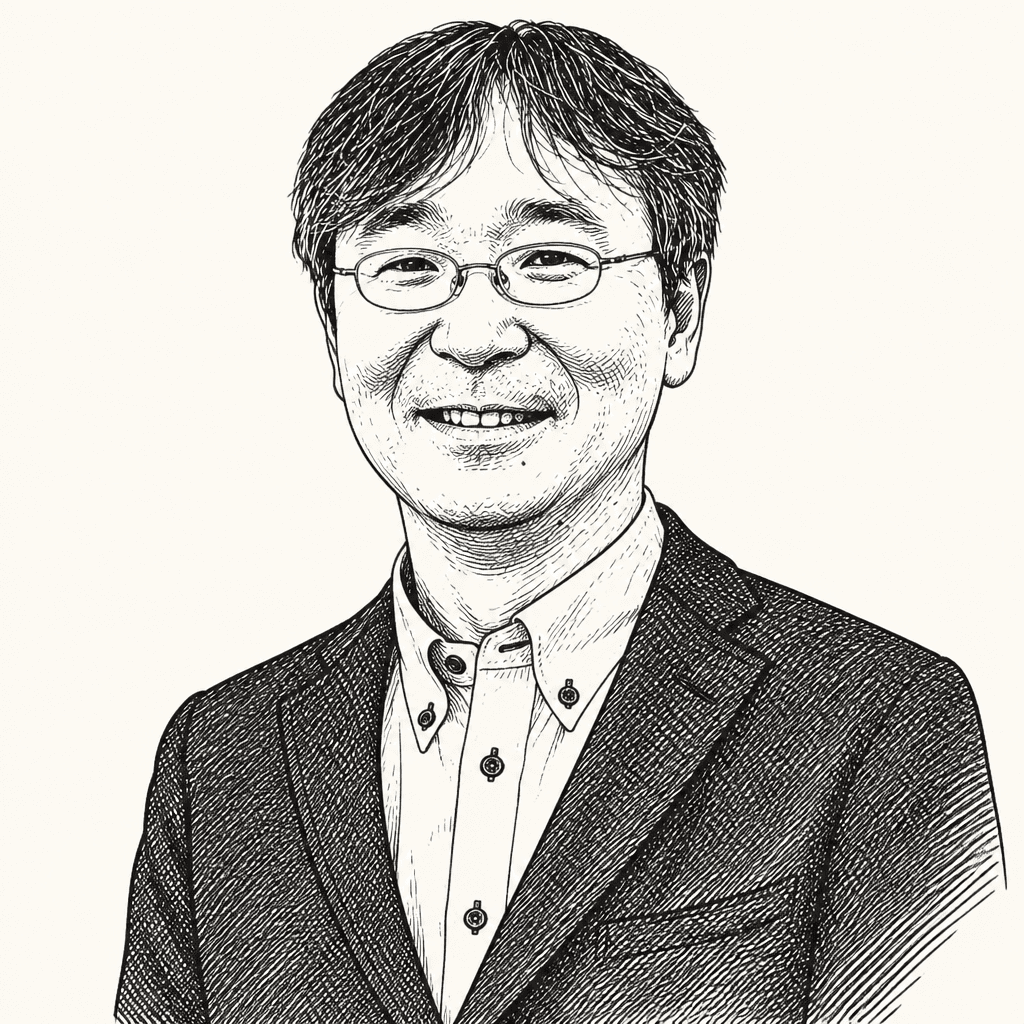
Bloomberg Tech: Asia’s Humanoid Summit segment presents humanoid robotics as an industry trying to move from demonstrations to deployment, with forecasts far ahead of current adoption. Shery Ahn’s interviews with Google DeepMind’s Carolina Parada, Honda’s Takahide Yoshiike and Bloomberg Intelligence’s Ian Ma frame the central test as whether humanoids can become useful, safe and affordable machines rather than theatrical prototypes. Their arguments converge on the same bottlenecks: embodied AI, dexterous manipulation, cost, standards and a business model that can support scale.

The humanoid market is still tiny, but the forecasts assume a platform shift
Shery Ahn framed the humanoid robotics industry as moving out of its proof-of-concept phase and into the harder problem of deployment. The central tension was not whether humanoids can generate attention. Unitree demonstrations illustrated the spectacle: robots boxing with gloves, performing synchronized backflips, and appearing in stage-like performances. The question is whether the industry can turn spectacle into commercial scale.


A visual attributed to Barclays estimated the current humanoid robot industry at only $2 billion to $3 billion. Another Barclays-attributed visual gave a much larger forecast range for 2035: $40 billion to $200 billion. A visual attributed to Morgan Stanley put the longer-range opportunity, when services and supply chains are included, at as much as $5 trillion by 2050. Capital has already moved ahead of adoption: visuals attributed to BofA showed investment rising from $700 million in 2018 to more than $4 billion in the prior year, and the narration identified Figure AI and Apptronik as startups that had secured enough venture funding to reach billion-dollar valuations.
Manufacturing was identified as the first major use case. The logic is straightforward: labor shortages create demand, industrial sites already use automation, and humanoids may be able to handle work that conventional industrial robots cannot. But the installed base is still small. A chart attributed to the International Federation of Robotics and Omdia showed 13,000 humanoids shipped in 2025, compared with 542,000 industrial robots installed in 2024.
Bloomberg Intelligence’s projection showed why investors are watching despite the small starting point: as many as 12 million humanoids deployed by 2035. Its chart showed low shipment volumes through the late 2020s and a sharp climb by 2035. Ahn compared that figure to the population of Bolivia, noting her own Bolivian background; the earlier narration compared it to Belgium’s population. The forecast implies a shift from thousands of units to a population-scale installed base within roughly a decade.
| Measure | Value | Attribution in source |
|---|---|---|
| Current humanoid robot industry | $2B–$3B | Visual attributed to Barclays |
| Projected humanoid market by 2035 | $40B–$200B | Visual attributed to Barclays |
| Potential market by 2050 including services and supply chains | $5T | Visual attributed to Morgan Stanley |
| Investment in 2018 | $700M | Visual attributed to BofA |
| Investment in the prior year | More than $4B | Visual attributed to BofA |
| Humanoids shipped in 2025 | 13K | Chart attributed to International Federation of Robotics and Omdia |
| Industrial robots installed in 2024 | 542K | Chart attributed to International Federation of Robotics and Omdia |
| Projected humanoids deployed by 2035 | Up to 12M | Bloomberg Intelligence |
China was described as already leading in volume, producing the majority of humanoids today and pricing well below Western peers. Unitree product pages shown on screen listed humanoid robots at $4,000 and $4,900; the Unitree R1 page also stated that shipments begin in May 2026 and showed shipping costs between $300 and $1,200. That low-cost production advantage became one of the recurring competitive themes: China on manufacturing cost, the United States on AI, Japan on precision hardware.
DeepMind’s robotics bet is that intelligence, not choreography, separates useful robots from demos
For Carolina Parada, humanoids are compelling because they fit into environments built for people and because their human-like morphology may let systems learn from human demonstrations. Parada, who leads Google DeepMind’s Robot Mobility and Robot Vision group, described robotics as a field that combines machine learning, physics simulation, and AI. Humanoids, in her account, are not just a form factor; they are a way to bring AI into human spaces.
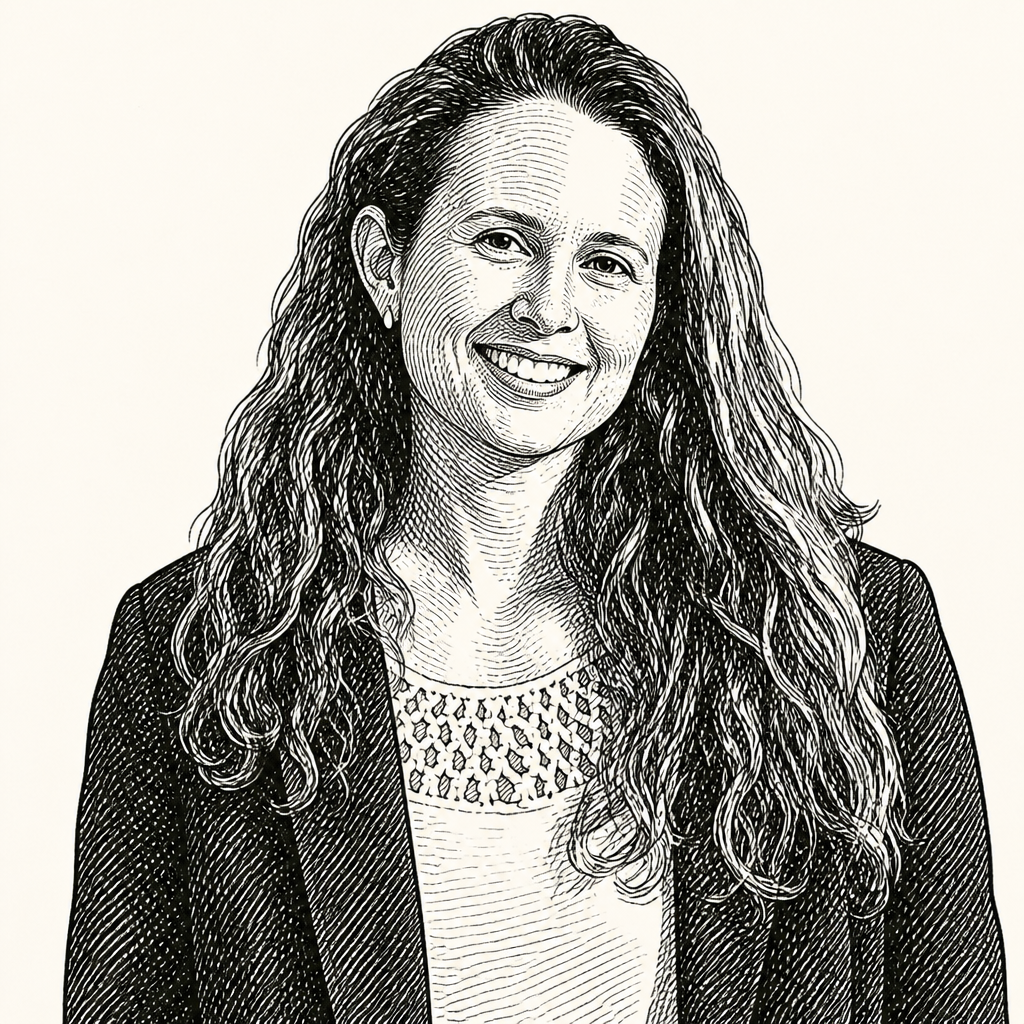

Ahn pressed on a gap that has defined the category: AI has advanced quickly in software, while embodied intelligence has felt slower. Parada called embodied intelligence “the next frontier on AI” and said DeepMind has been working to bring Gemini into the physical world. The promise she described is not simply natural-language control. It is the use of Gemini’s “world understanding” and multimodality to let robots understand an environment, reason about it, and take action “to the level of precision of a human expert.”
The work is still incomplete. Parada said Gemini Robotics can provide reasoning, interactivity, and multimodality, but DeepMind is pushing on dexterity: tasks such as folding origami or packing a lunchbox. Those examples mattered because they are mundane for humans and difficult for robots. Usefulness depends less on theatrical whole-body motion than on the ability to handle objects precisely in variable conditions.
Gemini Robotics is able to give you that reasoning. It's able to give you that interactivity. It's able to give you multimodality. But it's not yet able to—what we're pushing the boundary on is on doing highly dexterous tasks.
DeepMind’s partnership with Boston Dynamics places Gemini Robotics alongside Atlas and Spot. Ahn said Google’s AI research arm had partnered with Boston Dynamics on the newly commercialized Atlas humanoid robot, and asked whether Gemini would go into Atlas and Spot. Parada answered, “Yeah,” then described the broader ambition as bringing Gemini Robotics into the physical world. Boston Dynamics’ Atlas was shown sorting automotive parts into racks in an industrial testing environment, labeled “Fully Autonomous,” alongside clips from Google DeepMind’s robotics work.
Parada drew a sharp line between demonstrations and actual intelligence. Ahn asked where DeepMind’s edge lies in a field crowded with new companies in the U.S. and China. Parada answered that the difficult problem is “understanding the nuance and complexity of the human world.” Many public demonstrations, she said, are predefined or memorized sequences. Real usefulness requires robots to operate where humans are present, conditions change, and spaces are unstructured.
The edge is at understanding the nuance and complexity of the human world.
She also sketched the technical evolution that brought robotics to this point. Parada said DeepMind had introduced, over the last few years, several advances that had become table stakes for general-purpose robots. She described the introduction of large language models and vision-language models to robots as enabling robots to understand natural language and their environments. She said Transformers shifted robotics into an era of data-driven robotics and introduced a new kind of foundation model, the vision-language-action model, or VLA, which connects perception, language, and action. She also pointed to reinforcement learning and simulation as enabling robots to imitate humans and operate in unstructured spaces, including the whole-body control behind acrobatic demonstrations. Imitation learning, in her account, is what has made highly dexterous examples such as tying shoelaces plausible.
The overall architecture Parada described requires three capabilities to come together: high dexterity, precise whole-body control, and high-level intelligence. Without all three, humanoids remain impressive but constrained.
Safety is becoming a robotics intelligence problem, not just a mechanical one
Ahn raised safety as a consequence of deploying humanoids into complex environments rather than cages or tightly controlled industrial cells. Carolina Parada responded with a layered model. Functional safety means the robot can handle failures or changes in its own physical systems. Control safety means it remains stable, does not fall, and does not hit objects. Semantic physical safety is more subtle: the robot needs common sense about the world.
Her examples were ordinary human judgments: walking around a puddle, or not placing an object too close to the edge of a surface. Parada said that kind of safety can only be brought through intelligence. In other words, as humanoids move into human environments, safety cannot be reduced to stronger parts or better emergency stops. The robot must understand physical meaning in context.
That safety framing tied back to her broader view of the industry’s bottleneck. The breakthrough she expects is the combination of an accelerating hardware trajectory with accelerating intelligence. That is what moves robots from fixed sequences and fixed behaviors toward machines that “think in the moment,” understand a situation, and do something useful.
Asked about the U.S.-China rivalry and the broader geopolitical backdrop, Parada did not frame the future chiefly as a national contest. She said the field remains early, progress is fast, and the opportunity in Asia is large, especially given aging populations. Her answer kept returning to the same hinge: hardware alone does not unlock the category; intelligence that can adapt to real situations does.
Honda sees manipulation as central to customer value
Takahide Yoshiike placed Honda’s current work in the long arc from Asimo to practical manipulation. Honda was one of the early leaders in humanoid robotics, and Yoshiike said its earlier research focused on bipedal locomotion. Around 2013, he said, Honda shifted toward higher-level locomotion such as climbing ladders and disaster-response applications. More recently, the focus has moved again: from movement through space to manipulation.
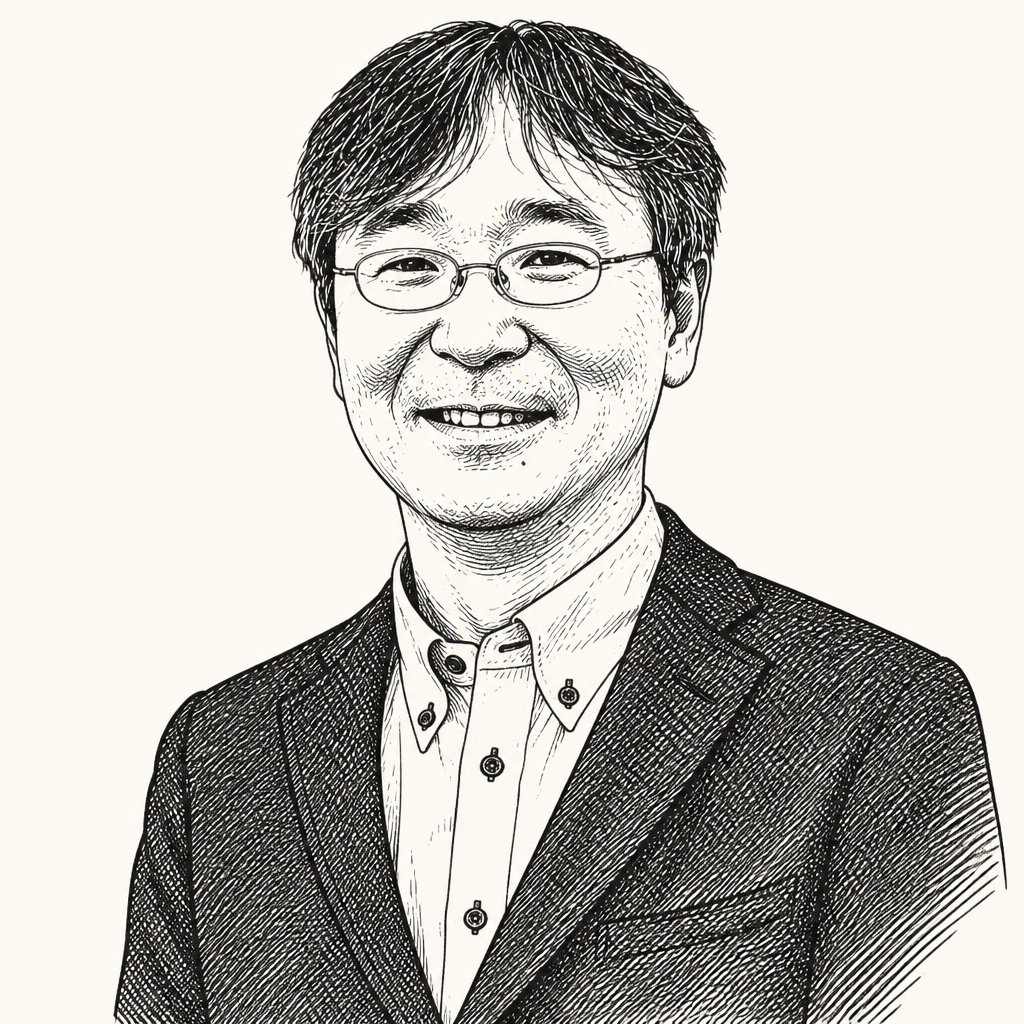
That shift is central to Honda’s current Frontier Robotics work. Ahn introduced the division as tackling multi-fingered robotic hands, one of the central challenges in humanoid mobility. Honda Research Institute material showed a black-and-white robotic hand moving its fingers, holding a metal bar, lifting a cylindrical weight from a scale, and revealing mechanical joints and casing in close-up.
Yoshiike connected manipulation to Honda’s broader “4D avatar robot” vision. Honda, he said, has businesses in two-dimensional mobility through automobiles and motorcycles, and is entering three-dimensional mobility through HondaJet, eVTOL, and rockets. Robots are conceived as “4D” mobility, going beyond time and distance. In practical terms, that means a robot could be teleoperated in a distant place or delegated a task autonomously. Both teleoperation and autonomy are required, and the interface should be human-like. For Honda, that makes the multi-fingered hand a critical component.
Avatar robot means a four-dimensional mobility.
The technical environment has changed substantially since Honda’s earlier locomotion work. Yoshiike said that when he worked on walking, processors were cheaper and lower performance; now there are far more computation resources. That has made it easier for robots to learn to walk. In his striking formulation, the change is so large that “not only the PhDs who knows the robotics, but also the normal person can somehow make the robot walk.” Manipulation has not yet undergone the same transition.
This distinction explains why Honda is emphasizing hands. Walking has become more accessible because computation and learning methods have improved. Manipulation remains hard because it requires contact-rich, precise, varied interaction with the physical world. Yoshiike treated that as the next value-creating frontier, not a marginal add-on.
He was blunt about the state of today’s humanoids. In his personal opinion, humanoids are not mature yet. Current machines can “somehow do a great dance or kung fu,” but that is not enough to provide customer value. The line echoed Parada’s distinction between memorized sequences and useful intelligence. The industry’s visible demos may help attract attention, but Honda’s concern is whether robots can perform work that matters to customers.
The near-term market need, in Yoshiike’s view, is labor shortage. Existing industrial robots with grippers can do only a narrow range of work, leaving many tasks to human labor. Honda’s starting point is therefore to realize tasks that ordinary traditional industrial robots have not yet handled. From there, Yoshiike said, accumulated success data can support more physical-AI-oriented development.
His competitive map was concise: Chinese companies are strong in cost reduction; U.S. companies are stronger in AI; Japanese companies are strong in precise, high-quality hardware. Japan’s task, he said, is to use that hardware strength while combining it with AI technologies.
The business model is unresolved even if demand appears real
The technical bottlenecks described by DeepMind and Honda feed directly into the commercial problem: robots have to become useful enough, safe enough, and cheap enough to justify sustained deployment.
Ian Ma of Bloomberg Intelligence treated the humanoid market as both promising and unresolved. Asked whether a path to 12 million units by 2035 is feasible, Ma said the market is cautious about hype. He described a split: companies are front-loading experiments to see how humanoids can be employed, while important bottlenecks remain back-loaded, especially in technical components. The market’s direction depends heavily on development of the “AI brain,” particularly foundation models.
Ma did not argue that the industry is purely speculative. He said a couple of companies are already showing they can monetize humanoids and make a profit. But most are still losing money. The industry is at the stage where companies are trying to determine which kind of humanoid, with which functions and specifications, can support a sustainable business strategy.
That point matters because “humanoid robot” is not a single product category. Ma compared the market’s likely shape to smartphones: there can be low-end, easy-entry devices and premium products. In humanoids, that could mean simple robots that dance at one end and premium machines that perform sophisticated industrial work or housework at the other. Cost reduction matters, but so does product segmentation. A cheaper robot is not necessarily the same business as a more capable one.
Ahn pushed on whether consumers will want humanoids in homes and offices. Ma pointed to cultural acceptance as a differentiator. He cited a Mitsubishi Research survey finding that 56% of Chinese respondents were willing to have humanoids involved in daily tasks, while willingness in Japan and the U.S. was lower. Adoption, in his view, will not be determined only by capability and price. Different societies may accept or resist humanoids in everyday settings at different rates.
Geopolitics adds another constraint. Ma said many humanoids still rely on AI models and Nvidia technology. If trade friction escalates, Chinese companies may need to replace their existing frameworks to sustain humanoid development. The implication is that the supply chain and model stack behind humanoids could become as strategically important as the robot body itself.
Safety standards are also lagging. Asked whether standards exist, Ma said they are “still not there yet.” He identified two domains: physical coexistence with humans and cybersecurity. Remote control creates a particular risk. If a robot can be remotely operated, then a hacked robot could become a critical safety issue. That concern differs from traditional industrial robots, which are often confined to controlled spaces.
Ma closed with a comparison to generative AI’s adoption shock. Everyone, he said, is waiting for the “ChatGPT moment” in humanoids. He does not think the field is there yet, but he allowed that it could arrive faster than current evidence suggests. His position captured the central balance: the opportunity could be extremely large, but the industry still has to solve intelligence, dexterity, cost, standards, safety, and business-model questions before projections become installed machines.