Apple’s Siri Overhaul Tests Its Cross-Device AI Strategy


Carolina Milanesi, president and principal analyst at Creative Strategies, argues that Apple’s next Siri overhaul should be judged less as a ChatGPT rival than as a test of whether Apple can make AI useful across the devices its customers already own. In a Bloomberg Tech discussion with Ed Ludlow, she said Apple’s advantage is embedded, cross-device intelligence, but that pressure is rising as consumers form daily habits with assistants such as ChatGPT and Claude.
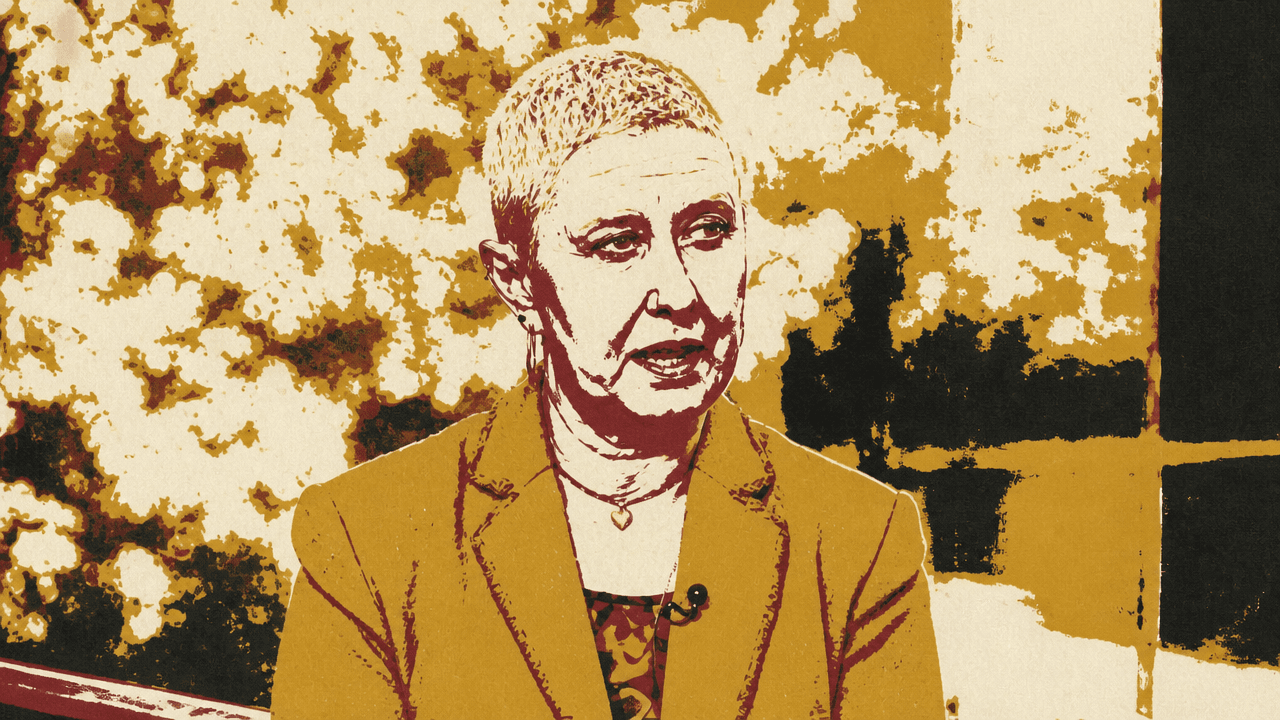
Apple’s Siri problem is not just whether it can answer like ChatGPT
The next Siri test is not only whether a standalone app can replace ChatGPT or Claude on an iPhone home screen. Carolina Milanesi framed the more important question as relevance inside the customer’s own device life: whether the assistant is “pertinent to me as a consumer” and can move with the user across Apple hardware.


That distinction matters because Milanesi sees Apple’s position as different from the chatbot companies’. Claude and ChatGPT are services a user opens. Apple Intelligence, as she described it, is embedded in devices, and Apple’s business is still fundamentally the sale of devices. The company’s advantage, if it executes, is not just a model interface. It is the fact that many Apple customers own several Apple products and expect the same experience across them.
Ed Ludlow put the issue in practical terms: if the next phase of Siri follows a user from iOS to macOS and through the broader installed base, how important is that? Milanesi’s answer was direct: very important, because continuity across devices is what can “basically lock customers in.”


She acknowledged the awkwardness of that word. “Lock” immediately raises regulatory questions, she said, and she flagged Europe as an area to watch when thinking about what happens to Siri. But her consumer point was separate from the regulatory one: the value people feel is the ability to carry an experience from one device to another without the assistant seeming different depending on which Apple screen they are using.
Having the ability to have my experience carry across all my devices is what consumers at the end of the day want, because that’s the true value.
A better Siri would not fix the smartphone market this year
A Bloomberg News excerpt by Ed Ludlow put a hard limit around the near-term Siri story. The on-screen text, headlined “Apple’s revamped AI smashes against down market,” said that even if Apple “finally delivers the Siri overhaul investors and consumers have been waiting for,” it would not “suddenly reverse the trajectory of the smartphone market.”
The reason given in the excerpt was not software. “According to IDC, memory constraints and component costs are doing far more to shape shipment volumes than software announcements.” Ludlow added that memory pricing and weakness tied to Android were weighing on the market this year.
That market context narrows what Siri can plausibly change in the short term. In Milanesi’s framing, the more immediate strategic question is not whether an AI announcement moves this year’s smartphone shipments, but whether Siri becomes a more useful layer across the Apple devices people already own.
The share move mattered because Ludlow placed it inside a broader investor repricing of Apple’s AI position. Apple shares were up 2.5% at that moment and close to overtaking Alphabet, Google’s parent company, as the best-performing Mag 7 stock of the year, he said. He described Apple as having been given the benefit of the doubt: treated as “AI adjacent” and credited, in the market’s view, for not spending tens of billions of dollars developing AI.
That creates a narrower but sharper expectation. Investors may not be counting on Siri to rescue 2026 smartphone shipments, but they are giving Apple room to prove that its lower-spend, device-centered AI strategy can still produce a credible consumer assistant. Ludlow’s question to Milanesi followed from that tension: how much pressure is there for Siri to be right this time?
AI is unlikely to be a switcher by itself
Carolina Milanesi was skeptical that AI alone will make people switch smartphone ecosystems. She said she “really” struggles to see AI as a switcher mechanism because users remain locked into ecosystems. In her view, model performance alone is a weak basis for changing platforms: one model may be ahead one week, another the next, and the field can feel like parity from a consumer standpoint.
The real question, she said, is how AI “shows up within the device.” That phrase carries much of her argument. Apple does not need to win by making consumers think in abstract model benchmarks or enterprise productivity features. It needs to surface intelligence in places mass-market users understand.
Ludlow referred to Mark Gurman having mentioned camera use cases, and Milanesi agreed. She expects intelligence to keep appearing in ways that help an ordinary consumer who “just wants to take a great picture.” That, she said, is simple but delivers value. It is a different emphasis from centering AI around productivity or enterprise workflows.
This is also where Apple’s historical consumer positioning enters the analysis. Milanesi said Apple has been careful about putting attention where the mass market can understand it. In that framing, a successful Siri or Apple Intelligence rollout is not defined by whether it impresses a technical audience with the broadest possible chatbot feature set. It is defined by whether the intelligence becomes visible at the point of ordinary consumer need: photos, device continuity, and daily use across Apple hardware.
The pressure has increased because consumers are forming AI habits elsewhere
Carolina Milanesi contrasted the current moment with the discussion a year earlier. At that time, she said, consumers were not walking into stores asking for AI. She still thinks that is broadly true. The change is that consumers are now starting to form preferences around the chatbot or agent they use every day.
That creates a more specific pressure on Apple. If people are already deciding that ChatGPT, Claude, or another assistant is their daily AI interface, then Apple cannot rely only on the argument that consumers do not shop by asking for AI. Siri now has to be credible against the tools users have begun to adopt.
There’s definitely more pressure on Apple to deliver something that is comparable to ChatGPT or Claude.
Milanesi did not argue that Apple has to match the largest AI spending programs. Her point was narrower: consumers are beginning to settle into daily habits with assistants outside Apple’s ecosystem, so Apple faces more pressure to deliver something comparable. Ludlow supplied the market tension around that standard. Apple has been rewarded partly for not joining the heaviest AI spending race, but user expectations are being shaped by products from companies that are visibly competing in that race.