Musk Frames SpaceX IPO as Proof of a Once-Unlikely Space Bet
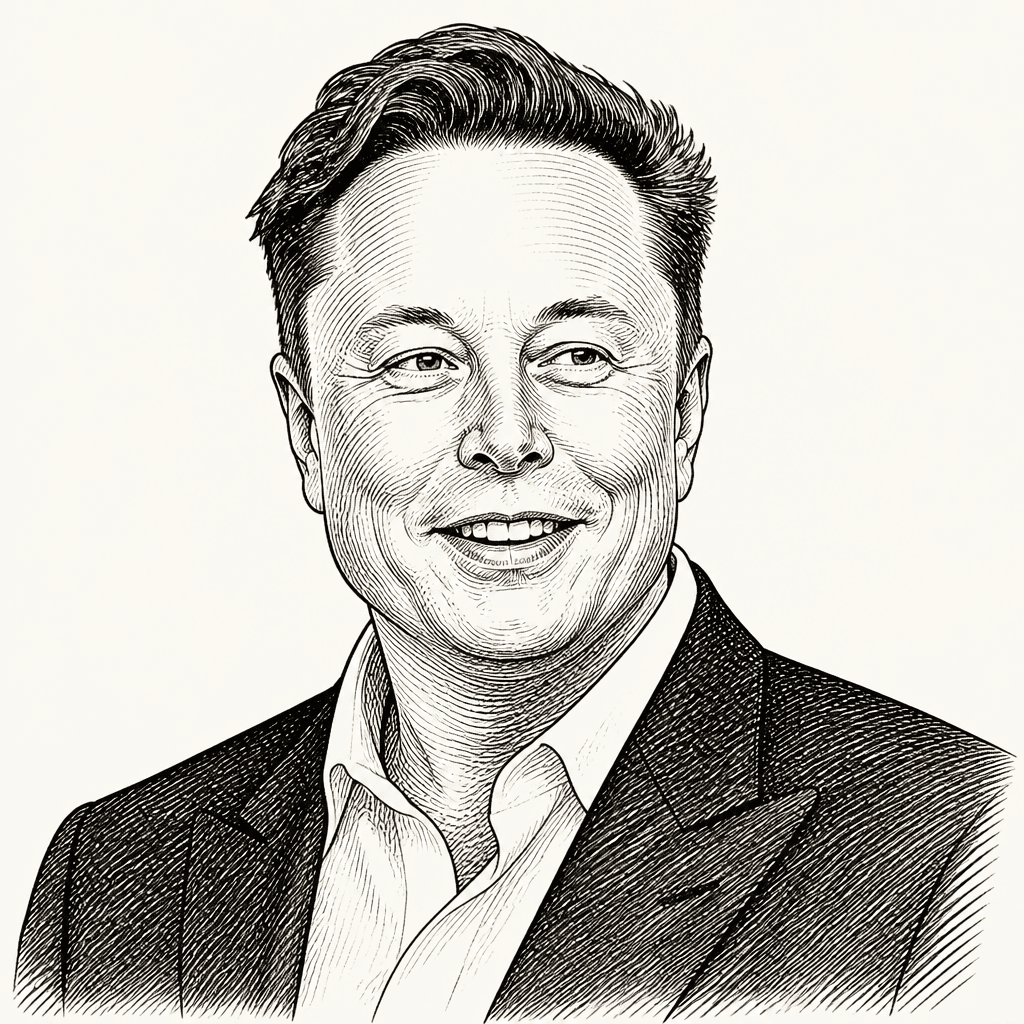
At SpaceX’s Nasdaq opening bell ceremony, Elon Musk framed the company’s IPO less as an inevitable Wall Street milestone than as the outcome of a venture he once thought had less than a 10 per cent chance of survival. Musk argued that SpaceX was founded because incumbent aerospace companies were not pursuing the technologies needed to make humanity multiplanetary, and said the company’s purpose is to make travel to the Moon, Mars and beyond possible for more than a small group of astronauts.
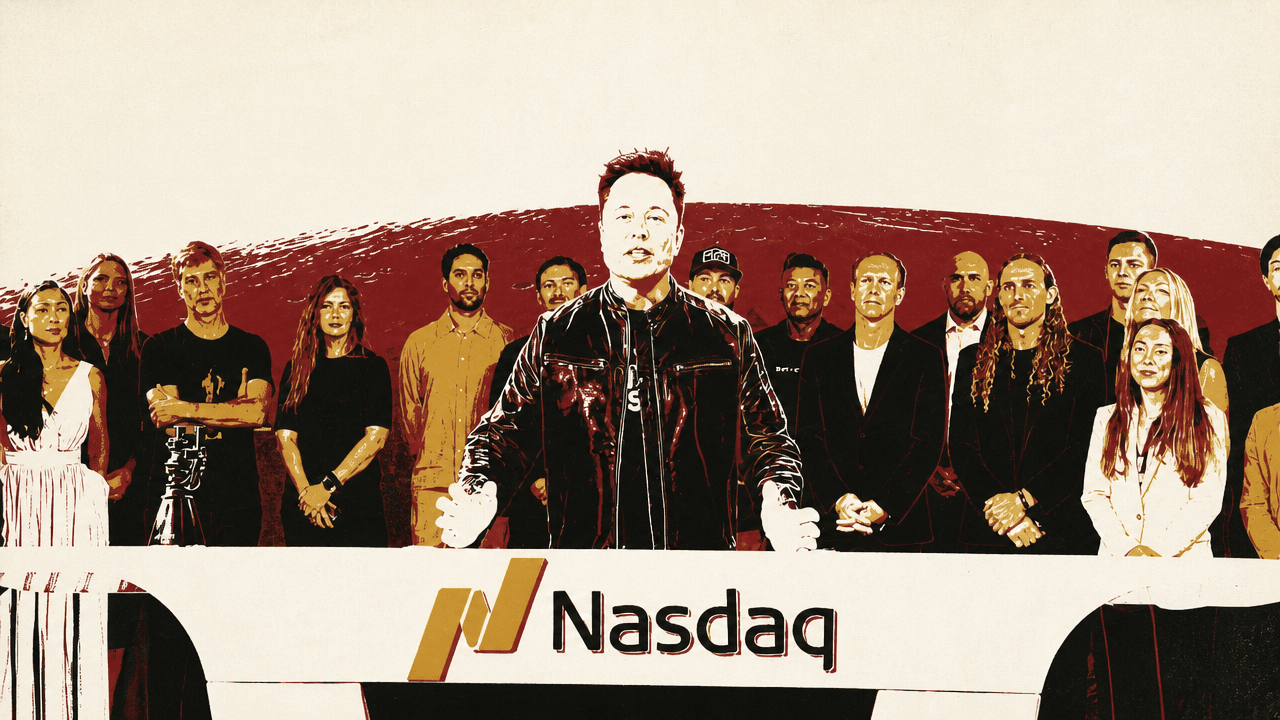
A low-probability company reaches Nasdaq
Standing at a Nasdaq-branded podium with SpaceX ticker information displayed as “SPCX,” Elon Musk described the company’s public listing as the result of a long improbability: “a little company that started in a warehouse in El Segundo” becoming, in his words, “the largest IPO” ever.
The setting carried part of the message. The screen behind Musk showed the SpaceX logo against a planet, while the podium and broadcast graphics paired the company with Nasdaq’s listing language. A later split-screen showed cheering crowds at Nasdaq MarketSite in New York and at Starbase, Texas, presenting the moment as both a Wall Street event and a company celebration in Texas.
Musk’s first substantive claim was not that the listing had been inevitable, but that it had once seemed nearly absurd. He said he had given SpaceX “less than a 10% chance” of succeeding at all, and that if anyone had told him the company would eventually go public in this way, he would have thought they were “smoking some really good crack.” The point was blunt: SpaceX, in his account, began as a venture he expected would probably fail.
I gave SpaceX less than a 10% chance of succeeding at all, to be clear.
That risk was not presented as recklessness for its own sake. Musk said he told people SpaceX would probably fail, but that the attempt was necessary because without a new company entering space, humanity would “never be a truly spacefaring civilization.” The listing was therefore framed by Musk against the company’s founding rationale: a new entrant, in his view, was needed to pursue technologies required for a different future in space.
Why Musk said incumbents were not enough
Elon Musk did not argue that existing aerospace companies were incapable of building rockets. He said “the other aerospace companies” built “good rockets and everything.” His criticism was narrower: they were, in his view, “simply not pursuing the technology that is necessary to make life multiplanetary.”
That distinction matters because Musk did not frame SpaceX’s purpose as merely producing another rocket supplier. He described the company as an attempt to pursue the capabilities that would make humanity “a truly spacefaring civilization,” and ultimately make life multiplanetary.
Musk tied that aim to a familiar science-fiction vocabulary. SpaceX, he said, exists “to make Star Trek” and “the exciting science fiction futures that we’ve read about” real. His compressed version of the mission was that SpaceX wants “to take the fiction out of science fiction.”
SpaceX is all about… to take the fiction out of science fiction.
He then made the intended beneficiary explicit. SpaceX, he said, wants to take “anyone who wants to go to the Moon,” “anyone who wants to go to Mars,” or anywhere in the solar system, “and maybe beyond the solar system at some point.” He corrected himself away from the category of astronauts: “not just a few astronauts, I mean you, literally you.”
That phrasing carried the breadth of the promise. Musk addressed viewers directly and said SpaceX wants to be able to take them to the Moon, to Mars, and ultimately beyond. He closed that thread by saying he was confident the SpaceX team would do that “for you.”
Space as a reason to look forward
Elon Musk turned to the question of how space ambitions sit alongside problems on Earth. His answer was not to deny those problems. He said there are “always problems on Earth,” always things people wish were better, and that “we should solve them.”
But he added a second requirement. There also have to be things that make people “excited about the future,” things that make them “glad to wake up in the morning because you can’t wait to see what happens next.” In this framing, SpaceX’s mission is not only technical or civilizational; Musk presented it as a source of anticipation, a reason for the future to feel worth waking up for.
That is how his remarks connected the Nasdaq ceremony back to SpaceX’s founding risk. The public listing was presented as a milestone in a longer effort to make an inspiring future plausible: a company that once had, by its founder’s own estimate, a high chance of failure now describing its ambition as travel to the Moon, Mars, and beyond, extended beyond professional astronauts.