Grab AI Interactions Rose 60% As Cost Per Transaction Fell 42%

Grab CFO Peter Oey says the company’s AI tools are generating returns by increasing activity and spending across its ride-hailing and delivery platform. He pointed to higher customer basket sizes and more rides and delivery jobs, while saying AI interactions rose 60% and cost per transaction fell 42%. Grab raised its full-year revenue and profit forecasts.
Platform growth carried a profitable quarter
Grab reported a profitable quarter across ride-hailing, delivery and financial services, and raised its full-year revenue and profit outlook. CFO Peter Oey said the results came despite a difficult Southeast Asian backdrop: fuel prices were high and weather was unfavorable. Rides increased 21% year over year, and the platform had 57 million monthly transacting users.
Oey said the products Grab had been releasing were working together, supporting the top and bottom lines as well as free cash flow. He did not point to one isolated change behind the quarter; his explanation emphasized more rides, more users and the combined contribution of the company’s products.
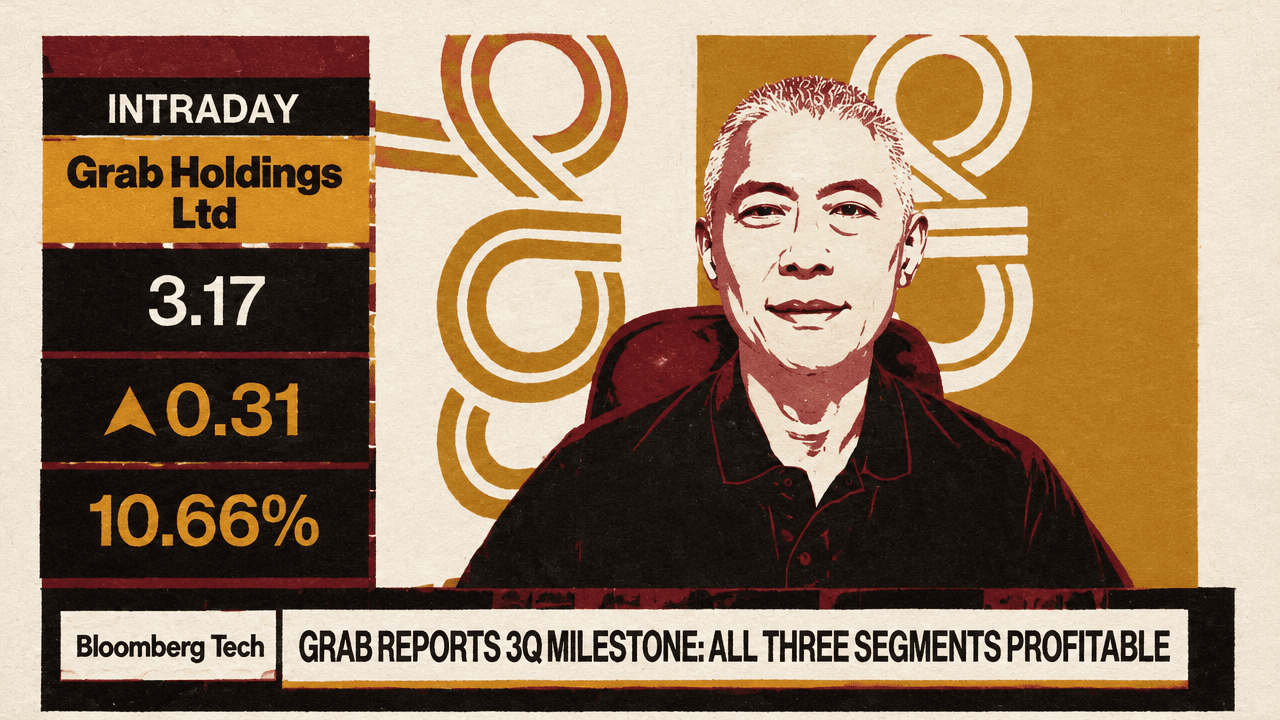
Bloomberg’s Ed Ludlow framed the results around record EBITDA and asked what had improved enough to justify raising guidance. A chart shown during the interview displayed Grab’s U.S.-listed shares up about 11% intraday. That was the share-price move visible at the time of the broadcast, alongside the raised outlook.


AI earnings feed activity across Grab’s platform
Ludlow cited figures from Grab indicating that drivers using its AI assistant earned more than 10% more per hour, while merchants relying on the assistant earned 20% more. Oey described those gains as part of a “win-win” for people using the tools and for Grab, because improved productivity can generate more activity on the platform.
For drivers, Oey said, the assistant helps them be more productive and earn more. Grab benefits when they complete rides because it takes a commission. On the restaurant side, he pointed to higher basket sizes and more delivery jobs, which also create work for couriers. The benefits, in his account, move between the different participants rather than accruing to just one group.
It’s a win-win for everyone.
Oey called this an ecosystem play: AI features can help drivers, restaurants and couriers, while the resulting rides, orders and spending contribute to Grab’s business. His explanation of Grab’s return centered on commissions and increased activity, including higher restaurant basket sizes—not only on the earnings gains reported for drivers and merchants.
AI use rose as per-transaction costs fell
Ludlow raised the cost of AI as a potential pressure on the economics and cited a 42% quarter-over-quarter decline in cost per interaction. Asked whether the decrease reflected contract terms, Peter Oey instead described Grab’s process for choosing and deploying models. The company has been matching models to use cases and refining those choices over three or four quarters. It has also been educating employees and engineers about which models to use.
Oey compared the choices to a restaurant buffet: having many options means being careful about what to select, much as someone watching their calories would be. He described model selection as ongoing optimization, not as a single contract change.
At the same time, AI use was increasing. Oey said AI interactions were up 60%, while token cost per transaction was down 42%. He said Grab delivered its margins and profitability despite the higher level of use. The contrast is central to his account of the economics: the company was using AI more while reducing its cost per transaction.
Grab plans to keep leaning into AI, Oey said. It will continue fine-tuning its approach while seeking to grow both the top line and the bottom line. He presented the rising interaction count, lower unit cost and maintained profitability as reasons to continue investing.