Apple Plans OLED iPad Mini as China AI Requires Local Partners


Apple is preparing its largest iPad mini overhaul in five years, led by an OLED display, as it readies updates to the Pro, Air and entry-level models, Bloomberg’s Mark Gurman reports. Gurman says the hardware push follows iPad price increases of $100 to $200 and is meant to give customers more visible reasons to upgrade. In China, he says Apple Intelligence would retain Apple’s on-device models but rely on Baidu and Alibaba technology, with model updates subject to periodic government approval.
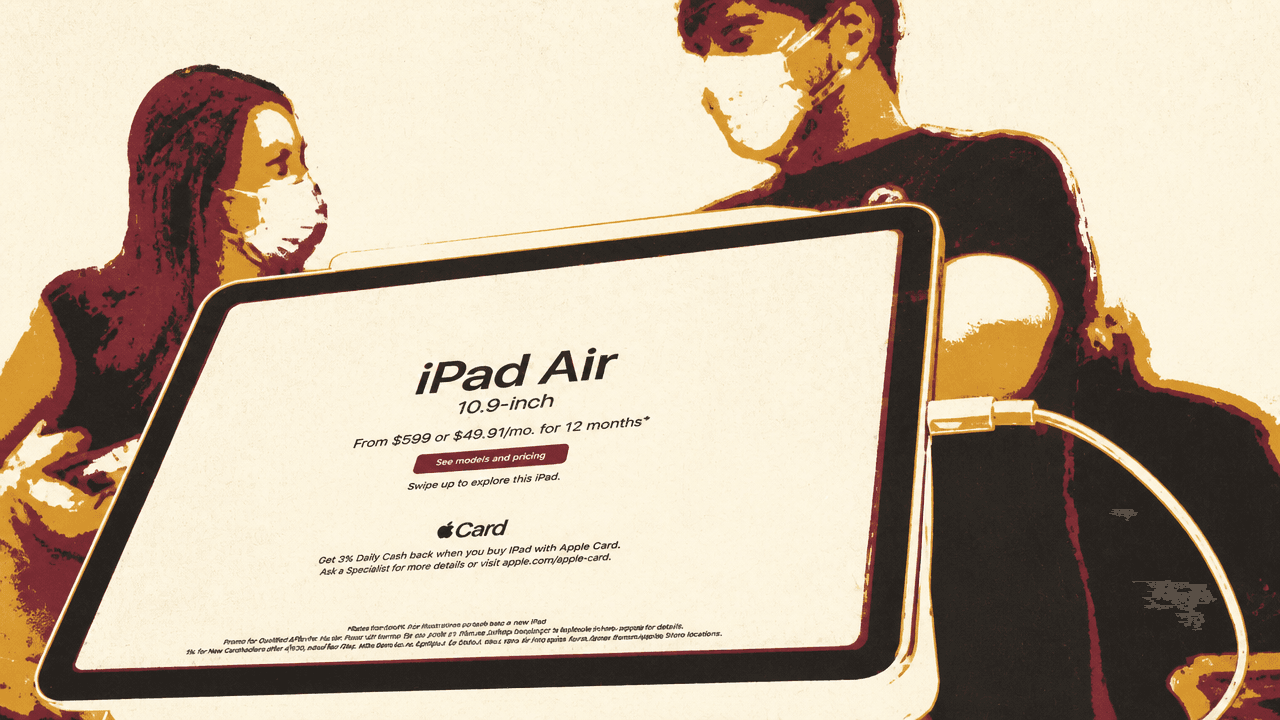
Apple’s iPad and China AI plans answer different constraints
Apple is preparing a broad iPad refresh as recent price increases raise the burden on each model to justify its place in the range. Separately, Mark Gurman describes a China configuration for Apple Intelligence that would retain Apple’s own models while using local partners and subjecting model updates to recurring approval.


The iPad response is hardware-led: the reported centerpiece is an OLED display for the iPad mini, followed by updates across the rest of the lineup. In China, the adaptation is a service configuration. Gurman says Baidu would take on roles handled elsewhere by Google and OpenAI, while Alibaba technology would sit above Apple’s on-device models in the arrangement he describes.
A pricier iPad range needs upgrades customers can see
Gurman says Apple’s fall iPad mini update will be among the product’s largest in five years. Its central change is an OLED display, which he says would bring the mini’s display quality closer to that of an iPhone or iPad Pro.
This has been a long time coming. This is something that tech enthusiasts have been clamoring for.
The OLED mini is the first move in a broader refresh sequence rather than a one-off redesign. Bloomberg’s on-screen roadmap identifies the mini’s launch for the fall, with revamped entry-level iPad and iPad Air models following next year. Gurman adds faster iPad Pro models to that next-year slate.
| Timing | Models and changes described |
|---|---|
| Fall | iPad mini overhaul with an OLED display |
| Next year | Faster iPad Pro models, new iPad Air models, and a new entry-level iPad |
The commercial backdrop is Apple’s recent iPad price increases. Gurman attributes them to a memory shortage and says the changes have varied by model: some iPads rose by $100, others by $150, and others by $200.
Those increases make the refresh more consequential. Gurman says Apple needs upgrades that make the devices “more worthwhile” in a competitive tablet market that includes Amazon, Samsung, and other manufacturers. The mini gets the most visible reported change first, while the Pro, Air, and entry-level models are all due for updates next year.
China would change the partners around Apple Intelligence
Outside China, Mark Gurman describes Apple Intelligence as a layered system built from Apple’s on-device and cloud models, supplemented by partners for capabilities Apple does not provide itself. Search is one such function: he says Apple works with Google. Siri also has an optional OpenAI fallback, allowing it to query ChatGPT—with the user’s permission—when it cannot answer a request itself.
China would use a different set of roles. Gurman says Baidu would handle both search and the chatbot role that OpenAI otherwise fills, since ChatGPT is not available in China.
| Layer or function | Arrangement Gurman describes for China |
|---|---|
| Apple models | Apple’s on-device models would remain on Chinese iPhones |
| Search | Baidu |
| Chatbot fallback | Baidu, replacing the OpenAI role described elsewhere |
| Layer above Apple’s models | Alibaba AI technology |
| Model updates | Periodic approval by the Chinese government |
Alibaba’s role is the most consequential part of Gurman’s account. He says Chinese iPhones would continue to use Apple’s on-device models, but that Alibaba AI technology would operate in a layer above them.
The phones in China will continue to use the on-device Apple models, but there will be a layer on top using Alibaba AI technology that I call a censorship filter.
That is Gurman’s characterization of the Alibaba layer. He says it would keep the phone in constant connection with the Chinese government, and that Apple’s background model updates would need approval periodically as new versions reach the iPhone. Gurman says Xiaomi, Huawei, and other phone providers operating AI-equipped phones in China also have to use this type of filter.