Anthropic’s S-1 Shows Strong Finances and a Slowing Growth Rate

Anthropic’s S-1 presents an IPO candidate with ample cash, not a company forced to go public to plug a funding gap, says Gil Luria, managing director at D.A. Davidson. But the filing also lays out an unusual governance structure: Anthropic is a public benefit corporation, and seven founders together control a majority of its voting power, leaving investors to weigh both the company’s stated purpose and how that group will make decisions.
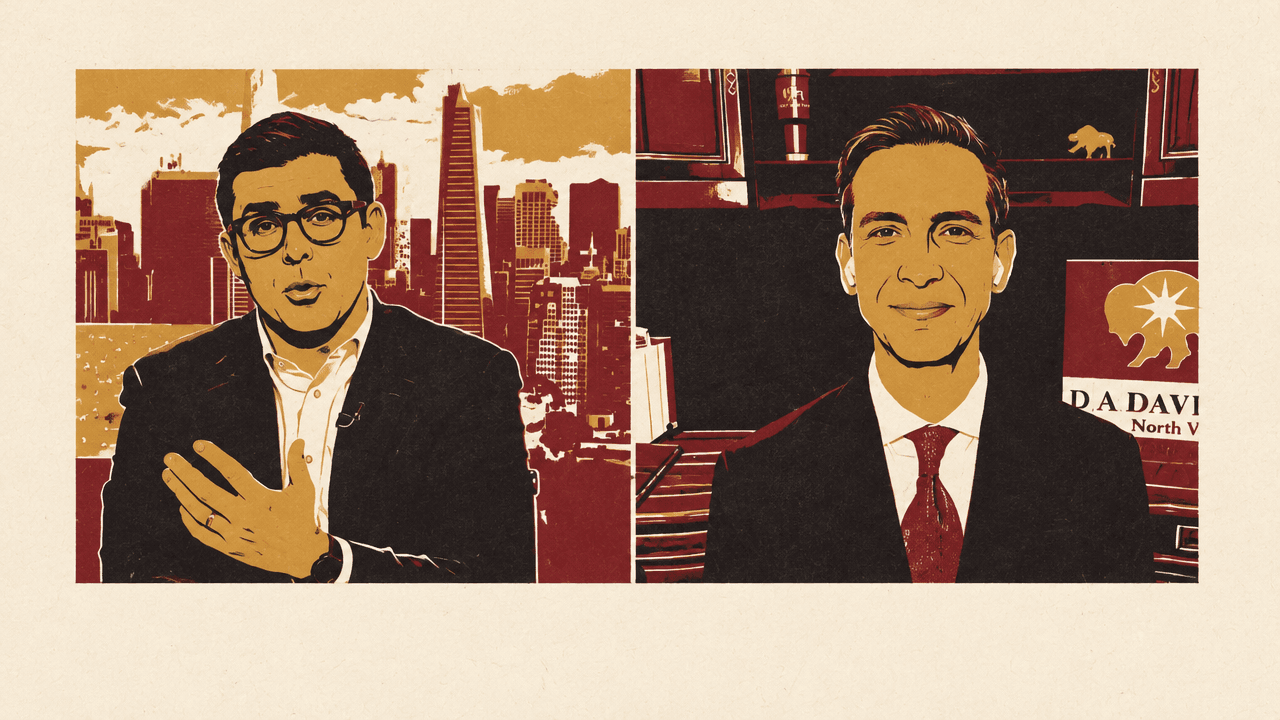
The filing changes the question from survival to economics
Gil Luria says Anthropic’s S-1 undercuts the claim that the company loses money on every query. Its revenue is about twice its total compute costs, including training, and the filing reports second-quarter GAAP operating income of $974 million, with an 8% operating margin.
The balance sheet also makes a near-term cash squeeze a less plausible reason for going public. As of June 30, Anthropic had $131 billion in cash and short-term investments and $147.4 billion in total assets, against $117 billion in liabilities. Luria calls the cash position a “war chest”: the company is not burning through cash quickly, and he says its capital expenditures are not especially high. The filing does not include a cash-flow statement, so the balance sheet alone does not show the full pace of cash use. But, in Luria’s reading, the IPO is not an act of desperation.
Ed Ludlow points to a different uncertainty in the filing: Anthropic warns that growth will slow from its historical pace. Luria says deceleration in the third quarter was already known, but that it was still disappointing for revenue added in Q3 to be lower than in Q2. Anthropic had captured close to all of the enterprise market in the middle of the year, he says; OpenAI and open-weight models have since caught up, leaving Anthropic with a more moderate share.

The figures discussed on air put that slowdown in context, though they do not settle what comes next. Ludlow says Bloomberg had reported Q3 revenue of $16.8 billion, up from $11.6 billion in Q2—a 45% sequential increase. Luria says investors will look to the roadshow for fourth-quarter guidance and a 2027 growth outlook. The key question, as he frames it, is whether revenue is still growing at a substantial rate, rather than approaching a peak.
Compute costs show whether the AI business can support its supply chain
For Luria, the filing’s most consequential evidence is the improving relationship between revenue and compute costs. Ludlow cites compute costs at ten times revenue in 2023, compared with 55% of revenue in the first half of 2026. A Bloomberg chart shown during the discussion gives a longer series for compute and infrastructure spending: 1,056% of revenue in 2023, 653% in 2024, 160% in 2025, and 55% in the first half of 2026.
Luria calls the trend positive because model companies must sell the compute they buy for more than it costs them. He says Anthropic’s gross margin—the revenue left over relative to compute spending—is increasing. That matters beyond the company itself: in his account, the AI economy depends on model companies being able to pay hyperscalers for compute, which in turn supports spending on semiconductors, semiconductor equipment, construction, and energy.
Ludlow notes that the S-1 does not give a large total-addressable-market figure of the kind he says appeared in SpaceX’s filing, which cited $26.5 trillion for AI. Luria expects Anthropic may address market size in a later filing or during the roadshow. He suggests the company could frame its market around labor: the value of making people more productive and displacing some labor, rather than the narrower software market. That framing, he says, would imply a large runway for growth.
Seven founders retain control, and the company defines a broader purpose
The S-1 describes an unusually distributed control structure. Ludlow says the seven founders together hold 50.1% of voting power, with Dario Amodei remaining CEO and Daniela Amodei remaining president and board chair. Luria contrasts that arrangement with the more familiar pattern in which one or two founders retain control. Here, investors would have to consider not only the founders’ control but how a group of seven might agree—or fail to agree—on major decisions.
That creates a different kind of uncertainty from a company whose direction can be associated with a single controlling founder. Luria says shareholders will not be able to reach a controlling stake, and that the group’s internal dynamics could affect the company’s trajectory. He describes this as an added layer of opacity: investors may not know what the seven founders agree on or what happens if they do not.
The other unusual feature is Anthropic’s status as a public benefit corporation. Luria says the company is presenting itself as responsible not only for maximizing shareholder value but also for benefiting humanity, with the company itself deciding what that benefit means. He warns that this could mean the company does not always prioritize shareholder returns. Investors, he says, will need to be comfortable trusting the founders to decide what is good for humanity and for the company, even when that does not mean maximizing shareholder value.
The filing’s IPO details, displayed during the discussion, say Anthropic plans to trade on Nasdaq under the symbol “ANT,” with Goldman Sachs and Morgan Stanley leading the offering. Marketing was expected to begin as soon as the week of November 9.