Data-Center Builders Borrowing at 9% Risk Destroying Value

DA Davidson technology research chief Gil Luria argues that AI demand and the risks of financing its infrastructure should be judged separately. He sees chip demand and Nvidia’s ecosystem supporting growth through 2030, but warns that data-center builders borrowing at high rates may destroy value even as demand rises.
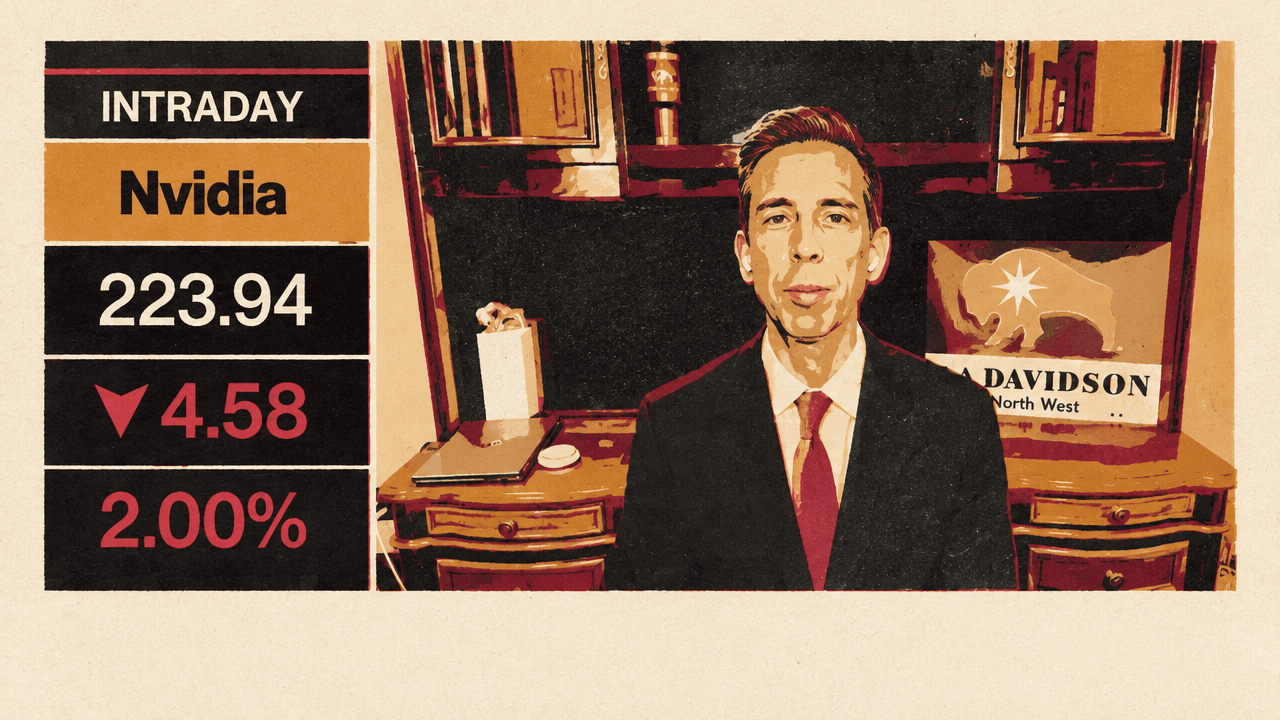
Demand may last; financing can still break the buildout
Gil Luria draws a distinction between continued growth in AI demand and the economics of building the capacity to serve it. Customers may keep paying for AI while some data-center builders destroy value because of the cost and financing of their investments.
That distinction helps explain Jensen Huang’s confidence about demand and Nvidia’s expanding role. In Paris, Huang said demand for AI infrastructure was far greater than supply, an imbalance he expected to persist for several years. He described the buildout as a new industrial expansion, constrained by factories, energy and construction. Huang said Nvidia had invested $8 billion in European startups over the previous year and would announce another $2 billion in investments the following week. He also said Nvidia had invested across nearly every layer of European AI infrastructure; he did not specify that the forthcoming $2 billion would be allocated across all those layers.


Luria said Nvidia is not creating the wave of demand. Companies and consumers paying to use models for work and personal purposes are driving it. Nvidia’s role is to find gaps in the ecosystem—fiber, new cloud providers, optical capacity and geographic diversity for model companies—and invest in making capacity available. Those investments also make it more likely that the companies Nvidia backs will buy its GPUs.
Nvidia’s investment holdings had mostly risen in value, Luria said, but remained a relatively small part of the company’s valuation. The more important return, in his view, is the additional GPU sales that a stronger ecosystem can support.
Luria described the market as skeptical about how long Nvidia’s growth can continue. The company had forecast 70% growth for the next year, he said, yet traded at a discount to the broader market. He said the current outlook pointed to an infrastructure cycle lasting through 2030; Huang had described a possible five-to-10-year buildout. A Bloomberg Open Interest chart showed Nvidia’s stock trending upward over the months displayed, alongside the disagreement Luria described between strong growth expectations and the market’s valuation.
Capacity limits can govern growth without ending it
The question is not only whether demand is real, but how quickly suppliers can expand capacity. Luria identified ASML as a key constraint because almost all of the most advanced chips are made using its EUV machines, and he said there was no other company that could make them. He described ASML as having been cautious about expanding, in part to avoid helping create a bubble.
Luria said ASML’s latest comments marked a shift: it could not supply customers with the capacity they needed in 2027 and 2028, and was beginning to consider expansion as orders extended into 2029 and 2030. He said that was consistent with positive outlooks and visibility from semiconductor-equipment companies, chipmakers, hyperscalers and model companies.
That optimism sits alongside an uneven market view of the cycle. Luria said Nvidia and Broadcom traded at slight discounts to the market, while Micron and SK Hynix traded at roughly a third of the market’s multiple—about five or six times earnings. Other semiconductor and optical companies, he said, were valued as if the cycle would run through 2030. He saw a contradiction: if the broader cycle continues, the four companies trading as if it were already over should benefit too.
Debt can turn growth into value destruction
Luria’s warning about neo-clouds is not a rejection of the AI cycle. It is a warning about financing. Borrowing at high interest rates to build data centers that are becoming commoditized outside the hyperscalers may not be a sound investment, even if demand keeps growing.
His example was a company borrowing at 9% to earn a 5% return. Scaling would not solve the mismatch. Luria said that if CoreWeave were borrowing at 9% and could earn only 5%, “it doesn't matter how much they scale. They're destroying value at every turn.” The danger is especially acute, he said, for neo-clouds financing their entire buildout with debt.
Asked about reports that CoreWeave was seeking insurer capital and better ratings to attract investors, Luria said that was because, in his view, the company had run out of the ability to borrow even at 9%. He called that a very concerning factor. Capital at those rates could stop being available, and the finite supply of risk capital for data centers may restrain expansion. A Bloomberg Open Interest chart showed CoreWeave’s stock moving sharply down over the months displayed, in contrast with Nvidia’s upward trend.
Luria said the buildout is more defensible when companies invest from cash flow and recognize that the activity is speculative. Continuing to chase debt at 9% or more, he warned, risks exhausting the capital available to fund it. He argued that limits on lending could keep growth at a pace the ecosystem can sustain through 2030.
Model-company financials are still missing
For Luria, the clearest test of what customers will pay for AI lies with the model companies. He wanted Anthropic to disclose gross and net revenue, gross margins, training costs and how those costs are expected to trend. He also wanted to know what the company pays for capacity and whether its growth has slowed.
He grouped Anthropic and OpenAI as companies at the beginning of the value chain: they collect money from businesses and consumers, making their results an indication of how much the market is willing to pay for AI. Luria said the industry had waited a long time for specifics from them and that it was time to get them.