Texas Uses State Grants to Build a Commercial-Space Cluster
 Greg Abbott
 Loren Grush
 Karen Jones
 Brigette Oakes
 Norman Garza
 Vanessa WycheTom GibsonBloomberg OriginalsWednesday, July 15, 20264 min read
Texas is building a statewide commercial-space industry around NASA talent in Houston, launch sites on the coast and in West Texas, and manufacturing and testing operations in Central Texas. Bloomberg reports that state grants are reinforcing a model in which NASA contracts help companies finance early development, while Texas offers industrial capacity and a business-friendly environment to keep them expanding locally. Loren Grush, Bloomberg’s space reporter, says SpaceX’s scale has made the strategy more visible—and its environmental and local costs around Boca Chica harder to ignore.

Texas is broadening beyond its NASA base
Texas is assembling a commercial-space cluster that runs from Houston to the southern coast, Central Texas and West Texas, combining NASA talent, launch geography, industrial capability, private companies and state incentives. Loren Grush says Houston’s central role in spaceflight has made Johnson Space Center a source of engineers who go on to found companies nearby.


The footprint is distributed rather than concentrated in Houston.
| Location | Organization or company | Role in the Texas space cluster |
|---|---|---|
| Houston | NASA Johnson Space Center | Mission Control and a source of engineering talent for nearby companies |
| Houston | Axiom Space and Intuitive Machines | Commercial companies established near Johnson Space Center |
| Central Texas | Firefly Aerospace | Rocket facility and development center |
| Southern Texas | SpaceX Starbase | Starship launch and development site at Texas’s southern tip |
| West Texas, near Van Horn | Blue Origin | Launch facility |
At Firefly Aerospace’s Central Texas site in Briggs, Brigette Oakes describes 200 acres of factory floor, engine-test stands and machine shops where the company conducts most of its rocket, engine and component testing. Firefly’s March 2025 lunar mission made it the first commercial space company to land upright on the moon, after a 45-day transit carrying 10 NASA scientific payloads. The company has secured NASA contracts worth hundreds of millions of dollars and expanded its manufacturing and testing facilities outside Austin.


Making sure that we keep all of this manufacturing in-house and in Texas is one of the key areas that allows us to be really scalable.
Texas also offers industrial capabilities that transfer to space. Karen Jones points to heavy machinery, metal fabrication and telemetry used in offshore drilling and exploration, alongside renewable-energy and low-carbon technologies. Solar panels, she notes, power satellites. Grush adds that Firefly originally came to Central Texas partly because it needed substantial open land for engine testing; Texas’s reputation for light regulation and business friendliness is another attraction.


SpaceX makes Texas’s commercial pull harder to ignore
SpaceX is the largest presence in Texas’s commercial-space story. Loren Grush says its Starbase facility sits at the state’s southern tip, where proximity to the equator gives rockets an additional boost toward orbit. The company relocated its headquarters to Texas in 2024; Bloomberg title cards shown in the source describe plans for a solar factory near Austin and at least a $55 billion investment in a chip plant. Its June 2026 IPO bell rang from Nasdaq’s Texas operation rather than New York.
The company’s scale intensifies Texas’s commercial-space pull, but it also makes the costs of the state’s strategy conspicuous. Grush says endangered species live around Boca Chica’s beach and surrounding mudflats, the area from which SpaceX launches Starship. SpaceX’s buildup, she says, has made the place “completely unrecognizable” from what it had been.
The source also includes local news footage of environmental concerns following a SpaceX explosion in June 2025. State support for the sector, including taxpayer funding for companies such as SpaceX, continues despite pushback from some Texans.
The state is paying companies to stay and expand
Texas formalized its courtship of aerospace companies through the Texas Space Commission, created by legislation passed in 2023. Norman Garza says the purpose was to make clear that companies already established in Texas should not leave and should receive help expanding their footprint.


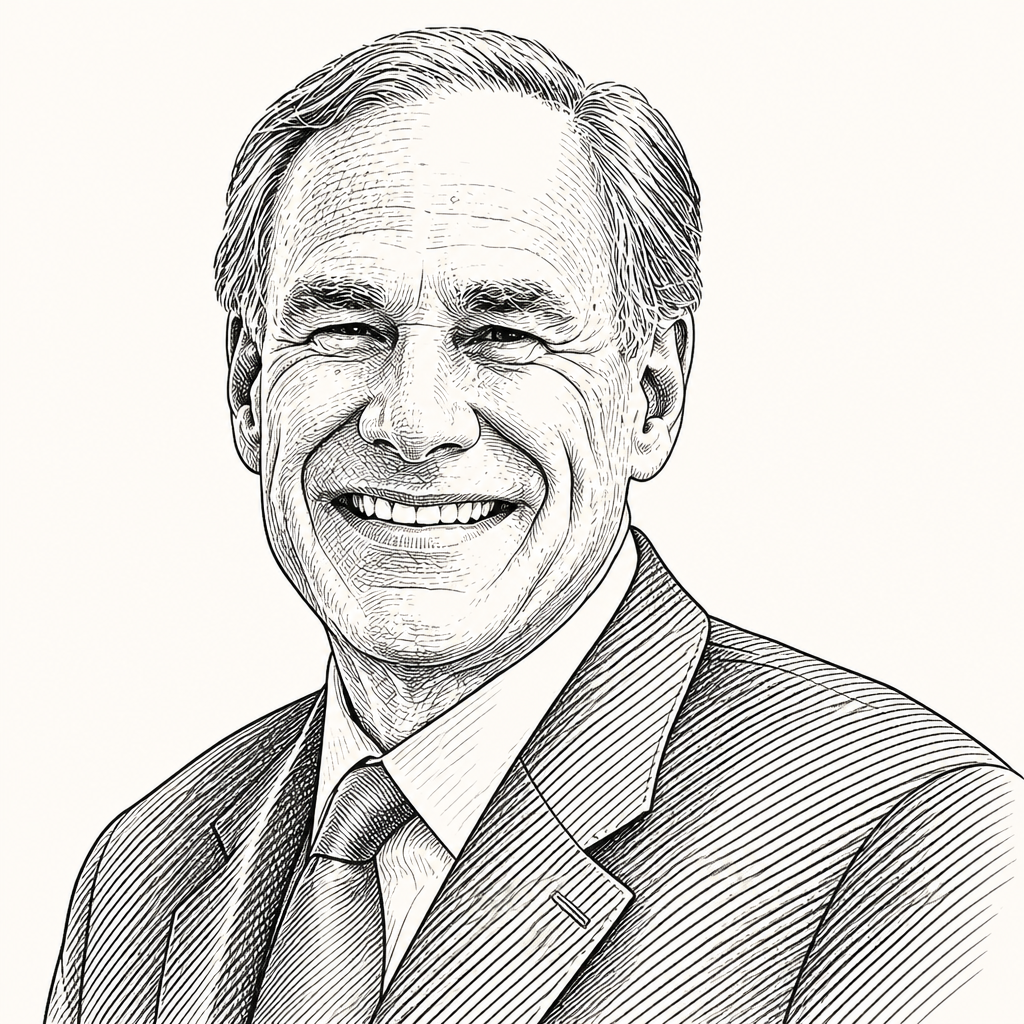
The commission’s enabling legislation says it was established to strengthen the state’s leadership in civil, commercial and military aerospace and promote innovation in space operations and commercial aerospace. Greg Abbott framed the ambition more simply: “Those who reach for the stars do so from the Lone Star State.”

That total was due to double by the end of the year. The grants shown span manufacturing capacity, orbital research and computing infrastructure.
| Recipient | Grant | Stated use |
|---|---|---|
| Firefly Aerospace | Up to $8.2 million | Central Texas Spacecraft Development Center, expanding spacecraft and lunar-lander production and integration capacity |
| Aegis Aerospace | Up to $10 million | A space-flight-ready advanced-materials manufacturing platform for orbital experiments and demonstrations |
| Axiom Space | Up to $5.5 million | Initial nodes for an orbital data-center architecture in low-Earth orbit |
The grants add state money to an industry already receiving much larger flows of private and federal capital. Loren Grush cites about $55 billion of space-industry investment last year, compared with NASA’s inflation-adjusted annual budget of roughly $24.4 billion.
NASA contracts turn public demand into commercial runway
NASA’s changing procurement role is central to the Texas strategy. Historically, Grush says, the agency would specify a rocket or spacecraft, cover contractors’ costs, oversee its design and development, and own the finished vehicle. It is shifting toward acting less as an overseer and more as a customer: companies build systems and NASA buys missions or services, while still helping direct where the industry goes.
That transition is unusually tangible in Houston. Vanessa Wyche says commercial industry is responsible for building the landers in the Artemis era, even as NASA remains responsible for integrating the broader program and its planned moon base. Johnson Space Center’s 11,000 employees are integral to that program, according to Tom Gibson.


NASA’s Commercial Lunar Payload Services program, begun in 2018 and managed from Houston, puts the customer model into practice. The program outsources lunar-payload missions to companies in an effort to reduce exploration costs and encourage innovation and growth. Grush describes the value of the arrangement in financial terms: companies receive a substantial initial NASA investment and the prospect of a paying customer for a flight—an especially meaningful form of de-risking for vehicles that require years of expensive development.
SpaceX supplied the precedent. Gibson says its first $1.6 billion NASA contract in 2008 saved it from bankruptcy. NASA funding helped develop Falcon 9, Grush says, after which SpaceX diversified; Starlink is now its primary revenue source. Newer Texas companies such as Firefly are pursuing a similarly diversified mix of commercial, defense, scientific-exploration and partnership work across launch, lunar and on-orbit services.