Russian Arms Demand Drove North Korea’s $22 Billion Windfall
 Donald Trump
 Adam FarrarSoo-hyang Choi
 Andrei LankovBloomberg OriginalsFriday, August 7, 20265 min read
Bloomberg Economics estimates that North Korea earned as much as $22 billion abroad from 2022 to 2025, nearly four times its revenue in the previous four years, despite sweeping sanctions. The source argues that Russia’s demand for weapons has supplied the largest windfall, while cryptocurrency theft and trade with China provide convertible currency and essential imports. Adam Farrar says the result is not broad prosperity but greater capacity for Kim Jong Un’s regime to fund military modernization and preserve its rule.
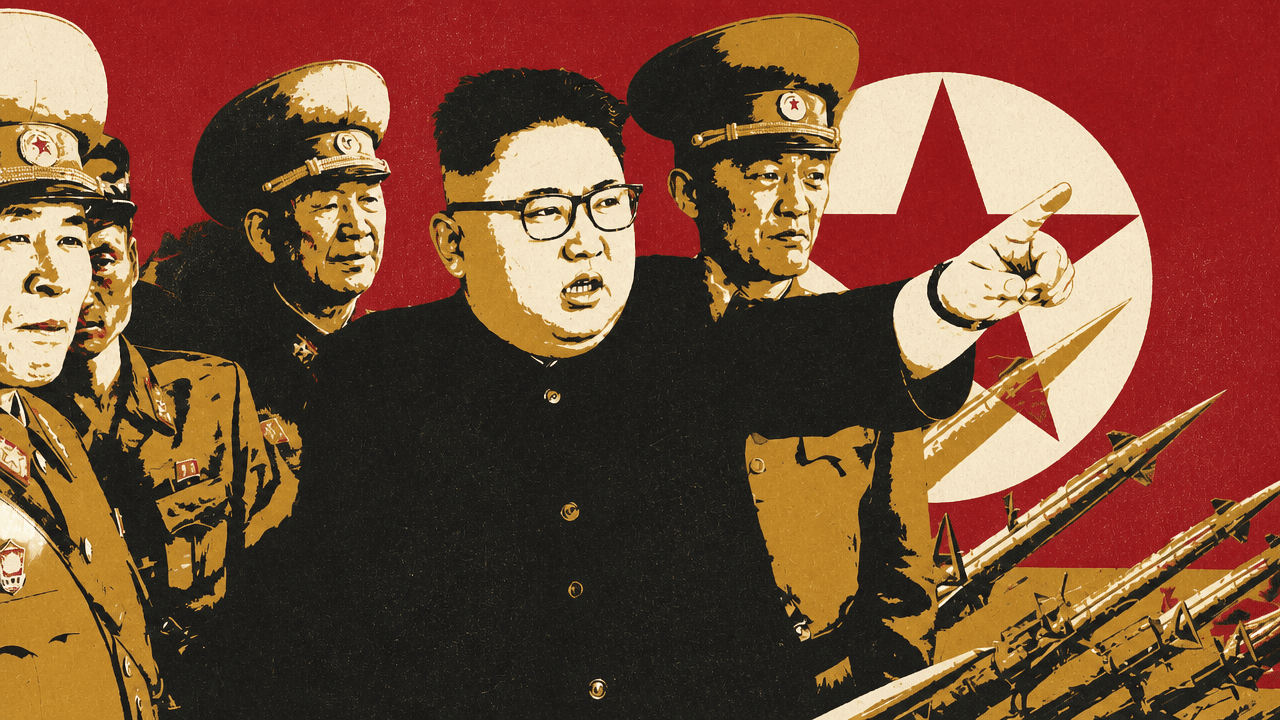
Russia’s demand for arms has turned sanctions into a less binding constraint
North Korea brought in as much as $22 billion in foreign earnings between 2022 and 2025, according to Bloomberg Economics—nearly four times the total of the preceding four-year period. The gain reflects a changed mix of revenue: arms sales to Russia, state-backed cryptocurrency theft, and a trading relationship with China that remains central to the economy.
The country has not become broadly prosperous. Soo-hyang Choi stresses that North Korea remains one of the world’s most impoverished countries. Adam Farrar puts its GDP at roughly $30 billion, compared with around $1.9 trillion for South Korea—an economy about 60 times larger. But the regime has gained foreign currency, access to imported goods and technology, and more room to fund military priorities.
| Economy | Estimated GDP |
|---|---|
| North Korea | ≈$30B |
| South Korea | ≈$1.9T |
Russia’s war in Ukraine supplied the largest new source of money. The Center for Strategic and International Studies estimates that North Korea may have earned as much as $12.8 billion from arms sales to Russia alone. Russia was using munitions faster than anticipated and needed another source of Soviet-era artillery; North Korea had both substantial stockpiles and the capacity to manufacture more.
The returns may not all be cash. The source says it is unclear how much comes back as money and how much arrives as goods or technology. North Korea’s recently unveiled destroyer appears to use Russian air-defense technology; the source estimates comparable equipment would cost more than $20 million and suggests it was transferred from Russia.
The relationship may also improve North Korea’s weapons industry. Weapons sent to Ukraine can be tested in combat conditions and upgraded, potentially making them more saleable to other countries. The added money and technology give the regime greater ability to expand conventional capabilities that had lagged as it directed much of its resources to its nuclear program.
Adam Farrar describes the strategic consequence directly:


A rich North Korea has the potential to be a much larger threat.
Crypto theft supplies convertible currency for the regime’s procurement
Arms sales are the biggest new windfall, but cryptocurrency theft gives the regime a different asset: liquid foreign currency that can be converted and spent across its procurement needs.
Farrar says North Korea has developed the largest state-sponsored hacking units focused on cryptocurrency targets. Estimates for 2025 put the proceeds at more than $2 billion a year. Private researchers cited by the source estimate that North Korean groups accounted for roughly 30% of global cryptocurrency theft in 2017. After a pandemic-era interruption, their share is thought to have risen above 70% by 2026 year to date.
The theft is useful because the proceeds can be turned into conventional currencies. Farrar says they are eventually cashed out into euros, dollars and renminbi, then moved to bank accounts primarily outside North Korea to purchase goods for the regime. Unlike an arms transfer tied to one buyer and one conflict, crypto proceeds can support a wider range of imports and state activities.
That flexibility matters alongside North Korea’s recent economic recovery. The Bank of Korea data shown in the source traces a deep contraction after a brief expansion in 2016, when UN sanctions and pandemic lockdowns pushed the economy into a prolonged slump. GDP growth resumed rapidly by 2023. Farrar says that, in the strongest post-pandemic years, the foreign currency available to the regime was almost 60% higher than at pre-sanctions levels.
China remains the supply line beneath the new revenue streams
China provides the underlying economic relationship that crypto and arms income cannot replace. Soo-hyang Choi says 98% of North Korean trade comes from China. It is the main destination for North Korean exports, the main source of imports, and a critical supplier of energy resources, according to Farrar.
Beijing supports its neighbor to the extent sanctions allow partly because it wants to avoid an economic collapse, refugee flows and regional instability. Andrei Lankov says China sometimes tolerates North Korean actions that it dislikes because it needs a stable North Korea and is willing to pay for that stability.
China’s role also matters because Russia’s war-driven demand may not last indefinitely. The source describes Kim as trying to restore his relationship with Xi Jinping while benefiting from the Russian partnership. Choi sees Kim’s appearance alongside Xi and Vladimir Putin at a Beijing military parade as evidence that he has strategically navigated a changed geopolitical environment—one far removed from the isolation that followed the failed 2019 Hanoi summit.
At that summit, Kim and US President Donald Trump discussed exchanging sanctions relief for dismantling North Korea’s nuclear program. The talks collapsed. Trump said North Korea sought to have sanctions lifted “in their entirety,” which the US could not accept. Lankov’s assessment was that Kim’s economy then “hit the wall because of the sanctions.” The subsequent recovery came not through a negotiated nuclear settlement, but through revenue channels and geopolitical relationships that made sanctions less constraining.
The objective is survival, with more resources for both nuclear and conventional power
The new revenue mix does not change the regime’s core priorities. Russia-derived money and technology can support military modernization; crypto provides convertible funds for purchases; Chinese trade and energy supplies help sustain the wider economy. Together, those channels give Kim’s government greater capacity to pursue nuclear development while rebuilding conventional forces and insulating itself against pressure.
Andrei Lankov frames the hierarchy as survival before prosperity:
They would like to be rich, but in order to be rich, you have to be alive first.
The source says North Korea views the US and Israeli attacks on Iran as confirmation of its belief that nuclear weapons are the only reliable guarantee of regime security. That logic helps explain why a windfall is consequential even in a country that remains economically small: it increases the resources available to preserve the state and its military deterrent rather than necessarily improving living standards.
It also supports dynastic continuity. Kim has ruled for 15 years while preserving the military-first, totalitarian vision associated with his father, Kim Jong Il, and grandfather, Kim Il Sung. His daughter, believed to be Kim Ju Ae, has become increasingly visible at military events and accompanied him on a Beijing trip. The source presents those appearances as evidence that she is being prepared for succession, making the regime’s financial resilience part of a longer project of family rule.