Germany’s Industrial Model Is Buckling Under Energy Costs and Chinese Competition
 Stephen Engle
 Donald TrumpMarilen MartinMartin AdemmerFriedrich MerzBloomberg OriginalsFriday, August 21, 20266 min read
Germany’s industrial model has become a drag on growth, Bloomberg’s Marilen Martin argues, as the advantages that sustained it—cheap Russian gas, open global trade and leadership in high-value manufacturing—have eroded. Economist Martin Ademmer says the decline in output since 2018 increasingly reflects a lasting loss of economic potential rather than a cyclical downturn. Higher energy costs, Chinese competition and a more protectionist trading environment now leave Berlin trying to defend industry with limited fiscal and political room to maneuver.
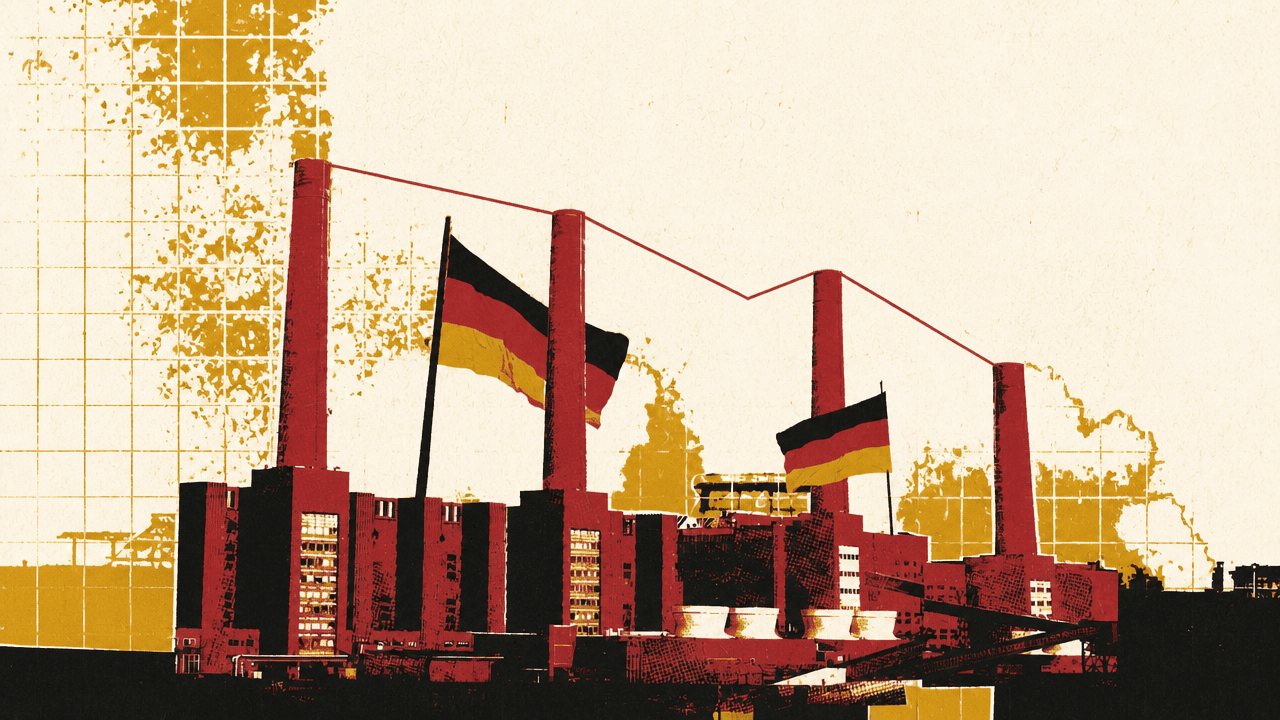
Germany’s industrial model has become a drag on growth
Marilen Martin puts the diagnosis bluntly: “The economic model is not working anymore.” Germany’s industrial base remains unusually central to its economy, accounting for roughly 20% of total value added, according to Martin Ademmer—a larger share than in France, Spain, or Italy. Its reach also extends into business services and supply chains.
That concentration once made Germany Europe’s engine. Manufacturers sold premium cars, machinery, engineering products, and chemical inputs abroad. Now the dependence magnifies weakness: when factories thrive, Ademmer says, the economy tends to grow; “the reverse is also true.”
Industrial production peaked in 2018 and has declined since Covid. The earlier pattern matters: labor-market reforms beginning in 2003 helped revive output, which then climbed for roughly a decade after the global financial crisis. The subsequent decline is therefore not just a weak quarter or a post-pandemic adjustment. Germany’s GDP is also 6% to 7% behind a weighted combination of Korea, Japan, Finland, Canada, and Sweden over the past two decades.
For Ademmer, the duration changes the diagnosis. The weakness increasingly looks not like a cyclical dip but like a lasting loss of economic potential. Big companies are announcing restructurings, factory closures, and layoffs, Martin says. Bloomberg headline cards shown alongside the account reported BMW severance packages tied to 8,000 job cuts† and Volkswagen plans that could involve 100,000 cuts and plant closures†.
Three advantages disappeared in quick succession
Germany’s earlier success rested on three pillars, according to Martin Ademmer: cheap Russian gas, open rules-based global trade, and industrial leadership in machinery, automotive production, and engineering. Each has developed structural problems.
The energy shock was the most immediate rupture. Russia had supplied about half of Germany’s natural-gas demand, according to Kamil Kowalcze. When that supply stopped after Russia’s full-scale invasion of Ukraine, German energy costs rose above those in the US and China. Europe’s industry relies heavily on imported fossil fuels, Martin says, and chemical producers cannot quickly replace oil and gas because they use them both for energy and as feedstock.
They need gas and oil not only for energy, but they need the carbon molecules.
Higher energy costs have taken a particular toll on chemicals, Ademmer says. Martin estimates that nearly 10% of European chemical capacity was earmarked for closure between 2022 and 2025. At BASF’s Ludwigshafen complex, one of the world’s largest chemical sites, employment has fallen below 30,000 for the first time since the 1950s. At the same time, Martin says, BASF built a new plant in Zhanjiang, China, for billions of euros.
The implication is not simply that German firms face a higher utility bill. An industry built around energy-intensive processes is losing competitiveness in activities that have long anchored regional jobs, supplier networks, and export capacity.
China is no longer only a customer
Germany weathered—and benefited from—the first “China shock” of the early 2000s. As Chinese exports expanded after China joined the World Trade Organization, pressure landed most heavily on low-tech, labor-intensive industries. Germany’s high-value manufacturing base was less exposed, while China became one of its largest customers.
The newer shock is different. China has moved up the value chain and now competes with German producers in machinery, electrical engineering, energy infrastructure, industrial components, chemicals, and cars. Germany’s problem has two sides: it is losing ground in China as an export market while Chinese imports rise in the same industrial categories.
Germany’s exports of several industrial products to China fell about 10% in 2025 while imports of those same items increased. The relationship shifted from a German trade surplus a few years earlier to a notable and widening deficit. Vehicle exports to China fell by more than 30% last year, while Germans are buying Chinese EVs.
| Germany’s trade with China in 2025 | Change shown |
|---|---|
| Exports across several industrial categories | Down about 10% |
| Imports of those same items | Increased |
| Vehicle exports to China | Down more than 30% |
| Overall direction of the relationship | From German surplus to a widening deficit |
Solar panels are an earlier example of the shift: production that existed in Germany in the 2000s moved largely to China. Electric vehicles raise a more consequential version of the same problem. German companies were complacent about Chinese EVs for too long, according to the account; they have switched gears, but catching up may be difficult.
China’s control over critical minerals and rare earths adds a supply-chain vulnerability. The concern described is not necessarily a complete cutoff, but delays. That uncertainty alone can prevent companies from planning reliably.
Berlin must defend industry without the old room to maneuver
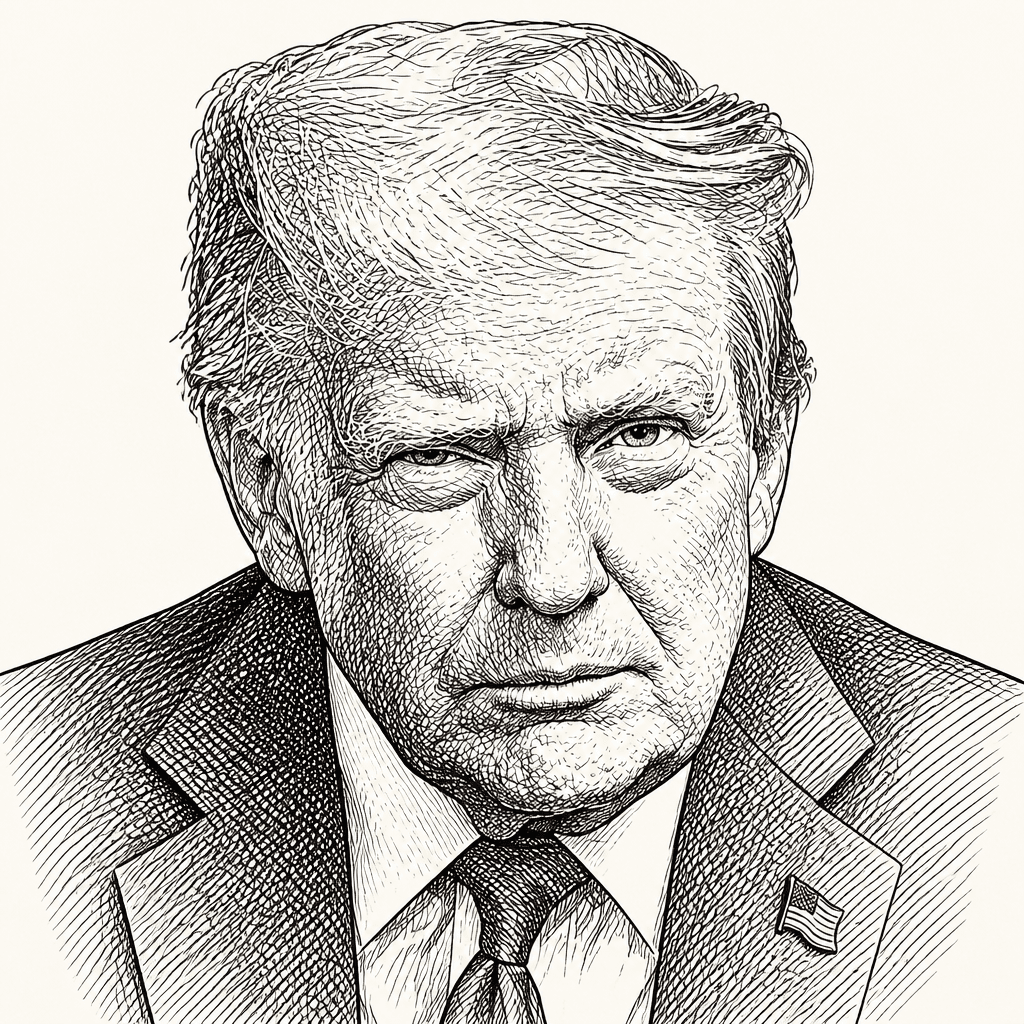
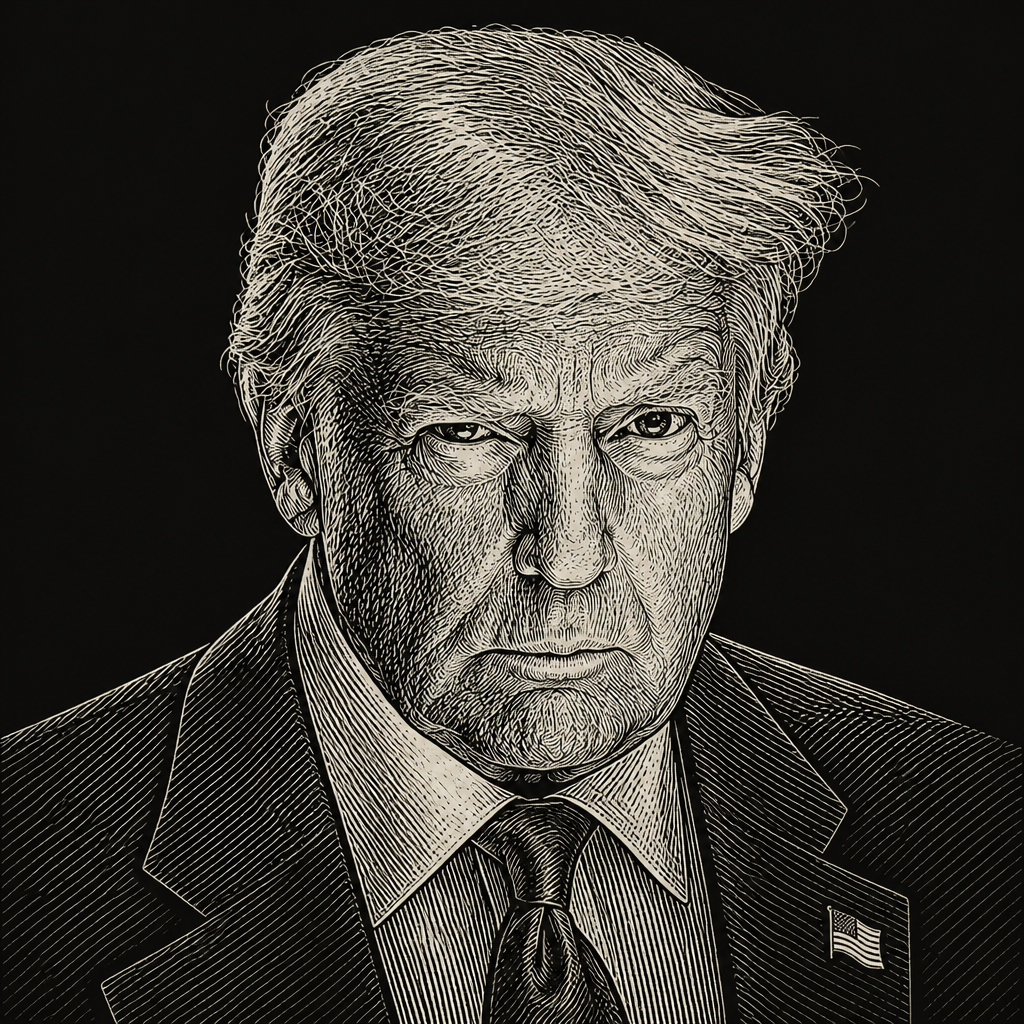
Germany faces these pressures as trade becomes more fragmented and protectionist. Donald Trump ordered his administration to consider reciprocal tariffs on trading partners and told companies that building plants in the US would spare them tariffs. For an export-led industrial economy, that is a more hostile environment.
Donald Trump framed the auto imbalance directly: “You know how many cars we have? Mercedes-Benz and BMW. They don't want anything from us.”
Germany cannot independently create whatever subsidy regime it wants because it is part of the EU. It supported industry during the acute energy crisis in 2022 and 2023, but those measures were temporary and expensive. Permanent subsidies would require a large share of the government budget, while the economic and political case remains unresolved.
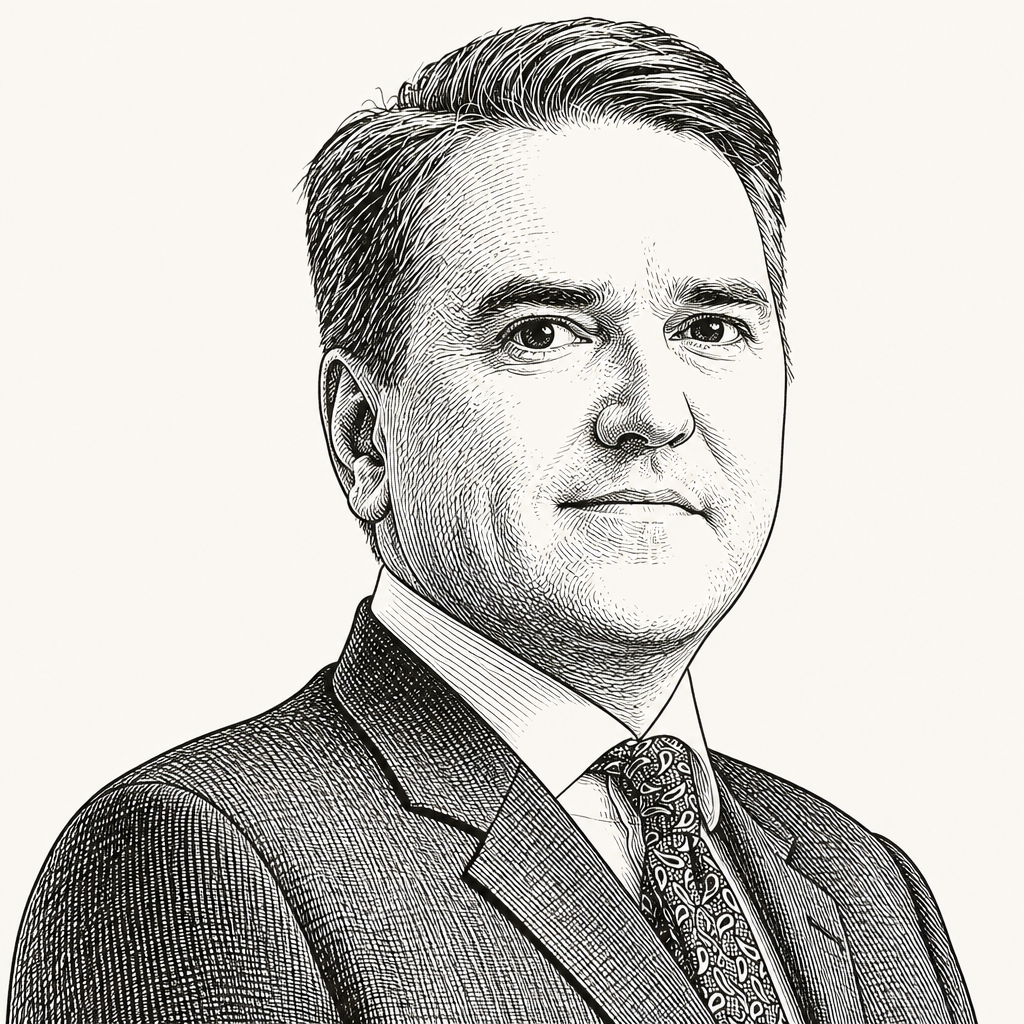
Chancellor Friedrich Merz loosened the debt brake and introduced a large defense and infrastructure spending package, though its broader effects will take time to filter through the economy. He has also criticized Europe’s pace of industrial execution.
We are still far too slow. China builds within a few months. In the EU, it takes years.
Merz’s China policy captures the broader constraint. Stephen Engle says Merz has been fairly hawkish toward Beijing, but must balance protecting German interests with continued engagement with China.
Industrial decline risks becoming a European political problem
Workers in less competitive industrial sectors face depressed or muted real-wage growth. Companies also confront a shrinking, aging workforce. Without stronger growth, Germany may struggle to fund its expanded social system, which depends on tax revenue from successful companies; social benefits, pensions, and healthcare are already being cut, according to the account.
The political feedback loop is stark. Fear of decline can fuel support for political extremes; fragmentation can make reform harder; and weaker reform can further undermine growth, tax revenues, and public trust.
It's a moment in history when you don't act now, Europe or Germany might be as well a huge open-air museum.
Germany’s weakness would not stop at its borders. Its manufacturers sit at the center of integrated European supply chains, and other countries depend on German industrial production and demand. Whether it remains Europe’s economic engine depends in part on whether industry and manufacturing excellence can remain in the country.
There are signs of improvement: Germany saw very modest GDP growth in 2025, and its stock market reached record highs. But the central task remains reinvention—adapting an industry-heavy economy to higher energy costs, rapid technological change, and geopolitical fragmentation. German companies are looking to industrial AI as one possible way to develop an edge against US and Chinese models.