China’s Brain-Chip Startups Race Toward Commercial Medical Use
 Elon MuskMr Zhang
 Tiger Tao
 Ike Swetlitz
 Amber TongBloomberg OriginalsMonday, June 8, 20267 min read
Bloomberg Primer reports on the race to commercialize brain-computer interfaces through NeuroXess, a Shanghai startup testing an implanted device in a paralyzed patient. The source presents BCI less as near-term human enhancement than as an assistive medical technology still facing safety, regulatory and reimbursement tests, while arguing that China’s policy support could help its companies compete with better-funded US rivals.
The near-term promise is independence, not enhancement
A little over eight years after an accident left him paralyzed from the neck down, Mr Zhang is training with a brain-computer interface from Shanghai-based NeuroXess. He asked not to have his face filmed. In the demonstration shown, he controls a wheelchair “with our mind,” as he puts it, and describes the goal plainly: once he is well trained, “we can move freely. I can go anywhere I want.”
The implant has also changed more ordinary parts of his day. Zhang says he can use high-tech equipment to control objects, click on Taobao, order takeaway through Meituan, and listen to music and novels. “It has improved my quality of life,” he says. He is also training to control a robotic exoskeleton on his hand. According to NeuroXess founder and chief scientist Tiger Tao, this kind of technology could one day help Zhang walk again.
That gap — between current assistive use and the larger claim that BCIs could reshape human capability — runs through the field. Elon Musk framed Neuralink’s ambitions in civilizational terms during a June 2025 presentation whose slide listed goals including reducing human suffering, enhancing human capabilities, understanding and expanding consciousness, and mitigating the risk of artificial intelligence. Musk said, “Ultimately, I think this helps mitigate the civilizational risk of artificial intelligence.”


The medical use case is more concrete. For Zhang, the future he names is eating, drinking, walking, and eventually taking care of himself in daily life. Asked whether he still wants to stand up again, he answers yes.
BCI is old science entering a commercial race
Amber Tong emphasizes that the recent buzz around brain-computer interfaces does not mean the underlying idea is new. The term was coined in the 1970s by an American scientist, Jacques J. Vidal, whose paper “Toward Direct Brain-Computer Communication” was shown on screen. Tong describes the early concept as taking electrical signals measured by EEG, mapping them onto patterns, and decoding how they correspond to movement.


Ike Swetlitz defines a brain-computer interface as technology that allows the brain to communicate directly with a computer or another electronic device, bypassing the rest of the body. According to Swetlitz, human use of implanted chips to read brain activity did not arrive until the early 2000s.


The basic mechanism is straightforward in description and difficult in practice. Neurons drive actions such as speaking, eating, or moving a hand by sending electrical signals. BCIs read and decode those signals, then use them to control an external device such as a tablet or prosthetic limb. Some systems are implanted into the brain or placed on top of it; others sit on the scalp.
Tong stresses that brain data is noisy regardless of how it is measured. BCI companies therefore rely on algorithms to filter background activity and identify the brain’s intended instructions. She also says the large amounts of brain data collected through these systems may help scientists better understand the human brain, and that many researchers believe such data could help AI researchers build different kinds of artificial intelligence systems.
The commercial race is unevenly financed. In the US, Tong says BCI companies are estimated to have raised $2.75 billion collectively. Chinese and European companies have raised only a fraction of that. But China’s sector is growing: funding for Chinese brain-chip startups more than doubled in 2025 compared with the prior year, and in March 2026 China approved its first invasive BCI for commercial use.
| Market signal | Figure or status | Source shown |
|---|---|---|
| US BCI company fundraising | $2.75 billion collectively | Bloomberg / PitchBook (2025) |
| Chinese BCI company funding | More than doubled in 2025 compared with the year before | ITJUZI (April 2025) |
| China commercial approval | First invasive BCI approved for commercial use in March 2026 | Bloomberg |
NeuroXess chose a less invasive implant to trade signal depth for durability
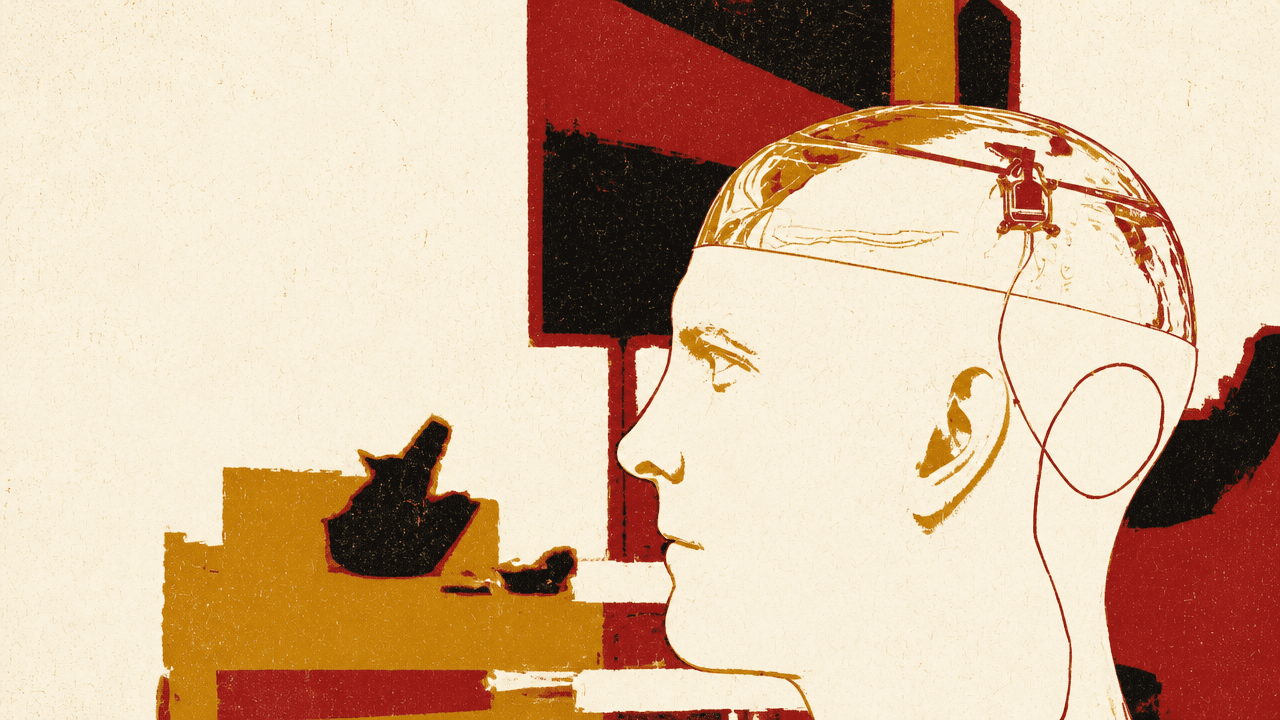
Tiger Tao says NeuroXess built its device especially for ALS patients or people with high-level spinal cord injuries. The system uses a strip of electrodes that sits on top of the cortex to record brain signals. Those electrodes connect to a brain chip for signal processing, which in turn connects to an internal control unit in the chest. The control unit processes and wirelessly transmits data to a computer and houses the battery.


Tao describes the charging arrangement as familiar: a wireless charger, similar to one used for a cellphone, is placed on top of the chest and aligned with the battery.
More than 50 patients have tested different versions of NeuroXess’s technology. Zhang has lived with it the longest, since October 2023, and spends several hours a day training to learn new skills with the BCI. His current test is designed to run for a full year, which the source presents as critical for evaluating long-term safety and effectiveness. After that, Zhang could remove the device or keep it. NeuroXess claims the implant could last three years.
The safety concern is not incidental. The source describes an implant in the brain as potentially a “ticking time bomb” because the brain can form scar tissue around it over time. That scarring can damage brain cells and block signals to the device. NeuroXess’s answer is a less invasive electrocorticography-style strip on the brain surface, intended to reduce scarring and maintain a usable signal.
The design choice does not remove the regulatory burden. Tao says the device will be classified as a Class III medical device, “the hardest to get in terms of approval.” He estimates it will take another one and a half to two years to secure approval from China’s National Medical Products Administration, which he describes as the country’s FDA equivalent.
China’s policy support may compensate for thinner venture funding
China’s BCI effort is not presented as a purely private startup race. The source places it inside the country’s five-year planning system, where top officials outline key areas for economic and social development. It draws a comparison to new energy vehicles: China highlighted EVs for investment over past decades, and the source says China now dominates most of the global EV market.
In the 15th Five-Year Plan for 2026–2030, brain-computer interfaces are listed as one of six “strategic industries of the future,” alongside quantum technology, biomanufacturing, green hydrogen and nuclear fusion, embodied intelligence, and 6G communications. The expected benefits shown include clearer guidelines, faster clinical trial reviews, better coordination, and a $165 million brain science fund.
That policy support matters because Chinese BCI startups have less venture funding than US peers. Tong says the government backing can help them accelerate development despite the funding gap.
NeuroXess is also positioning itself for scale. The company has already broken ground on a manufacturing facility and says it will make 10,000 devices a year. It has also collaborated with Xiaomi to integrate its BCI with a broader universe of smart-home devices. The source notes that other startups have similar partnerships with technology companies so patients can begin controlling devices with their minds; a Wall Street Journal screenshot shown on screen reported that Apple would support brain-implant control of its devices.
The business model and privacy risks remain unsettled
The largest unresolved test is whether BCIs can become viable businesses and fulfill their promises in commercial, real-world settings. The source raises payment as an open question: how these devices will be covered, what insurance will pay, and whether reimbursement will be enough to cover costs.
BCIs are described as expensive. Bloomberg reported in July 2024 that Neuralink estimated each surgery would bring in $50,000. NeuroXess has not announced a comparable estimate. The business question is whether the market is large enough if BCIs remain medical devices, or whether investors will push for broader availability and marketing.
That broader path raises neural privacy concerns. If BCI technology becomes more widely available, the source asks who has access to brain data and what happens to it. Some jurisdictions are already passing laws to protect neural privacy; a New York Times headline shown on screen read, “Your Brain Waves Are Up for Sale. A New Law Wants to Change That.”
The risks extend beyond commercial data handling. The source notes fears that BCIs could be used or abused to alter consciousness against people’s will or deployed in military settings to create soldiers with enhanced cognitive abilities. It connects those concerns to history and current research: the CIA ran illegal mind-control experiments during the Cold War; DARPA has funded BCI studies that could allow hands-free control of drones; and China has funded brain research for military applications.
For now, the trial at NeuroXess is not about superhuman cognition or military control. It is about a paralyzed patient practicing for hours each day to move through the world, operate everyday digital services, and perhaps regain more bodily independence. The wider industry is racing toward approval, scale, and market access. Zhang’s benchmark is more immediate: whether the technology can help him stand, walk, and care for himself.