AI Infrastructure May Pay Off Before Its Applications Are Clear
 Francine Lacqua
 Tim Stenovec
 Donald Trump
 Scarlet FuLin Jian
 Stephen SchwarzmanBloomberg OriginalsSunday, October 25, 202610 min read
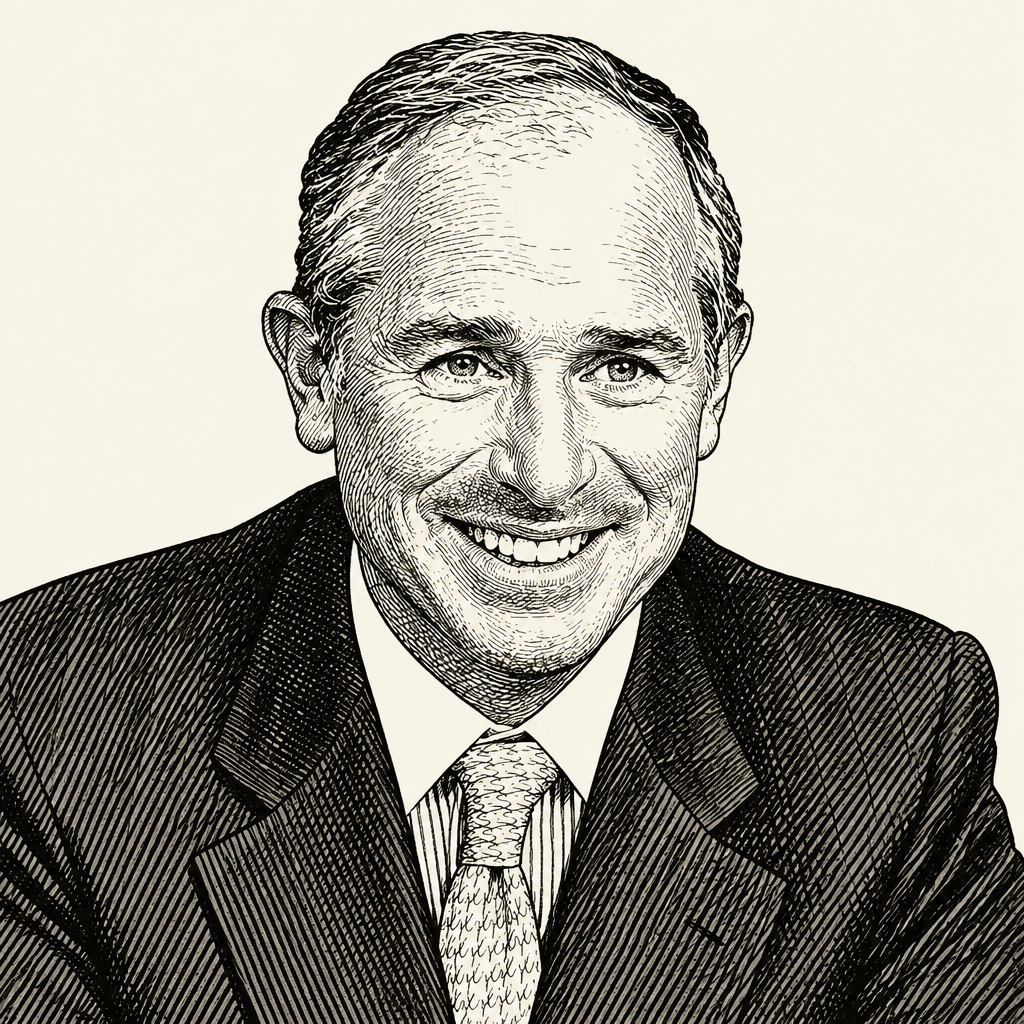
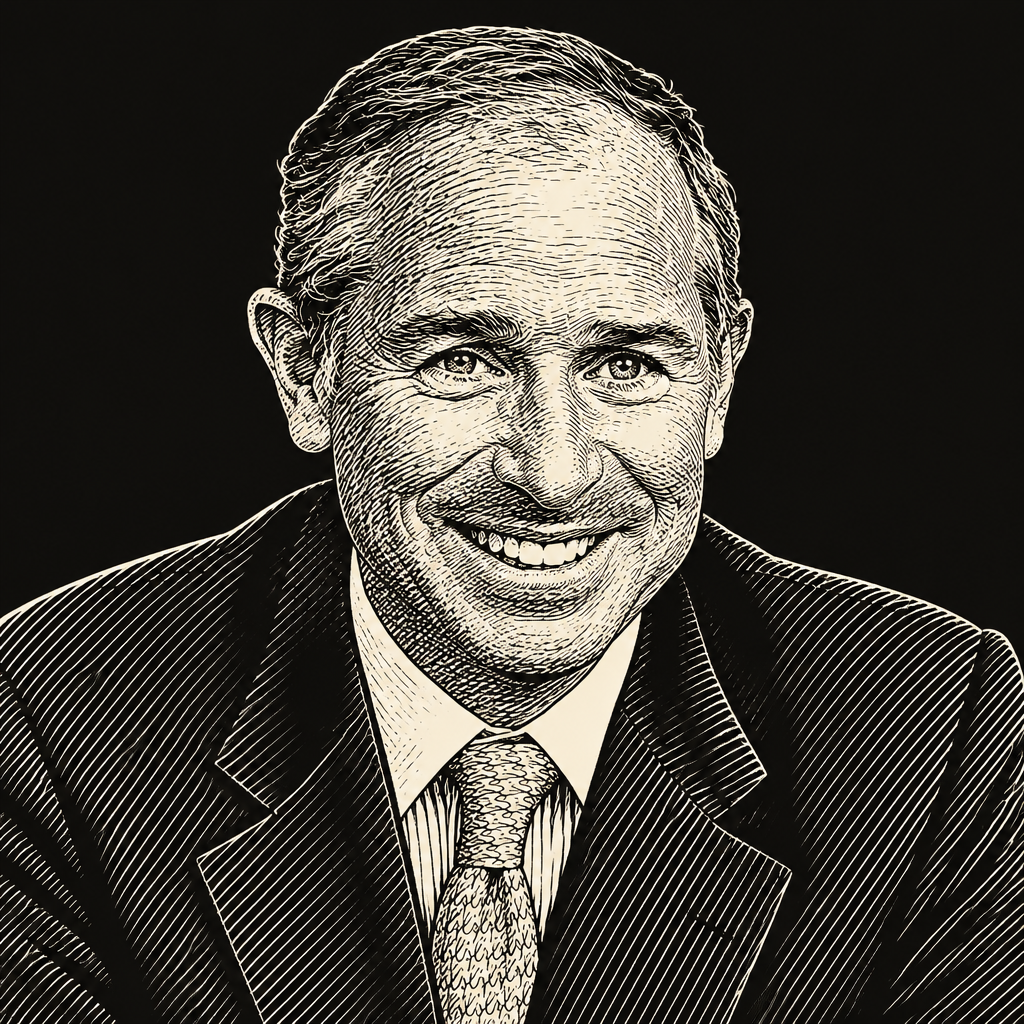
Blackstone chief executive Stephen Schwarzman says the firm’s early AI investments grew out of a broader strategy: use information from its businesses to spot economic shifts before they appear in public data, then invest in the infrastructure those shifts require. He points to Blackstone’s $10 billion purchase of a data-center company in 2021 as a bet on AI’s power and computing needs, while arguing that the commercial returns may take years to emerge.

The signal is often what does not fit
Stephen Schwarzman says Blackstone looks for economic shifts by combining information from its businesses with a willingness to investigate anomalies. When a pattern conflicts with his understanding of the world, he says, he pays attention rather than dismissing it. “Those pieces that don’t fit tell you the future,” he said. Blackstone, he added, collects information from each of its businesses every week.
That approach can give a large investor a view of economic activity before it appears in public data. As Francine Lacqua explained, Blackstone’s portfolio companies give the firm exposure to businesses across healthcare, technology, consumer markets and other sectors. Unlike an asset manager that typically holds small stakes in publicly traded companies, Blackstone often takes majority or controlling stakes in private businesses.


Schwarzman’s example of an unexpected signal came from a bus ride in China in 2015. He was sitting with Alibaba founder Jack Ma, who began talking about artificial intelligence. Schwarzman said he initially did not understand what Ma was describing. He later asked an academic contact, then the head of MIT, about it. The answer, he recalled, was that Ma was understating AI’s importance: “We invented AI at MIT.”
Blackstone acted on that view by buying a large data-center company in 2021 for $10 billion. Schwarzman said the business is now 15 times larger and that Blackstone is the world’s largest owner of data centers. That position, he said, brings the firm into contact with six hyperscalers and gives it a broad view of activity across the AI infrastructure ecosystem.
The investment also pointed to a constraint that Schwarzman says the firm recognized early: the developed world would be short of electricity as data-center demand grew. Blackstone has since become a major investor in the area. The chain of reasoning is central to his account of investing ahead of a shift: learn from a wide network, notice an implication others may not yet be acting on, and invest in the infrastructure the change will require.
Schwarzman has applied a similar focus to interest rates. In a Bloomberg interview in January 2024, he said he was confident rates would come down, but that Blackstone did not care exactly when. What mattered, he said, was the transition from a period of rising rates to one of falling rates.
AI’s returns may arrive after its infrastructure
The scale of current AI investment raises a question: whether the expected commercial returns will justify the capital being spent. Lacqua noted that AI requires chips, data centers, energy, cooling, fiber-optic cable and critical minerals, while the business case for many applications remains uncertain. Bloomberg News’ Tim Stenovec reported that OpenAI had closed a $122 billion funding round at an $852 billion valuation, intended to support spending on chips, data centers and talent. Bloomberg Radio’s Scarlet Fu reported that Anthropic was in talks to raise $30 billion at a possible $900 billion valuation.
Asked whether those valuations would be borne out, Schwarzman compared AI’s infrastructure buildout with the development of electric power. Thomas Edison invented the electric light bulb in 1882, he said, but making electricity broadly useful required a grid, which took about 40 years to build. The people constructing the grid did not know that radio and television would later make use of it. For Schwarzman, infrastructure may precede products whose value is not yet apparent.
He said the returns would vary across stages. Judging the grid by its first few years of returns, he argued, would have missed its longer-term value. But the analogy is not a promise that every early investment will succeed: some investors who commit capital at the beginning, he said, will not make it to the end.
The future is always key to having a successful present.
Schwarzman’s case is that infrastructure needs to be built before the full range of applications—and their economic returns—can be known. He presented that uncertainty as part of the investment, not as evidence that each company or valuation is sound.
Private credit faces a test of confidence
Blackstone’s growth has tracked the expansion of private markets. The firm manages $1.3 trillion and held more than 12,500 real-estate assets and 250 portfolio companies in July 2026. These investments are not all traded openly, making their value and performance harder for outsiders to observe than those of public stocks and bonds.
One major private-market business is private credit: direct loans made by non-bank lenders to companies. Banks pulled back from some higher-risk lending after the 2008 financial crisis, creating room for firms such as Blackstone to lend to businesses banks could no longer serve. Lacqua put the market’s current size at $1.8 trillion and said it could double by 2030.
The concern now is partly about what AI could mean for software companies that borrowed from private-credit funds. If a company’s products become outdated quickly, investors may question the value of its loans. Because those loans rarely trade, investors have less visible market pricing to consult. Some investors have sought to withdraw money from funds with significant software exposure. When redemption requests exceed preset limits, Blackstone and other firms have restricted withdrawals. Lacqua described the limits as intended to avoid forced asset sales and protect value; critics see them as evidence that the asset class may be riskier than investors understood.
A Bloomberg graphic comparing selected funds reported second-quarter 2026 redemption requests of 17% for Cliffwater, 10% for Blackstone and 9.8% for Partners Group.
| Selected fund | Redemption requests |
|---|---|
| Cliffwater | 17% |
| Blackstone | 10% |
| Partners Group | 9.8% |
Schwarzman rejected the claim that private credit is showing a general danger. He said the funds were still generating roughly 9% returns and that defaults had risen only a little. He also challenged a report by a small hedge fund that, he said, had panicked the market by predicting that nearly every software company would go bankrupt within two years.
Schwarzman recounted speaking with the head of one of the three major AI companies, who called that prediction absurd. The executive’s view, as Schwarzman relayed it, was that AI companies sell tools and tokens to software businesses, which can use them to improve their operations. Some software companies will be poorly positioned for the change, he said, but that does not mean the whole industry will fail.
Schwarzman expects the effects to take a year or two to play out and thinks the market’s reaction has been excessive. His defence rests on distinguishing a broad panic about software from the more limited risk that some companies will not adapt. But he acknowledged the difficulty once investors have been frightened: “Once you panic people, it’s tough to calm them down.”
Growth, not cost-cutting, is private equity’s case
Blackstone helped move private equity from a niche business into the mainstream. The firm went public in 2007, as pension funds, endowments and corporate funds were putting more money into the industry. In the years after the financial crisis, it also expanded into private credit.
Schwarzman’s account of how private equity makes money emphasizes building companies rather than simply reducing costs. When he entered the business, he said, there were about 10 private-equity firms; now there are thousands. The business has changed, and he described cost-cutting deals as more characteristic of the 1980s and perhaps the 1990s. Today, in his view, the largest gains come from investing in companies and helping them grow faster. Customers, he added, do not reward businesses that cut costs while failing to provide a good product or value.
That defence sits alongside a broader criticism of private equity’s reach. Investment has extended beyond industrial firms and divisions of larger companies to businesses such as pet shops, doctors’ practices and newspapers. WIRED’s Louise Matsakis published an article titled “How Private Equity Killed the American Dream”; Rolling Stone’s Megan Greenwell published “How Private Equity Helped Destroy Local News.” Those claims reflect wider concerns about the industry’s effects on consumers and society.
Housing is a particularly visible point of dispute. Blackstone bought houses after the 2008 crisis through Invitation Homes, converting them into rental properties. Invitation Homes went public in 2017 and later became the largest single-family rental company in America, with more than 80,000 homes. Blackstone no longer owns Invitation Homes but has about 60,000 US homes in its portfolio. Some lawmakers argue that large investors have contributed to a smaller supply of homes available to ordinary Americans and declining affordability.
Asked about public anger over investors buying housing and pricing people out, Schwarzman argued that the problem is a shortage of construction. He said the United States built the same number of houses in 2025 as in 1960, despite the population having more than doubled. The remedy, he argued, is to build more. Private investors own only a few percent of houses, he said, though some ownership is concentrated in better areas.
Blackstone has said it plans to offer loans to support construction of 50,000 US homes a year. Lacqua presented the initiative as an attempt to encourage more building and address the housing shortage, while noting that private equity’s effects differ across industries. Its role in housing remains contested; its investments have also backed growth in sectors such as life sciences and infrastructure.
Ambition does not settle the meaning of success
Schwarzman traced his appetite for building things to watching customers in his father’s curtains-and-linens store in suburban Philadelphia. He worked there from age 10. The job taught him, he joked, that he disliked waiting on customers and was not good at wrapping gifts. But it also gave him a chance to observe how people made buying decisions.
At 14, he urged his father to expand the store nationally, then suggested expanding across Pennsylvania. His father declined both ideas. He was content, he told his son, with a house in the suburbs, two cars and enough money to send him to college. Schwarzman said he realized he was different from his father, but also learned to respect his father’s idea of a successful life. He was annoyed at the time, he acknowledged. The experience taught him that he could not change other people—and that he would have to find happiness elsewhere. He said he loved doing new things and creating and building, in business and beyond it.
The ambition to build also shaped how Schwarzman described risk. Starting Blackstone was, in retrospect, his biggest risk: he did not understand at the time that the business they had conceived had never been done. Yet he called himself conservative and said he did not like doing anything dangerous. His maxim was that there are no brave old people in finance: a person might win by being brave once or twice, he said, but not forever.
He illustrated that caution with Blackstone’s 2007 purchase of a large office complex, a $39 billion deal—about four times larger than the biggest comparable deal he recalled. Because the firm believed prices were high, it sold half of what it had bought on the day of the acquisition, then sold another $10 billion a week later at still higher prices. Blackstone was left with about $10 billion of the original purchase. Schwarzman said that while much of the real-estate market collapsed and nearly every other company that had bought real estate went bust, Blackstone made 2.2 times its money.
He also described succession as a learned management skill, not luck. Running a company, in his account, involves dealing with people, choosing when to resolve internal problems, and managing external pressures including regulation, public scrutiny and the media. Those skills, he said, are not innate for most people.
Schwarzman’s access is aimed at de-escalation
Schwarzman has relationships with leaders including Xi Jinping and Donald Trump. Lacqua said he had told Xi how globalization affected working- and middle-class Americans, and had warned Trump that a trade war on multiple fronts could leave the United States isolated. Schwarzman said he had been involved in issues between the US and China with the primary objective of de-escalation.
He said he attended recent meetings between Xi and Trump in Beijing and did not see either country as a risk to the other, arguing that both understood the potential consequences and that neither was in an offensive mode. The two countries, he said, together account for about 42% of the world’s economy. When asked what major trend would emerge from their relationship, he said both wanted to normalize it.
That view sits against a series of confrontations: Trump’s trade war in his first term; export controls and restrictions on outbound investment under the Biden administration, intended to hinder China’s development of technologies including chips, AI systems and quantum computing; and renewed tariffs under Trump, followed by Chinese retaliation. China restricted exports of critical minerals used in products ranging from electric vehicles and smartphones to guided missiles. The US sought a truce on access to rare earths, Lacqua said, but tensions remained high and trade restricted. How much Trump listens to Schwarzman on China policy, she added, is unknown.
Schwarzman also described a political environment in which he believes the center has weakened. A lifelong Republican, he said it had become difficult to belong to any political party because people no longer listened to one another. He pointed to issues he considered nonpartisan, including following laws and whether children learn in school. The country, he said, should measure outcomes and do what works, and return to a “balanced center.”