Midwest Climate Development Faces a Test of Cost, Trust, and Local Power
 John Mitterholzer
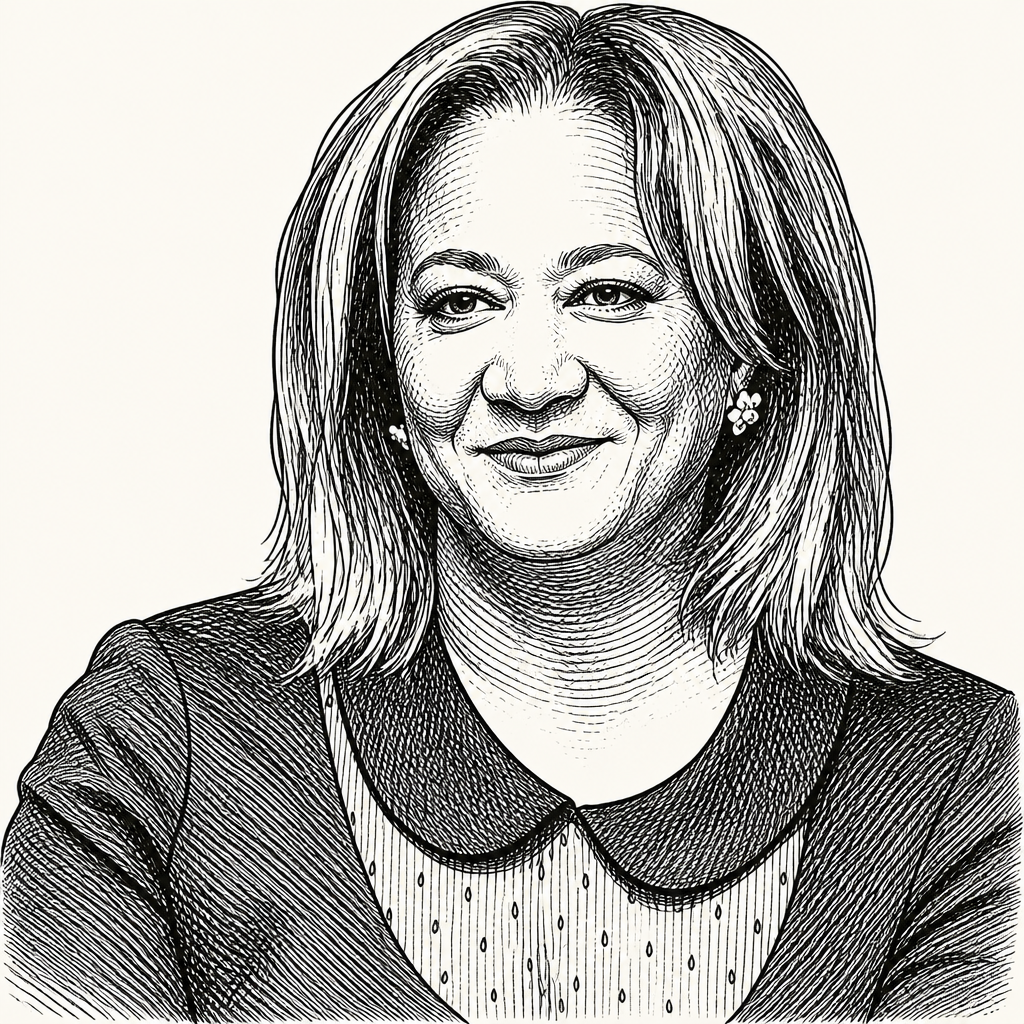
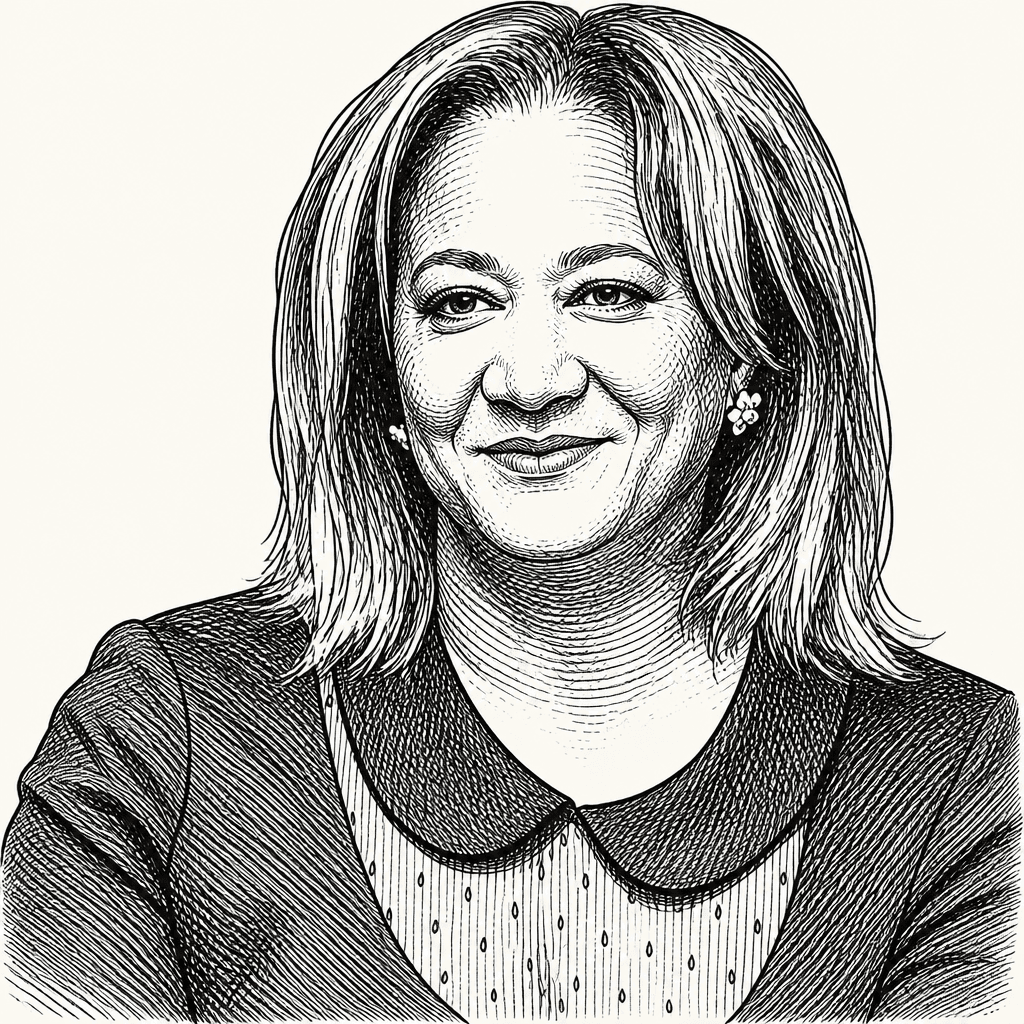 Anika Goss
 Karen Weigert
 Stephanie Lawson
 Michelle ParkerThe Aspen InstituteWednesday, July 29, 202611 min read
Midwest climate and energy development will endure only if it lowers household costs, reduces local risks and gives residents a meaningful say over projects reshaping their communities, according to Anika Goss, Stephanie Lawson and John Mitterholzer. They argue that data centers, solar buildouts and land reuse should be judged not simply by their climate claims, but by their effects on electricity and water bills, heat, pollution and neighborhood control. The practical task, they say, is to equip local governments and residents with the information, financing and leverage to set better terms before opposition hardens.

Whether development lowers costs and shares power is the Midwest’s practical climate test
The Midwest’s climate agenda is being shaped less by abstract emissions targets than by energy bills, flooding, unsafe heat, vacant land, and the terms on which new development arrives. Karen Weigert described the region as responsible for a majority of U.S. emissions while often being overlooked in national climate narratives. The panelists’ common concern was that climate and energy development will not become durable if communities are asked to absorb its costs without seeing clear benefits or having meaningful influence over its terms.
For Anika Goss, climate measures last when they are recognizable as part of a neighborhood’s own ambitions. Detroit Future City, the planning and research organization she leads, emerged from Detroit’s 2012 strategic framework, a community-planning process conducted before the city’s bankruptcy. At that point, Goss said, Detroit had roughly 50 square miles of vacant land. That figure is now about 18 square miles.

Vacancy is not simply a blight problem or a redevelopment opportunity. In low-density neighborhoods, it can become climate infrastructure: stormwater management, urban forests, gardens, and other land uses that reduce heat and manage water. But Goss’s argument was not that cities should impose a green agenda on neighborhoods. The starting point has to be what residents say they need.
A neighborhood may want a family restaurant or a small grocery store. Those are valid development goals, she said. But planning also has to acknowledge that the same neighborhood may need hundreds of trees because it has none, and because children cannot use the outdoors when conditions are both dangerously hot and unsafe. High utility costs, treeless streets, heat islands, and limited outdoor space are not separate from climate readiness; they are the terms through which residents experience it.
Detroit Future City begins with research, education, and engagement before intervention. Goss said communities cannot make meaningful choices about land, energy, or climate when technical information is held by a separate class of planners, scientists, and institutions. She described a recurring division from her years working across the Midwest and Pennsylvania: one table for environmental-justice representatives, often rooted in neighborhoods of color, and another for environmental scientists, planners, and landscape architects with greater access to resources and information.
We can’t gatekeep. This is too complicated for us to have some of this information and only some people get it and others don’t.
That imbalance becomes more consequential as data centers, solar projects, and other energy infrastructure move faster than local planning processes. Goss said communities are playing catch-up with the investment decisions being made around them. The question is not whether communities support clean energy in the abstract. It is whether they have enough information to understand a project’s local effects and enough leverage to negotiate its benefits.
Solar offers one example. A community may favor solar generation while still needing to ask whether an urban array worsens heat-island effects, whether those effects will be mitigated, and whether people living next to the array receive any direct energy benefit. Those questions are not answered automatically by the fact that a project is renewable.
Goss made the same point about data centers. She said rural Michigan communities are seeing solar farms arrive quickly without corresponding energy relief for surrounding residents. Communities facing data-center proposals may be left fighting projects they do not fully understand, only to have their concerns discounted. In Detroit, smaller vertical data centers have operated in urban neighborhoods for some time, sometimes without residents knowing they are there or what their impacts may be.
Indiana offers a more immediate illustration of what happens when development outpaces community confidence. Stephanie Lawson said Indiana had 90 data centers proposed statewide, in addition to 9,000 megawatts then under construction. The projects are rural, suburban, and urban rather than confined to one kind of community.


Lawson said the state had handed companies $8 billion in incentives to attract development while communities saw little direct benefit. At the same time, she said, energy costs had risen 25% in the preceding few years. Indiana still burns more coal than every state except Texas, Lawson said, and coal and gas would supply the power for many new facilities unless policy changes.
The consequences she described are highly local. In Monrovia, a proposed facility had applied to use 179 diesel generators. The concern Lawson described was not only emissions, but noise and diesel exposure for neighbors. In a historically Black Indianapolis neighborhood, she said, a proposed data center would sit 200 feet from surrounding property lines because Indiana lacks permitting rules requiring greater separation.
Lawson said residents in Michigan City, Monrovia, Lebanon, and elsewhere had legitimate fears after seeing what she characterized as serious health effects and human suffering in nearby communities. Their response had become political: she said roughly one-third of Indiana counties had adopted restrictions or moratoriums intended to limit or ban data centers outright. Republican counties were among them.
Her diagnosis was that residents will resist development when companies receive public subsidies while households bear higher electricity and water costs. She pointed to co-location with solar or wind as an approach used in other states, but said Indiana lacked policy incentives to support it. The practical opening is to establish better terms before opposition hardens into blanket prohibition: development that does not shift its utility, water, and health costs onto surrounding communities.
Grid scarcity has turned clean local power into an economic-development question
Energy affordability is already a severe problem in parts of Ohio. John Mitterholzer said research conducted a few years earlier found Cleveland neighborhoods where residents spent 30% of their income on energy. The federal threshold for being considered energy-burdened is 6%.
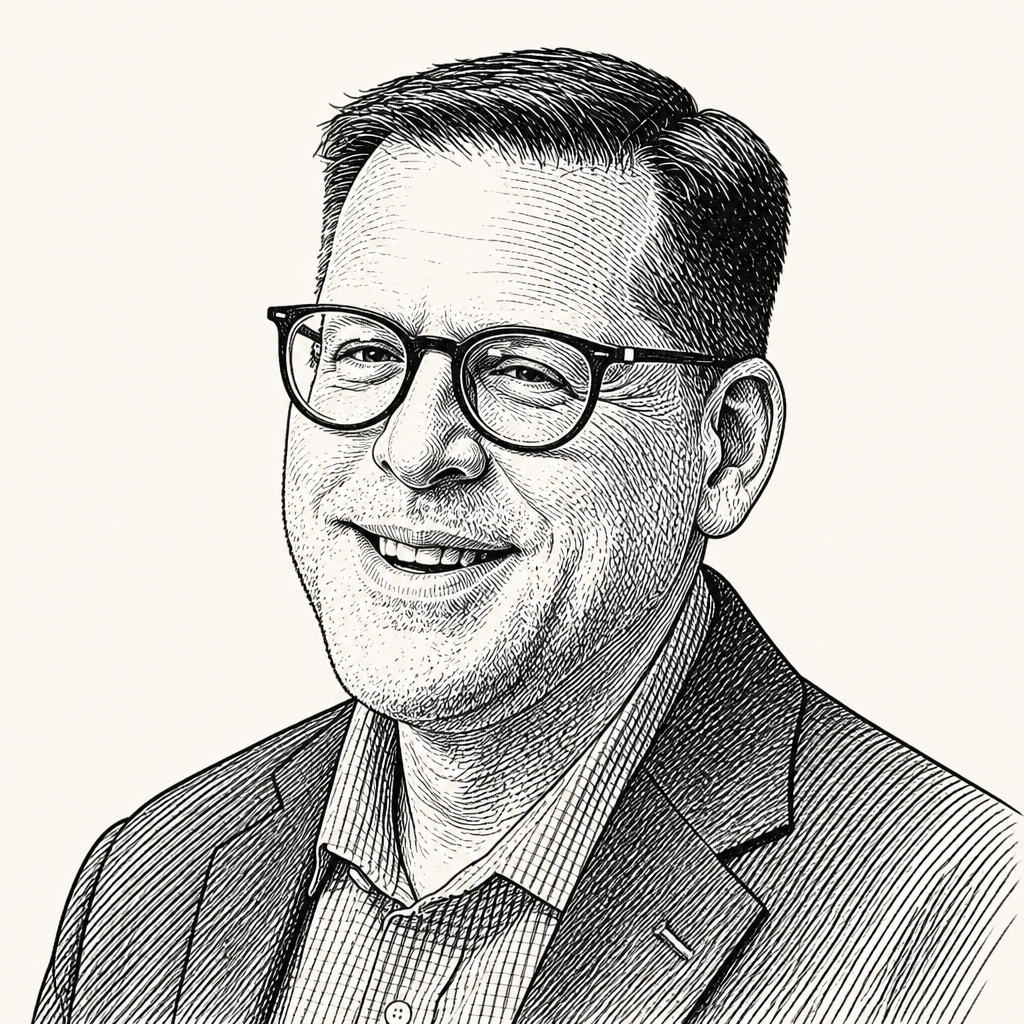
Cleveland Public Power does not own generation and must procure electricity through auctions, which Mitterholzer identified as a central challenge. The city has been working to add solar and find other ways to lower prices. But he said the pressure is no longer limited to Cleveland: energy burden is increasing across Ohio, in both rural and urban communities, after the PJM auction produced double-digit cost increases for three consecutive years.
Data-center demand compounds the strain. Indiana may be further along in the buildout, Mitterholzer said, but Ohio is not far behind. Demand is rising quickly without a clear path for meeting it. His position was that clean energy remains part of the affordability solution, rather than a separate environmental objective.
The constraint has also altered redevelopment discussions in Cleveland. Projects can no longer assume they can connect to the grid and receive all the power they need. That is alarming, Mitterholzer said, but it has made microgrids, energy districts, and locally structured generation more relevant to economic development.
Those models are not new in Europe or Canada, but remain less developed in the United States. In Cleveland, Mitterholzer said, the Chamber of Commerce is now asking questions climate advocates have long pressed business leaders to confront: where will energy come from, and how can it be built?
He pointed to Vancouver as an illustration. On a Chamber-supported visit, the group learned that Vancouver had grown from five energy districts a decade earlier to 28, nearly all running on clean energy. Mitterholzer noted that Vancouver has substantial hydropower, an important qualification. Still, the example made the model tangible.
We actually have solutions to that demand that can be clean and cost-effective, and we really need to figure out how to make sure we move those things.
The relevance of energy districts, in his account, is not simply lower-carbon supply. Mitterholzer said they can help residents and reduce costs when designed correctly, while tying local development to a more deliberate energy strategy.
Indiana’s municipal work follows a related logic. Lawson said McKinney Family Foundation supports climate-action and sustainability plans in roughly 40 cities and towns. She said the cancellation of the Inflation Reduction Act cost those communities $240 million intended for investments including Solar for All, but that municipalities were continuing to pursue implementation.
The foundation works with Sustainable Cities to help municipalities and small towns gain representation at the statehouse, including access to lobbyists who can explain local conditions. Lawson pointed to Allen County, where some solar development had been done well and other projects had not. The task is to make those differences visible rather than treating all solar development as interchangeable.
Climate work, in this account, also depends on democratic capacity. If residents cannot vote, attend public meetings without intimidation, or raise concerns at city-council and statehouse hearings, the people most affected by energy infrastructure will have the least ability to shape it. McKinney therefore supports election protection, journalism, and civic engagement alongside climate work.
The local institutions that make technical choices usable
Small municipalities often face a basic institutional gap: mayors and council members are expected to make decisions about fleet electrification, resilience, utility costs, and development proposals without dedicated staff or technical expertise. The panelists treated trusted intermediaries—not a new round of top-down planning—as the infrastructure that can close that gap.
Ohio’s Power Clean Future network includes 54 communities representing 48% of the state’s population that have committed to climate action, according to Mitterholzer. The communities include Cleveland and Columbus as well as smaller municipalities, and they cross political lines.
The network can help a mayor who wants to electrify a municipal fleet but does not know how to procure vehicles, plan charging, or finance the transition. Mitterholzer said local officials are often more workable partners than state or national actors because they must solve visible problems to remain in office. He said he had taken six Ohio mayors to Liverpool and Manchester to study energy districts, reflecting an appetite among local officials to understand systems they may soon need to build.
Ohio’s progress, he argued, also rests on advocates who have continued to work through hostile or indifferent policy conditions. He cited a recent Ohio energy law that received little national attention. In his assessment, the measure was significant because it was agnostic about fuel source: it did not explicitly privilege fossil fuels or another energy source, and it created options Ohio had lacked for a decade that he said would advance more solar.
I don’t do the work. My job is to figure out how I can get resources to the people on the ground who are doing the work.
Indiana has built a comparable channel for local expertise through the Environmental Resilience Institute at Indiana University and its Center for Rural Engagement. Lawson said McKinney supports the institutions as a hub for data and technical assistance on adaptation and sustainability. The foundation also funds about 30 McKinney Climate Fellows each year to work with municipalities.
The fellowship model matters because fellows are often paired with a student from the relevant town or community, Lawson said. They arrive in response to a mayor’s or council’s request for help and can handle a specific task while helping officials identify where sustainability planning could save money or reduce risk. The aim is to make technical knowledge less intimidating and more usable for small communities that may not know what help to request.
The same principle applies at the neighborhood scale. Detroit Future City began with a field guide for vacant lots and a mini-grant program devoted to environmental uses: butterfly gardens, stormwater projects, and other forms of ecological placemaking rather than conventional food gardens. It began with five grants and eventually distributed $300,000 over six years, Goss said.
During COVID, the organization shifted from scattered grants to larger land-transformation projects developed with block clubs and neighborhood organizations. In one neighborhood, residents acquired a contiguous city block and turned it into an urban forest. Goss said the forest connected gardens in the area and increased nearby residents’ property values by 200%.
An adjacent neighborhood did not want a forest. It wanted trees around a new playground. That preference directed the next project, whose planning included children through a community charrette. Detroit Future City is now developing a green-space conservancy intended to help neighborhoods preserve vacant land as permanent green space on their own terms.
Financing is another form of local capacity. McKinney’s Catalyst Fund for Climate and Democracy is intended to draw outside capital into Indiana and seed local work. Lawson said the foundation has also sought to expand access to capital for resilient homes, businesses, and schools, including by buying down interest rates so energy-efficiency investments become affordable.
Lower-cost financing can reduce the energy burden of a household or institution, she said. Lawson also challenged the assumption that nonprofits should categorically avoid debt: appropriately structured, low-interest loans can help organizations keep serving their communities. The broader point was that local groups should not be expected to carry an expanding climate and civic workload through conventional grants alone.
Faster understanding, not simply faster buildout
When Michelle Parker raised an argument she had heard from data-center industry representatives—that deployment needed to move faster, including to avoid losing ground to China—Goss drew a distinction between the urgency of public understanding and the urgency claimed for development.


Goss said she was skeptical that geopolitical competition justified bypassing local engagement. In her view, the race was more plausibly about competitive profit than a prospect that communities would suddenly be disadvantaged by the existence of Chinese data centers. She allowed that she could be wrong, but said Detroit’s history had made her wary of development narratives that treat community participation as an obstacle, particularly in a majority-minority city she said is often discounted.
The work that needs to accelerate, she argued, is building a shared language and an accurate understanding of the stakes. Residents need usable information about promised jobs, sustainability claims, and water use. Without it, they cannot judge what a project will consume, what it will deliver, or whether its costs and benefits will be distributed fairly.
Data centers remain development projects, in Goss’s account, and should be assessed accordingly. The question is not whether a community can be moved quickly enough toward acceptance. It is whether people have enough information, capacity, and bargaining power to decide what kind of development serves their neighborhood.