Women’s Workforce Gains Stall as Caregiving Burdens Persist
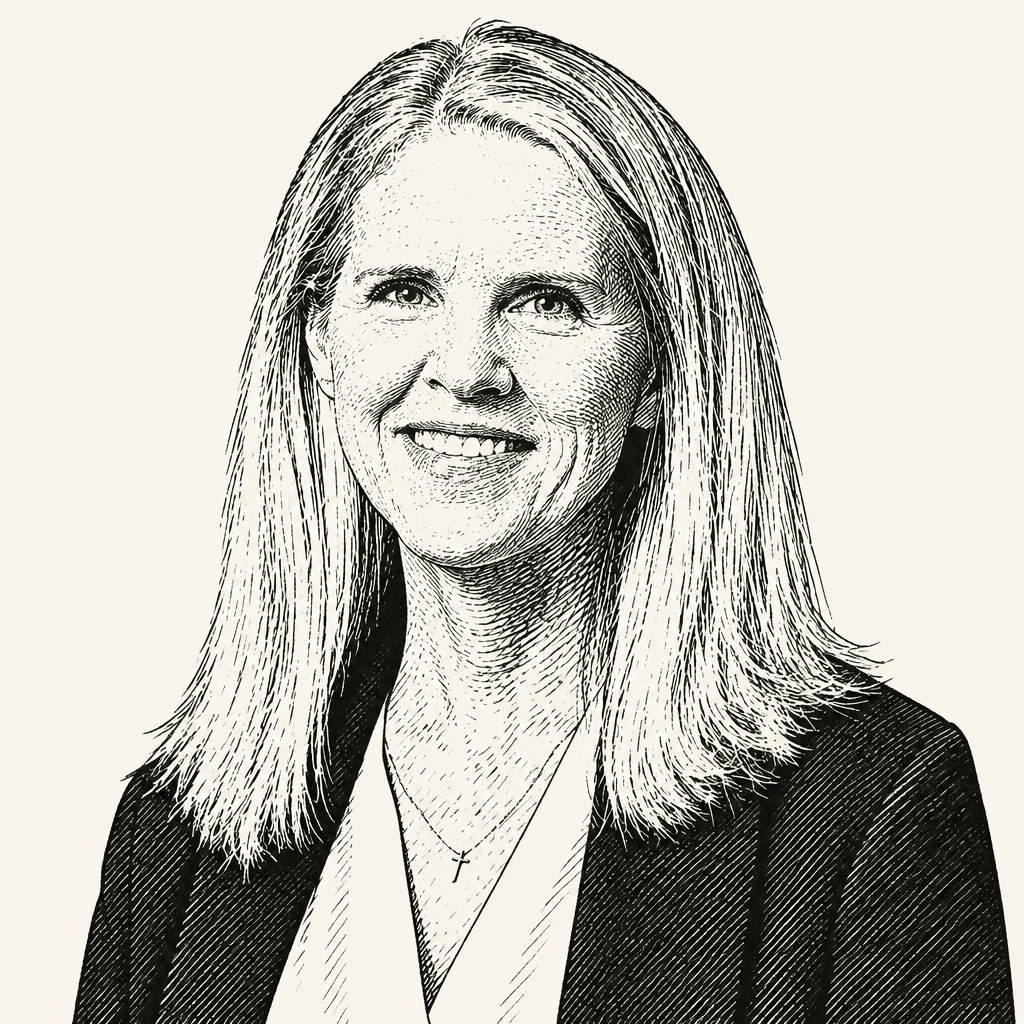
Kim Parker, managing director of the Pew Research Center, argues that women’s gains in education, employment and earnings have not brought equal footing at work or at home. Drawing on Pew data, she traces how women continue to carry more of the work of raising children, supporting adult children and caring for older relatives—and face greater career, financial and health costs as a result.

Women’s work gains stall as caregiving spans the family life cycle
Kim Parker describes a persistent mismatch: women have made substantial gains in employment and earnings, but remain more likely than men to carry family caregiving responsibilities. That imbalance runs from raising young children through supporting adult children and caring for aging relatives. In Parker’s account, it helps explain why progress at work has not produced parity either at work or at home.
The gap is especially visible among parents. In 2025, 94% of men with children under 18 were working or looking for work, compared with 74% of women.
Among adults ages 25 to 54 overall, the figures were 89% for men and 78% for women. Parker notes that women now outpace men in college completion, yet their labor-force participation has been relatively stable since about 1990 and remains lower than men’s. That stability stands out against the gains women have made in education.
Women’s median hourly earnings rose from 65% of men’s in 1982 to 86% in 2025, but Parker says the wage gap narrowed mainly through about 2000 and has been relatively flat since. The overall figure also conceals a repeated trajectory among younger women: successive groups entered the workforce earning closer to what men their age earned, then lost ground over time.
Parker’s cohort chart shows women who were ages 25 to 34 in 2000 entering at 86% of men’s earnings at the same age and standing at 79% in 2025. The next cohort entered at 89% and stood at 82% in 2025. The chart also shows later cohorts beginning closer to parity. Across the groups, Parker says, women tend to lose ground after five to ten years, then coalesce around similar positions without returning to where they started.
That pattern does not erase the broader shift in household earnings. The husband-as-sole-or-primary-breadwinner arrangement has become less common, while the shares of marriages in which spouses earn about the same and those in which the wife is the primary or sole breadwinner have each tripled over roughly 50 years. But equal earnings have not meant equal workloads at home.
In marriages where spouses earn similar amounts, Parker says wives spend more time on caregiving and housework, while husbands spend more time on leisure. The weekly figures shown in her presentation were 6.9 hours of caregiving for wives versus 5.1 for husbands, and 4.6 hours of housework versus 1.9. Husbands averaged 25.2 hours of leisure a week, compared with 21.6 for wives.
Parker also points to public views about whose contributions are valued. In the survey she presented, 57% of Americans said society places more value on men’s contributions at work than at home; 35% said the two are valued equally, and 7% said men’s contributions at home are valued more. Views about women were less concentrated: 49% said women’s contributions at home and at work are valued equally, 31% said their contributions at home are valued more, and 20% said their work contributions are valued more.
Work and family demands cross in both directions
Many working parents say they cannot give 100% either at home or at work. In the survey Parker presented, 58% said they could not give their all at home and 46% said the same about work. Mothers were more likely than fathers to report both pressures: 67% of mothers, compared with 50% of fathers, said they could not give 100% at home; at work, the figures were 56% and 38%.
The pressures are not confined to one side of the work-family divide. Majorities of mothers and fathers said they handle work tasks while with their families and parenting tasks while at work. Majorities also said that being a parent or having a job makes it harder to be a good parent. Mothers were more likely than fathers to report these experiences. Among full-time working parents, mothers were also more likely to say that being a parent makes it harder to advance at work.
Among full-time working parents, 52% of women said being a parent makes it harder to advance at work, compared with 38% of men. The finding captures a career cost that parents themselves associate with parenthood.
Working parents reported similar difficulty balancing work and family across categories of how often they worked from home:
| How often parents work from home | Share saying balancing work and family is difficult |
|---|---|
| All or most of the time | 52% |
| Some of the time | 54% |
| Rarely or never | 54% |
Parker had expected remote work to offer particular relief to mothers by reducing commuting and making it easier to handle household tasks during the day, such as laundry or school pickup. The survey found similar reported difficulty balancing work and family across the work-from-home categories. Parker also notes that 60% of U.S. workers have jobs that cannot be done remotely.
When parents were asked about possible support, paid family and medical leave stood out: 84% said it would be helpful, while only 50% said it was available to them. Parker describes a similar mismatch for other benefits. Parents said choosing when to work their hours, working from home when needed, and having onsite childcare would be useful, but access was limited. Onsite childcare was particularly scarce; she said hardly anyone had it, even though parents generally thought it sounded like a good idea.
Caregiving continues after children reach adulthood
Raising children does not end neatly when they become young adults. Parker says parents’ lives remain intertwined with their adult children’s well into their late twenties and early thirties. The figures in this part of her presentation come from a survey of parents of young adults.
In that survey, 41% of parents said their children relied on them for emotional support, and 59% said they had provided financial help in the past year. Parker notes that emotional support can run in both directions: mothers and young adult daughters may rely on one another.
Mothers were more likely than fathers to be in frequent contact with their adult children, though the shares of fathers doing so were substantial. At least a few times a week, 81% of mothers and 63% of fathers said they texted with an adult child. For phone or video conversations, the figures were 61% of mothers and 46% of fathers.
The practical logistics of raising young children may ease as children grow, Parker says, but care and connection still take time and attention. Many parents of young adults are workers too, so this continued involvement sits alongside their jobs.
The effects of caring for older relatives fall more heavily on women
Among people with a parent, spouse, or partner age 65 or older, 28% of women and 23% of men said they were caregivers for that person. Many are working while providing care.
A majority of men and women caring for an aging parent said caregiving had a positive impact on their relationship with that parent. Women were more likely, however, to report negative effects on their physical health, emotional well-being, and finances. Among full-time workers helping an aging parent, 20% of women and 9% of men said caregiving had harmed their physical health. For emotional well-being, the figures were 40% of women and 22% of men; for finances, 36% and 22%.
Gender gaps also appeared among people caring for a spouse or partner. Women were more likely than men to say this care had negatively affected their emotional well-being, social life, and financial situation. In Parker’s figures, 33% of women and 16% of men reported a negative effect on emotional well-being; 29% of women and 15% of men reported an effect on their social life; and 20% of women and 9% of men reported an effect on their finances.
Among people caring for an aging family member, 77% favored tax credits to help pay for caregiving, 73% favored paying for short-term care to give family caregivers a break, 67% favored requiring employers to provide paid family leave, and 66% favored direct payments to help with caregiving costs. Parker said the policies she asked about do not really exist.
There’s a disproportionate burden that falls on women. We’ve seen that for many years and we still see it in our data today.