Military Leverage Alone Cannot Secure Lasting Political Outcomes
 Robert O'Brien
 Stephen Hadley
 Marc Thiessen
 Michèle FlournoyThe Aspen InstituteThursday, July 16, 202612 min read
Former national security officials Stephen Hadley, Robert O’Brien and Michèle Flournoy, alongside AEI’s Marc Thiessen, disagreed over whether Trump’s use of military force, tariffs and allied pressure can produce arrangements that last beyond his presidency. Thiessen and O’Brien argued that coercion has forced overdue changes in allied defense spending and constrained adversaries; Flournoy and Hadley warned that military damage, strained alliances and inconsistent signals do not by themselves constitute strategy. Their central question was whether immediate leverage can be converted into durable deterrence, political settlements and institutions.

The question is whether pressure can outlast the presidency
The central disagreement is not over whether the United States should use hard power. It is whether the Trump administration can turn immediate leverage—military force, tariffs, sanctions, pressure on allies, and threats of escalation—into political arrangements that survive after the pressure eases and after Trump leaves office.
Marc Thiessen made the results-first case. He offered a mixed assessment of Trump’s second term, criticizing, among other things, the acceptance of an Air Force One from Qatar, the handling of the TikTok ban, tariffs used as revenue measures, sales of advanced AI chips to China, and what he described as insufficient follow-through in Iran. But he argued that these criticisms should be weighed against what he characterized as consequential achievements: tougher border enforcement, pressure on Chinese influence in Panama, higher defense spending, military operations against adversaries, support for Ukraine, and a series of peace agreements and diplomatic initiatives.
I think it’s an objectively—when you turn the mute button on and just look at some of the things he’s done—that he’s accomplished some serious things in this second term.
The panel’s more consequential dispute concerned durability. Can pressure make allies more capable without weakening their trust in the United States? Can military campaigns impose costs on adversaries without creating commitments that exceed the tools Washington is prepared to use? And can the administration communicate enough resolve on Ukraine and Taiwan that Russia and China do not read inconsistency as weakness?
Michèle Flournoy identified defense innovation as a genuine contribution. She described a period of technological disruption that will change how wars are fought and credited the administration with sustained senior-level attention to accelerating and scaling the adoption of drones, AI, hypersonics, and related technologies. The execution is imperfect, she said, but the intent is serious and necessary if the United States is to deter China and other future threats.
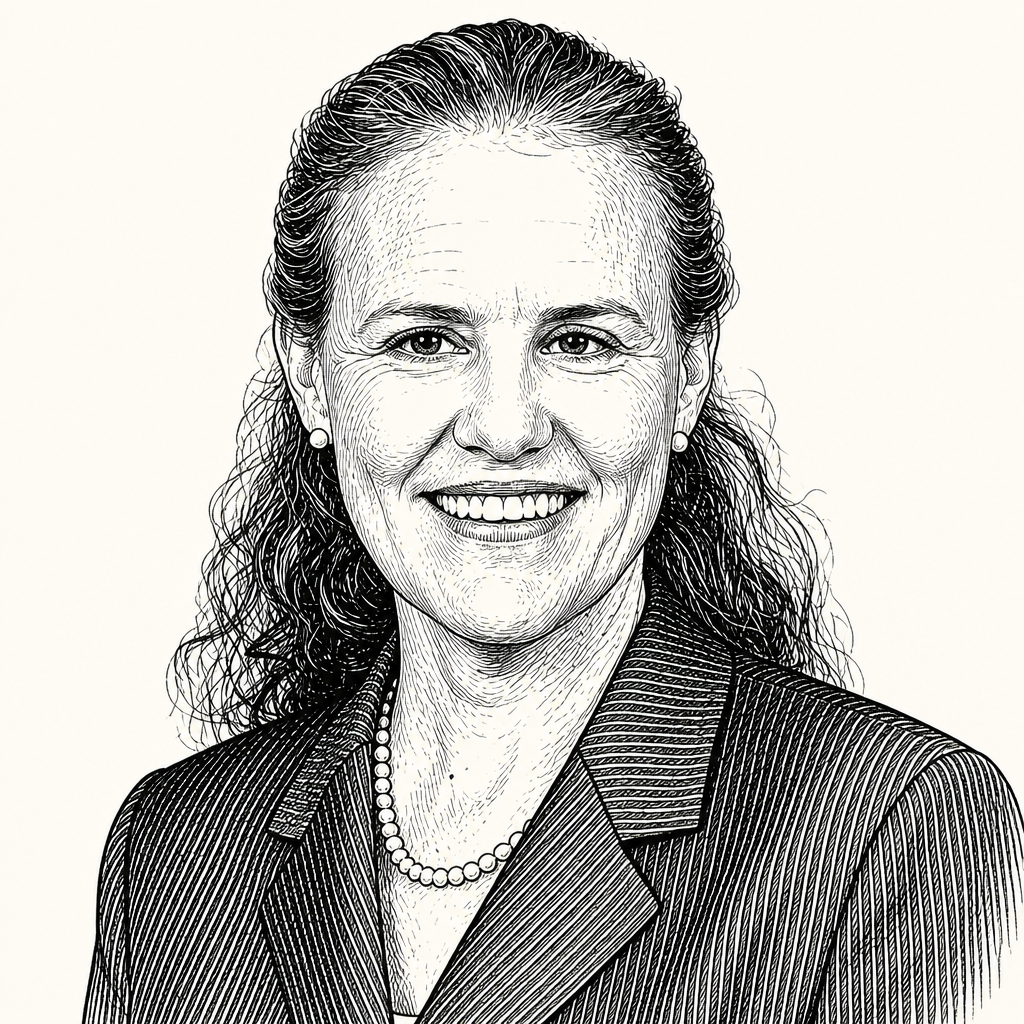
Robert O'Brien saw a comparable success in the Western Hemisphere. In his view, Trump had returned sustained attention to a region neglected by prior administrations: pressuring Panama over Chinese influence, confronting Venezuela, and pushing Denmark to invest more seriously in Greenland’s defense while negotiating U.S. basing arrangements associated with Golden Dome missile defense.
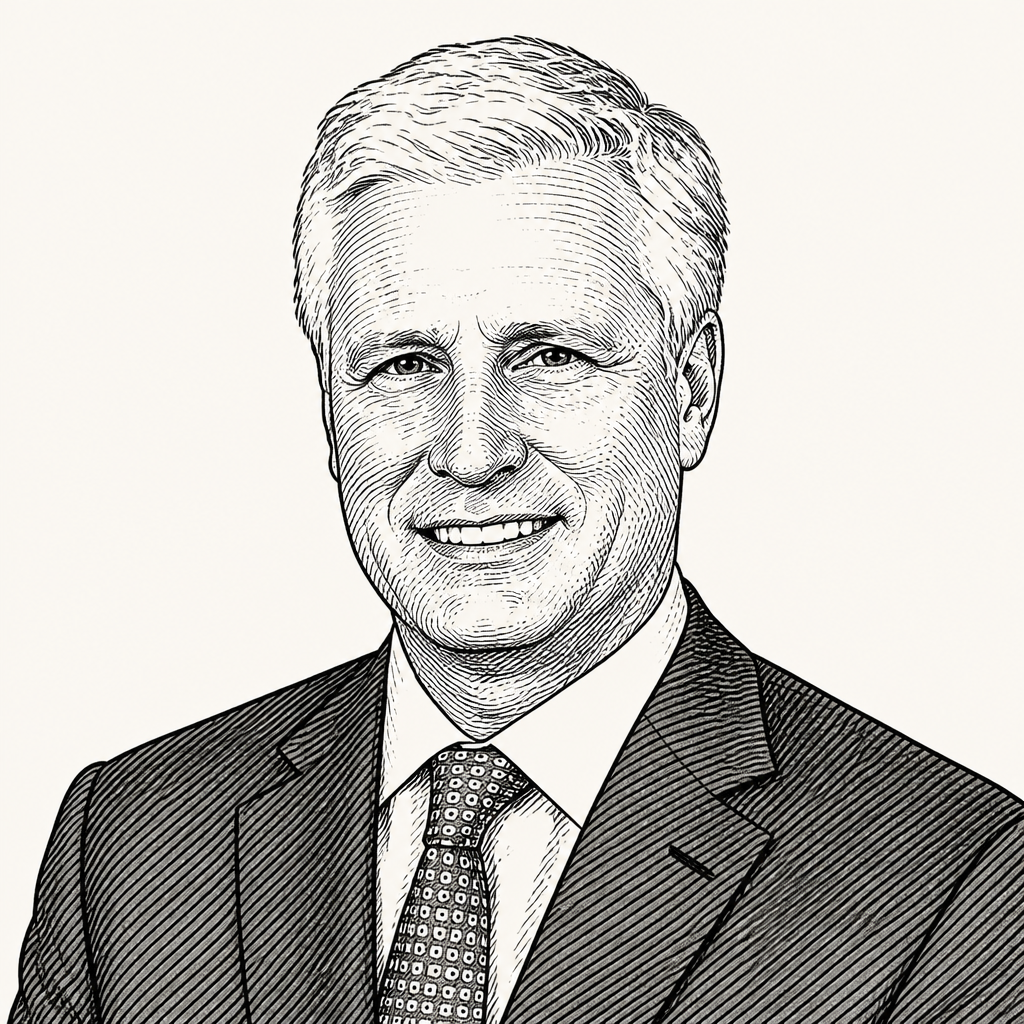
Stephen Hadley focused on a different redistribution of responsibility: Europe’s assumption of a greater conventional-defense role. The United States has global commitments that Europeans do not share, he said, and Europe should therefore be able to handle the conventional defense of its own continent. The United States would still provide the nuclear umbrella, uniquely American capabilities, and support as European countries build their capacity. Hadley’s argument was that this would be a more sustainable division of labor, not a U.S. withdrawal.
Europe may be rearming, but trust remains a strategic asset
European allies are spending more and assuming a larger role in their own conventional defense. The dispute is whether Trump’s method made that shift durable by forcing an overdue adjustment, or made it more fragile by eroding the trust on which alliance action depends.
Stephen Hadley argued that the important development was not simply NATO’s agreement on higher defense-spending targets. European governments, he said, had begun to accept conventional defense of Europe as their own responsibility and strategic interest, rather than as a concession to Washington. That distinction matters because commitments rooted in self-interest are more likely to persist.
Hadley described a division of labor in which the United States retains its nuclear umbrella and capabilities Europe does not possess while European governments build the capacity to defend their continent conventionally. He regarded that as the right objective. Based on an earlier panel of European officials at the forum, he said Europeans appeared to have embraced the goal as more than a grudging response to presidential coercion.
Robert O'Brien agreed that pressure had been necessary. Recalling the 2019 NATO summit, he described earlier efforts to secure compliance with the Wales commitments as pleading. Presidents of both parties had asked European governments to do more, he said, but Trump’s unorthodox diplomacy and tough talk finally made the demand stick.
Michèle Flournoy did not dispute the underlying goal. She recalled Robert Gates’s forceful final speech as defense secretary, when he warned NATO allies that they had to do more, and said the increase in countries meeting the 2% target had unfolded across several administrations. The effort was bipartisan, long-running, and overdue.
Her objection was to the strategic cost of how Trump pursued it. These were the countries that helped the United States win the Cold War, invoked Article 5 after September 11, and fought alongside Americans in Afghanistan. Denmark, she noted, suffered disproportionately heavy losses in Afghanistan on a per-capita basis.
China doesn’t have allies like this. Russia doesn’t have allies like this. Iran doesn’t have allies like this.
For Flournoy, this was not a complaint about tone detached from power. The United States cannot meet the China challenge alone, she argued. It needs allies to scale industrial capacity, technology, military power, economic pressure, and trade relationships. If European governments begin to “de-risk” not only from China but from the United States, Washington will have fewer partners and less capacity to organize a collective response in a future crisis.
Thiessen accepted that Trump’s rhetoric may at times have been excessive, suggesting that the president may have turned the volume to 11 when six or seven could have sufficed. But he maintained that softer methods had not worked. Flournoy’s response was concise: pressure did not need to be insulting.
Hadley separated the relationship between governments from the political damage in allied societies. European leaders understand that Europe cannot alone manage Russia’s challenge in Europe or China’s challenge economically and regionally, he said. That necessity gives them a strong reason to preserve their relationship with Washington.
But he shared Flournoy’s concern about public opinion. Trump’s rhetoric, Hadley said, had alienated populations in several allied countries. He cited polling that, in his account, showed Europeans expressing more confidence in China than in the United States. Governments may maintain the relationship because they need it; public confidence in the United States can still erode, and rebuilding it may take time.
O’Brien was less concerned that the political breach would prove decisive. Europeans do not want their children and grandchildren living under what he called “Xi Jinping-style communism,” he said, and would remain with the United States. The central fact, in his view, was that they were now contributing more to their own defense.
The same tension bears directly on Ukraine and Taiwan. Flournoy said Trump had supported Ukraine in meaningful ways and approved a large Taiwan arms package, but she regarded his signals in both cases as inconsistent. She wanted clear U.S. resolve: that Russian aggression will not be allowed to prevail in Ukraine, and that the United States will defend Taiwan against unprovoked Chinese aggression.
Hadley broadly agreed on Ukraine. The United States should be “all in,” he said: helping Ukraine hold the front line, preventing further Russian territorial gains through sanctions and other measures, and supporting Ukrainian long-range attacks on Russian energy infrastructure. He did not think an agreement acceptable to both Russia and Ukraine yet existed. But sustained pressure, he argued, could eventually persuade Vladimir Putin that the costs of continuing the war outweighed the gains.
The longer-term objective, Hadley said, would be to stabilize Europe by helping Ukraine enter the European Union and develop indigenous defense capabilities.
O’Brien emphasized Trump’s role in providing 600 Javelin missiles to Ukraine, arguing that those weapons helped stop Russia’s three-pronged armored attack and were central to Ukraine’s survival. Flournoy objected to treating either Ukraine or the campaign against ISIS as a singular Trump achievement. Both were bipartisan efforts spanning administrations, she said, with earlier work that later officials built upon.
Hadley made the broader institutional point: despite public rhetoric, there is more bipartisan foreign-policy continuity across administrations than people acknowledge. That continuity matters because deterrence depends not only on U.S. capabilities, but on whether adversaries believe American commitments will survive changes of leadership.
Iran exposes the gap between military damage and political strategy
Iran produced the sharpest conflict over what should follow a successful military campaign. The participants shared the objective of preventing Iran from acquiring a nuclear weapon. They disagreed over what the intervention had accomplished, what risks it had created, and whether the United States should seek negotiation, containment, economic strangulation, or a broader transformation of the regime.
Marc Thiessen treated Operation Midnight Hammer as a major success and said it had buried Iran’s nuclear program. He also said Operation Epic Fury had destroyed 85% of Iran’s defense-industrial base, sunk its navy, grounded its air force, decimated its ballistic missiles, and killed at least 50 senior Iranian officials, including Ayatollah Khamenei.
Robert O'Brien considered the Iran campaign potentially the administration’s most consequential achievement. His premise was that a nuclear-armed Iranian regime would use such a weapon against European states, Israel, or the United States. Destroying Iran’s nuclear capacity was therefore imperative, he argued.
His criticism was that Trump had been too patient after the initial operation. O’Brien called for the United States to “finish the job” by striking economic targets, including Kharg Island and oil-export infrastructure. Sanctions and maximum pressure had not been enough, he said, because oil revenue enables Iran to rebuild its nuclear and ballistic-missile programs and support Hamas, Hezbollah, and the Houthis.
O’Brien’s proposed remedy was to remove that revenue source while replacing disrupted supply through greater production in Venezuela, Guyana, Mozambique, and the United States. He repeatedly described the desired result as turning Iran into “a stan”: a state unable to finance malign activity or project meaningful power.
Michèle Flournoy accepted the need to prevent a nuclear-armed Iran and noted that, while at the Pentagon, she had supported planning for military options if negotiations failed. But she saw the present intervention as a case in which objectives had outrun strategy.
In contrast to what she described as the prior year’s targeted, specific, and effective intervention, this campaign had pursued a jumble of objectives without clear priorities or a strategy for translating military action into political outcomes. She said the administration had inadequately appreciated the risk that Iran’s regime would survive bombing and assassination pressure, had failed to define a clear exit plan, and had not sufficiently prepared for retaliation against U.S. partners across the Gulf.
The Strait of Hormuz illustrated her concern. Iran does not need to shut the waterway permanently to impose costs. A few drones or mines, Flournoy argued, can threaten shipping and establish a “new normal” in which Tehran can periodically disrupt the international economy. Even if commerce resumes, she warned, the war could impose substantial costs on American stockpiles and the United States’ ability to underwrite deterrence elsewhere.
| Participant | Primary objective | Proposed path |
|---|---|---|
| Michèle Flournoy | Prevent a nuclear-armed Iran while managing escalation | Prioritize objectives, define an end state, and translate military action into political outcomes. |
| Stephen Hadley | Prevent nuclear reconstitution and reduce coercion of shipping | Deter rebuilding, retain narrow negotiation terms, and attrit Iran’s means of attacking cargo vessels. |
| Robert O’Brien | Deny the regime resources for nuclear, missile, and proxy activity | Strike oil and gas production and export infrastructure while replacing supply elsewhere. |
Stephen Hadley proposed a more bounded objective. The United States should stop chasing Iran for a nuclear agreement, he said, because the military campaign had already inflicted substantial damage. Israel had killed Iran’s top nuclear scientists, he said, and Iran’s 60% highly enriched uranium was buried under rubble, perhaps in gaseous form and difficult to recover.
If the Iranians try to reconstitute it, we will hit it again.
Hadley would leave open negotiations if Iran sought them, but only on terms that barred indigenous Iranian enrichment and denied the regime a large financial payoff that could fund Hezbollah or military reconstruction. On Hormuz, he proposed facilitating shipping on the comparatively safer Omani side while continuing to target Iranian fast boats, cruise missiles, drones, and other means of attacking cargo vessels. Together with alternative pipelines and export routes, that approach could gradually reduce Tehran’s ability to threaten global commerce, he argued.
The divide is ultimately over achievable objectives under a constraint that all three approaches acknowledge: no large U.S. ground war. O’Brien wanted a decisive campaign against Iran’s ability to generate oil revenue, on the theory that destroying that financial base would permanently limit the regime’s capacity to rebuild and support proxies. Hadley proposed preventing nuclear reconstitution and steadily reducing Iran’s capacity to coerce shipping, without treating immediate regime collapse as an attainable outcome. Flournoy’s objection was more basic: military damage and an expansive list of goals do not amount to a strategy unless the United States has prioritized objectives, managed escalation, and identified a political end state it can actually secure with the means it is willing to use.
A doctrine requires ends that match the available means
Thiessen saw the outline of a Trump Doctrine in the administration’s conduct. Like Ronald Reagan, he argued, Trump faces a public unwilling to support major ground wars after Iraq and Afghanistan. Reagan’s answer was to support partners—the Contras, the Mujahideen, UNITA, and friendly governments—rather than deploy U.S. troops everywhere.
Marc Thiessen suggested that Trump’s version combines coercive diplomacy, tariffs, sanctions, and other instruments with aggressive military force when pressure fails, while avoiding the large occupations associated with Iraq and Afghanistan. Iran and Venezuela were his principal examples.
But Venezuela was also the clearest challenge to his own theory. Thiessen argued that compelling Delcy Rodríguez to cooperate while Trump is in office is not enough. If her government resumes its old behavior once U.S. pressure recedes, the operation will not have produced a lasting political settlement. The United States, he said, needs a democratic Venezuelan government that independently wants to cooperate with Washington.
He made a related argument about Iran. After weakening the regime, the United States should revive elements of the Reagan Doctrine and help the Iranian people replace it. For Thiessen, coercion can create an opening, but durable success requires political change that outlasts the coercer.
Stephen Hadley accepted the desire for durable change while emphasizing the limit on American tools. Citing Bob Gates, he said there was no record of regime change achieved simply through air power. If the United States wants regime change, it generally requires boots on the ground—precisely what Trump does not want to deploy.
That means objectives must match means. A strategy built around force without major occupation cannot casually promise transformations its tools cannot deliver. Hadley pointed to an intermediate option: working “by, with, and through” local forces trained and sustained by the United States. That approach emerged in the post-occupation phases of Iraq and Afghanistan and remains available, he said, even if it has not been used much lately.
Hadley also argued that democratic participation is not simply an ideological preference. Giving people a stake in determining their future is messy and does not always produce outcomes Washington likes, but it is a path toward stability. Without that in Venezuela, he warned, the country could become “a Maduro regime without Maduro” when Trump leaves office.
Michèle Flournoy rejected the premise that these actions add up to a doctrine. Trump’s decisions, she said, are better understood as instinct, impulse, and strong but separate beliefs—such as confidence in tariffs—than as a coherent framework connecting ends, ways, and means.
I don’t see the coherence that I would describe as a doctrine.
Hadley’s criticism of the administration’s internal process reinforced that judgment. Trump often has interesting ideas, he said, and even apparently outrageous proposals can contain a useful insight. The task for the administration is to identify that insight, turn it into policy serving American interests, strip away distracting “chaff,” announce the policy clearly, and follow through with disciplined execution.
That is not a procedural objection for its own sake. The difference between leverage and strategy lies in whether officials can convert a president’s momentary advantage into institutions, allied commitments, local political arrangements, and deterrent signals that survive the moment.