Tulsa’s Current Boom Is Shaped by a History of Growth and Loss



The Aspen Ideas: Economy gathering in Tulsa asked how economic change reaches different communities, who benefits from growth and what prosperity makes possible. Experience Tulsa’s Grant Bumgarner placed the city’s current growth in the context of its Native history, oil boom and the destruction of Black Wall Street and rebuilding after the 1921 massacre. That history, the speakers argued, makes economic change inseparable from questions of who benefits, who bears its costs and what growth enables.
Tulsa’s growth is inseparable from the history of the place
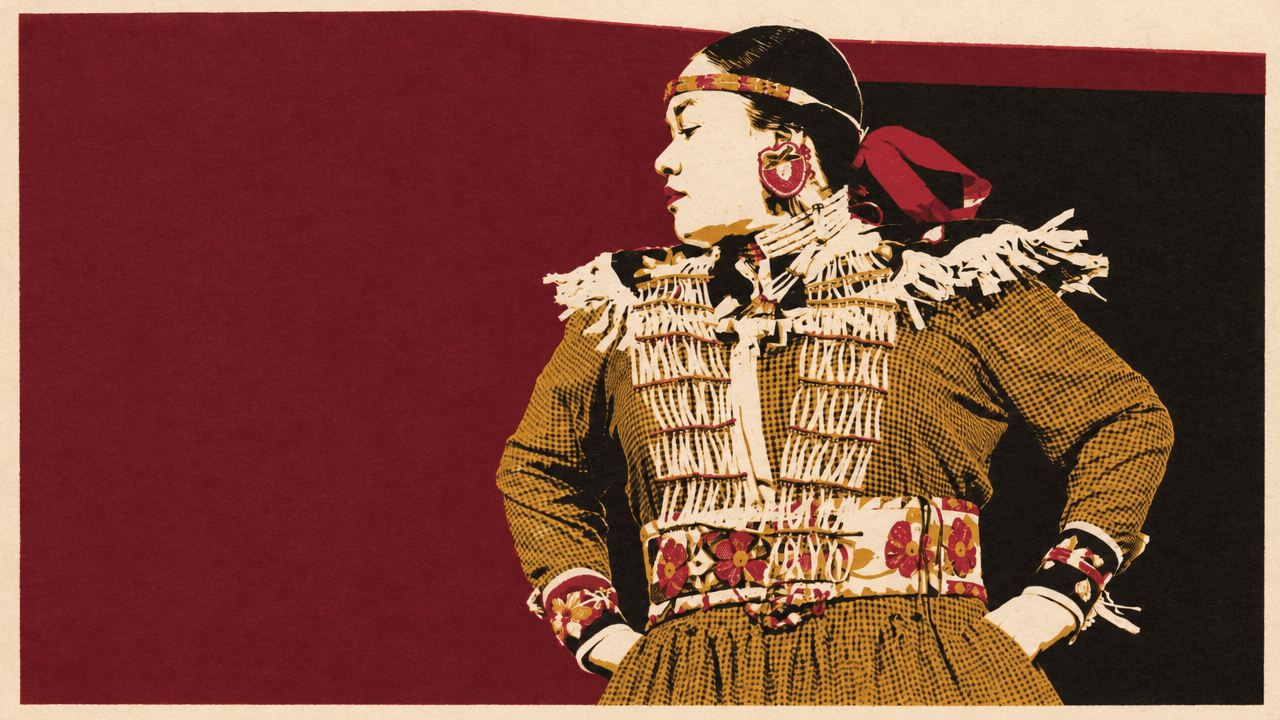
Economic growth does not arrive on a blank slate. In Tulsa, Grant Bumgarner placed the city’s current growth alongside its Native history, oil boom, racial violence and community rebuilding. His account makes Tulsa a place to consider how economic change unfolds within histories that include both opportunity and profound harm.
A fifth-generation Tulsan and director of community at Experience Tulsa, Grant Bumgarner called Tulsa “one of the most American cities in the country,” while acknowledging the controversies and complications in that history. He described the city as difficult to place on a regional map: too far south to be the Midwest, too new and northern to belong to the Old South, and too far east to fit the usual idea of the West. Tulsa, he said, sits at a crossroads where Americans might come into conversation with themselves.

It is also, he said, at the intersection of nations. Cain’s Ballroom stands within the lands of the Osage, Cherokee and Muscogee nations. Bumgarner traced Tulsa’s founding to the Muscogee Nation in the early 1830s, at the end of the Trail of Tears. He told the story of Chief Yahola and his people reaching a bend in the Arkansas River, finding an old oak tree and relighting the sacred embers of their council fire. They founded Tallasi, which Bumgarner translated as “old town”; the name later became Tulsey Town, then Tulsey, and finally Tulsa.
Bumgarner’s account connects the city’s beginnings to the Muscogee Nation’s journey and the rebuilding of its community. He did not present that history as a separate economic argument. Rather, he placed it among the histories through which Tulsa’s later growth must be understood, describing tribal nations’ capacity to reconstitute cities, cultures and a thriving economy in a new and strange land.
Tulsa’s transformation into an oil boom town brought another kind of change. Bumgarner said the city had about a thousand residents in 1900, when it was still in a territory that had not yet become a state. A few years later, oil brought rapid growth. By 1930, Tulsa had 150,000 residents. Tens of thousands of immigrants, entrepreneurs and businesspeople from across the country came in search of opportunity, and the city became known as the “Magic City.” Bumgarner called it one of the world’s first true oil boom towns.
But the boom was only one part of his account. Bumgarner placed the birth of Black Wall Street beside the destruction of the Tulsa Race Massacre, and emphasized the strength of Tulsa’s Black community in rebuilding after 1921. He also spoke of the courage of people who set out for fortune in a new state and of tribal nations rebuilding in unfamiliar circumstances. His history holds rapid growth and profound loss together, rather than treating prosperity as a story of expansion alone.
That perspective shaped his description of Tulsa now. Bumgarner said the city was “now, yet again, a boom town,” growing “not in spite of our past, but because of it.”
In our history, I hope this country can see itself, see its past, and see a new way forward.
For Bumgarner, Tulsa’s complicated history made it a fitting place for conversations about economic change. The city’s story does not resolve questions about who benefits from growth or what its costs are. It gives those questions a local setting in which booms, destruction and rebuilding all belong to the account.
Economic change looks different from the ground
For Ida Rademacher, the point of bringing Aspen Ideas: Economy to different places is to connect large economic forces to what happens in companies, households and governments. That connection brings trade-offs into view: who faces them, how they differ across communities, and what choices mean on the ground.
The Tulsa gathering was the second Aspen Ideas: Economy event. Ida Rademacher said 550 people attended the first, in Newark the previous fall; more than 900 had registered for Tulsa, beyond organizers’ expectations.


Rademacher urged visitors and Tulsans to meet one another. The event’s “network of networks,” she said, was meant to bring together people from different walks of life who might not otherwise meet. She described Tulsa as a different setting with a different history from Newark, and said the economic conversation had changed significantly over the intervening year. In a moment of extraordinary economic change, she argued, unconventional conversations matter.
The program’s themes moved from the “once and future wealth of nations” to the “once and future wealth of workers,” and then to the economic possibilities facing rising generations. The opening evening would focus on people and place, with Tulsa’s and Newark’s mayors and Oklahoma’s governor discussing forces shaping their decisions and communities, along with the trade-offs they faced. Other conversations would bring generations together around the economy they are shaping and the one they will inherit.
Rademacher’s central point was that the future of the economy looks different depending on where someone stands, where they sit and what year they were born in. The question is not only how broad economic forces affect the country as a whole, but how they reach workers, local governments and younger generations in different circumstances. The event’s mix of participants was intended to make those differing perspectives part of the discussion.
Prosperity is measured by what it makes possible for people
Maria Acebal framed the economic questions in terms of human consequences. The Aspen Institute, she said, brings people together across geographies, generations, viewpoints, backgrounds and professions for dialogue and practical paths forward through society’s challenges. The people gathered at Cain’s Ballroom—business leaders, policymakers, entrepreneurs, people from across the workforce, community leaders, scholars, journalists, artists and innovators—represented that range.
Maria Acebal connected this purpose to the Institute’s history. As it approached its 77th year, she said, its origins lay in the aftermath of World War II and the shadows of the Cold War. The lesson she drew was that convenings matter most when coming together feels hardest. She also pointed to the Institute’s humanistic values as a way to judge economic progress: to measure progress, she said, people must ask what it makes possible for people’s lives.


That test puts distribution and trade-offs at the center. Acebal named technological revolution, political polarization, international armed conflict, and the challenges of energy and climate among the forces shaping the economy. She framed them as reasons to ask anew what allows prosperity to spread, what stands in its way, what trade-offs people face and who benefits from the choices in front of them.
Her standard complements Rademacher’s focus on tracing broad forces into companies, households and governments. One asks where economic change is felt and how its effects differ; the other asks what the resulting choices make possible, and for whom. Bumgarner’s account of Tulsa gives those questions a local history: oil-driven expansion, the destruction of Black Wall Street, rebuilding after 1921, and the continuing presence of tribal nations. The speakers did not offer a single answer to who benefits from economic growth. They set out questions that make that distribution, and the histories shaping local choices, harder to leave out.
Acebal said the gathering offered time and space to think, plan and act on these questions. She credited Rob Koretz and the Koretz Family Foundation with helping bring the event to Tulsa. Koretz had attended the Newark gathering and wanted to bring Aspen Ideas: Economy to Tulsa; Acebal described his vision and conviction as central to making that possible. She also thanked the mayors of Tulsa and Newark, Oklahoma’s governor, the event’s sponsors and Tulsa community partners.