One Semester of Civics Cannot Sustain Democratic Agency
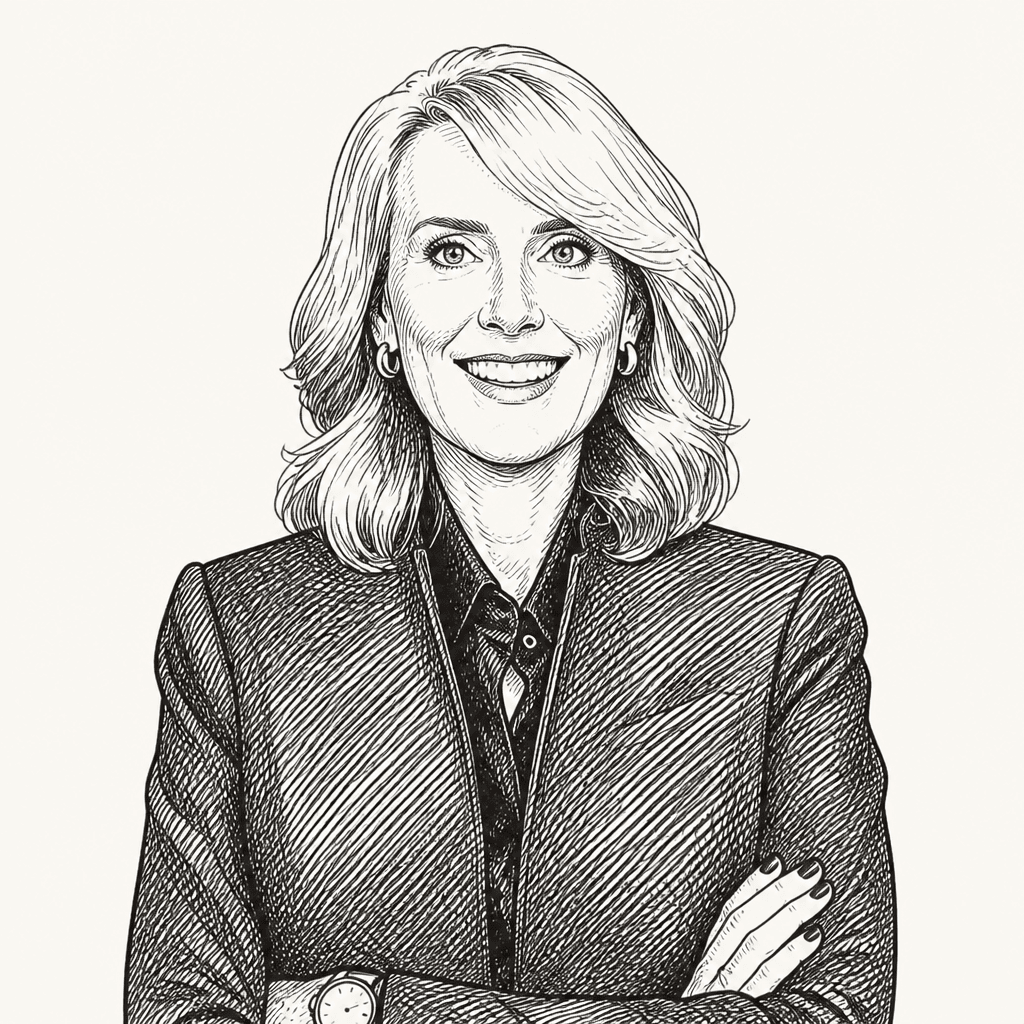
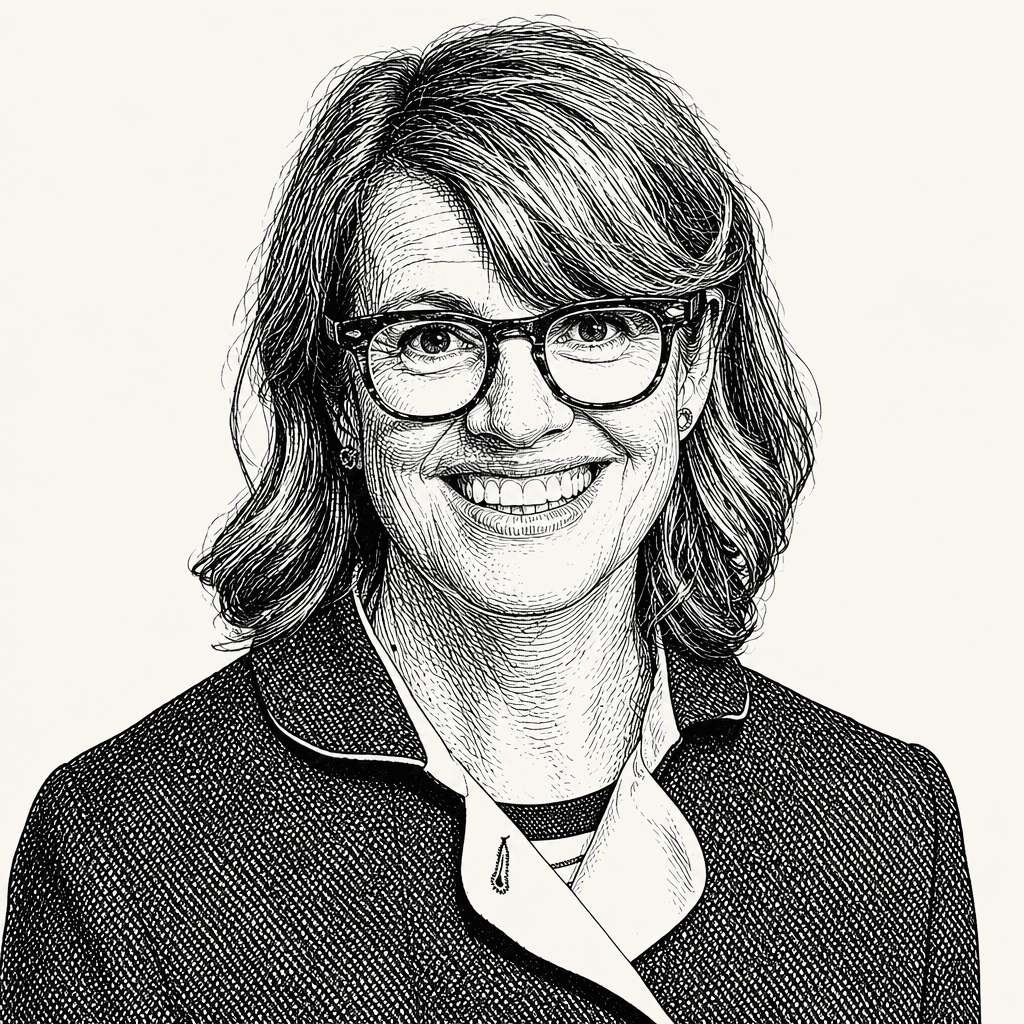
In an Aspen Ideas Festival session with Kelly Corrigan, civics educator Sharon McMahon argues that American democracy is weakened by civic ignorance, thin school requirements and an information environment where charisma often substitutes for accountability. Her case is that civics cannot be treated as a one-semester subject: citizens need enough knowledge to understand power, evaluate sources, tolerate disagreement and act without giving in to despair.

Civics is not a semester-long subject
Kelly Corrigan begins from a premise: cynicism kills democracies, and civics education may be its antidote. Sharon McMahon accepts the connection, but her first point is institutional rather than inspirational. More than half of states, she says, require no civics education for high school graduation. Among the states that do require it, most require only one semester. A full year of civics or government education is not the norm.
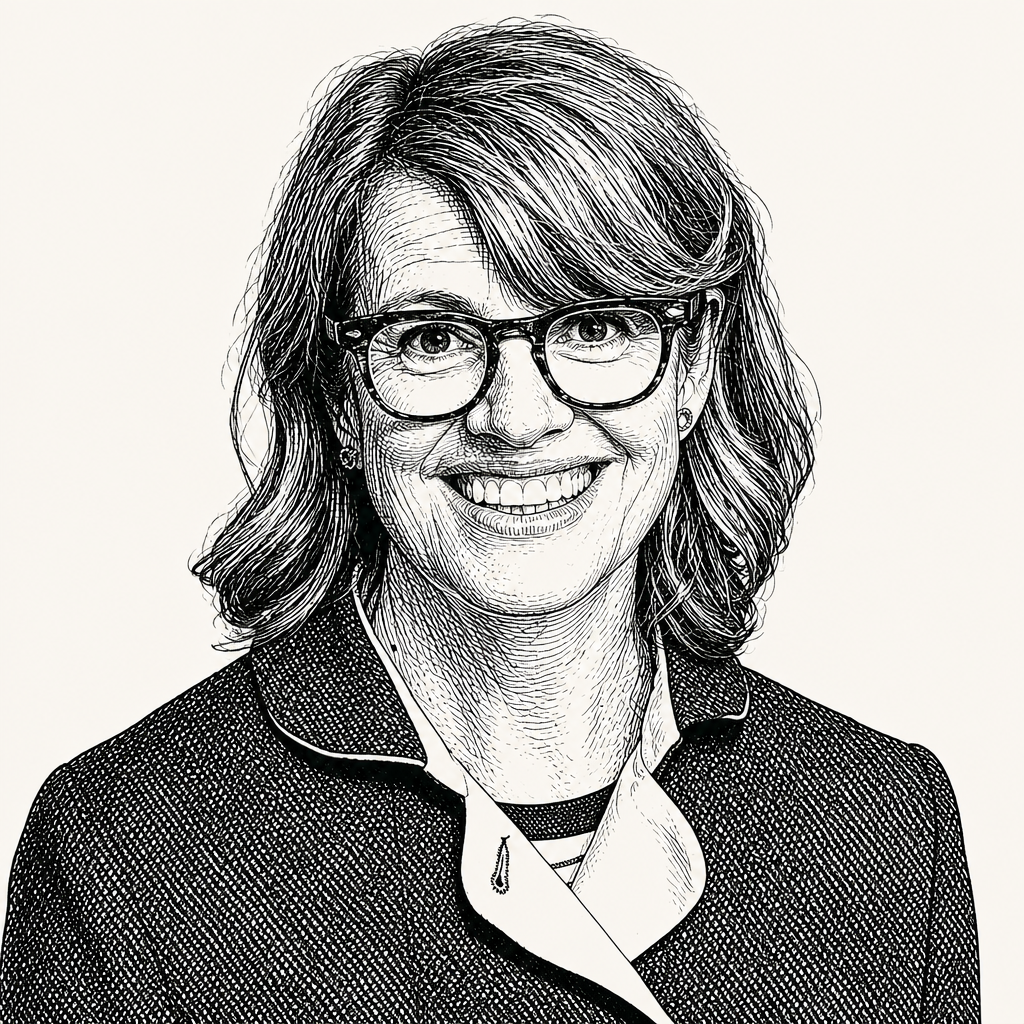
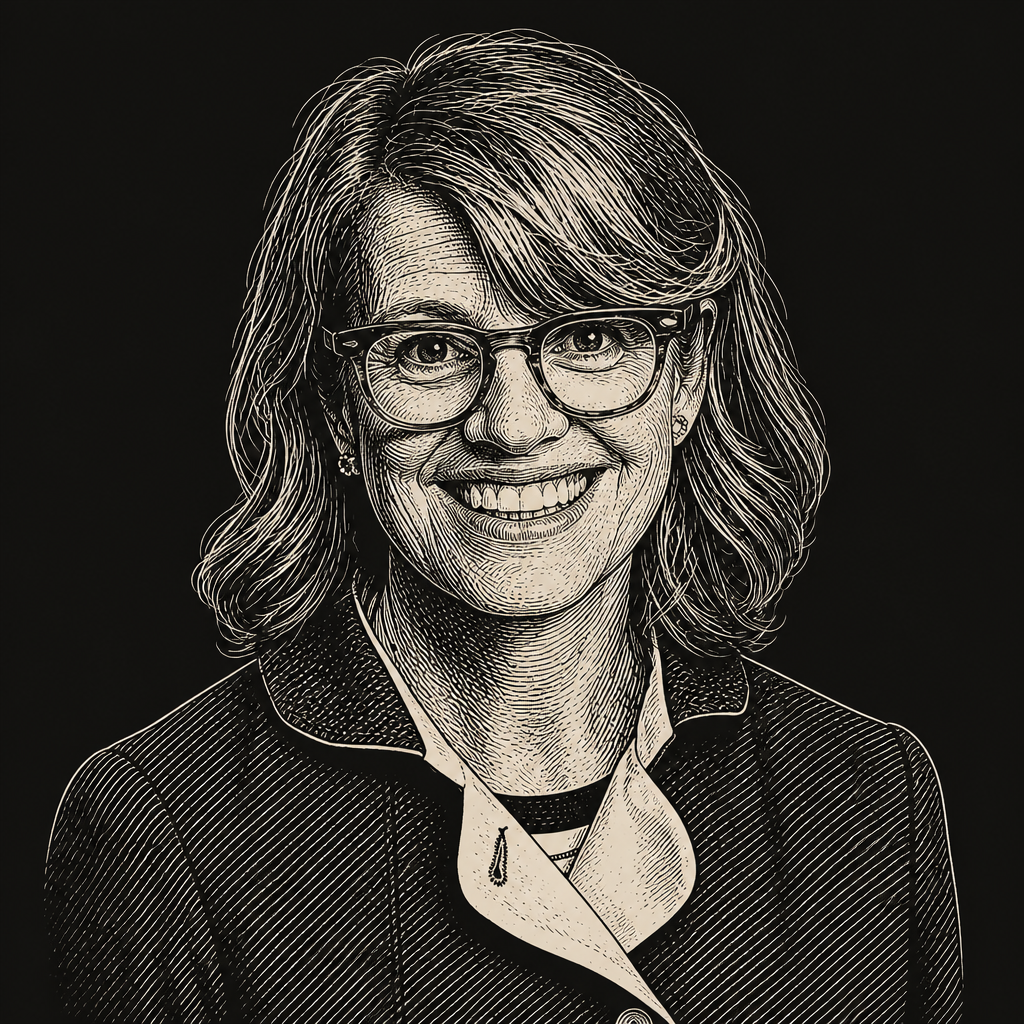

McMahon treats that as a category error. No serious subject is considered mastered after one semester, and often not after one year. She uses high school Spanish as the comparison: many people took two years and emerged with only fragments — “Donde esta el bano?” or “Me llamo Sharon.” The idea that one semester of civics would produce democratic fluency is, in her word, “silly.”
That underexposure matters because the democratic system depends on people understanding where power is, how change is made, and what participation can actually do. McMahon points out that civics education was once more common, especially in the 1950s, though she refuses to romanticize it. Its mid-century peak, in her account, was bound up with Cold War motivation: countering the Soviet Union, asserting American superiority, and embedding religious-national language such as “In God We Trust” into civic rituals and currency. Still, she says, by the end of the 1950s a higher percentage of Americans could name the three branches of government than can do so today.
Her concern is not abstract. She says there are sitting members of Congress who have incorrectly named the branches of government on camera, despite working in one of them. The joke lands because the underlying claim is not funny: civic ignorance is not confined to disengaged voters or young people. It reaches people formally inside the system.
Agency is the practical opposite of despair
Sharon McMahon grounds her case for civics education in agency. Despair, she argues, is countered by action, not by constant optimism. When a neighbor’s house burns down, a person cannot rebuild the entire house or replace everything lost. But helping in some concrete way changes how that person feels and what they are capable of doing next. The point is psychological and civic: doing something makes people feel better, and people who feel some agency are better equipped to be useful.
That distinction matters because McMahon believes many Americans feel government as something done to them. They experience themselves as victims of government: nothing matters, nothing changes, both parties are terrible, leaders are unqualified, and participation feels futile. Kelly Corrigan identifies the political consequence as passivity. McMahon agrees, but emphasizes the deeper condition beneath passivity — the feeling that no action can affect anything.
Her historical counterexample is broad. The Civil Rights Movement, the 19th Amendment, and other episodes now regarded as positive forward motion depended on people who did not accept futility as the final word. If the vanguard of the Civil Rights Movement had concluded that people would never change and that no one could be persuaded, McMahon says, the movement could not have advanced. “Nothing can change, so why should I try?” is, in her view, one of the most dangerous civic attitudes now circulating.
All positive forward motion has happened because people had the courage to try.
This is also why McMahon keeps returning to historical context. Some problems that feel unprecedented are, in her telling, older than they look: propaganda, immigration conflict, fear of civil war, disputes over belonging. She is careful not to overstate continuity. The present has unique elements, including technologies and circumstances that did not exist before. But she insists that many of the underlying questions are familiar: Who belongs in America? Who is an American? Who has the right to participate?
That familiarity is not comforting in itself. McMahon names ideas she sees rising again, including Christian nationalism and arguments by some people that women should cede their right to vote to spouses in a return to household voting. She says these are not only fringe ideas; some advocates have platforms much larger than hers and appear on major podcasts. Her point is not that repetition makes the ideas less dangerous. It is that repetition means Americans do not have to invent every response from scratch. There is a historical record, she says, of what has moved the needle before.
Human environments change, McMahon says, but human motivation has not changed that much. The useful implication is practical: if the country has faced related conflicts over belonging, participation, and power before, it can study how people created pressure, persuasion, and durable change.
Septima Clark’s lesson was that enemies may change
The civic model Sharon McMahon offers is not the famous leader alone, but the ordinary person who “kept doing the next needed thing.” From her book, “The Small and the Mighty,” she highlights Septima Clark, the Charleston-born educator often regarded as the mother of the Civil Rights Movement.
McMahon tells Clark’s story as an argument about scale, persistence, and the indirect routes by which civic change happens. Clark was born in 1898 to parents who had been enslaved. She married, lost a baby, had another child, and then discovered that her husband had a second family. When he died, he left both women with nothing. At a time when single motherhood was especially precarious and government support systems did not exist in the way they later would, Clark became a teacher.
Charleston refused to employ Black teachers in any school, forcing Clark to leave the city to work. She later helped win a lawsuit against Charleston and secured a job there. Then, in the early 1950s, the city told government workers they could not continue their employment if they were involved in “communist” organizations. McMahon stresses the labeling: in that moment, civil rights organizations were cast as communist. She compares the tactic to contemporary efforts to attach negative labels, such as “DEI,” to things political actors oppose.
Clark refused to give up her civil rights work and was fired. McMahon reads that firing almost as an act of strategic blindness by Clark’s opponents: they had “no idea what you just unleashed,” because now Clark had all her time for civil rights work. She went to the Highlander Folk School in Tennessee, where people came for residential training and workshops. Clark could not have known that some of the people in those workshops would become central figures in the Civil Rights Movement, including Rosa Parks and John Lewis. She taught Rosa Parks before Parks became famous; not long after Parks left Highlander, the Montgomery Bus Boycott began. She taught John Lewis before he became one of the visible leaders on the Edmund Pettus Bridge during the march to Selma.
Clark’s work was opposed at every turn. McMahon notes attempts to firebomb her house and falsely arrest her. The opposition itself, she argues, showed that Clark was threatening to those invested in the existing order. If she had meant nothing, they would not have worked so hard to stop her. Later in life, Clark returned to Charleston and was elected to the school board — the same civic sphere that had once excluded and fired her.
The lesson McMahon draws from Clark is not simply that she was a great teacher or that she trained future icons. It is what Clark said late in life, after seeing both World Wars and the modern Civil Rights Movement: people can change.
I can work with my enemies because they might have a change of heart at any moment.
That line is central to McMahon’s civic ethic. Clark did not say she could work with enemies because their ideas were acceptable, or because she was willing to concede her humanity, or because opposition did not matter. She said they might have a change of heart. McMahon asks how enemies could “see the light if nobody turns it on for them.”
The point leads to a narrower account of compromise. McMahon describes asking Condoleezza Rice about the difficulty of compromising with people who dispute one’s humanity or right to full participation. Rice’s answer, as McMahon recounts it, was that compromise is not a mushy middle where both sides surrender important principles and produce “primordial ooze.” Instead, compromise can be the firm footing of overlapping solid ground — more like tectonic plates that overlap than like swampy mush. McMahon’s conclusion is that civic work would improve if people abandoned the idea that meaningful change always requires giving up everything important to them.
American civics has no single owner
If a state decides to teach civics, the next question is who decides which stories are told. Kelly Corrigan frames the choice sharply: a standardized curriculum created by academics, a common account of America, liberal democracy, and democratic change — or civics education determined school by school and classroom by classroom.
Sharon McMahon answers through the distribution of authority. Contrary to how she says some people talk about the Department of Education, standards and curriculum are overseen primarily by states, not set through one national civics curriculum. States decide what standards they will have, and they decide how much authority to delegate to local school districts over curriculum. As a result, the education a child receives in one part of the country may differ vastly from what a child receives elsewhere.
Her own teaching and parenting experience supplies the contrast. She previously taught in the Washington, DC suburbs, in a large school district she describes as having some of the best public schools in the country and a $2 billion annual operating budget. Property taxes were aggregated at the county level and distributed throughout the county, rather than tying schools directly to neighborhood property-tax bases.
When she returned to rural Minnesota with her children, her second grader was in a class with 37 other second graders. She emphasizes that she is not disparaging Minnesota, her home state, but describing a resource gap. In that class, she says, one child who was hard of hearing and autistic had no paraeducator and spent much of the school day sitting in the hallway because the noise and group activities were overwhelming. In the district she had left, McMahon says, such a situation “wouldn’t have lasted three minutes” before lawyers were involved.
There are national professional bodies, including the National Council for the Social Studies, that offer guidelines and scholarship on what it takes to raise engaged citizens. McMahon speaks at their conferences and calls the organization wonderful. But there is no single national standard that says: know this, and you are civically prepared.
Influencers fill the vacuum, and charisma is not accountability
The vacuum created by thin or absent civics requirements is filled by other teachers, including influencers. In Kelly Corrigan’s formulation, Sharon McMahon is one of the responsible ones, grounded in facts, but not every charismatic person with an audience is doing the same work. A persuasive person can tell children and adults, “this is the story of the United States” and “this is how things really work,” without the accountability that might attach to an organized educational institution.
McMahon agrees and adds the incentive problem: some motives are pure, and some are to sell more supplements through a podcast link. She describes encountering people confidently wrong about basic civic facts, including someone online claiming to have obtained a degree from the Electoral College. She later told Idaho state lawmakers, including the secretary of state, the story; they found it funny and mailed her a faux diploma from the Electoral College, which she keeps framed.
The joke is a diagnostic tool. Some claims are not matters of interpretation. There is no University of Electoral College. When people get such claims from a source, McMahon tells them that the source was either deeply misguided or intentionally lying. She does not claim to know which. Either way, she says, the person should stop treating that source as reliable.
The hard part is that “reliable source” has itself become politically fraught. Corrigan notes that a blue check can look adjacent to legitimacy. McMahon responds that blue checks can now be purchased; in her description, they no longer mean verification, but subscription status and increased visibility. Because paid verified comments are often prioritized near the top of comment sections, she says, they can shape what viewers see first.
McMahon adds a further concern from sessions she had heard at Aspen: research discussed there, she says, indicates that people use comment sections to judge the validity of the information in a video they have just watched. They go to the comments; if most comments affirm the video, they may substitute that social proof for their own judgment. McMahon does not present this as individual stupidity. People are inundated by a fire hose of information, and parsing truth from falsehood is difficult.
Social proof is a human shortcut. If McMahon sees Corrigan comment approvingly on a video, and she knows and likes Corrigan, she is more likely to believe it. People value the opinions of people they know over anonymous sources; they ask friends which vacuum to buy rather than relying only on Consumer Reports. The problem is that this ordinary social mechanism now operates inside information systems where comments, blue checks, and audience response can influence judgments about truth.
Critical thinking requires disagreement, not insulation
The problem begins before a student ever gets to the structure of Congress or the mechanics of legislation. Kelly Corrigan suggests that if the country cannot educate everyone in how government works and how durable change is made — through legislation, for instance, rather than relying only on executive orders — perhaps it can teach a small set of powerful questions. The first would be: What is your source? Corrigan imagines trying to make that question socially permissible, even in polite conversation “by the mango mousse,” when someone says something dubious.
Sharon McMahon turns the question toward what teachers actually want from students. She says nearly any teacher would prefer a student who can think critically and make a well-reasoned argument, even against the teacher’s own view, over a student who memorizes the teacher’s talking points and parrots them back. Short-term memorization is not the long-term skill educators are trying to build.
But critical thinking has a cost many people now resist: to think critically, a student must encounter information they disagree with. That is where McMahon sees public pushback. In an era framed around parental rights in education, many parents want to choose what their children learn, opt them out of certain topics, and prevent exposure to claims or materials they reject. McMahon allows that there may be good reasons to opt out of some things. But as a general approach, she says, shielding children from disagreement robs them of the ability to think critically.
Her definition of indoctrination is the inverse of the common complaint. Indoctrination is not hearing things you disagree with. Indoctrination is hearing only one thing and being told it is the correct way to think. Critical thinking requires sitting with discomfort and testing validity.
Corrigan calls that tiring. McMahon agrees and frames it as “effortful thinking” rather than effortless thinking. Effortful thinking uses energy. It feels wrong in the brain to confront information that conflicts with existing beliefs. Parents are human; they do not like their children hearing things they themselves reject. But McMahon insists that education must include the capacity to sit with that discomfort.
You have to know stuff to do stuff
Sharon McMahon’s most popular recent civic videos, she says, have been built around a blunt message: it is “time to lock in” because “the era of not knowing stuff is over.” People need a common set of facts, she argues.
You gotta know stuff to be able to do stuff.
She compares government reform to heart surgery: no one should want a heart surgeon operating on vibes, charisma, niceness, or good hair. The surgeon needs an intimate knowledge of how the heart works. Likewise, people cannot change the structures of government meaningfully if they do not understand them.
McMahon finds one recent source of hope in the people willing to admit what they do not know. She describes women who appear to be over 40 saying they never learned civics, are learning it now, and do not want their children to suffer the same fate. Some ask basic questions: What is the difference between the Senate and Congress? Many people in an Aspen audience may know the answer, McMahon says, but many Americans truly do not. Because people dislike looking stupid, asking such a question takes courage.
She reads that willingness to ask not as evidence only of ignorance, but as evidence of care. One person who learns can tell others. Women, she says, are influential in families, communities, civic organizations, churches, and other houses of worship. The same is true of men, but she emphasizes the ripple effect of a 45-year-old woman learning something and then teaching children, grandchildren, friends, and neighbors. She connects it to the historical idea of “each one teach one,” including the ripple effects of literacy among Black Americans in states where they had been forbidden to learn to read.
The hope is decentralized, interpersonal civic capacity: one person learns, then teaches.
Decentralized information is both the risk and the opportunity
The same ripple effect that can spread civic knowledge can spread misinformation. Sharon McMahon agrees with that risk. If civic education is removed from a centralized location and the national story is told by many sources with many motives, one person’s knowledge will be inconsistent with another’s. Kelly Corrigan suggests inconsistency breeds cynicism: when rules, stories, or science seem to change, people may reject the whole.
McMahon does not reject that concern, but she resists treating decentralization as new. Humans have always learned important things from noncentralized sources. Farmers did not historically learn how to run farms from a single repository of farming information; they learned from ancestors and family members. Centralized information can have value and can share best practices, but decentralized transmission is closer to how information has often moved.
In a period of growing distrust of institutions, this becomes both danger and opportunity. People can learn misinformation from trusted sources. But they can also reject accurate information when it comes from mistrusted institutions. McMahon doubts that Americans will rally around a single centralized repository of civic truth. That may not be “an American thing to do,” she says, because Americans tend to believe in their own ability to think for themselves, whether or not that belief is warranted.
The possibility she sees is not uniformity. New tools allow better information to reach more people than in a past where a person might have had access only to the twelve people they knew. The challenge is that the same environment can move both knowledge and error through trusted relationships.
That challenge becomes sharper with large language models. McMahon says she has tested Claude and OpenAI on civic and historical questions. Her assessment is mixed. They do well with basic facts: ask for the three branches of government and the model will answer. But historical information is prone to hallucination, and McMahon says hallucinations are prevalent in that domain. She also warns that LLMs do not know everything happening in the world. Their knowledge bases end at certain points, and users must specifically ask them to search for newer information.
When they do search, McMahon says, one major source is Reddit, partly because Reddit does not block LLMs the way some other platforms do. Corrigan applies her “what’s your source?” test: if the LLM’s source is Reddit, and Reddit’s source is “a bunch of random people making comments on the internet,” the chain is weak. McMahon agrees that some LLMs are better than others and that users can constrain them — for example, by asking for scholarly, peer-reviewed, fact-based sources and not Reddit.
Still, she refuses to let AI become another reason for civic fatalism. Humans invented AI, she says, and humans can regulate it, mitigate harms, and take responsibility for it. It is not a lightning strike or act of God. The existence of a new tool with new risks cannot become an excuse for “excessive cynicism,” which she calls soil in which no good thing has ever grown.
Her answer to AI is consistent with her answer to civic despair: the future is not something that simply happens to people. It is something people can influence.
Transparency matters more than institutional aura
Source evaluation, in Sharon McMahon’s account, is not solved by trusting a logo, a checkmark, or a confident person. It depends on whether claims can be traced.
That is how she answers a question about Wikipedia. McMahon says Wikipedia used to get a bad rap as unreliable, but that scholars who have studied its reliability against other encyclopedic sources have found it to have a high rate of accuracy. Its advantage, in her account, is transparency: editors are required to source information, and readers can scroll to the bottom and inspect the citations. If an entry claimed George W. Bush was a three-term president, the reader could click through and see whether the source supported the claim. Wikipedia’s value, as McMahon presents it, is not that it is perfect; it is that its claims are traceable.
The same principle explains why the “what’s your source?” question matters. A source does not become reliable because it is popular, because it is socially affirmed, or because it appears in the first visible comments. It becomes usable when a reader can inspect where the claim came from and decide whether that foundation can bear weight.
McMahon’s own public work is built on a related theory of civic scale. Corrigan notes that McMahon has raised $13 million and counting for various causes. McMahon also organized a letter-writing campaign after January 6 to thank the custodians at the Capitol who cleaned up after the attack. Thousands wrote letters, including teachers who had second-grade classes participate.
The staff received so many letters that the Architect of the Capitol office did not have space to display them all. They scanned the letters and put them into magazines that were mailed to workers’ homes, giving them a record that what they did mattered. Because they could not accept gifts over $20, even buying lunch or sending gift cards was not feasible. Letters became the available civic instrument.
The example is small by design. It is not legislation, litigation, or a national curriculum. It is a civic act scaled through trust and coordination, directed at people whose public service might otherwise have remained invisible.
Young people need preparation, not just protection
The question of AI and young people returns the discussion to effortful thinking. Sharon McMahon says cognitive offloading from AI use is being studied, including the possibility that people become less intellectually capable when they regularly outsource effortful work rather than doing it themselves. But she does not want adults to frame AI simply as forbidden or bad. Demonizing something prevalent in young people’s lives may make it more enticing.
Her preference is to encourage effortful thinking while developing norms and policies around technology use. That can include “away for the day” phone policies in schools and clearer policies about AI use in classrooms.
Here again, she emphasizes divergence. Some private schools are now built almost entirely around AI instruction, with adult “guides” rather than traditional teachers and enrichment activities such as fencing after AI lessons. At the other end are approaches like Waldorf schools, which she describes as delaying reading until age seven while children spend much of the day outdoors. The range of educational options is wide, and McMahon argues for a middle path that prepares children to use technology without leaving them defenseless against it.
Her developmental frame is “protection to preparation.” When children are little, adults should protect them from things that are not developmentally appropriate. As they grow older, the emphasis should shift toward preparing them to exist in the world they will actually inhabit.
McMahon also notes that young people may not respond to AI the way adults assume. Her middle-school-aged daughter thinks nearly everything online is AI and sees herself as an arbiter of what is AI-generated. Among her daughter’s friends, McMahon says, the attitude is often: if it is AI, it is dumb. She does not claim this is universal, but sees a possible pendulum swing. Millennials and boomers, especially millennials, shared large amounts of mundane personal life on Facebook. Gen Z and Gen Alpha have seen the consequences of oversharing and often share little, keep accounts private, and add only people they know.
Kelly Corrigan adds examples of phone resistance, including a “Luddite movement” of young people using dumb phones or no phones and families installing corded phones. She also points to growing interest in speech and debate as a place where civics understanding might be introduced. McMahon likes that idea, and agrees with the importance of face-to-face contact.
Her own household practice is concrete. Her middle school daughter constantly asks to have friends over or go to friends’ houses. McMahon, an introvert, admits that having people over all the time is not her preference. But she intentionally allows as much in-person time as possible because the alternative is worse: if her daughter is not with friends face to face, she is likely texting alone in her room.
The civic implication is understated but clear. Critical thinking is not only a classroom skill. It is formed through exposure to disagreement, accountable sources, human contact, and practice in deciding whom to trust.