Employers Shift the Risks of Fluctuating Demand Onto Workers
New Pew Research Center data show that many Americans are struggling to afford basic costs even as headline economic indicators look strong. In a discussion at Aspen Ideas: Economy, economist Jonathan Morduch and labor economist Kathryn Edwards argue that annual figures obscure the week-to-week volatility many workers face, often because their hours and pay fluctuate. They say that instability shifts business risk onto households and cannot be solved by budgeting advice alone; greater predictability and worker bargaining power are needed.
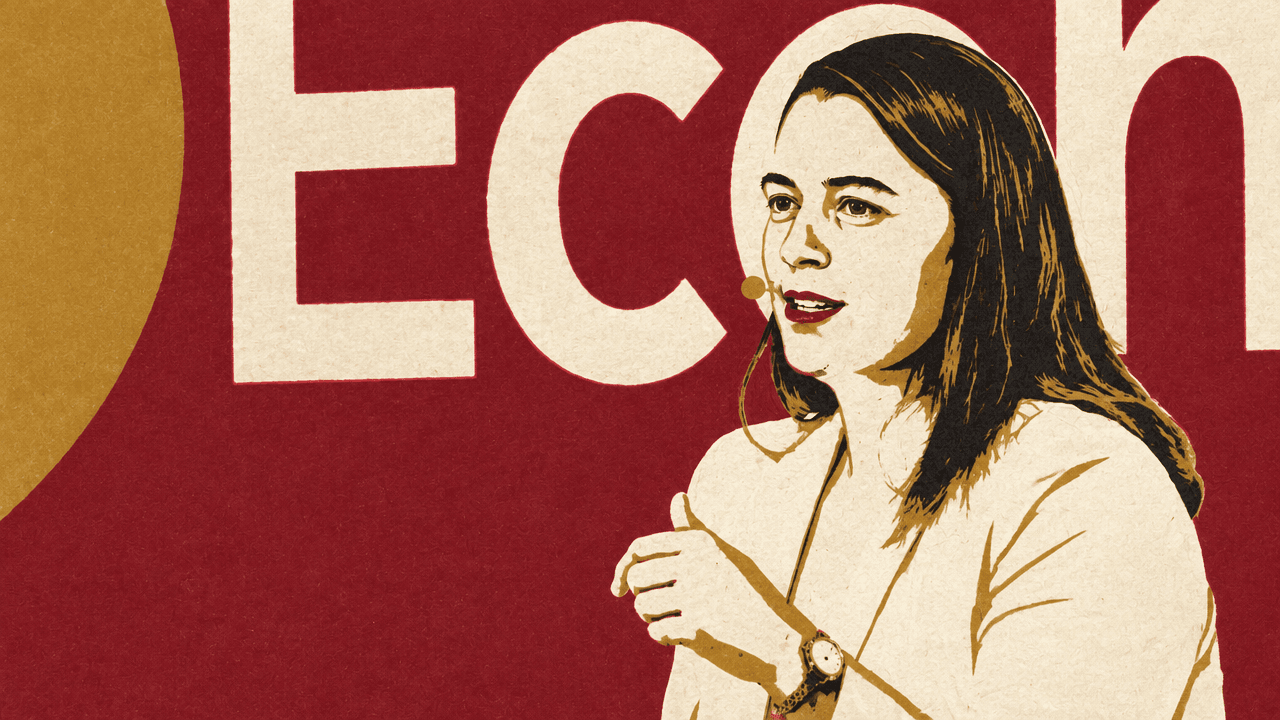
Good annual numbers can coexist with financial distress
National indicators and household reports appear to tell different stories. Jonathan Morduch says wages have roughly kept pace with inflation, unemployment was around 4.2%, and the poverty rate around 10%. Those figures do not readily explain why so many Americans report struggling. His answer is that headline measures conceal both which costs are rising and when money actually arrives.
Kathryn Edwards describes the first problem as a race between wages and prices. The comparison looks reassuring when it treats each as a single aggregate: overall wages may grow faster than overall prices. But workers do not pay an average price for an average basket of goods. Healthcare costs have outpaced overall inflation since the 1970s; education and child care joined them in the 1990s; shelter did so in the 2000s; and food has risen faster than overall inflation since 2020. A worker whose pay gains lag behind the cost of essentials can be worse off even when aggregate wages are keeping pace with aggregate prices.
Edwards cites Pew’s finding that 44% of Americans are struggling to afford shelter, health, food and transportation. For her, this is not hard to reconcile with a favorable GDP report: economic growth does not mean everyone shares in it. She rejects the explanation that people simply fail to appreciate how well they have it. When people say they are struggling, she argues, leaders should take the reports seriously. The mismatch between economic indicators and people’s accounts of their lives also feeds distrust: people may doubt that leaders will respond, while leaders doubt that people are genuinely struggling.
Morduch identifies a second blind spot: much economic data is reported annually, while households have to manage money week by week and bill by bill. In the Financial Diaries project, researchers followed 235 households—each below 200% of the poverty line—over a year, recording their economic lives repeatedly. The instability they documented was striking, even among people with steady jobs. Later analyses using much larger datasets, he says, have shown that this kind of instability is widespread.
Annual income exceeding annual expenses does not ensure there is enough money in an account when a bill is due, Edwards says. Between annual totals and daily life is where many financial difficulties take shape. Families may get through a shortfall by deciding which bills to delay. That is not the same as saving; it is a way to cope when income and expenses do not line up.
The instability often comes from hours, not wages
Morduch points to a University of Chicago study using millions of observations from an unnamed payroll company. He says the company serves roughly two to five million workers each year, and the data run from 1980 to close to the present. The study shows, in his account, that about 60% of American workers are paid hourly, and that instability in pay is largely about variation in hours, not changes in wage rates. It is not confined to gig work. Workers in ordinary jobs may lose expected overtime or see hours fall when business slows.
That distinction matters because households have little room to absorb a smaller paycheck, especially when prices are rising. Morduch recalls a woman in the Financial Diaries study who was worried about her husband’s next paycheck. He had a job as a mechanic repairing big-rig trucks, but a substantial part of his pay was commission. In spring and fall, when trucks were less likely to break down, his earnings fell. The household could anticipate the dip without being able to prevent it.
In these arrangements, Morduch argues, business risk is shifted onto workers. A repair company might otherwise bear the consequences of changing demand; instead, workers absorb those swings through commissions, tips or variable overtime. The people least able to manage that risk are left to shoulder it. When a low-pay period coincides with a health expense, fuel costs or another shock, it becomes harder to save or recover. Morduch points to Pew’s finding that many Americans do not have three months of income saved as evidence of how difficult it is to buffer these recurring shocks.
For Edwards, unsteady pay also challenges the idea that poverty is mainly the result of individual choices. A person can hold a single job, work at the wage they were offered and still fall into poverty because their employer did not provide enough hours.
Where is the personal failing that results in the poverty that we ascribe to people’s character when it comes from their schedule?
She makes a related argument about financial literacy. Teaching compound interest as a route to building wealth does little for households whose unstable pay leaves them borrowing to cover basic expenses. In that situation, Edwards says, compound interest can deepen debt faster than a person can manage it. Treating the lack of savings as proof that people have not learned the right financial lesson puts the blame on households without addressing the conditions that make saving difficult.
Predictability is a first step; worker power is the larger question
Asked whether a senator or a financial-sector leader would be better placed to help, Morduch chooses the senator first. The instability, he argues, is part of a workplace bargain: productivity can rise without wages rising as much, and inequality shows up not only in pay but in unstable hours. Changing that balance is a government issue.
Edwards puts the underlying cause more sharply: unsteady pay is itself an outcome of declining worker power. Predictable-scheduling protections, such as requiring advance notice of schedules, can help workers plan child care and other responsibilities. But she cautions against treating any single scheduling law as a complete solution. If workers remain without power, instability can take another form. The wider question, in her view, is how to restore workers’ ability to negotiate, including through unions. She says unions were a powerful tool for reducing inequality in the 20th century and notes that private-sector unionization has fallen below its level before the National Labor Relations Act.
Morduch lays out a progression from basic protections to broader reforms. He points to regulations in places including Oregon, Seattle, New York and Los Angeles that aim to provide basic predictability. One example is preventing workers from being called in and then sent home because business is slow. He says advance notice gives workers time to plan, while legislation requiring greater stability of work would be harder to design. Strengthening unions is harder still, but, in his view, may be more effective in the end.
Traditional unionization is not the only possible route to collective bargaining. Edwards raises sectoral bargaining as an alternative: workers in an industry or occupation within a geographic area could negotiate common working conditions. She offers nurses in Minnesota as an example of the kind of group such an arrangement might cover. She also argues that workers should not have to negotiate individually for benefits that could be treated as broader rights. Health coverage need not be tied to a job, she says, and automatic individual retirement accounts could make retirement saving less dependent on an employer.
The health-insurance question makes the power issue concrete. Edwards says one in four Americans report being “job locked” because they cannot risk losing or changing their health insurance. Employer-sponsored coverage can give an employer leverage by making it harder for a worker to leave. She argues that separating health insurance from work is not only a question of coverage or cost: it would also require employers to give up some control over workers’ ability to move between jobs. Morduch agrees that this is a difficult change, not an easy policy win.
Morduch sees a separate role for financial institutions. Automatic savings arrangements may suit people with regular incomes, he says, but can work poorly for households facing variable pay and emergencies. He wants savings products that combine structure with flexibility, allowing people to save while still accessing money when an unexpected expense hits.
Edwards argues that public goods can be financed through ordinary tax-and-spend policy. She estimates that the One Big Beautiful Bill Act reduced federal revenue by $450 billion a year, apart from roughly $100 billion in cuts to Medicaid. In her view, revenue on that scale could support universal child care, paid family and medical leave, and universal school meals, while still allowing for additional tax revenue. Her objection to relying on modern monetary theory is that it leaves the tax system’s role in distributing benefits unresolved.
Employer incentives matter, but they do not settle the case
An audience member asks why employers do not improve jobs when turnover is costly. Morduch says workers in unstable jobs are more likely to leave, imposing costs on employers as well as workers. But businesses also benefit when workers absorb the risks of fluctuating demand. Providing greater security may retain staff while requiring the business to take on more of that risk.
Edwards distinguishes direct payroll costs from broader labor costs. Higher wages, paid sick days and more predictable schedules can increase payroll expenses, while lower turnover can reduce other labor costs. She points to a Gap randomized trial in which stores using better scheduling were more profitable. She does not present that result as proof that employers will always choose stability: a business still has to decide whether to bear the costs of slow days rather than pass the risk on to workers.
A business’s choices, Edwards argues, are not automatically the only sensible ones simply because they are made in pursuit of profit. She cites Costco as an example of a profitable business whose workers can earn $33 an hour and build retirement savings. Morduch adds a caution: reform should not rest solely on the hope that employers will act because stability makes good business sense. The case for it, he says, is also that treating workers well is the right thing to do in a decent society.
The question of small businesses extends the power argument beyond employees of large firms. Morduch says his Small Firm Diaries project is following small-scale entrepreneurs and examining questions similar to those in the Financial Diaries. He describes the entrepreneurs as facing instability, with workers bearing some of the risk as well.
Edwards argues that independent business owners may have more in common with workers than with large corporations. The federal definition of a small business, she notes, includes firms with fewer than 500 employees; that does not match the scale of the Main Street businesses or solo ventures she has in mind. For her, the central issue is who has the power to advocate for themselves. A small-business owner may have little leverage compared with a large corporation, just as a worker may have little leverage compared with an employer. The ability to walk away—to another job, self-employment or a small business—matters, but Edwards says the United States has the lowest rates of small businesses and self-employment among OECD countries. She interprets that as a reflection of power, not simply of people’s willingness to become entrepreneurs.