Climate Action Needs a Moral Language Beyond Partisan Identity


Rainn Wilson argues that climate action needs more than science, policy and consumer-level guilt: it needs messages that reach the politically disengaged “movable middle” and a moral language rooted in care for people and the natural world. In conversation with Zeenat Rahman, he contends that treating places, relationships and ecosystems as sacred can give people with different politics or beliefs a shared basis for protecting them.
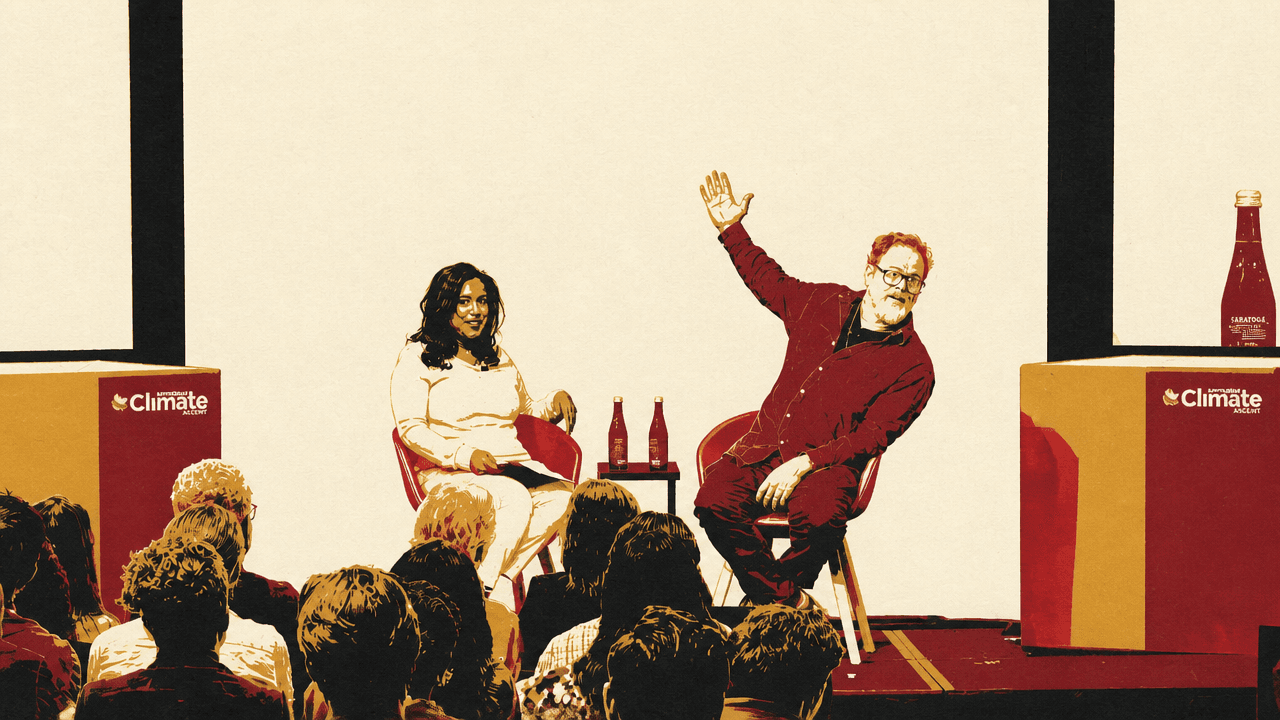
Climate work needs a message for the movable middle—and a moral language of care
Rainn Wilson argues that climate action cannot rely only on technical solutions or messages designed for people already persuaded by the issue. It needs a communications strategy for people who are uncertain, disengaged, or politically resistant—and a language of care expansive enough to connect people who do not share the same politics, faith, or environmental identity.

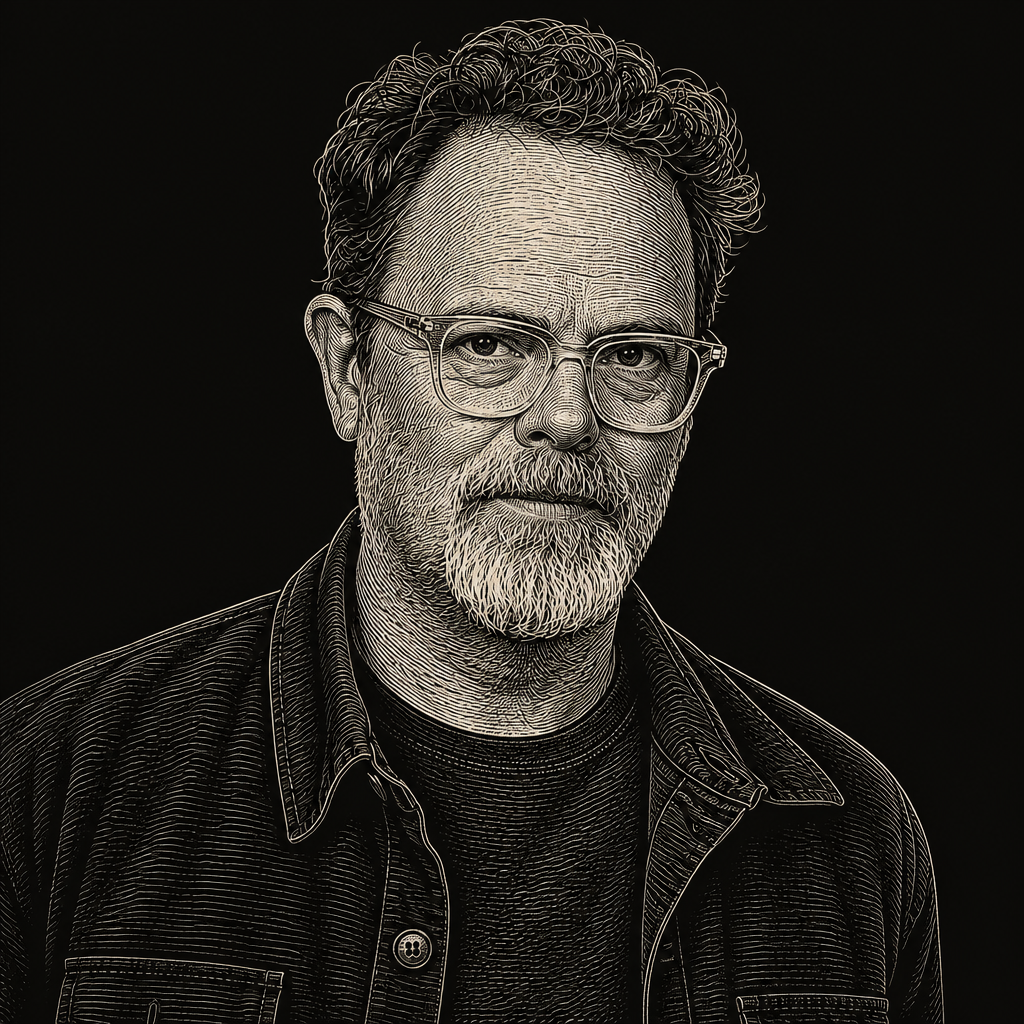
That combination emerged from Wilson’s own reassessment of what he could do with a public platform. Before COVID, while learning more about the climate crisis, he says his principal response had been to send “angry tweets in my underwear at climate change deniers.” He concluded that this was not going to accomplish much. Work with Dr. Gail Whiteman at the University of Exeter and Arctic Basecamp led him to see what he regarded as an unmet need in climate communication: messages capable of connecting climate science with audiences beyond those already engaged.
Wilson calls that audience the “movable middle.”
At one end, Wilson says, are people who will not listen to climate or environmental messaging at all. At the other are people who already vote, think, and care about climate. Too much climate communication is directed at that second group, he argues—material akin to nature documentaries made for committed “tree huggers,” which may reinforce concern without widening it.
The challenge is the person Wilson describes as a confused 27-year-old in Omaha, Nebraska: someone receiving conflicting signals from relatives watching Fox News, from school, and from the internet, and who does not know what to believe. That person still needs science, but not science presented solely as dry data points. The message must use storytelling, humor, celebrity, and ideas that can interrupt habitual responses.
We need to reach them with some science, but we need to do it with storytelling.
His climate projects have followed that premise. With Arctic Basecamp, Wilson worked on The Idiot’s Guide to Climate Change and helped produce the online COVID-era telethon Make Earth Cool Again, which included participants such as Billie Eilish. At the COP conference in Glasgow, he says, the group towed an iceberg from Greenland and hung it outside the venue, where delegates passed it as it melted. They handed out bottles of glacial meltwater accompanied by facts about glacier melt, placing an environmental message in front of not only advocates but also representatives of large and petroleum companies.
Wilson compares this approach to the cultural effect he attributes to Will & Grace. The television show did not present LGBTQ relationships and marriage as a declared political agenda, he says; it made them ordinary within its world. In Wilson’s telling, public opinion shifted substantially over the course of the show. Climate communication should similarly make the human causes of climate change less culturally alien, even if the reality itself remains “really abnormal and terrifying.”
Language itself can determine whether a listener stays in the conversation. Climate Basecamp has been renamed Project Basecamp because, Wilson says, the word “climate” now causes a large share of people to “absolutely shut down.”
Climate literacy matters more than consumer guilt
When Zeenat Rahman asks how young people can find a meaningful role amid problems too large for any individual to solve, Wilson rejects the familiar starting point of consumer guilt.


He says he often hears young people ask whether they should recycle more, then responds bluntly: “Let’s face it, recycling is basically bullshit.” His argument is not that individual habits are worthless or that people should consume without restraint. He explicitly says people should not shop incessantly through one-click convenience, ignore food waste, or simply abandon recycling. But he disputes the idea that consumer virtue is the central lever on climate change.
Wilson says 19 companies have been responsible for 80% of climate change over the past 26 years. He also says British Petroleum and Saatchi & Saatchi developed the idea of the carbon footprint as a way of placing responsibility on consumers. In his view, that framing draws attention away from the industrial and institutional forces producing emissions.
The more useful first step, he tells young people, is to learn enough about climate that an area of genuine interest emerges. That means not merely accumulating a handful of facts, but becoming curious about what creates carbon dioxide, how methane operates, and the roles of petroleum, concrete, agriculture, deforestation, and renewable energy. The subject is broad enough that a person may find a particular part of it that provokes anger, curiosity, or commitment.
This is a more demanding version of individual agency than a checklist of household choices. The task is to build knowledge until someone can locate where they can contribute—where their concern “incites” or inspires them. Wilson presents his own path into climate work as an example: learning led him toward an issue he felt compelled to address publicly.
Broken systems reflect a disconnection from care
Rainn Wilson considers legislation, carbon capture, limits on carbon and methane, and tree planting important. But he describes an underlying “spiritual disease”: a disconnection from other people, from the heart, and from the Earth.
In Soul Boom, Wilson argues that necessary efforts to repair broken systems can still amount to Band-Aids on an underlying cancer. The deeper problem, he says, is an erosion—over decades or centuries, though he does not claim to know how precisely to chart it—of the human connection needed to sustain justice, fairness, compassion, and mutuality.
He does not reserve those values for religious believers. Wilson explicitly acknowledges that atheists, agnostics, and others may recoil from the language of religion or spirituality. They can instead understand the same orientation as essential human values, common sense, or being good-hearted. He sees those values in the world’s faith traditions and in wisdom traditions outside organized religion, but does not make faith a prerequisite for acting on them.
Wilson points to failures beyond climate as evidence of the broader condition he has in mind. His stepfather, after a stroke, spent 10 hours in a hospital hallway because there was no room available at the hospital to which he was taken under Medicare, Wilson says. He also names agriculture, politics, and mental health as systems that are breaking down.
His skepticism extends to technology’s recurring promises of broad social benefit. The internet, he says, was supposed to reduce paper use, improve life, and equalize economics; crypto was supposed to democratize capital. He argues that those promises did not materialize as advertised. He makes a similar argument about AI and data centers, citing layoffs at Oracle and Microsoft and contending that companies are building the infrastructure in order to eliminate jobs.
The point is not that technology itself is the sole problem. Wilson’s question is what companies believe workers are worth, what counts as reasonable growth and profit, and whether economic life can be organized in greater harmony with people and the planet.
Taking climate out of the realm of the head and putting it back in the heart.
The sacred is Wilson’s proposed bridge across political division
Rainn Wilson proposes the idea of the sacred as a bridge between climate politics and moral obligation. It is meant to create a basis for care among people who might reject one another’s language, institutions, or assumptions.
He imagines people putting on “sacred goggles”—a way of seeing ordinary places not simply for their utility, but for the histories and attachments they hold. A corridor may matter because someone was asked to marry there. A tree may matter because a gardener planted it after bringing a family to Chicago. A church may matter because someone was laid to rest there. The practice is to notice that places are already bound up with memory, love, loss, and responsibility.
That framing can unite people on different political grounds, Wilson argues. A person on the left might see the awe, beauty, and wonder of science as sacred. A more religious person might understand the planet as God’s kingdom, with human beings as caretakers of an ecosystem shared by eight billion people. They need not agree on why the world is sacred in order to agree that it deserves protection.
Wilson uses the term “sacralize”: to make something sacred. He asks what it would mean to sacralize campuses, workplaces, communities, companies, and everyday connections—to make places, spaces, and relationships more sacred. For Wilson, this is one way to begin a dialogue that could produce greater harmony and a way forward.
Compassion is the difficult practical test. It is easy to endorse compassion, Wilson says; it is much harder to make it more important than making money. Yet he treats that reordering as necessary. Reaching people who react defensively to climate language may require a message that begins from shared attachments rather than partisan identity.
His closing meditation put that proposition into practice. Wilson asked attendees to remember a place in nature from early childhood—a backyard tree, beach, hike, lake, or blade of grass—where they first felt beauty, connection, and love for the Earth.
That space is sacred. It’s sacred to you. It will always be with you.
The remembered place was meant to connect personal attachment to collective work: preserving the tree, lake, or blade of grass so it can be shared with children, relatives, friends, and the wider community. Wilson calls that “sacred work”—both “God’s work” and “science’s work.”
For work he describes as difficult and often thankless, that attachment can also be a source of renewal. His final instruction was relational rather than solitary: participants should share the experience with someone else, including a stranger they had met at the gathering, and support one another in what follows. “We can’t do this alone,” he says.