Lower-Income Countries Need Energy Abundance, Not Basic Grid Connections
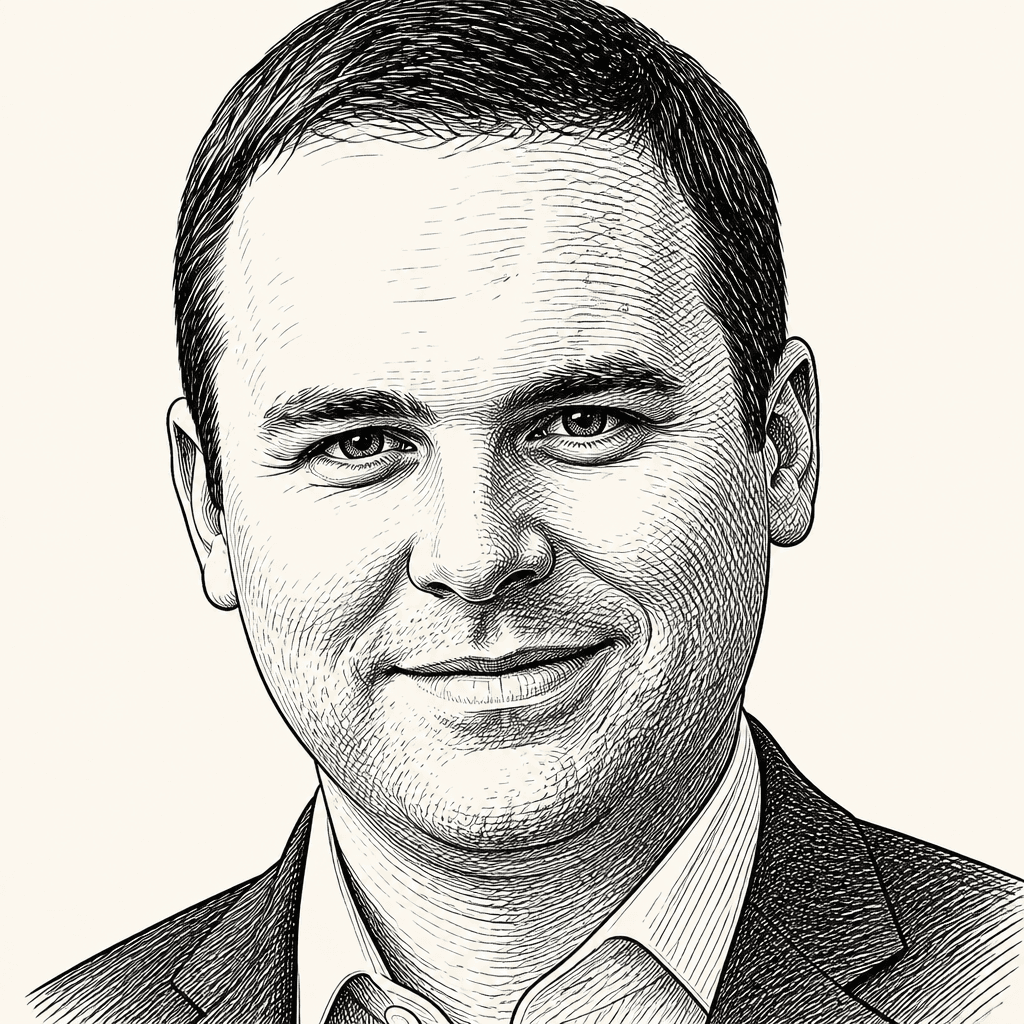

Jason Bordoff and Cassady Walters argue that development policy should aim beyond basic electricity access toward “universal energy abundance”: reliable, affordable power sufficient to support industry, transport, agriculture and modern services. Through the High Level Panel on Universal Energy Abundance, they advocate country-specific energy pathways that account for climate constraints while addressing the financing, institutional and investment risks that make energy projects far costlier in lower-income markets.

Energy access is not the same as energy abundance
Cassady Walters defines universal energy abundance as a development standard rather than a binary measure of whether someone can charge a phone or turn on a light. Basic electricity access matters for human dignity, she says, but it does not supply the energy needed to change economic prospects at the household or national level.
The distinction is practical. Energy abundance means a household can turn on power without wondering whether it will remain available through the night. It means a country can run factories, transport systems, and industry—not merely connect homes to a limited electrical supply. In Walters’s formulation, the goal is an energy system so dependable that people do not have to think about where their energy is coming from when they use it.
That standard begins with a blunt observation: no rich country is energy poor. Low- and middle-income countries need substantially more energy, not just nominal grid connections, if they are to industrialize and support the socioeconomic outcomes associated with development.
The High Level Panel on Universal Energy Abundance, led by Columbia University and the Rockefeller Foundation and chaired by former Chilean president Michelle Bachelet, is intended to focus attention on that larger requirement. Its concern is not only the roughly 730 million people without ready electricity access, but the much greater energy supply required for mechanized agriculture, refrigeration, fertilizer production, industry, and modern services.
Jason Bordoff puts numbers around the gap. Conventional definitions of access may imply only 50 to 100 kilowatt-hours of electricity per person each year—enough for lighting and phone charging. Estimates of a “modern energy minimum,” he says, rise to roughly 1,000 kilowatt-hours per person annually: 10 to 20 times the access-level figure. Malaysia, by comparison, uses about 5,000 kilowatt-hours per person.


Bordoff’s broader claim is that energy and prosperity are inseparable. Measures of well-being—longevity, income, mortality—remained close to stagnant for much of human history, he says, until societies learned to harness energy at scale, initially through fossil fuels. The relevant comparison is not between minimal access and the consumption of a large American suburban home. It is between limited electricity service and the energy required to build productive, resilient economies.
Development and decarbonisation require country-specific pathways
The initiative does not treat the source of energy as irrelevant. Jason Bordoff says it is not an argument for supplying “any energy” regardless of its origin. But he objects to beginning the development conversation by telling lower-income countries that meaningful improvements in living standards can come only through zero-carbon sources, particularly while the United States still gets 15% to 20% of its electricity from coal.
The tension is not rhetorical in his account. Providing far more energy quickly through zero-carbon sources alone is difficult. Renewables have become very cheap and will do much of the work, Bordoff says, while battery storage has also fallen sharply in cost. But he wants the group to examine a wider set of pathways: geothermal, cutting-edge nuclear, and other technologies on the innovation frontier. It is not, he says, a case for offering lower-income countries speculative promises about fusion years from now.
Cassady Walters says no outside institution should decide the energy mix for Vietnam, Nigeria, or another country. The group’s role is to help countries confront their constraints, identify plausible pathways, and make projects financeable—not to prescribe a universal portfolio of gas, coal, renewables, or nuclear.
Nuclear illustrates the point. Walters sees it as a potential source of firm, clean, reliable power, but says countries require regulatory systems and safety guidance before they can deploy it. The practical question is therefore not simply whether a technology is desirable in principle, but whether the institutions, financing, and implementation capacity exist to use it.
Climate remains central because the countries in question are also among those most exposed to climate impacts. Bordoff says they have fewer resources to cope with those effects and often face the worst physical consequences. Ignoring emissions would deepen their future energy and development crisis.
At the same time, Walters argues that low- and middle-income countries should not be treated as though they bear equal responsibility for creating the climate problem. Africa, she says, has produced less than 3% of cumulative carbon emissions. Even full use of African gas resources, she argues, would still represent a fraction of the global total. Development pathways cannot be foreclosed by standards directed at a problem these countries did not create.
It’s not a one-two step to clean. And that’s up to a country to figure out what that transition period looks like.
That acknowledgment extends beyond power generation. Bordoff notes that electricity represents only about 20% of the global energy system. Transport, agriculture, industry, cement, steel, and the building of cities all require energy, and many are difficult to electrify quickly. Neither speaker offers a settled technical path for decarbonizing those activities at the required scale and cost.
Bordoff says a more honest global framework may require different timelines. Participants from lower-income countries, he says, have argued that if wealthier countries expect targets around mid-century, wealthier economies may need to get to zero sooner—he offers 2035 as an example—while developing economies might need until 2070. Those are difficult conversations in international climate forums, but he regards them as necessary ones.
The practical task is to make deployment financeable and repeatable
The proposed intervention is not principally to select technologies. It is to change the conditions that prevent viable technologies from being built at scale.
Cassady Walters says energy technologies in the low- and middle-income countries where the Rockefeller Foundation works often cost two to three times more than they do in richer markets. The gap is not simply the cost of equipment. Regulatory frameworks, currency-exchange exposure, and the broader risk of investing in a market can make otherwise promising projects prohibitively expensive.
Bordoff adds governance and corruption concerns to that list of investment barriers. Walters estimates that risk can account for 60% to 90% of why project costs are so much higher. Reducing that risk—both the underlying risk and investor perception of it—is therefore a central part of expanding supply.
That changes the role Walters sees for philanthropic capital. She points to first-of-a-kind utility-scale storage as an example: financing one difficult project can establish proof of concept, reduce uncertainty, and allow 10 more projects to follow. The purpose is to de-risk projects and technologies sufficiently for investment dollars to flow into the market.
Governments, in her view, must treat energy as a foundation of industrial strategy rather than a separate infrastructure concern. Walters cites Zambia, where ambitions to develop the mineral sector can outrun the available grid. A strategy for mining, manufacturing, or broader economic growth has little chance of succeeding if the system cannot power it.
The urgency is not abstract. Jason Bordoff describes a four-month energy disruption associated with events in Hormuz that, while less severe as a global price shock than some expected, imposed much sharper physical consequences in lower- and middle-income countries. In Southeast Asia, he says, countries faced shortages and scarcity; Pakistan asked people to watch cricket on television instead of traveling to stadiums to conserve energy, while work weeks were shortened, schools closed, and physical fuel rationed.
His point is that the unequal burden of energy insecurity is already visible. Much of the growth in oil demand over the past 15 years has occurred in lower-income countries, Bordoff says. When supply tightens, demand destruction occurs there first. The result, in his account, is that lower-income countries feel the disruption much more acutely.
Walters sees that pressure as a window for action. Governments are confronting energy-security needs now, which may create momentum for a faster buildout—provided financing, risk reduction, and institutional capacity can move at comparable speed.
For entrepreneurs and local policymakers, the request is specific: build and demonstrate systems that can travel. Walters says governments considering unfamiliar technologies want examples of what has worked elsewhere. Advanced technologies will not reach lower-income markets simply because they exist; they need deployment pathways, operating experience, and credible proof that a project can work under real conditions.
A local project can therefore matter beyond its own energy output. If it provides proof of concept and reduces uncertainty for the projects that follow, it can help make subsequent investment more plausible. In Walters and Bordoff’s account, that is how innovation can move beyond an isolated demonstration.