Middle Powers Need U.S. Power to Resist Chinese Coercion
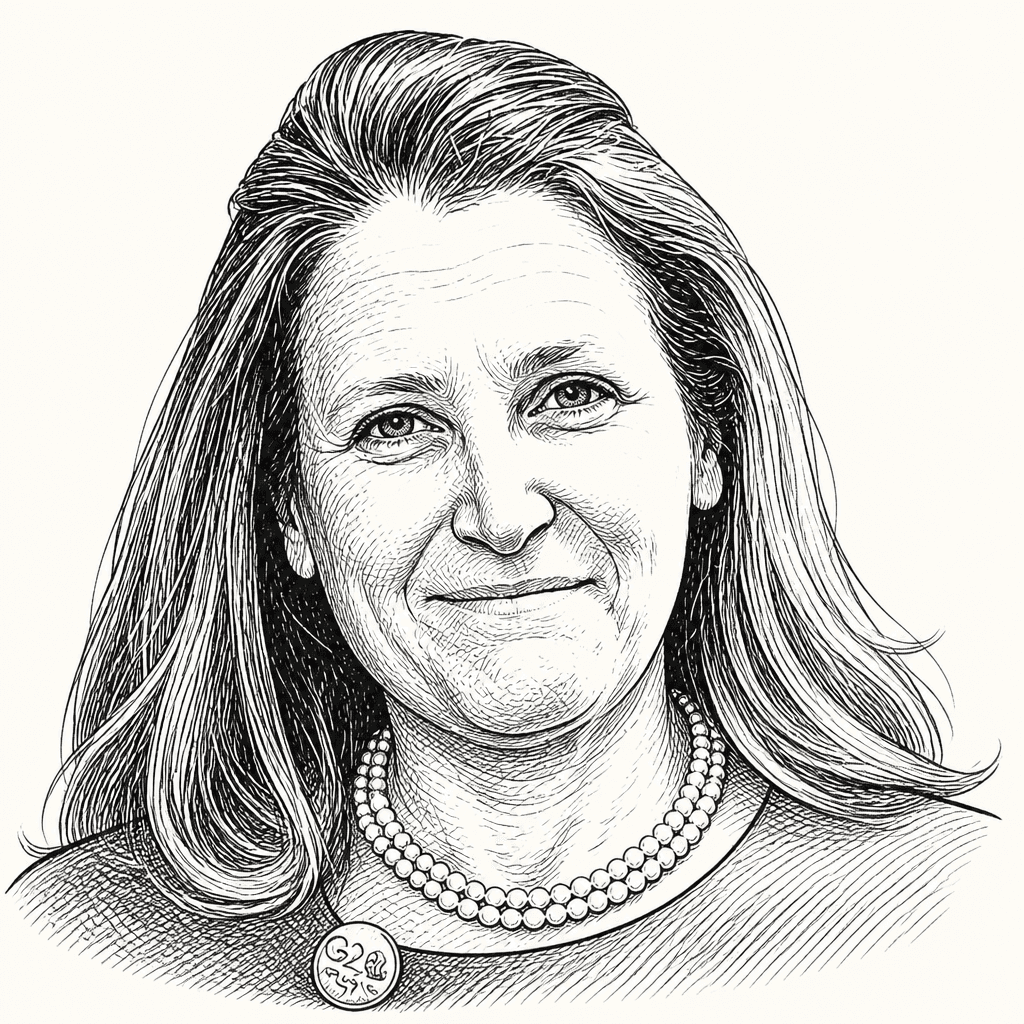 Chrystia Freeland
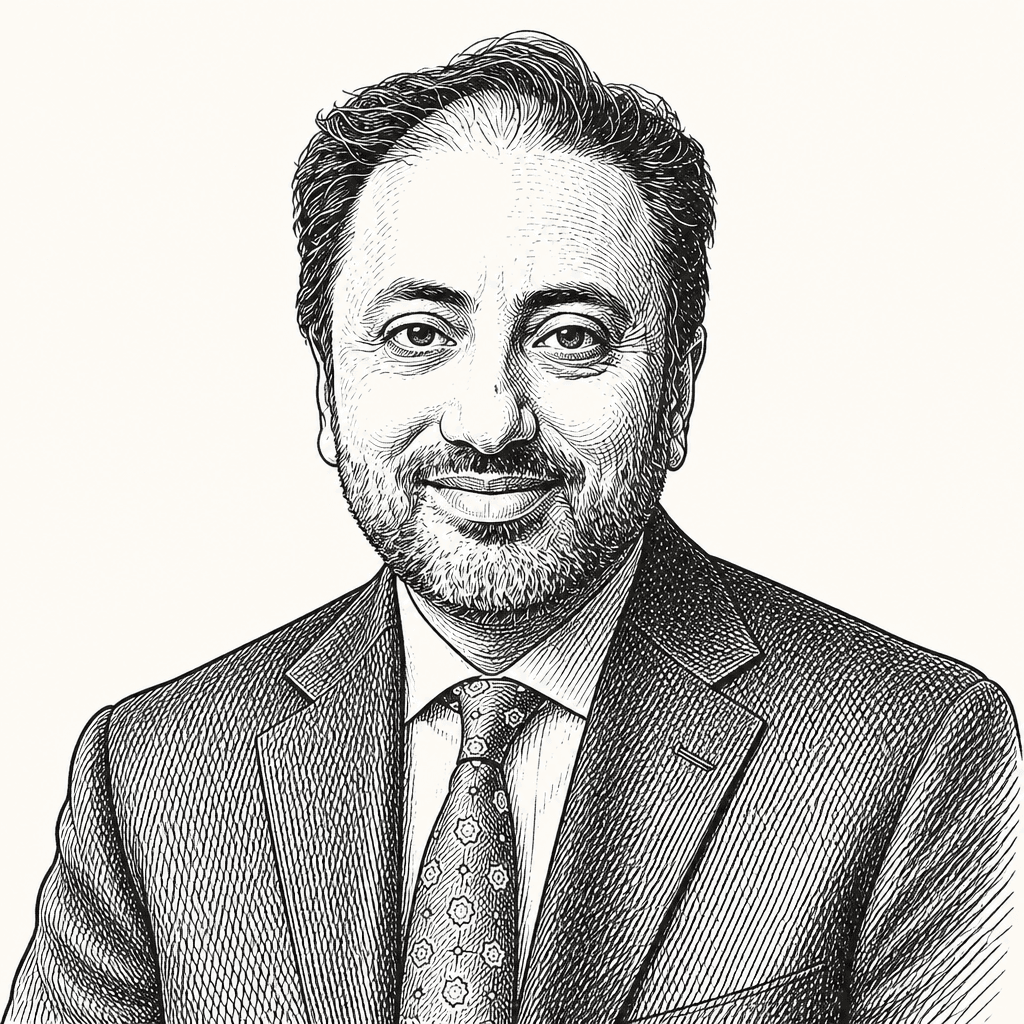 Sadanand Dhume
 Tomáš Klvaňa
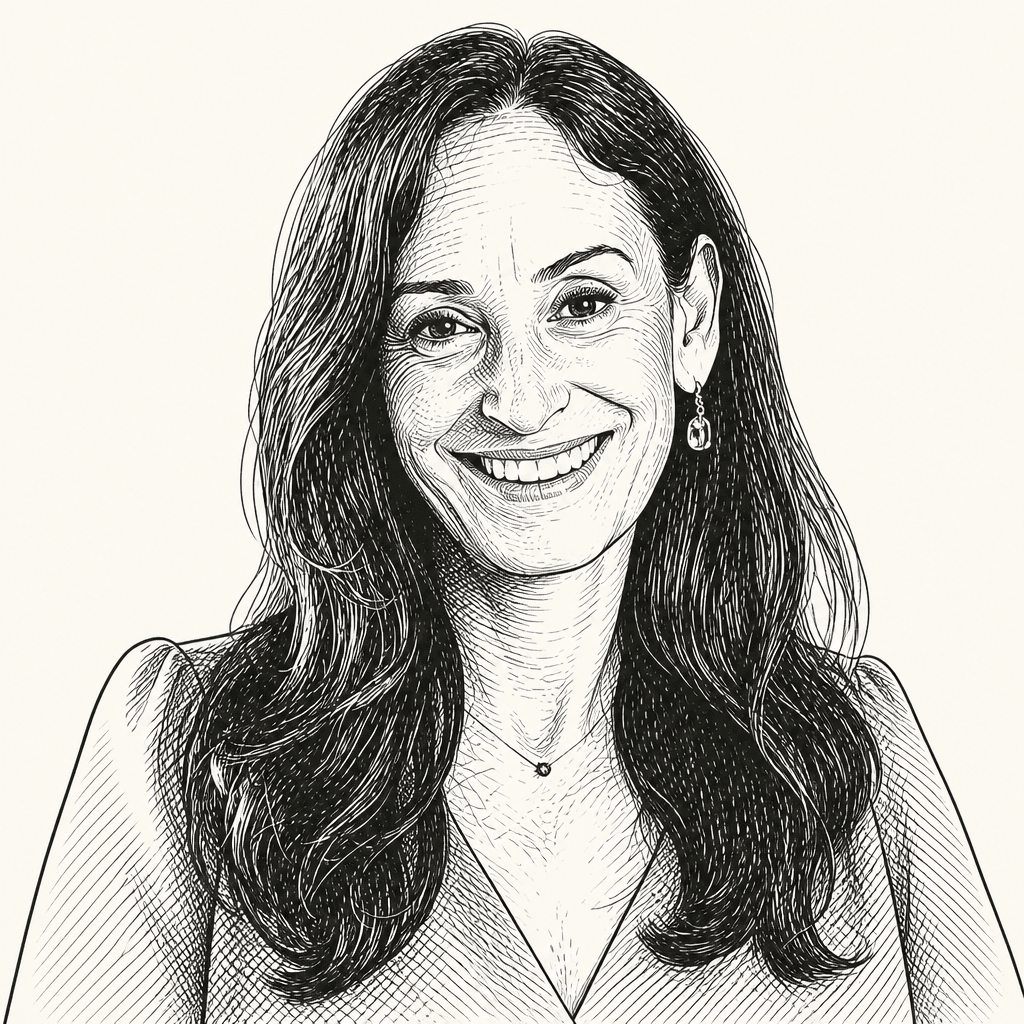 Shannon O'Neil
 Jonathan CapehartThe Aspen InstituteThursday, July 2, 202619 min read
Middle powers are seeking leverage between a less reliable Washington and a more coercive Beijing, but the speakers argued that coordination cannot substitute for American power. In a Jonathan Capehart-moderated Aspen Ideas Festival panel, Chrystia Freeland, Sadanand Dhume, and Shannon O’Neil said countries outside the two dominant powers need deeper cooperation, but remain constrained by divergent interests, supply-chain dependence, collective-action problems, and the continuing indispensability of the United States.
Middle-power coordination is necessary, but not sufficient without the United States
The central proposition was stark: countries outside the two dominant powers need collective leverage, but they are unlikely to create enough of it without U.S. participation. The new nonalignment under discussion was not a return to Cold War neutrality. It was a more constrained question: whether countries caught between Washington and Beijing can combine economic, diplomatic, technological, and military weight to avoid negotiating one by one from weakness.
Jonathan Capehart framed the issue through Canadian Prime Minister Mark Carney’s argument at the World Economic Forum: “Middle powers must act together because if you are not at the table, you are on the menu.” Carney’s warning, as Capehart read it, was that great powers can “go it alone” because they have market size, military capacity, and leverage; middle powers cannot. If they negotiate bilaterally with a hegemon, they compete to be “the most accommodating,” producing what Carney called “the performance of sovereignty while accepting subordination.”
Chrystia Freeland said Carney’s remarks landed in Canada because they voiced a national mood: sadness, anger, and betrayal over how the United States was treating a close ally. She described Canada’s position as an attempt to remain democratic, remain available as an American partner, but also prepare to “steer a course that works for us” if the United States chooses another path.
Her account was concrete rather than abstract. She cited U.S. tariffs of 50% on Canadian steel and aluminum, and 25% on Canadian cars and car parts, imposed on national-security grounds. She called that logic perverse, noting that “aluminum is basically electricity in solid form” at a time when the United States says it needs more power for affordability and data centers.
For Freeland, the immediate driver of the new middle-power discussion is not simply the rise of China or the long erosion of the postwar order. It is the behavior she attributes to the current U.S. administration toward countries that thought of themselves as America’s closest democratic partners. Canada, she said, would rather be “your friend and ally,” but is no longer able to assume that Washington will act as one.
Sadanand Dhume introduced a sharp caution from India’s experience. India was one of the founders of the original Non-Aligned Movement, alongside countries such as Egypt, Indonesia, and Yugoslavia. Dhume argued that the original version was “not a very happy experience” and not a successful foreign policy, especially when judged against economic development. He said Indian reactions to Carney’s speech contain a duality: some welcomed the critique of hypocrisy in the old liberal international order, while policymakers in New Delhi recognize that a middle-power coalition may be noble in sentiment but difficult to execute.
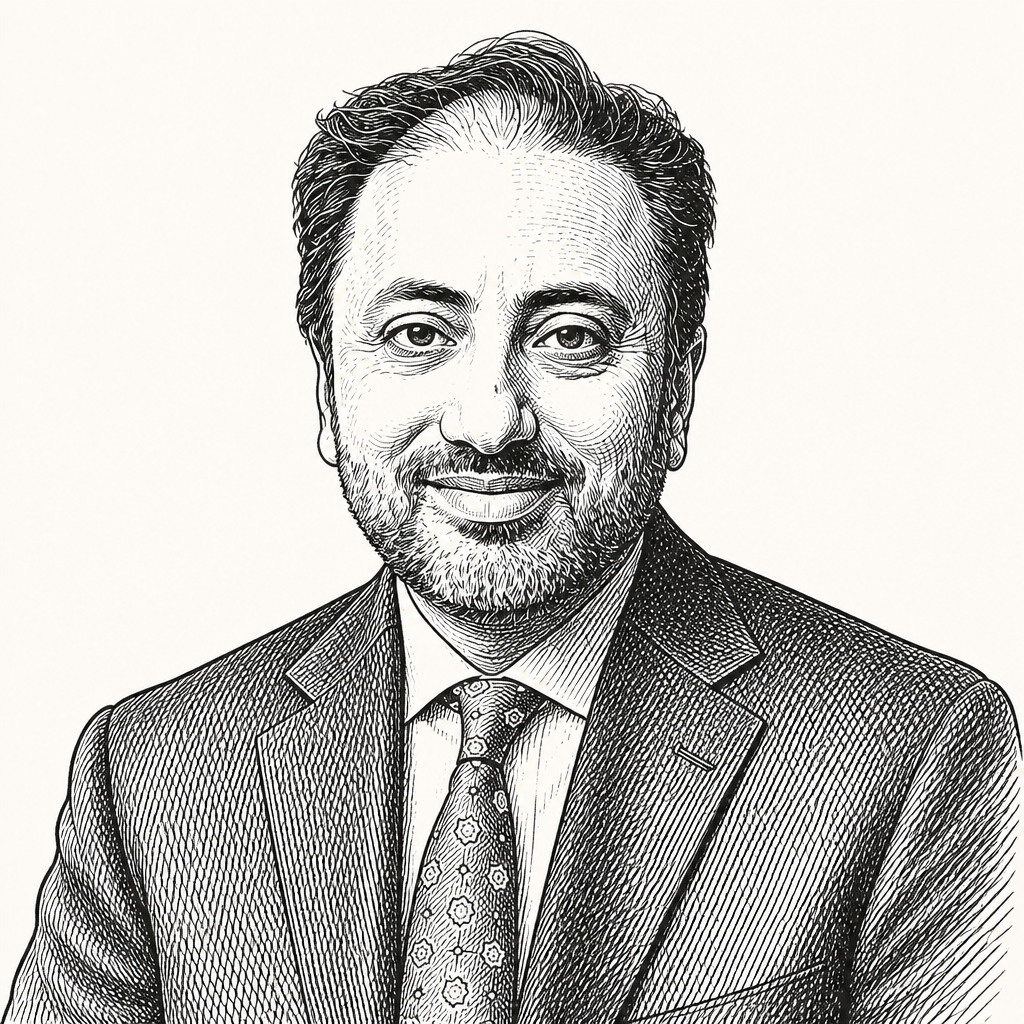
India, Dhume said, is already hedging. It is repairing ties with Canada, pursuing a free trade agreement with the European Union, and may buy 114 Rafale fighter jets from France in what he described as one of the world’s largest fighter-jet orders. But he insisted that none of this replaces India’s most important relationship: the United States, not only economically, but diplomatically and technologically.
I don’t think anyone realistically believes that this kind of middle power coalition can replace the centrality of the United States.
Shannon O'Neil agreed that Carney’s speech was inspiring, but called it aspirational in the current environment. She argued that the high point for middle-power autonomy was not now, but roughly 20 years ago, when the United States was the hegemon and generally enabled a broader rules-based order through the WTO, IMF, World Bank, security alliances, and other institutions. In that setting, countries could participate and be heard through rules.
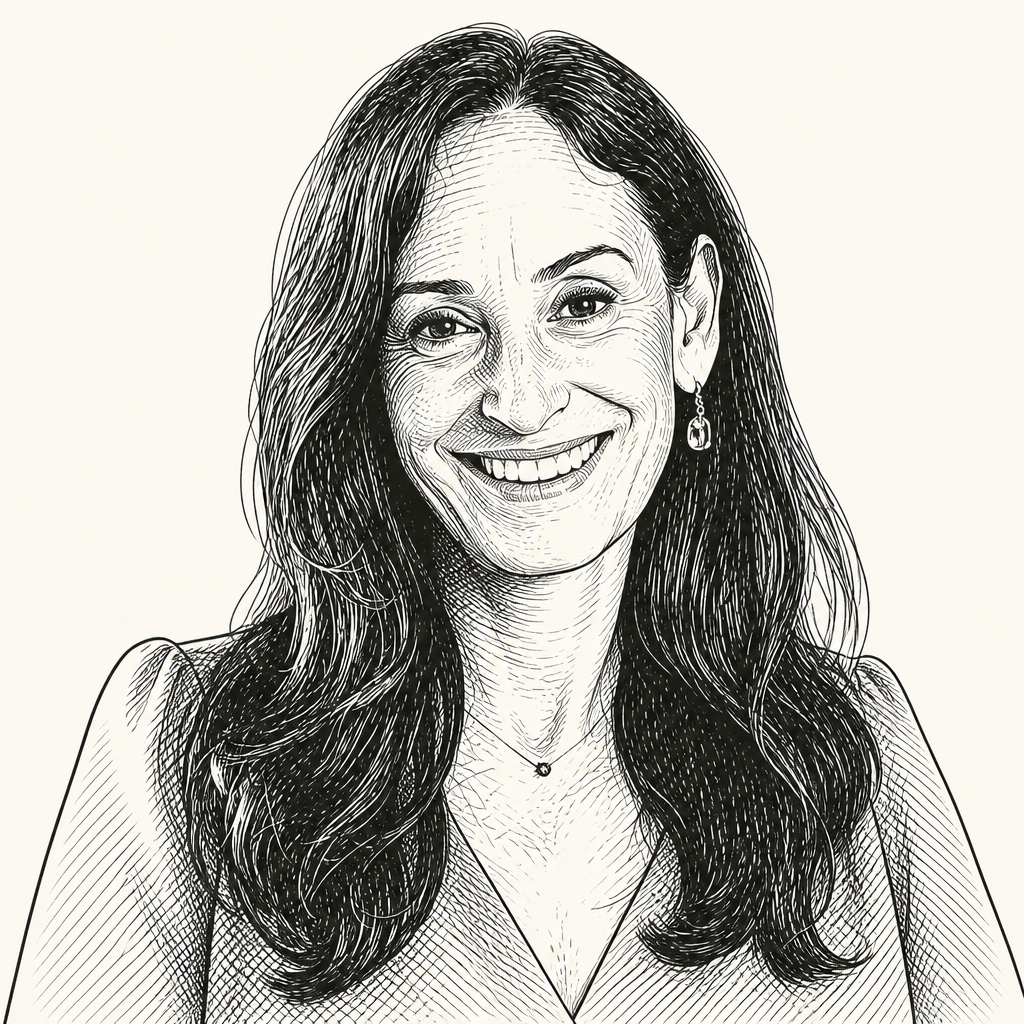
That world, she said, is no longer available in the same way. The United States has become more unilateral, transactional, and coercive. China, meanwhile, is not an enabling partner for a middle-power order either. O’Neil described Beijing as focused less on alliances than on “partnerships, clients, or even vassals.” The pressure on countries in between is therefore coming from both directions.
The result is a paradox: the need for a third path is increasing just as the ability to build one is narrowing. Middle powers may need pragmatism and collective leverage more than before, but O’Neil argued that the space for hedging will shrink as the United States and China demand choices across more parts of the economy and security architecture.
Europe’s difficulty shows why a middle-power bloc is hard to build
Shannon O'Neil’s most direct objection to the idea of a middle-power bloc was structural. A coalition of India, Brazil, Europe, Canada, South Africa, and other states may look powerful on paper, but the members have divergent interests, different levels of economic development, different forms of government, and different global priorities.
She described this as a classic collective-action problem. Everyone might benefit from coming together, but that does not mean they can sustain a coherent force. Her example was Europe. If any group should be able to solve collective action, it is the European Union: it has had more than 70 years, repeated treaties, and dense formal mechanisms binding its members together. Yet Europe is still struggling to respond effectively to what O’Neil called China’s economic juggernaut, which she said is hollowing out European industry.
If Europe cannot fully solve that problem, O’Neil argued, it is difficult to see a much looser and more heterogeneous grouping of middle powers doing so.
Chrystia Freeland contested the pessimism, but not by denying the difficulty. She pointed to Ukraine as evidence that a smaller power, backed by allied democracies, can resist a much larger aggressor. She called Ukraine a “tiny power” in economic terms, with an economy “the size of Nebraska,” and argued that it is standing up to Russia and, in her assessment, “actually winning right now.”
Her claim was not that Ukraine is succeeding because of a formal middle-power club. It is succeeding, she said, first because of its own conviction and because it is good at making weapons and fighting in a smart modern way. But it is also succeeding, according to Freeland, because Europe, Canada, Norway, Japan, South Korea, and other democracies have supported it. She described Ukraine as the clearest current example of democracies winning “on the battlefield,” with Ukraine in the lead and Europe providing substantial money.
Brussels and Kiev are the leaders of the free world right now.
Freeland argued that European fear of losing U.S. military support shaped early attempts to appease the Trump administration. She said the United States did withdraw support, and that Ukraine’s position was still “going okay” and even “going really well.” She added that if the United States joined “Team Ukraine,” the war could be over by the end of the year and would send a powerful message to China by containing Putin.
Sadanand Dhume partly disagreed with the lesson Freeland drew from Ukraine. To him, Ukraine does not show that middle powers can now prevail collectively against great powers. It shows that changes in technology make it harder for a great power to impose its will militarily on a smaller country. He suggested a parallel in Iran: on paper, a stronger country may appear dominant, but subjugating a much smaller country militarily is no longer easy. That fact matters, but Dhume did not think it proves that middle powers can work together in a way that removes them from dependence on the two largest powers.
O’Neil placed Ukraine closer to Freeland’s side of the ledger, but as a catalyst rather than a finished model. Ukraine’s future, she said, is to become part of Europe: perhaps not NATO, but part of the European Union more broadly, bringing the continent its most innovative and battle-tested army. That could add energy to the EU and strengthen democratic coalitions, including any effort to bring the United States back into alignment.
China’s role in Ukraine made that point more consequential. If Freeland had said the United States was putting a thumb on the scale for Russia, O’Neil said China is putting more than a thumb there. Russian drones and conventional equipment, in O’Neil’s telling, rely on Chinese supply chains. Ukraine’s success would therefore matter not only for Russia’s defeat, but for the broader contest over the resilience of democratic coalitions.
Freeland disclosed that she is an unpaid official economic adviser to President Volodymyr Zelensky. Her view was that Ukraine’s next task is to recognize the economic battlefield as equal in importance to the military one. If Ukraine brings to economics the same clear purpose, national unity, and innovative ingenuity it has shown militarily, she said, it can become “the next tiger economy,” as Poland has been.
She cited Kyrylo Budanov — identifying him as President Zelensky’s chief of staff and formerly head of Ukrainian intelligence — as wanting Ukraine to become “the most liberal economy inside the European Union.” Freeland said that would be a win for Ukraine, the EU, and democracies.
On the broader claim of Western stagnation, Freeland rejected the framing. She pointed out the contradiction between fears that artificial intelligence will eliminate jobs because “super robots” will take over and claims that the West is no longer inventing anything. Both cannot be true, she argued. Her view is that the West, especially the United States, remains innovative. The deeper failure is sharing: many Americans, particularly in the Rust Belt, felt left behind by broader success. Trump identified that pain, she said, but “tricked them” by blaming Canada or Mexican immigrants. For Freeland, stagnation is not the absence of invention; it is the unequal distribution of its gains.
China cannot be isolated, but democracies can make domination harder
China was treated as too large, too advanced, and too embedded in global supply chains to be isolated. The policy question was therefore not whether democratic and middle powers could cut China out of the world economy. It was whether they could make Chinese domination harder by integrating more deeply with one another and enforcing rules China is accused of breaking.
Sadanand Dhume argued for concerted cooperation among democracies and countries facing a common threat from China. He cited the Trans-Pacific Partnership as one effort in that direction, though weakened by the absence of the United States, and the Quad as another grouping that brings together the United States, India, Australia, and Japan.
His ideal was not a sealed-off world economy. It was a world in which non-authoritarian countries integrate their own supply chains more deeply, trade more freely with one another, and push back in concert against Chinese actions, including in the South China Sea and elsewhere. The goal would be to make Chinese progress toward dominating Asia and the wider world “much more difficult.”
Shannon O'Neil focused on rules and subsidies. She argued that the WTO exists to address unfair competition, but China breaks the rules “all the time.” She gave subsidy levels as one indication: Chinese subsidies at 4.4% of GDP, compared with “the US and Europe” at about 1.7%, while the United States is below 1%. In her view, many Chinese brand-name competitors are subsidized in ways that create an unlevel playing field.
O’Neil also identified artificial intelligence as the next battleground. If democracies and other aligned economies representing 50% or 60% of global GDP can set rules of the road for AI adoption — open governance, transparency, privacy protection, and guardrails — that could give them an advantage over Chinese AI systems that do not operate under similar constraints.
Chrystia Freeland was more specific about the economic architecture she wants: friend-shoring and de-risking supply chains among democracies, especially in critical minerals, metals, and advanced manufacturing. She argued that the capacity exists. Canada, Australia, and Ukraine are “critical minerals superpowers,” she said. Japan and South Korea never abandoned heavy industrial capacity. Finland builds ships. Europe, especially Germany, is now confronting what Freeland called “China shock 2.0,” as U.S. tariff barriers push Chinese surplus production into the EU.
Her qualification was central: this strategy becomes far harder if the United States remains, in her phrase, a “predatory hegemon.” A democratic supply-chain bloc can be built, but it is much more difficult if Washington treats its allies as targets rather than partners.
China’s challenge is ideological as well as economic
China was treated not only as an economic competitor or military challenge, but as a political model whose appeal has grown because it appears to disprove an older postcolonial assumption: that democracy and development travel together.
Sadanand Dhume illustrated this with a story from Jakarta. A television producer from one of Indonesia’s major channels had returned from a Chinese city that was not Beijing, Shanghai, Tianjin, or any of the top five, and had been “completely and utterly blown away.” Dhume used the anecdote to explain China’s appeal in the developing world. In the decades after independence, countries such as India and Indonesia often saw democracy as “the only game in town,” partly because the countries with the strongest civil and political rights were also the most advanced, with the best infrastructure, hospitals, and universities.
The Soviet Union never fully challenged that association, Dhume argued. Third World elites might speak favorably of the Soviet Union, but they generally sent their children to the United Kingdom or the United States. China is different. Its urbanization, technology, and visible infrastructure give many developing-world observers a powerful alternative story: you do not need democracy to become prosperous or dramatically improve people’s lives.
Dhume said he considers that proposition a “pipe dream,” but emphasized that it has “a lot of buyers.” The argument for democracy becomes harder to make when the United States is in political turmoil and China appears to deliver material progress.
Chrystia Freeland agreed that the broader democratic argument is at stake, but she placed much more blame on Washington’s current behavior. She warned against latent anti-Americanism among allies hardening into satisfaction at the end of American hegemony. She said some outside the United States may be tempted to celebrate freedom from U.S. dominance and imagine “happy middle powers” doing their own thing. That, she argued, would be a serious mistake.
Freeland called the postwar United States an imperfect but comparatively good hegemon. If America permanently gives up the role of leading an alliance of democracies, she said, the world becomes worse for everyone, including Americans. She connected that to human rights, the rights of women, and the rights of minorities: a world in which non-U.S. democracies must constantly balance between authoritarian China and what she called an American “klepto-oligarchy” would not be favorable to those causes.
Her formulation was deliberately provocative. She said the democratic world once sent NGOs and Peace Corps volunteers abroad to promote democracy partly because broader peace and prosperity made everyone safer. Now, she suggested, democratic countries need “a Peace Corps for America,” because “the world needs America to become sane again.”
The crisis predates Trump, but Freeland argued Trump is breaking something distinct
Capehart asked whether middle powers would be having this conversation at all if President Trump were not in office. Shannon O'Neil answered yes, but with an important distinction: the conversation would be less sharp and less urgent.
O’Neil argued that the United States has been debating the sustainability of the rules-based order across administrations for 10 or 15 years. The postwar bargain was built when the United States was roughly a third of the global economy and nearly half of global manufacturing, in part because Europe and Japan had been devastated by World War II. Under those conditions, Washington could carry more of the public-good burden. Today, she said, the United States is about 25% of global GDP — roughly its longer-run historical share apart from the immediate postwar period — and far less dominant in manufacturing because China has risen.
She identified three sources of strain. First, the United States no longer has, or does not feel it has, the economic and commercial bandwidth to sustain the old system. Second, the rules-based order has included a major non-market actor that has taken advantage of and broken the rules for more than 25 years. Third, many Americans feel that the system has produced inequality and failed them in daily life.
O’Neil therefore saw continuity from Obama through Biden and into Trump, even if the rhetoric and solutions differ. The current administration’s volatility and transactionalism make navigation harder, but the underlying stress predates it. She also said China’s trillion dollars in net exports last year is flooding advanced and emerging markets alike, including Canada, Europe, Indonesia, and India.
Chrystia Freeland rejected the continuity frame as insufficient. She agreed that peak globalization required correction, and she described the post-1989 “end of history” optimism as generous but mistaken. The core error, in her view, was admitting China into globalization on the same terms as democratic market economies. She said that if China had not been admitted to the WTO in 2001, Donald Trump would not be president today.
But Freeland insisted that the current Trump administration represents a distinct break. It is, she said, “breaking the world” and betraying America’s long-standing allies. She argued that the Biden administration had begun to correct for the China error by building an alliance of American friends to act together on China, and that even Trump’s first term laid some groundwork. The tragedy, in her view, is that an administration elected partly on Rust Belt pain from the China shock is now producing a foreign-policy environment whose “real winner” is Beijing.
Sadanand Dhume supported that point through India. A year earlier, he said, India was relatively bullish on Trump’s second term. Indian media emphasized the personal relationship between Narendra Modi and Trump, their shared populist style, and the expectation that India would benefit because it did not carry the burdens of traditional U.S. allies who attracted Trump’s anger.
That expectation collapsed. Dhume said the relationship had taken “a real battering,” citing a period when Trump imposed 50% tariffs on India and when figures in the Trump cabinet were frequently reported insulting India. The result, he said, is that a door to China that had seemed closed after the violent India-China clash in the Himalayas in 2020 has reopened. Voices in India are now again saying the country may need more economic ties with China and perhaps Chinese involvement in parts of Indian manufacturing. Dhume called that outcome “entirely downstream” from Trump administration rhetoric and action.
The United States is still indispensable, even to those most angered by it
The sharpest critique of America came from Chrystia Freeland, but she also made the strongest argument against writing the United States off. Asked whether Brussels and Kyiv had permanently displaced Washington as leaders of the free world, she answered with a line she said would be unpopular in Canada: “you should never bet against America.”
Freeland located America’s resilience in entrepreneurship and neighborliness. She described her future son-in-law and his university peers launching a startup from an idea written on a napkin and raising more than a billion dollars. To her, that kind of generative capacity is “the best of America.” She said reality is forcing countries such as Canada and India into closer relations with China than they would like, but she did not present that as a desirable replacement for American leadership.
Her warning about China was grounded in Canada’s Huawei experience. As Canadian foreign minister, she said, Canada honored an extradition treaty with the United States involving Huawei’s CFO during the NAFTA negotiations because Canada wanted to demonstrate that it honored deals. After that, in Freeland’s account, two innocent Canadians were imprisoned in China for more than a thousand days in conditions she described as amounting to torture.
That is how China treats countries, Freeland said. Closer entwinement with Beijing is therefore dangerous, but present U.S. policy leaves countries such as Canada and India little choice.
Shannon O'Neil reinforced the indispensability point without defending current U.S. policy. Without the United States, she said, it is almost impossible for other countries to push back consistently, sustainably, and successfully against Chinese coercion. The United States remains the single military superpower capable of projecting force in multiple realms far from home. It remains about a quarter of global GDP, the largest economy, with the deepest financial markets, the dollar reserve role, and a level of entrepreneurship that still attracts global capital.
O’Neil added a telling contrast: China’s billionaires often try to get themselves, their children, or their families out of China, while American billionaires generally want to remain in the United States and buy homes in places like Aspen. Her point was that America retains a form of institutional and economic attractiveness that China does not.
The pro-American argument here was narrow: the world’s democracies cannot build a durable answer to China and Russia without American power, markets, innovation, and legitimacy. They may need to lead the United States back, but the speakers did not present a clean path for simply replacing it.
Agency means diversification, not autarky or capitulation
The argument against relying on the United States did not become an argument for bringing everything home. When challenged with the case that Trump may be forcing allies to pay more while revitalizing the U.S. defense industrial base and manufacturing sector, Shannon O'Neil said the problem was real but the diagnosis was “exactly wrong.”
The lesson of the last 40 years, she argued, is that autarky — bringing everything home — makes countries less safe and less prosperous. Global and international supply chains allow countries to produce parts and pieces of manufactured goods across borders, gaining economies of scope and scale, better products, lower prices, and access to global markets.
If the United States turns inward, O’Neil said, it is betting on 350 million domestic consumers at higher prices and with potentially less innovation, while leaving 8.5 billion other customers in the world. U.S. companies should pursue those markets as well. She also noted that the United States lacks some critical inputs; it cannot make everything domestically because it does not have all the necessary materials. The answer, in her view, is not dependence on China, but friend-shoring, near-shoring, national-security screening, and geographic diversification.
Chrystia Freeland added three objections. First, she said it is not true that the United States is currently supporting Ukraine in the way the question implied. Any American weapons going to Ukraine are being purchased from the United States by other allies, she said, and JD Vance and Pete Hegseth have bragged that money is no longer going to Ukraine.
Second, she argued that if America is choosing mercantilism — trying to sell to others while preventing others from selling to it — it is “doing it really badly.” The United States is not built for central planning, she said. Even as a mercantilist project, current U.S. policy is poorly designed.
Her example was steel and aluminum tariffs. When Canada retaliated against earlier U.S. steel and aluminum tariffs, Freeland said, she was responsible for designing the retaliatory measures. Canada avoided intermediate goods and targeted final consumer products that could be replaced, such as jam, because touching industrial inputs would hurt Canadian manufacturers. Current U.S. tariffs, in Freeland’s argument, are levied on intermediate goods and are therefore harming manufacturing jobs in the United States.
Third, she used the war in Iran as a demonstration that even the largest and strongest country is better off with allies. Her warning was blunt: America remains the biggest and strongest country in the world, but “pretty soon you’re not gonna have any.”
The final rules of the road were modest because the constraints were severe. Sadanand Dhume warned against looking only at foreign policy. Internal developments in middle and large powers matter as much as their external alignment. Democratic backsliding and the erosion of liberal norms within these countries should not be ignored.
O’Neil offered the most optimistic formulation: middle powers can still put issues on the agenda. They may not be able to replace the United States or create a fully autonomous bloc, but they can force great powers to react to priorities they set.
Freeland reduced her rule to three words: capitulation does not work. She said Modi has understood that, Italian Prime Minister Giorgia Meloni has understood that, and she hopes Americans will understand it too.
Capitulation doesn’t work.